


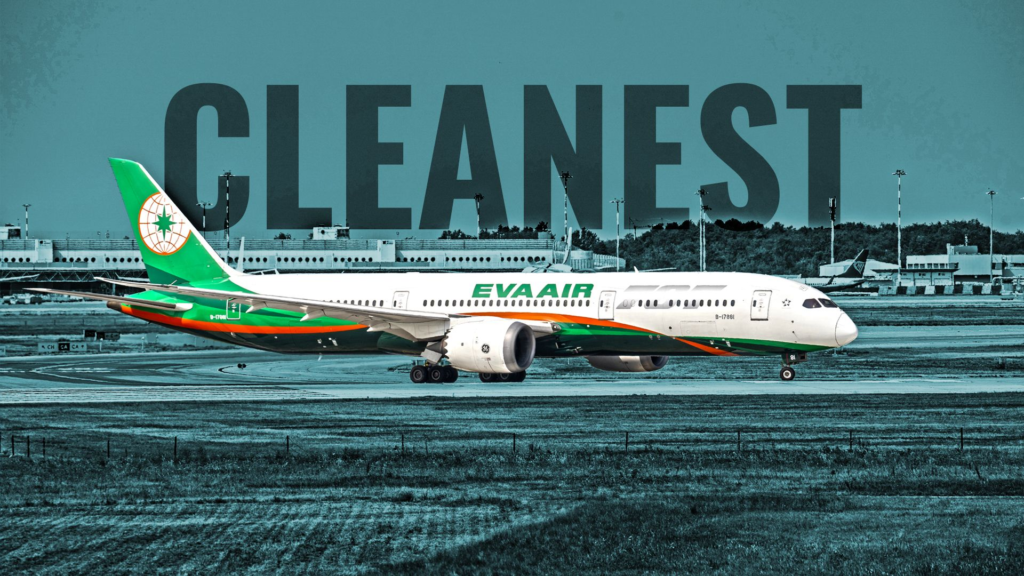
When travelers consider their favorite airlines, they tend to focus on customer service, legroom, seat-back entertainment, hidden fees, airport lounges, or baggage policies. While most passengers are also aware that aircraft cabins can harbor germs, cleanliness is rarely discussed with the same level of scrutiny. Even frequent flyers and industry professionals rarely debate which airlines maintain the cleanest cabins.
A visibly dirty aircraft is easily noticeable. Smudged windows, sticky tray tables, or crumbs left behind quickly diminish the onboard experience. By contrast, spotless cabins can often look similar to those that are reasonably clean and go underappreciated. However, even a slightly cleaner environment reinforces a perception of care and attention, and cabin hygiene plays a critical role in shaping how passengers perceive the flight. The moment passengers step onboard, the appearance and condition of the cabin set a first impression and reflect an airline’s commitment to quality and care.
Eva Air: The World’s Cleanest Airline In 2025

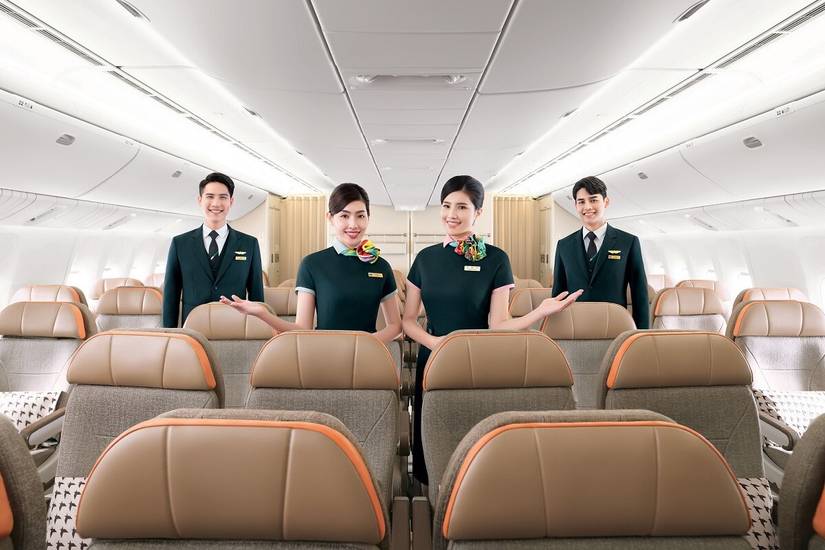
EVA Air rises from the No. 3 spot as the world’s cleanest airline in 2025. The rankings, coming from Skytrax Passenger Choice World Airline Awards, are based on the cleanliness and presentation of seat areas, tables, carpets, cabin panels, and lavatories. This recognition affirms EVA’s reputation for delivering exceptional cabin standards and a superior passenger experience.
EVA Air regards cabin cleanliness as a major service to its passengers. The carrier outlines this standard clearly, stating:
“EVA Air thoroughly cleans all cabin areas before departure. This includes seats, tray tables, TV screens, aisles, restrooms, and compartments above and in front of seats. Flight attendants also inspect and clean the cabin environment periodically during the journey, to ensure a clean and comfortable experience for passengers. Our airport staff and supervisory management teams conduct inspections from time to time to ensure cabin cleanliness and quality for continual improvement.”
The airline also performs strongly across several other Skytrax Passenger Choice Award categories. EVA ranks as the world’s best economy class catering provider and places within the top ten for airport services, cabin crew, economy class airlines, premium economy class airlines, premium economy catering, business class comfort amenities, airlines in Asia, staff service in Asia, and family-friendly carriers. In addition to the Passenger Choice Awards, Skytrax also publishes certified airline ratings. EVA is one of only 11 carriers to hold a 5-Star Airline designation, a distinction only awarded after a professional audit that evaluates airport and onboard product standards. Notably, 2025 marks EVA’s tenth consecutive year as a member of this prestigious group.
About Eva Air


Although Eva Air is not Taiwan’s flagship carrier ( China Airlines holds that spot), it is the island’s second-largest airline. Eva carried approximately 13.2 million passengers last calendar year and also has a fairly large cargo arm, transporting 790,000 tons (720,000 metric tons). The airline uses Taiwan Taoyuan International Airport as its primary operating hub, located approximately 25 miles (40 km) west of Taipei.
Eva maintains its cabin excellence across a diverse fleet. The carrier has always been a strong operator of 

|
Eva Air Fleet |
||
|---|---|---|
|
Aircraft |
In Service |
To Be Delivered |
|
777-300ER |
33 |
|
|
787-9 |
8 |
5 |
|
787-10 |
12 |
5 |
|
A330-300 |
9 |
|
|
A321-200 |
17 |
|
|
A350-1000 |
24 |
|
|
A321neo |
18 |
|
|
777F (Freighter) |
9 |
|
|
Source: Eva Air |
||
The fleet mainly consists of widebody airplanes to support their long-haul route network. However, they do rely on the single-aisle A321 for inner-Asia service, which is set to be replaced by the A321neo. Expanding on its future fleet plans, EVA’s aging 777 and A330 aircraft are planned to be phased out in favor of the A350-1000 and 787. Rather than retiring its 777s outright, the airline will withdraw them from passenger service and convert many into dedicated freighters for use in its cargo division.
How COVID-19 Reshaped Airline Cleaning Standards During The Pandemic


During the COVID-19 pandemic, airlines rapidly implemented new safety measures to reassure travelers and encourage people to continue flying. Carriers around the world adopted similar protocols designed to protect passengers, crew, and airport staff.
When it came to cabin cleaning and disinfection, airlines emphasized transparency. For example, EVA Air published specific commitments outlining its in-flight sanitation practices. The airline stated that all aircraft were thoroughly cleaned before departure and that lavatories were disinfected every 30 minutes in flight. Upon returning to its hub in Taiwan, each aircraft underwent deep cleaning using Calla 1452 disinfectant spray. EVA Air also specified that if a seat had been occupied by a passenger suspected or confirmed to have COVID-19, that section of the cabin would receive additional targeted sanitization.
Airlines in the United States adopted similar disinfection protocols. Another major focus was on highlighting the effectiveness of onboard HEPA air-filtration systems. 
As the pandemic began to subside, airlines gradually eased these enhanced cleaning measures. By July 2021, United stopped disinfecting aircraft before every flight and shifted to applying an antimicrobial spray once weekly. It is unclear whether this practice remains in place today, but other early-pandemic policies, such as social-distancing requirements and mandatory masking, have since been discontinued.
A Notable Absence: US Airlines


US carriers performed poorly in Skytrax’s 2025 cleanest airlines ranking and most other award categories. 
Skytrax evaluates airlines across many categories, including the best low-cost airline, best cabin crew, the best inflight entertainment, best staff worldwide, the best leisure airline, and best airport services, among others. The strongest category for US carriers by far was inflight entertainment. Delta placed sixth globally, United tenth, and JetBlue twentieth. Beyond this category, Delta and United only appeared toward the bottom of a few other awards. When considering Skytrax’s more prestigious 5-Star certified rating, Asian carriers once again dominated the list, with no US airline earning a place among the group.
|
World’s Cleanest Airlines (2025) |
|||
|---|---|---|---|
|
Rank |
Airline |
Region of Origin |
Also Received Skytrax 5-Star Rating |
|
1 |
EVA Air |
Asia |
Yes |
|
2 |
ANA All Nippon Airways |
Asia |
Yes |
|
3 |
Cathay Pacific Airways |
Asia |
Yes |
|
4 |
Qatar Airways |
Middle East |
Yes |
|
5 |
Singapore Airlines |
Asia |
Yes |
|
6 |
Hainan Airlines |
Asia |
Yes |
|
7 |
STARLUX Airlines |
Asia |
Yes |
|
8 |
Japan Airlines |
Asia |
Yes |
|
9 |
Korean Air |
Asia |
Yes |
|
10 |
China Southern Airlines |
Asia |
No |
Why do US airlines perform poorly? Historically, international carriers have placed a stronger emphasis on premium cabin experiences and high-touch service. While this is beginning to change as United, Delta, and American invest in new premium cabins, many top global airlines have long prioritized exceptional passenger experience. Several still offer true first class cabins, a product that US carriers have not focused on for many years.
How New Generation Aircraft Are Enhancing Cabin Cleanliness


Even though airlines may not be retaining the same aggressive cleaning programs seen during the pandemic, cabin cleanliness is evolving through aircraft design and technology. Airbus, for example, has highlighted future antimicrobial solutions that would be integrated directly into cabin materials. Instead of relying on recurring sprays and wipe-downs, these surfaces could be manufactured with antimicrobial additives that remain effective for the lifetime of the aircraft component. This would reduce pathogen buildup while lowering the ongoing cleaning burden for airlines. Combined with expanded touchless features in lavatories, galleys, and other high-touch areas, aircraft manufacturers are aiming to build hygiene directly into the structure of the cabin.
Beyond targeted antimicrobial material, next-generation aircraft like Boeing’s 777X are introducing broader design improvements that indirectly support cleaner-feeling cabins. Larger windows bring in more natural light, advanced LED lighting systems create brighter and more sanitary-looking spaces, and wider cabin designs enhance personal space for travelers. Meanwhile, lower cabin pressure altitude helps passengers feel more refreshed and comfortable, which naturally reinforces the perception of a clean and healthy onboard experience.
Together, these advancements suggest that the future of cabin cleanliness will rely less on visible sanitation efforts and more on integrated technology and thoughtful design. The next generation of aircraft will aim to make clean, comfortable, and reassuring environments standard across the industry and will help travelers feel protected and cared for, even if they never see a spray bottle or sanitizing robot.
source