



The United States Air Force is by far the largest operator of the F-35 Lightning II fighter jet, and it isn’t even close. If the term ‘air force’ is to include naval air arms, then the second largest is the Marine Corps, followed by the US Navy. The United States Army does not operate the F-35 or any fixed-wing combat aircraft. The Army has the world’s largest helicopter air force.
Due to the massive size of the US’ F-35 programs and the comparatively diminutive orders by export countries, this article will consider US Air Force, Marines, and Navy orders separately, but will lump any export country’s navy and air force orders together. Countries where both the air force and navy are purchasing the F-35 include Italy, the United Kingdom, and Japan.
The United States’ Programs Of Records

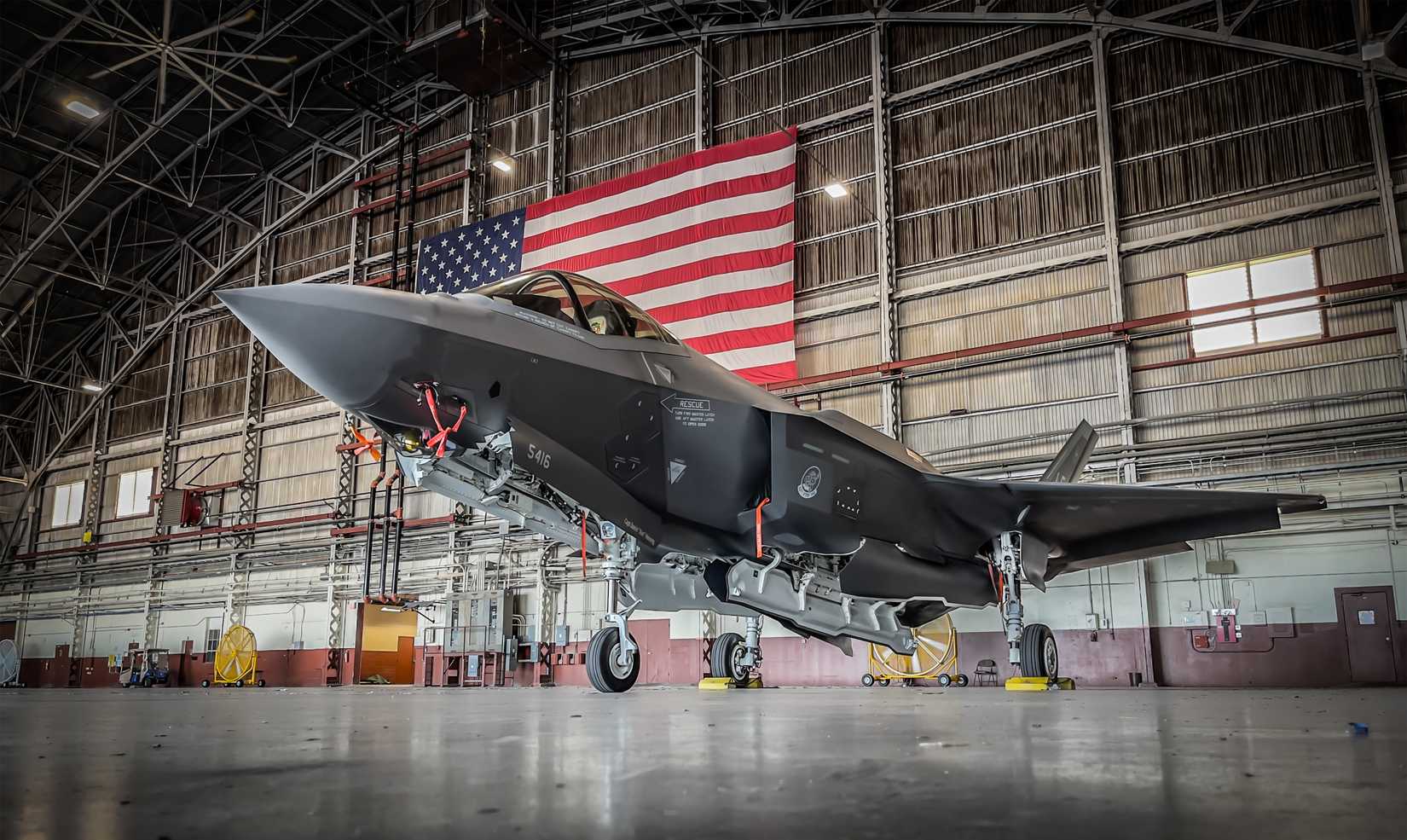
The United States Air Force has a program of record to purchase 1,763 F-35As, which is around half of all the F-35s the jet has a program of record for. A “program of record” (POR) is a government-funded acquisition program for a specific material, weapon, or information system that has received formal approval and is listed in the budget. However, in practice, many of these F-35s are not funded or officially ordered, and the final number of F-35s the USAF will eventually purchase remains highly uncertain.
The Marine Corps has a program of record for 353 F-35Bs and 67 F-35Cs for a total of 420 F-35s. That said, the Marines are believed to be shuffling their planned buys to include more F-35Cs and fewer F-35Bs while leaving the total at 420. The F-35B is the STOVL variant, able to take off and land vertically, and can operate on the Marines’ amphibious assault ships. The F-35C is the carrier-based variant that is larger, has more fuel for longer ranges, and can carry more payload, but it is restricted to operating on carriers and airfields.
The US Navy is the third-largest customer for the F-35 and is exclusively purchasing the carrier-based F-35C. It has a program to purchase 273 aircraft. Existing US Navy carriers require retrofits to operate the F-35, and this is an ongoing process that will extend into the 2030s. The Navy will operate alongside the smaller, less-capable Super Hornet into the 2030s and 2040s when the Super Hornets are expected to be replaced by the next-generation F/A-XX currently in development.
US Air Force Reducing Annual Purchases For Now

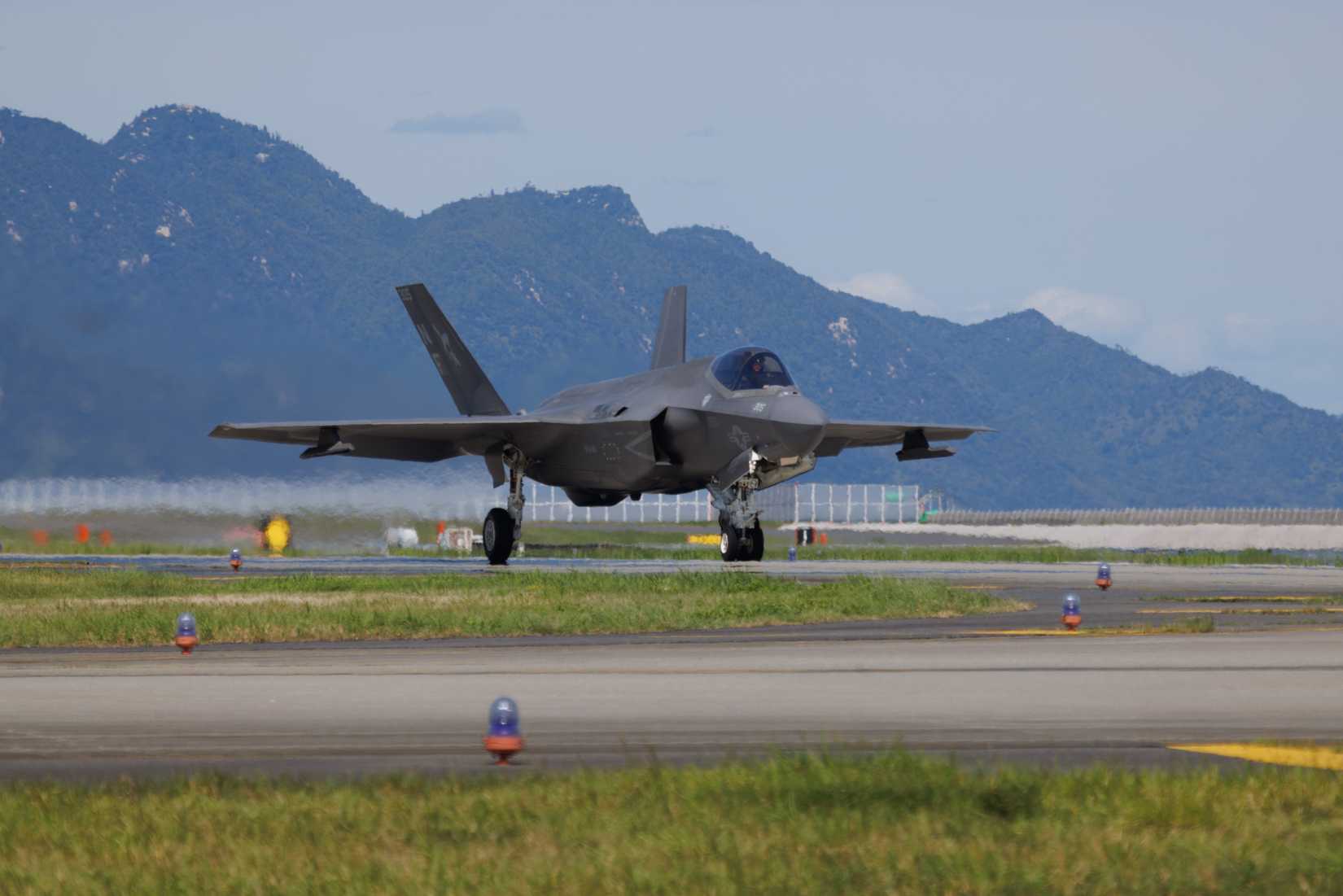
The US Air Force is currently reducing the number of F-35s it is buying. This is part of a budget reprioritization, partly because the funds are needed to upgrade existing jets, and partly because the Pentagon wants Lockheed Martin to work out teething problems with the Block 4 upgrade. The Air Force has indicated it will purchase them in greater numbers after problems are worked out.
In 2025, the service purchased 44 F-35As, but it has only requested to purchase 24 in fiscal 2026. It remains unclear what the final number will be; a draft Senate proposal increased the year’s purchase to 34 jets. Under new Air Force plans, it will not resume full F-35 orders until around 2028. It is forecasting purchasing 39 F-35s in 2027, just 18 in 2028, 32 in 2029, and 29 in 2030.
Still, all this is very uncertain. The rapidly changing face of threats, new options (e.g., Shield AI’s proposed X-BAT), budget constraints, and more will all impact decision-making. Even if planned buys are reduced now, they could be dramatically reversed next year due to new developments and assessments. One way or the other, the USAF will remain the largest buyer of the F-35 for years to come.

What US Air Force Bases Have F-35s?
Ten air force bases are listed as bases for the USAF F-35A, although they can operate from many more bases.
Over 1,230 F-35s Delivered
As of September 2025, Lockheed Martin has delivered around 1,230 F-35s of all three variants to all customers. Adding to that, the F-35 program has now logged over a million flight hours and has seen over 3,095 pilots trained. While the F-16 remains the most common fighter jet in service in the world today, the F-35 is rapidly rising through the rankings.
At the start of the year, the most common active fighter jets were the F-16 with around 2,000 in service, the Su-27 Flanker family (includes Su-30, -34, and -35) with around 1,300, the F-15 at over 900, the F/A-18 with over 800, the MiG-29 with under 800, and the F-35 with more than 700 in active service. It should be noted that not all delivered F-35s are counted as in active service. Currently, the F-35’s stable delivery rate is around 156 a year, although Lockheed is targeting around 200 in 2025.
A similar number of F-35s are being delivered every year as all other frontline US, European, and Russian fighter jets combined. Many F-15s, Su-27s, MiG-29s, F-16s, and F/A-18s are being retired and/or produced in comparatively low numbers. This means the F-35 may become the most common fighter jet in the world within the next decade.
United States Air Force Welcomed 500th F-35
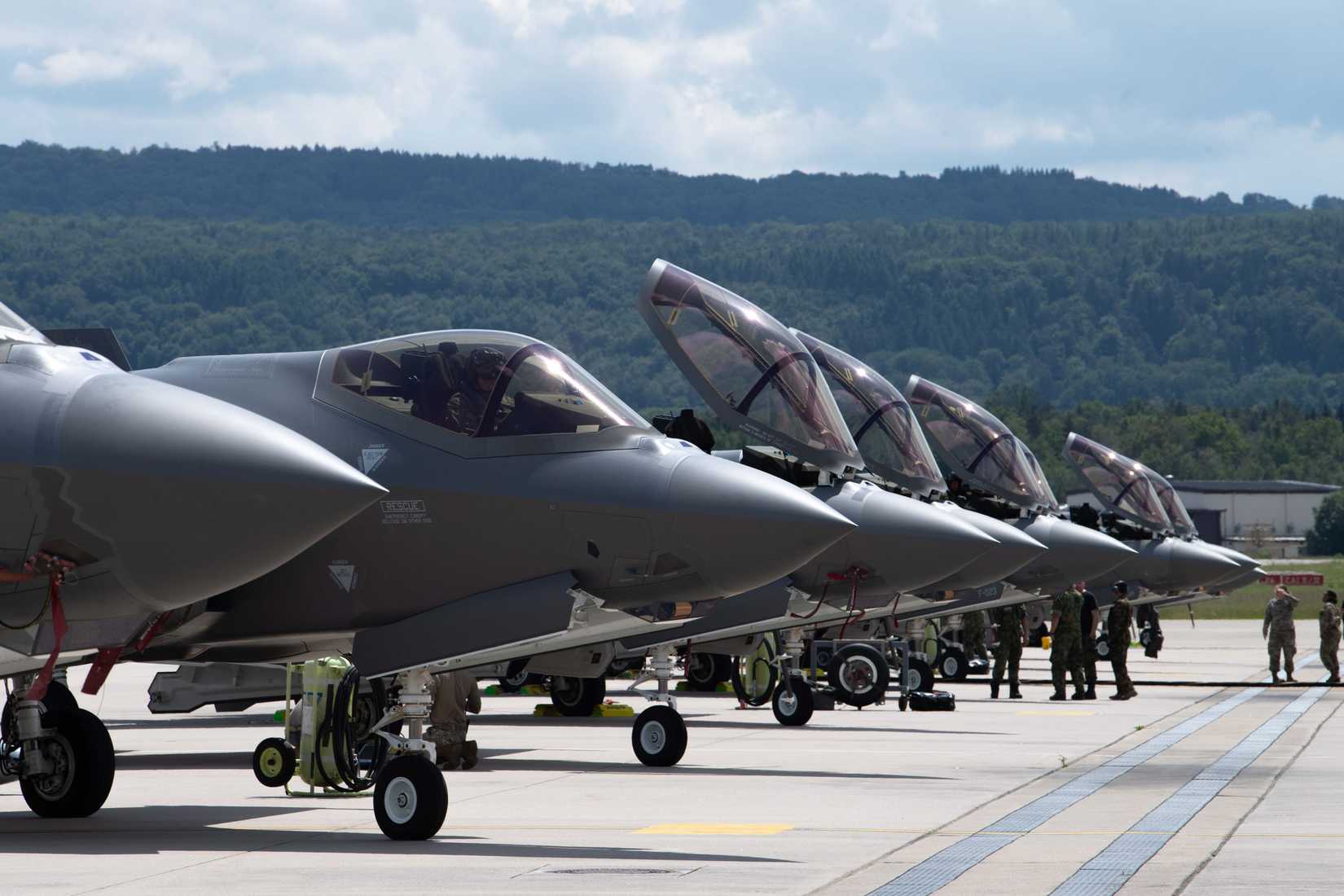
Of the 1,230+ F-35s that have been delivered, around 41% have been delivered to the United States Air Force. It has recently taken delivery of its 500th F-35A. This gives it a fleet about double that of the next largest fleet. It’s unclear how many F-35s the US Navy has received, although in December 2024, F-35.com reported it had delivered the 100th example to the Navy. The Navy may have received around ten more since then.
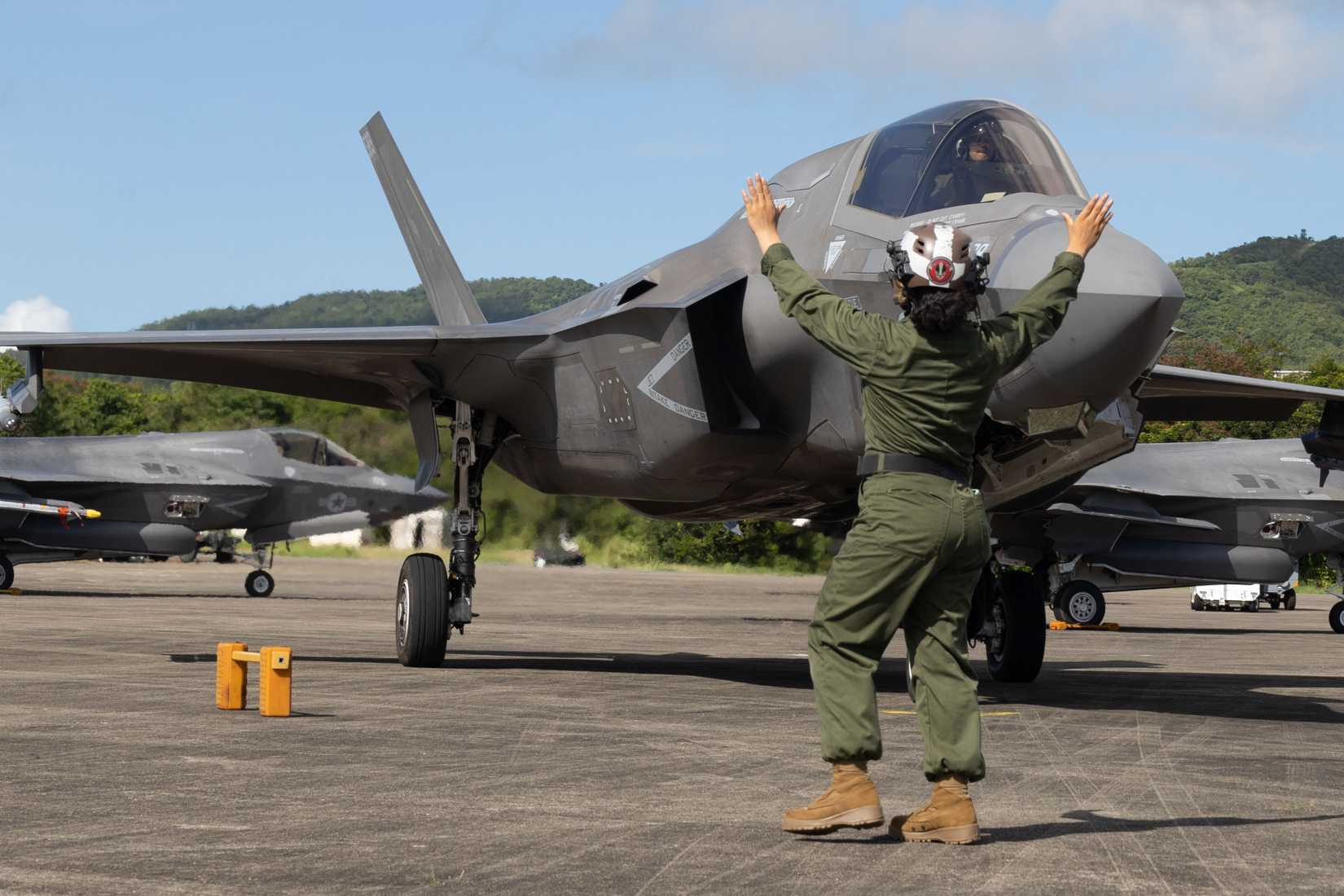
After the USAF, the Marines now have the world’s second-largest fleet of F-35s. In February 2025, the Marines stated it had received 183 F-35Bs and 52 F-35Cs for a total of 235 aircraft. It’s unclear how many the Marines have now, but they have a purchase plan of 13 F-35Bs and 13 F-35Cs in fiscal 2025. So the service has likely received around 20 more jets since the Marines’ statement. This means the Marines operate around 20% of the world’s F-35s currently in service.
|
US service branches and their F-35 programs |
|
|---|---|
|
US Air Force program of record |
1,763 |
|
US Air Force F-35 inventory |
500+ |
|
US Marine Corps program of record |
420 |
|
US Marine Corps inventory |
Approx. 255 |
|
US Navy program of record |
273 |
|
US Navy inventory |
Approx. 110 |
Even if the US Navy and Marine Corps’ fleets were to be combined, the US Air Force still has the largest fleet. An adjusted fleet of 110 Navy F-35s and 255 Marine F-35s would give the Department of the Navy a fleet of 365, still much fewer than the Air Force’s 500-strong fleet. This also suggests that the United States military has around 72% of the world’s delivered F-35s.

Will Lockheed Martin Catch Up F-35 Delays In Time For The 2030 US Marine Hornet Replacement?
It seems that the Marines will be able to more or less transition to the F-35B and F-35C by 2030.
Other F-35 Operators

Export F-35 customers include the US’ core European allies, the UK, Italy, the Netherlands, Canada, Australia, Denmark, and Norway. These were involved in the development of the F-35 program, especially the UK, which is a major contributor with around 15% of the aircraft’s components built by the UK. Then there are foreign military sales to Israel, Japan, South Korea, Belgium, Poland, Singapore, Finland, Switzerland, Germany, the Czech Republic, Greece, and Romania.
Of these, only Norway has completed its program of record and has received all of its planned 52 F-35As. The Netherlands has fully transitioned to the F-35 and retired its legacy F-16s, but it has not yet received all of its jets. The aircraft is in operational service in the UK, Japan, Korea, Italy, and Denmark. Singapore, Germany, Poland, Belgium, Romania, the Czech Republic, Finland, Greece, Romania, and Switzerland do not have operational F-35s, although some have been delivered, but are used in the US for training.
The countries with the largest programs of record are the UK with 138 jets, Japan with 127 (but up to 147), and Italy with 115. Australia and Israel are also significant customers, while other countries like Saudi Arabia are negotiating to purchase the jet. Taking European countries together, around 200 of around 650 F-35s (program of record) have been delivered.
The US Air Force Will Remain The Largest F-35 Operator

The United States alone has 70% or more of the world’s fleet of F-35s. Zooming in, the United States Air Force is the largest operator with over 500 F-35s, with the Department of the Navy following at likely more than 350. Within the Department of the Navy, the Marine Corps’ fleet is currently about twice the size of the Navy. The Marine Corps’ large numbers are explained in that the service is fully transitioning to the F-35, with the McDonnell Douglas AV-8B Harrier II and F/A-18 Hornet being phased out.
Meanwhile, the Navy’s comparatively modest buy is explained in that it is relying on the Super Hornet, with new deliveries continuing until 2027. After that, the Navy plans to eventually purchase the F/A-XX. In other words, the F-35 will be the only fighter jet for the Marines, but it is one of two, and later three, for the Navy.
While the US Air Force’s future procurement plans for the F-35 face questions, it is set to remain the largest operator of the aircraft. With more than 500 examples in inventory, its fleet is already larger than any other country’s or service’s program of record. Other countries around the world could increase their planned purchases, but, for now at least, it seems unlikely any country will purchase more than any of the three US service branches operating the F-35.
source