


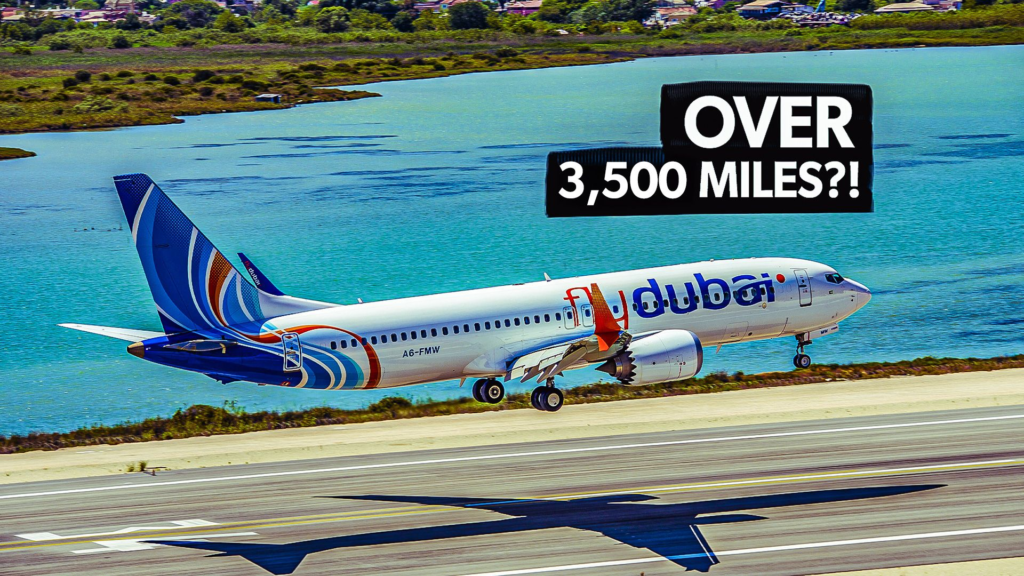
After the delivery of the first Boeing Boeing 737 MAX 8 in May 2017, the narrowbody aircraft became quickly popular, with 1,965 having been delivered as of August 2025. However, the aircraft is one of the most controversial in recent aviation history, as two fatal crashes, Lion Air Flight 610 on October 29, 2018, and Ethiopian Airlines Flight 302 on March 10, 2019, resulted in 346 deaths.
Due to these high-profile crashes, the entire 737 MAX fleet was grounded in March 2019. Following the controversy, the cause of the 737 MAX crashes has been discovered and resolved, and the plane has returned to service as a popular regional aircraft. This article takes a look at the mid-to-long range routes on which the 737 MAX shines, and the longest scheduled routes to be flown this year.
The Longest 737 MAX Routes In 2025

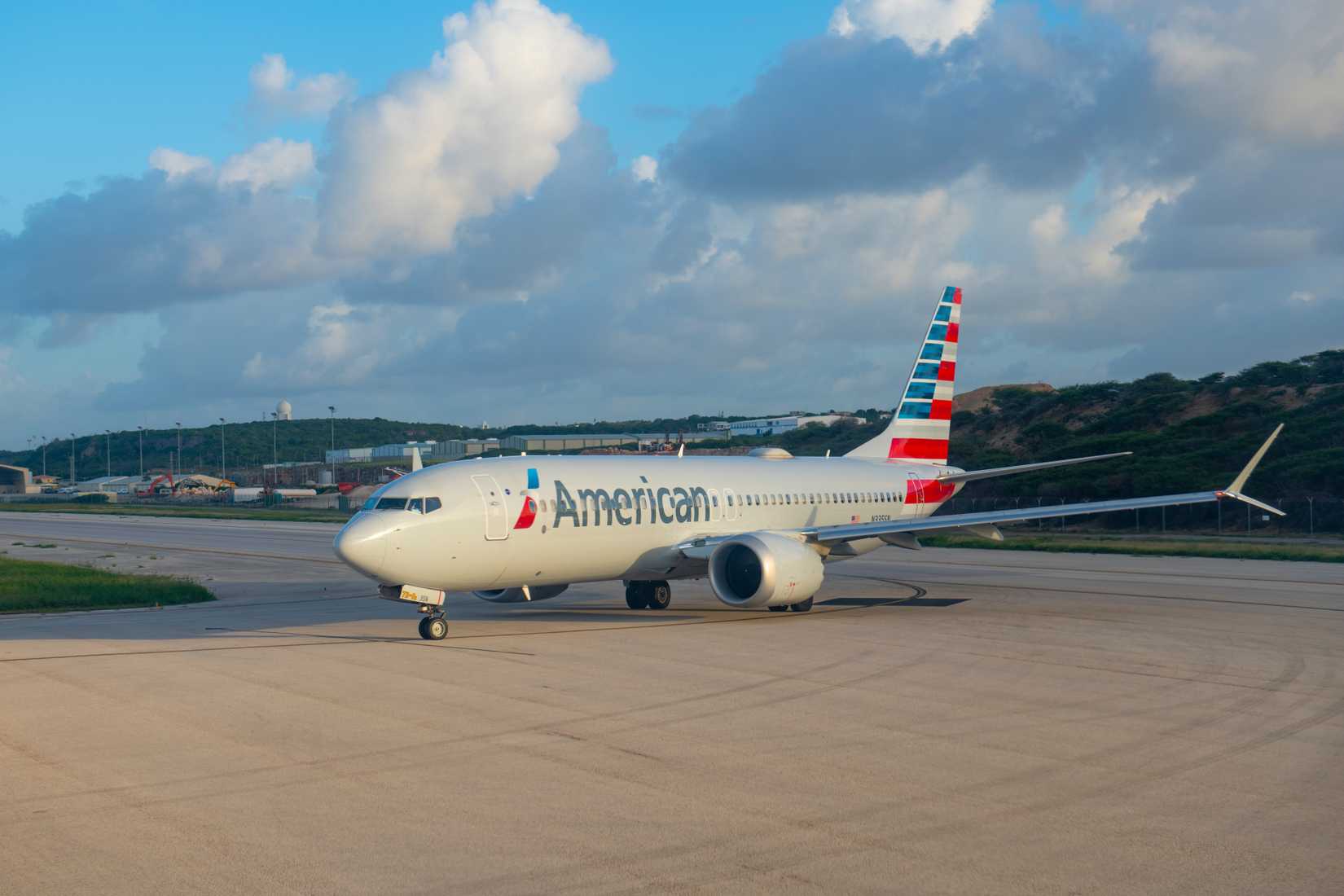
The cause of the 737 MAX crashes has been extensively covered, but putting a long story short, it was a case of an automated system designed to increase the handling of the plane erroneously overriding pilot inputs. When the grounding occurred, it was potentially disastrous for Boeing, as the 737 MAX had 4,636 unfilled orders, according to Bloomberg, valued at an estimated $600 billion.
Hundreds of these orders were canceled in 2019 and 2020, but order numbers have recovered and even expanded since. As of this year, Boeing has recorded a total of 6,782 orders, indicating that the aircraft will continue to enjoy a long career in the passenger aviation industry. The 737 MAX is now among the most popular narrowbody planes with many large airlines, such as Southwest Airlines, United Airlines, Ryanair, Alaska Airlines, American Airlines, and Akasa Air, among others.
According to Cirium, which details the routes and lengths scheduled for the year 2025, the 737 MAX 8 and the stretched 737 MAX 9 variant both fly some very long routes with their carriers, with the longest populated flight being 3,864 average miles, operated by TUI fly Nordic. All routes above 3,500 miles are listed below, with return journeys omitted:
|
Scheduled Boeing 737 MAX Routes in 2025 |
||||||
|
Airline (IATA Code) |
Origin Code |
Destination Code |
Variant |
Flights |
Seats |
Average Miles |
|
TUI fly Nordic (6B) |
HEL |
BVC |
737 MAX 8 |
4 (no returns) |
756 |
3,864 |
|
TUI fly Nordic (6B) |
SID |
HEL |
737 MAX 8 |
12 (8 returns) |
2,268 |
3,827 |
|
GOL Linhas Aéreas Inteligentes (G3) |
MCO |
BSB |
737 MAX 8 |
442 |
82,212 |
3,778 |
|
Arajet (DM) |
SDQ |
EZE |
737 MAX 8 |
18 |
3,330 |
3,734 |
|
Arajet (DM) |
PUJ |
EZE |
737 MAX 8 |
506 |
93,610 |
3,728 |
|
GOL Linhas Aéreas Inteligentes (G3) |
CUN |
BSB |
737 MAX 8 |
128 |
23,808 |
3,663 |
|
TUI fly Nordic (6B) |
ARN |
BVC |
737 MAX 8 |
14 (no returns) |
2,646 |
3,636 |
|
Virgin Australia (VA) |
HND |
CNS |
737 MAX 8 |
23 |
4,048 |
3,627 |
|
Icelandair (FI) |
SEA |
KEF |
737 MAX 8 |
54 |
8,640 |
3,622 |
|
GOL Linhas Aéreas Inteligentes (G3) |
MCO |
FOR |
737 MAX 8 |
50 |
9,300 |
3,605 |
|
GOL Linhas Aéreas Inteligentes (G3) |
MIA |
BSB |
737 MAX 8 |
456 |
84,816 |
3,598 |
|
TUI fly Nordic (6B) |
SID |
ARN |
737 MAX 8 |
48 |
9,072 |
3,598 |
|
T’way Air (TW) |
ICN |
BSZ |
737 MAX 8 |
6 |
1,134 |
3,591 |
|
Arajet (DM) |
SCL |
PUJ |
737 MAX 8 |
162 |
29,970 |
3,576 |
|
Icelandair (FI) |
KEF |
DEN |
737 MAX 8 |
117 |
18,720 |
3,568 |
|
Ethiopian Airlines (ET) |
ADD |
DAC |
737 MAX 8 |
111 (55 returns) |
17,760 |
3,553 |
|
Icelandair (FI) |
YVR |
KEF |
737 MAX 8 |
232 |
37,120 |
3,544 |
|
Icelandair (FI) |
KEF |
MCO |
737 MAX 9 |
1 |
178 |
3,534 |
|
Icelandair (FI) |
KEF |
MCO |
737 MAX 8 |
154 |
24,640 |
3,534 |
|
WestJet (WS) |
YYC |
PTY |
737 MAX 8 |
29 |
5,046 |
3,501 |
The Longest Routes Analyzed


With a range of up to 4,150 miles, the 737 MAX has been increasingly used on long-distance routes in recent years. Earlier this year, the longest scheduled route was 3,778 miles long, operated by GOL Linhas Aéreas Inteligentes and flying between Orlando International Airport (MCO) and Brasília International Airport (BSB).
However, in the months since, the three-airport route flown by TUI fly Nordic has taken the top spot, flying between Helsinki (HEL), Boa Vista Island (BVC), and Stockholm Arlanda Airport (ARN). The longest combination between the airports was from HEL to BVC, with an average distance of 3,864 miles. That said, the route is not flown on a regular basis, with roughly 12 flights in the year.
|
Most Flown 737 MAX Routes On The List |
||||
|
Airline |
Origin |
Destination |
Flights |
Seats |
|
Arajet |
Punta Cana International Airport (PUJ) |
Ministro Pistarini International Airport (EZE) |
506 |
93,610 |
|
GOL Linhas Aéreas Inteligentes |
Miami International Airport (MIA) |
Brasília International Airport (BSB) |
456 |
84,816 |
|
GOL Linhas Aéreas Inteligentes |
Orlando International Airport (MCO) |
Brasília International Airport (BSB) |
442 |
82,212 |
Arajet gets the top spot for the most lucrative route, with 506 flights between PUJ and EZE, equating to 93,610 potential seats. GOL Linhas Aéreas Inteligentes has the two next-most frequently flown routes, and these are head and shoulders above the rest in terms of frequency. Another point of interest is the Ethiopian Airlines Addis Ababa Bole International Airport (ADD) to Hazrat Shahjalal International Airport Dhaka (DAC) route, with many return flights taking a different route home.
The 737 MAX Has Modern Efficiency Features

The attractive thing about the 737 MAX for airlines, and why it has remained so popular even after the controversies mentioned above, is that it is a fuel-efficient aircraft. Armed with efficient CFM International LEAP engines, aerodynamic improvements such as split-tip winglets, and structural modifications, the 737 MAX benefits from many efficiency-increasing modern design features.
The 737 MAX is the fourth generation of the 737, succeeding the Boeing 737NG, and incremental changes have added up over the years, making the 737 MAX a great plane for regional medium-haul passenger transport, thanks to a fuel efficiency improvement of 14% over its predecessor. The original variant was the 737 MAX 8, which has a fully-loaded range of 4,000 miles (3,500 nautical miles), which is more than enough to fly some international routes as well.
|
Unusually Long 737 MAX Routes in 2025 |
||||||
|
Airline (IATA Code) |
Origin Code |
Destination Code |
Variant |
Flights |
Seats |
Average Miles |
|
Flydubai (FZ) |
BSZ |
DXB |
737 MAX 9 |
1 |
172 |
6,377 |
|
Ajet (VF) |
BSZ |
ESB |
737 MAX 8 |
7 |
1,232 |
5,627 |
|
China Southern Airlines (CZ) |
BSZ |
URC |
737 MAX 8 |
5 |
885 |
4,475 |
For the table above, the raw data from Cirium listed the irregular return flights from Manas International Airport (BSZ), in Kyrgyzstan, as being the longest. These entries were not included in the main table because they are likely to be empty repositioning flights, and were not listed among passenger flights on Flightaware or Flightradar24. Being able to make an empty 6,377-mile flight is impressive, and the flights show the significant effect of adding passenger and luggage weight.
The 737 MAX Is Part Of Boeing’s Strategy

After the grounding of all 737 MAX aircraft, Brazilian airline GOL Linhas Aéreas was the first to fly the aircraft carrying paying customers in December 2020. The airline has a fleet exclusively made up of 737s, including -700, -800, -8 MAX, and -800 BCF variants, so it was not surprising to see such a loyal airline being the first to test the waters following the 737 MAX crashes.
In the same vein, American Airlines was the first US-based airline to conduct a 737 MAX flight, later that month. According to American Airlines CEO, Robert Isom, the 737 is a viable plane, and has a place in the modern aviation industry:
“The aircraft is ready to go. [It] is much more efficient. It’s much greener. It’s a new plane that ought to be flying, and other aircraft ought to be left at home right now.”
With passenger aviation demand increasing sharply following the pandemic, airlines have been desperate to keep planes like the 737 MAX in the air, and while supply chain issues have struggled to recover following that time, every plane, especially modern and efficient ones, is worth its weight in gold.
|
Brief Specifications of 737 MAX Variants |
||||
|---|---|---|---|---|
|
MAX 7 |
MAX 8 |
MAX 9 |
MAX 10 |
|
|
Typical seating |
153 |
178 |
193 |
204 |
|
Maximum takeoff weight |
177,000 lb (80,000 kg) |
182,200 lb (82,600 kg) |
194,700 lb (88,300 kg) |
197,900 lb (89,800 kg) |
|
Length |
116 ft 8 in (35.56 m) |
129 ft 6 in (39.47 m) |
138 ft 4 in (42.16 m) |
143 ft 8 in (43.79 m) |
|
Range |
3,800 nautical miles (7,000 km) |
3,500 nautical miles (6,500 km) |
3,300 nautical miles (6,100 km) |
3,100 nautical miles (5,700 km) |
|
Takeoff (at sea level with maximum takeoff weight) |
7,000 ft (2,100 m) |
8,300 ft (2,500 m) |
8,500 ft (2,600 m) |
Not yet known |
Boeing appears to also recognize the importance of the 737 MAX in the passenger aviation market. Following the grounding of the MAX due to the Alaska Airlines blowout incident, the Federal Aviation Administration (FAA) capped 737 MAX production at 38 per month. However, Boeing plans to increase production to 47 per month, if plans are approved by the FAA. This will help the manufacturer make a dent in the sizable order backlog, and also help airlines to meet rising demand on these routes.
source