



Few airlines can match the reach, legacy, and ambition of United Airlines, one of the world’s most enduring and expansive carriers. Founded in 1926 as an amalgamation of Varney Air Lines and a number of other mail carriers, United has grown from humble beginnings in the American West to become a global powerhouse serving 373 destinations across six continents. The airline’s network strength and hub system have positioned it as a central player in international travel, connecting business hubs, leisure destinations, and emerging markets alike.
Over the decades, United has weathered deregulation, mergers, economic crises, and a global pandemic, emerging each time with greater resilience and reach. Today, its operational scale is unparalleled in North America, and its ongoing fleet modernization and network expansion are redefining what it means to be a truly global airline. United’s rise from a regional mail carrier to the world’s most connected airline is not just a story of growth but of strategic adaptation and innovation in the ever-evolving aviation landscape.
Connecting The Nation’s Power Centers: Chicago, New York, And Washington


At the heart of United’s network lies the corridor connecting 


Chicago O’Hare remains United’s largest hub and a cornerstone of its operational efficiency. Its strategic location in the Midwest enables rapid connections to both coasts, making it an indispensable part of United’s domestic and international routing. For travelers commuting between the political and financial capitals of Washington and New York, the airline’s frequency and reliability have made it the default choice for time-sensitive travel.
These routes not only symbolize United’s dominance in key business corridors but also illustrate the airline’s broader philosophy to serve major US centers with frequency, consistency, and network depth, ensuring the continued success and growth of the airline.
Hub-to-Hub Power: The Arteries Of United’s Network


United’s network is structured around powerful hub-to-hub operations, allowing passengers to flow smoothly through multiple connection points. Routes like 


Each hub serves a specific purpose. Chicago anchors the Midwest and connects to Europe and Asia. Denver bridges the Rockies and the central US. Houston provides vital access to Latin America. Newark anchors the East Coast, and San Francisco serves as a key transpacific gateway. By maintaining multiple high-frequency connections between these cities, United ensures both redundancy and flexibility, essential for weather resilience and operational efficiency.
The hub-to-hub model also maximizes aircraft utilization and creates seamless long-haul connectivity. For example, passengers traveling from smaller US cities can connect through Denver or Chicago to reach international destinations via Houston, Newark, or San Francisco. It’s a strategy that blends domestic dominance with global reach.
Transcontinental Strength: Linking The Coasts


Few routes capture United’s operational scale like its transcontinental services, most notably 
United’s transcontinental flights also demonstrate its investment in passenger experience. The introduction of Polaris business class, enhanced lounges, and high-speed Wi-Fi across its fleet reflects its focus on comfort and consistency for long-haul domestic travelers. These routes have become not just connections between coasts, but competitive showcases for United’s brand and service quality.
|
Aircraft Type (Planespotters.net) |
Current |
Future |
||
|---|---|---|---|---|
|
In Service |
Parked |
Total |
||
|
Airbus A319 |
74 |
5 |
79 |
|
|
Airbus A320 |
68 |
3 |
71 |
|
|
Airbus A321 |
50 |
50 |
23 |
|
|
Boeing 720 |
||||
|
Boeing 737 |
537 |
28 |
565 |
30 |
|
Boeing 747 |
||||
|
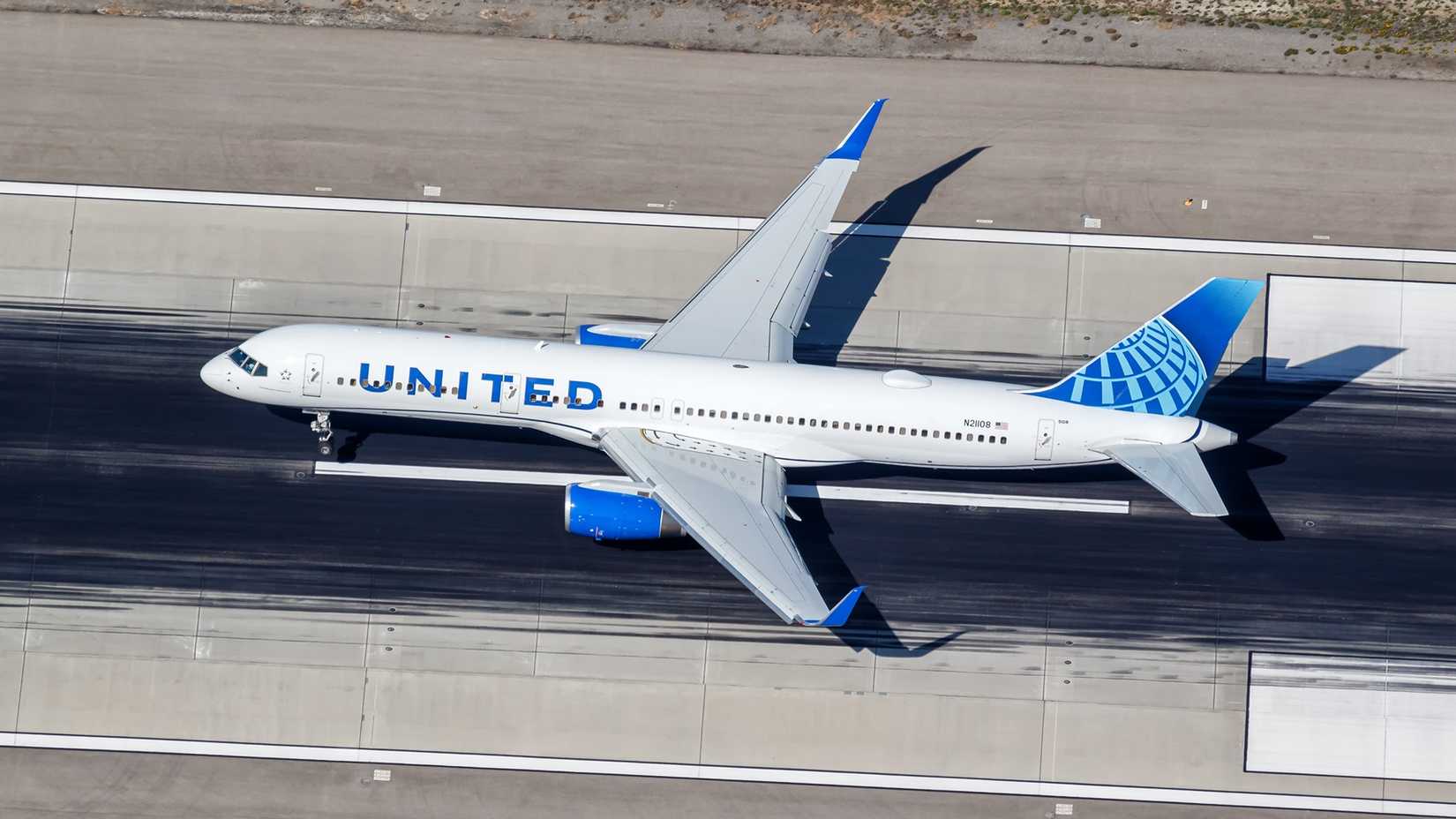
Boeing 757 |
55 |
6 |
61 |
|
|
Boeing 767 |
48 |
5 |
53 |
|
|
Boeing 777 |
90 |
6 |
96 |
|
|
Boeing 787 Dreamliner |
79 |
1 |
80 |
9 |
Strategically, transcontinental flights are also critical for maintaining United’s global network balance. East Coast passengers can connect through Newark to Europe or the Middle East, while West Coast travelers use San Francisco or Los Angeles as gateways to Asia and Oceania. United’s strong presence on both coasts ensures that every continent is only one connection away.
Regional Dominance: Feeding The Hubs


While long-haul routes often steal the spotlight, United’s success is equally built on its mastery of short-haul regional operations. Routes such as
Regional flights serve as the “feeders” that fill United’s domestic and international services. Passengers from smaller markets like Colorado Springs often reach their final destinations, from London to Tokyo, through connections at Denver, Chicago, or Houston. This hub-and-spoke model remains a key differentiator for legacy carriers like United compared to point-to-point low-cost competitors.
Operationally, United Express and its regional partners, SkyWest, Mesa, and Republic, play an essential role in sustaining the efficiency and reach of United’s network. By operating smaller regional jets on high-frequency, short-haul routes, these carriers enable United to align capacity with demand while maintaining seamless connectivity to its domestic hubs and global destinations. This integrated approach ensures that even smaller communities remain linked to major markets, feeding passengers into United’s larger system and supporting both economic and regional development. The result is a finely balanced network that combines scale, flexibility, and precision, allowing United to effectively serve nearly every corner of the United States while optimizing performance across its entire operation.
The Central Corridor: Houston, Denver, And Beyond
The DEN–IAH and ORD–IAH routes demonstrate United’s strategic importance in the central United States. Together, they contribute over 130,000 weekly seats and nearly 115 million ASMs.
These connections illustrate how United blends domestic density with international reach. A traveler from Denver can easily connect through Houston to destinations like Bogotá, São Paulo, or Mexico City, highlighting United’s integration of Latin American routes inherited from Continental Airlines after their 2010 merger.
This central corridor is also crucial for weather resilience and rerouting flexibility. When East or West Coast operations are affected by storms or congestion, United can pivot through Denver or Houston to maintain schedule integrity, an operational advantage few carriers possess at this scale.
A Century Of Flight, A Future Of Connection

United Airlines’ vast network, spanning 373 destinations, is the culmination of nearly a century of innovation, adaptation, and global ambition. From its pioneering airmail routes of the 1920s to its present role as the world’s most connected airline, United has continuously evolved to meet the shifting demands of travelers, economies, and markets across every corner of the globe. Its history mirrors that of aviation itself: a story of bold experimentation, strategic expansion, and an unrelenting drive to bring people closer together.
What truly distinguishes United, however, is not just its size, but its structure and purpose. Its carefully designed hub system, anchored in cities such as Chicago, Denver, Houston, Newark, and San Francisco, balances regional accessibility with transcontinental and intercontinental strength. Every route, from short-haul commuter connections like Denver–Colorado Springs to long-haul journeys such as San Francisco–Singapore, contributes to a unified network that underpins business, tourism, and trade on a global scale. United’s ability to synchronize operations across continents ensures both resilience and reach, enabling it to serve as a critical bridge between economies and cultures.
Looking ahead, United continues to chart an ambitious course for the future. The airline is investing heavily in sustainability, fleet modernization, and digital transformation, from adopting next-generation aircraft like the Boeing 787 Dreamliner and Airbus A321XLR to pioneering efforts in sustainable aviation fuel and carbon reduction initiatives. These efforts underscore United’s commitment not only to growth, but to responsible leadership in a rapidly changing world.
source