


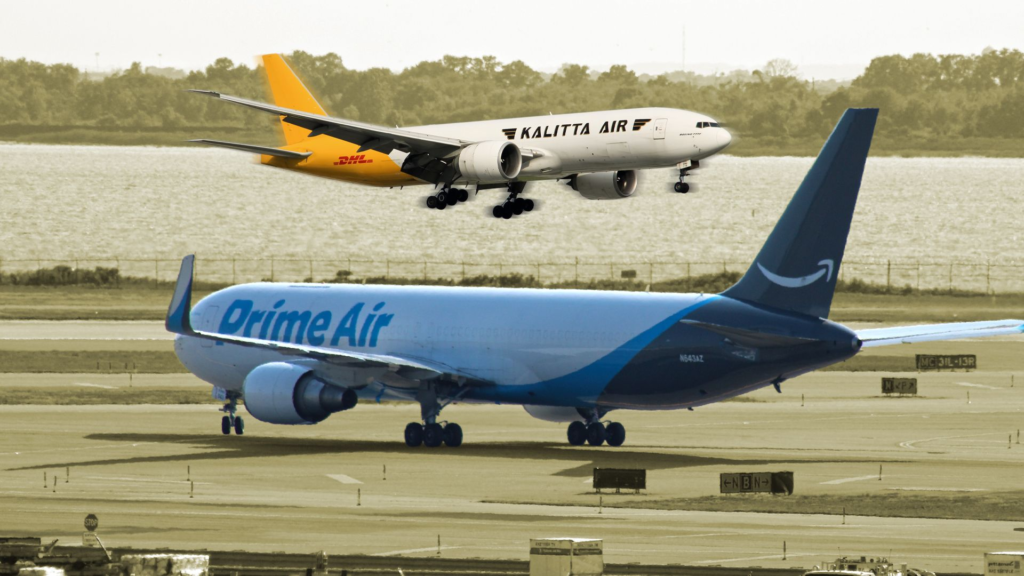
In the fast-evolving world of air cargo operations, choosing the right aircraft is a decision that defines efficiency, reach, and profitability. Among the heavyweights of the freighter market, this Boeing pair gets a lot of attention: 

The 767F has become the dependable backbone of e-commerce and express delivery, balancing payload with operational flexibility. The 777F, meanwhile, stands at the top of Boeing’s twinjet cargo lineup, an intercontinental powerhouse designed to replace four-engine giants like the 747-400F. Together, they form a complementary pair that defines how freight moves across continents today.
This guide explores what truly separates the two aircraft, from design and performance to operational economics and future market outlook, and examines why, even as new models like the 777-8F approach production and maybe even the 787 Freighter one day, the 767 and 777F remain Boeing’s most successful twin-engine cargo platforms to date.
Design And Platform Differences


The Boeing 767 Freighter represents Boeing’s trusted middleweight, a design optimized for balance rather than brute force. Born in the early 1980s, when airlines and cargo operators sought a jet smaller than the 747 but still capable of serious payloads, it quickly became the go-to aircraft for regional and transcontinental freight. Its twin-aisle fuselage, low deck height, and efficient wing design make loading, turnaround, and maintenance remarkably straightforward.
Derived from the Boeing 767-300ER passenger variant, both the purpose-built 767-300F and the Boeing converted freighter (BCF) models can carry around 116,000 lb (52 tons) of payload, accommodating 24 standard pallets on the main deck. Operators prize the type for its simplicity, fuel efficiency, and the ready availability of conversion candidates from passenger service, all factors that keep costs predictable and operations profitable.
In service, the 767 thrives on medium-haul routes where flexibility, quick turnaround, and lower trip costs matter more than sheer capacity. It remains the backbone of high-frequency networks for FedEx, UPS, DHL, Atlas Air, and Amazon Air, connecting regional hubs where a 777F would simply be too large or uneconomical. Its ability to operate from shorter runways and airports with less ground infrastructure has made it indispensable to the global express supply chain.
The Boeing 777 Freighter, by contrast, is a generational leap in both scale and philosophy. Introduced in 2009, it was conceived from the outset as a dedicated cargo aircraft, not a retrofit or adaptation. Although it shares lineage with the Boeing 777-200LR, the Boeing 777F features reinforced floor beams, a strengthened fuselage, combining cutting-edge technology with extraordinary payload capacity.
Its immense General Electric GE90-110B1 engines, the most powerful turbofans when they were introduced, each deliver over 110,000 lb of thrust, enabling the aircraft to carry 103 tons (≈227,000 lb) of freight across 4,970 NM (≈9,200 km) nonstop.
Where the 767 represents versatility, the 777F stands for global reach. It dominates long-haul, high-yield routes that link continents, from Shanghai to Frankfurt, or Memphis to Dubai, where endurance and efficiency outweigh any penalty in operating cost.
For major carriers like Qatar Airways Cargo, Lufthansa Cargo, and ANA Cargo, the 777F’s combination of payload, range, and reliability allows it to replace older four-engine freighters such as the 747-400F, reducing fuel burn and emissions while increasing profitability.
Ultimately, the two freighters complement rather than compete with each other. The 767 delivers agile, medium-range coverage ideal for express logistics and regional networks, while the 777F anchors global intercontinental freight operations. Together, they embody Boeing’s evolution from adaptable passenger conversions to purpose-built, mission-optimized cargo machines, each serving a critical niche in an industry that depends on both speed and scale.
Performance And Economics


Operational economics often define how an aircraft fits within a carrier’s cargo network. The 767F offers exceptional cost-per-trip efficiency and airport accessibility. Its two-crew glass cockpit and twin-engine layout cut costs, while its size allows operations into secondary airports with shorter runways or limited ground infrastructure. Cargo carriers often praise its quick turnarounds, typically under an hour, making it ideal for overnight express schedules.
The 777 Freighter, meanwhile, thrives on volume and distance. Though its trip cost is substantially higher, its unit cost per ton-mile remains among the lowest in the world when fully loaded. Powered by two GE90 engines, each producing more than 110,000 lb of thrust, it can cross oceans nonstop with maximum payload, eliminating intermediate stops that smaller freighters require. This efficiency translates directly to reduced total cost per delivered ton on dense, long-haul routes.
|
Metric |
Boeing 767-300F |
Boeing 777 Freighter |
|---|---|---|
|
Engines |
2 × Pratt & Whitney PW4062 / GE CF6-80C2 |
2 × General Electric GE90-110B1 |
|
Thrust (each) |
~60,200 lbf |
~110,000 lbf |
|
Typical Payload Capacity |
~116,000 lb (~52 tons) |
~227,000 lb (~103 tons) |
|
Range (with max payload) |
~3,225 NM (~6,025 km) |
~4,970 NM (~9,200 km) |
|
Fuel Capacity |
23,980 US gal (~90,770 L) |
47,890 US gal (~181,300 L) |
|
Max Takeoff Weight (MTOW) |
~412,000 lb (~187,000 kg) |
~766,000 lb (~347,800 kg) |
|
Cruise Speed |
Mach 0.80 (~530 mph / 850 km/h) |
Mach 0.84 (~560 mph / 900 km/h) |
|
Crew |
2 |
2 |
For operators like Qatar Airways Cargo, and Emirates SkyCargo, the 777F’s larger payload and nonstop capability create unmatched flexibility on intercontinental routes. Meanwhile, integrators such as UPS, FedEx, and Amazon Air continue to favor the 767F for short to medium missions that prioritize frequency and schedule reliability over absolute payload.
Market Position And Operator Preferences

The 767 Freighter remains one of Boeing’s longest-running commercial success stories. More than 1,300 aircraft have been produced or converted to freighter configuration, and Boeing plans to continue manufacturing the type into the early 2030s, driven by its dual role as the basis for the US Air Force’s KC-46A Pegasus tanker.
In the express freight world, the 767F is the gold standard: 

The 777 Freighter, on the other hand, is the flagship of high-capacity, long-range cargo operations. Since its entry into service with Air France-KLM and Qatar Airways Cargo, it has become the industry standard for airlines needing to move high-value or time-sensitive freight between major continents.
Airlines like Lufthansa Cargo, and ANA Cargo use the type to replace older 747-400Fs, reducing fuel burn and emissions while maintaining payload levels. Boeing ended 2024 with 43 777F deliveries, underscoring its enduring demand even as the 777-8F nears production later this decade.
Yet, the 777’s story is still evolving. Beyond factory-built freighters, a growing number of passenger-to-freighter (P2F) conversions are entering service, a trend that extends the airframe’s utility well into the 2030s. In 2025, for instance, lessor AerCap delivered the first two converted 777-300ERSFs to Kalitta Air, marking a new chapter for Boeing’s largest twinjet as it finds renewed life in the secondary freighter market. The move highlights operators’ appetite for capacity without the cost of new-build aircraft, further cementing the 777’s dominance in intercontinental cargo networks.
Future Outlook: From Workhorses To Successors
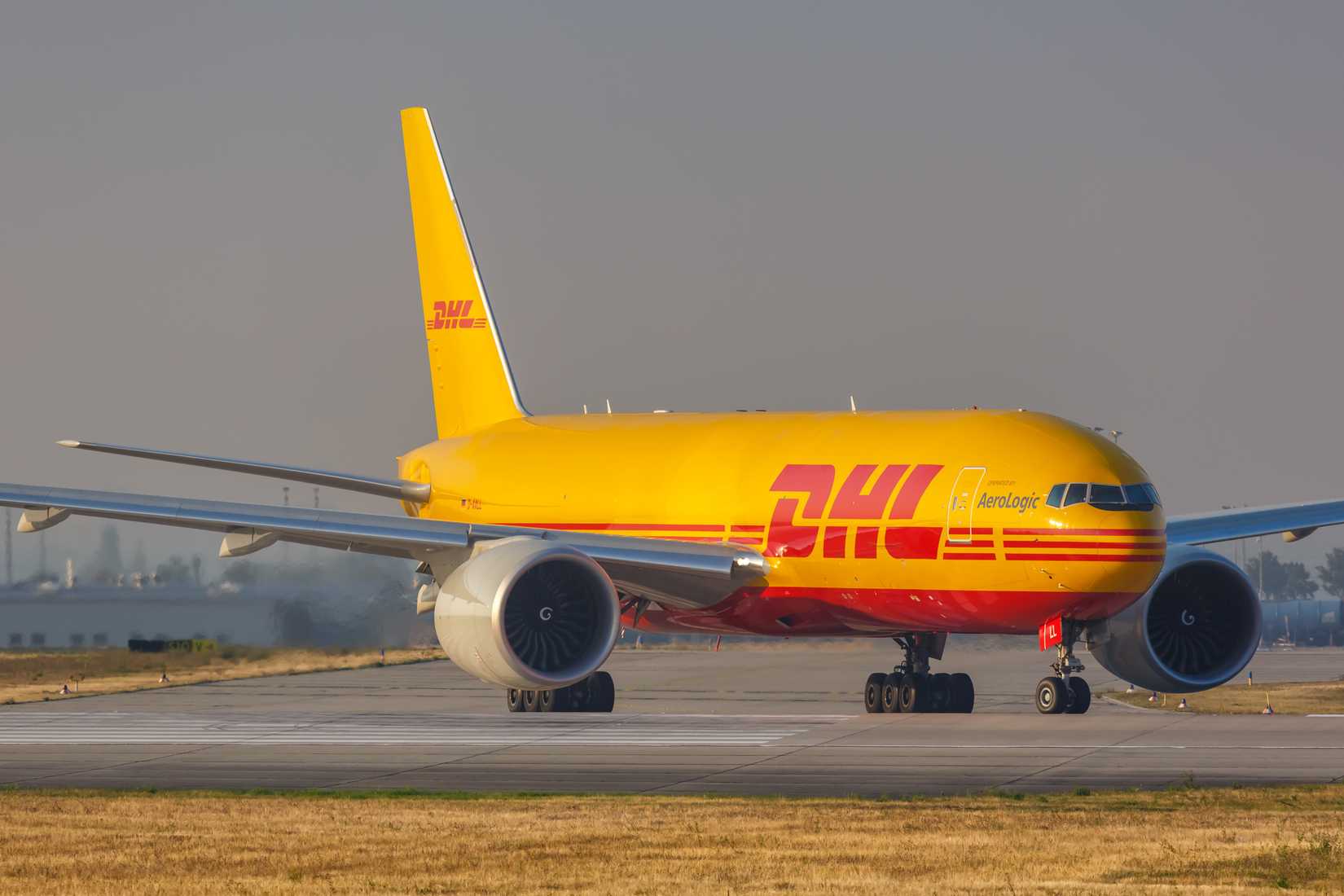
Looking ahead, both the 767 and the 777 freighters will continue to play central, if distinct, roles in air‑cargo as their platforms evolve and as new types enter service. The 767’s strengths are founded on a manageable size, proven systems, and an extensive base of conversion candidates, keeping it highly attractive for passenger‑to‑freighter programs and for specialized missions, including military tankers and logistics aircraft.
Continued KC‑46A production and support work preserve factory know‑how, supplier lines, and parts availability that underpin freighter conversions and sustain long‑term economic viability. That means operators will still find the 767 compelling for express integrators, regional feeders, and niche roles such as outsized cargo or combi adaptations well into the 2030s, where low capital cost, short‑field capability, and fast turnarounds remain commercial advantages.
The 777 family is following a different evolutionary path. The 777F has already set a benchmark for high-capacity, long-range cargo operations; its successor, the 777 8 Freighter (the Boeing 777X derivative), targets substantially improved efficiency through advanced aerodynamics, new composite structures, and next-generation high-bypass engines.
Boeing projects meaningful gains: lower fuel burn, reduced CO₂ per ton mile, and lower operating costs per flight, which, if realized in service, will reinforce the 777’s role as the go-to platform for nonstop intercontinental trunk routes and replacement of four older engine types. Because the 777 8F is aimed at demanding long-haul missions, it will appeal first to flag carriers and large integrators that need high payload and extended range.
In short, the 767’s conversion and defense applications and the 777’s evolution toward the 777-8F together demonstrate a pragmatic path forward for cargo operators: maintain and exploit the strengths of proven platforms today while selectively adopting next-generation types to capture long-term efficiency and environmental benefits.
Environmental Performance And Efficiency

Sustainability is now central to cargo fleet strategy. The 767F’s smaller frame yields a natural advantage on shorter routes, offering lower fuel burn and CO₂ output per trip. Boeing data shows approximately 19% lower emissions per ton-mile compared to legacy trijets like the DC-10F or MD-11F.
The 777F, though much larger, remains a long-range efficiency leader. Its GE90 engines achieve up to 18% lower fuel burn per ton-mile than four-engine freighters such as the 747-400F, while carrying nearly the same payload.
Both aircraft meet ICAO’s latest noise standards and are approved for up to 50% sustainable aviation fuel (SAF) blends. FedEx, Lufthansa Cargo, and Qatar Airways have already completed commercial SAF flights using both types, marking the start of a greener generation of twinjet freighter operations.
The Bottom Line: Two Freighters, One Strategy


The Boeing 767 and 777 Freighters are not rivals; they’re two sides of a carefully engineered strategy that addresses every segment of the global air cargo market. The 767 offers incredible flexibility, cost control, and ease of deployment, serving as the daily backbone for express carriers and regional cargo operators. The 777, by contrast, is Boeing’s long-range heavyweight aircraft that connects continents, underpins global supply chains, and remains the standard for efficiency among high-payload freighters.
Together, they ensure Boeing’s dominance in the freighter market continues into the next decade. The 767F continues to sell well thanks to its proven record and cost efficiency, while the 777-8 Freighter, expected to enter service in the coming years, will extend Boeing’s dominance in the large-twin segment.
For operators, the 777F’s replacement won’t come quickly. Its payload-to-range balance and dispatch reliability make it a benchmark in the industry. Meanwhile, the 767’s production longevity and the ongoing wave of passenger-to-freighter conversions ensure that the type will remain a mainstay of express fleets for at least another decade.
source