



When it comes to the engines powering the world’s most advanced airliners, two names always dominate the conversation: General Electric (GE Aerospace) and Rolls-Royce. Both are synonymous with reliability and quality, something that is vital to producing an industry-leading engine. Yet, behind their shared pursuit of performance and efficiency lie striking differences in design philosophy, technology, and business strategy. In this guide, we’ll explore how each company approaches the challenge of building the future of flight, from the record-breaking GE9X to the ultra-efficient Trent XWB, and what these differences actually mean for airlines, engineers, and passengers alike.
As the aviation industry accelerates toward a future where sustainability and lower operating costs are a priority, engine manufacturers are under unprecedented pressure to innovate accordingly. GE Aerospace and Rolls-Royce have taken divergent yet equally impressive paths to meet these challenges. GE emphasizes raw power, advanced materials, and manufacturing scale. It has been epitomized by the world’s most powerful commercial engine, the GE9X, which is being featured on Boeing latest landmark aircraft, the Boeing 777X. Rolls-Royce, on the other hand, focuses on efficiency, reliability, and sustainability, embodied by the Trent XWB, the most efficient large aircraft engine in service today. Together, these giants define the future of widebody flight, setting new benchmarks for almost every metric.
Power Or Efficiency

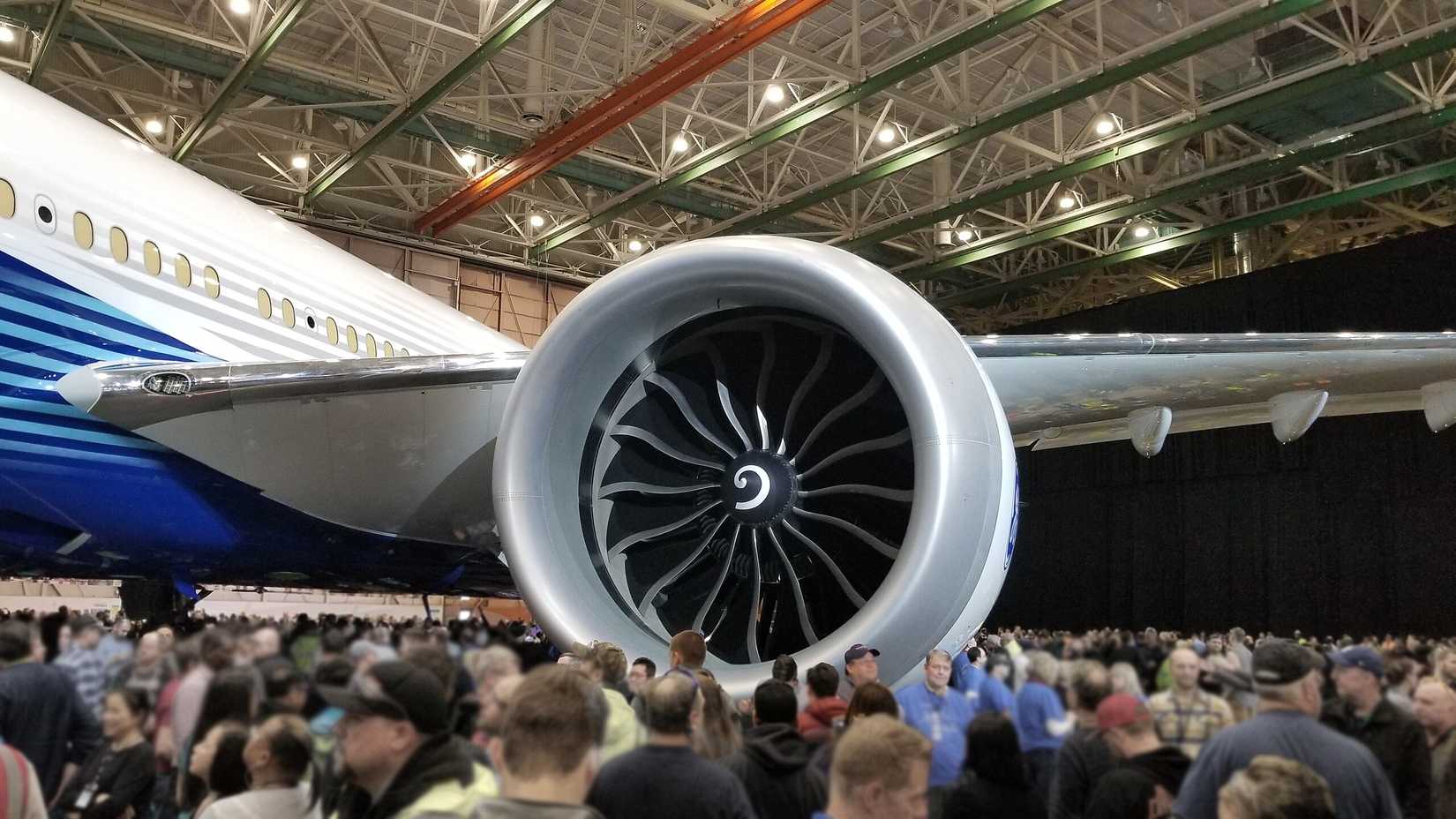
While both GE Aerospace and Rolls-Royce share the same mission of powering the next generation of widebody aircraft, their design philosophies diverge significantly. GE’s approach is rooted in power and durability. Their engines are constantly pushing the limits of thrust, utilizing innovative materials to help deliver the highest performance. Rolls-Royce, by contrast, builds its reputation primarily on efficiency, reliability, and refined engine architecture. What is noticeably different is that Rolls-Royce emphasizes sustainability and smooth operation over brute strength. This difference in philosophy influences not just how their engines perform, but also how airlines choose between them. These key distinguishing factors are what give each manufacturer a competitive edge.
The GE9X, built exclusively for Boeing’s 777X family, embodies GE’s design philosophy of power. With a record-setting 134,300 pounds of thrust, a 134-inch fan diameter, and innovative use of Ceramic Matrix Composites (CMCs), it achieves exceptional performance while maintaining fuel efficiency. GE’s philosophy heavily prioritizes scalability and robustness, ensuring its engines perform reliably even under extreme operating conditions. This was proven during thousands of endurance and dust-ingestion test cycles.
Rolls-Royce’s Trent XWB takes a different path. Purpose-built for the Airbus A350, it achieves up to 25% lower fuel burn and CO₂ emissions compared to older Trent models. Its three-spool architecture and optimized airflow contribute to smoother operation, reduced vibration, and industry-leading 99.9% dispatch reliability, something that is vital in an industry so rooted in safety and reliability. While the GE9X has also achieved this figure, it has only done so in testing and not in actual service. This efficiency-first design helps airlines to minimize operational costs and maximize aircraft availability. On the whole, this illustrates Rolls-Royce’s precision-driven engineering ethos.
Two Is Better Than Three?

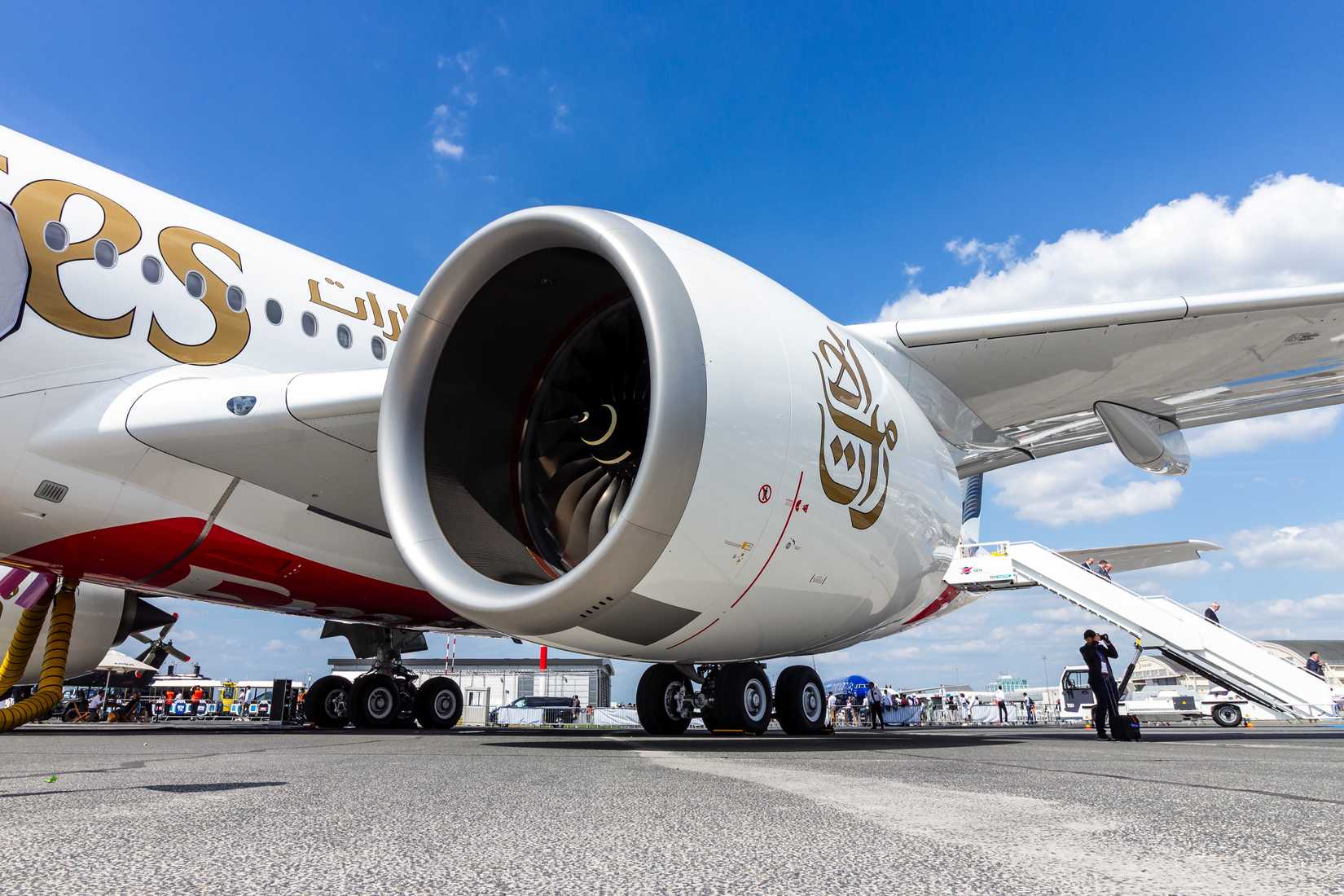
One of the most defining contrasts between GE and Rolls-Royce engines lies in their core mechanical architecture. Rolls-Royce utilizes a three-spool compressor system, while GE follows the two-spool design more common to American manufacturers. This is often overlooked when comparing engines. Typically, power and efficiency are the key comparative metrics; however, spool numbers also play a key role in how an engine operates.
The Rolls-Royce configuration of three spools divides the compressor into Low-Pressure (LP), Intermediate-Pressure (IP), and High-Pressure (HP) sections, each running on independent shafts at optimized speeds. This design keeps the engine cooler and reduces the risk of compressor stall during sudden throttle changes. In contrast, GE’s two-spool engines employ variable stator vanes to prevent stalling, relying more heavily on control systems and material strength to handle rapid power transitions. These differences alone show major differences in how the engines affect the rest of the user aircraft, and so operators keep a close eye on them when deciding which engines to choose.
|
Feature |
Rolls-Royce (Trent XWB) |
GE Aerospace (GE9X) |
|---|---|---|
|
Compressor Design |
Three-spool (LP/IP/HP) |
Two-spool (LP/HP) |
|
Length |
Shorter, more compact |
Longer, higher bypass |
|
Stall Prevention |
Natural anti-stall design |
Uses variable stator vanes |
|
Cooling Efficiency |
Cooler, less thermal stress |
Higher heat tolerance via CMCs |
|
Maintenance |
Lower, due to balanced spools |
Moderate, but excellent durability |
Both architectures have their own upsides. Rolls-Royce’s three-spool design provides smooth, efficient power delivery and simplifies fan-speed optimization. GE’s two-spool setup, on the other hand, allows higher thrust-to-weight ratios and simpler mechanical layouts, which is ideal for very high-thrust applications like the 777X. Ultimately, each represents a valid engineering solution shaped by different market priorities.
The Numbers Behind The Engines

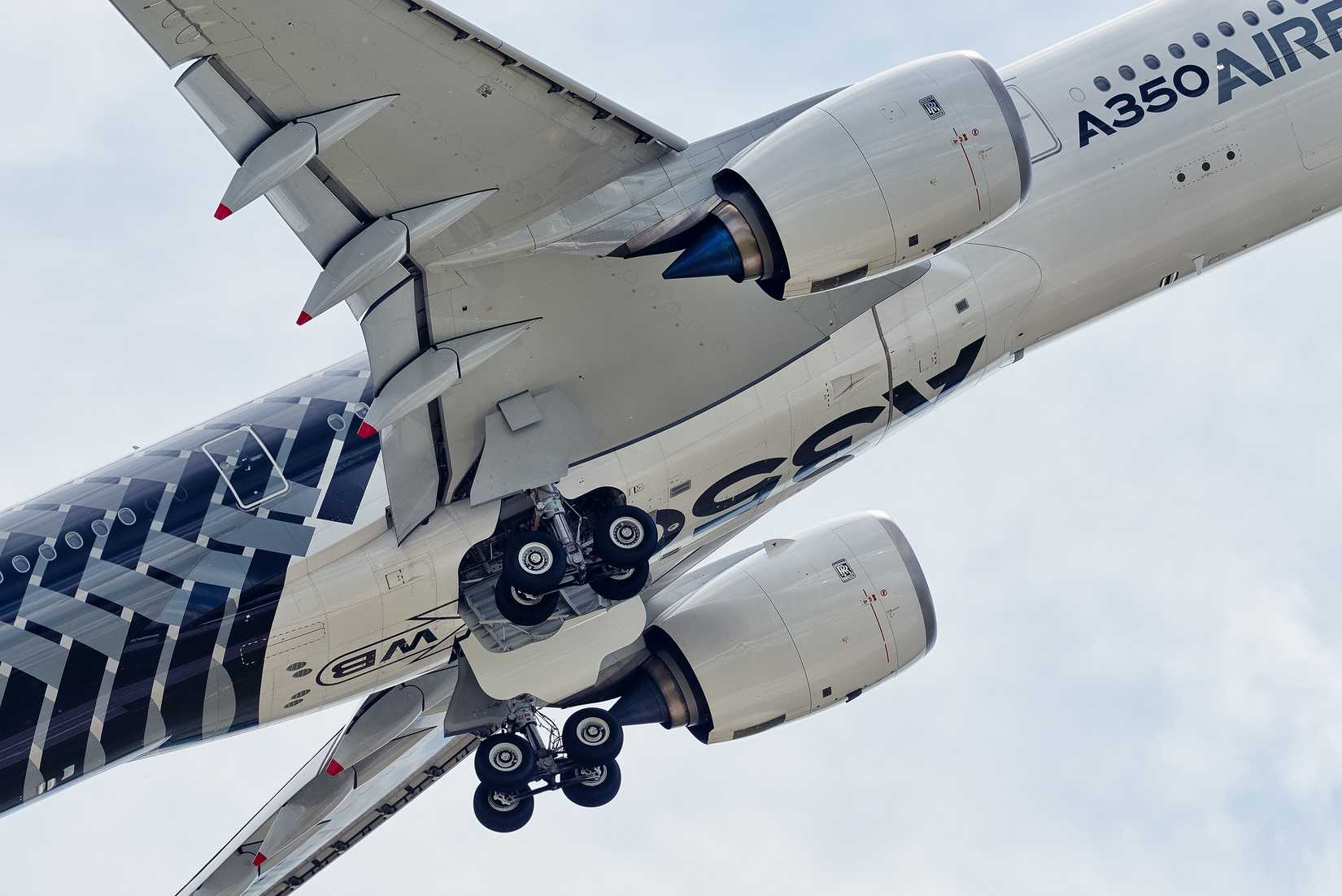
The GE9X currently holds the record as the most powerful commercial jet engine ever built, generating 134,300 pounds of thrust, which amazingly, is enough to lift an entire Airbus A320. Despite its immense power, it improves specific fuel consumption by up to 10% compared to its predecessor, the GE90. While it is clear that power is the secret to GE’s success, they haven’t left efficiency behind, ensuring their engines can keep up with the growing pressure to increase engine efficiency across the industry.
On the other hand, Rolls-Royce is very clearly leading efficiency benchmarks, opting for this rather than beating thrust records. The Trent XWB-97, powering the Airbus A350-1000, provides 25% lower fuel burn than previous Trent engines and offers $6.4 million in annual fuel savings per aircraft. In today’s aviation age, where keeping costs low by any means is essential, statistics such as these become a key selling point for manufacturers. Its performance, balance of power, and economy appeal to airlines prioritizing long-term profitability, which is why we are seeing so many orders worldwide for the A350.
|
Metric |
GE9X (Boeing 777X) |
Trent XWB (Airbus A350) |
|---|---|---|
|
Max Thrust |
134,300 lbf |
97,000 lbf |
|
Fuel Efficiency vs. Previous Gen |
10% improvement (GE90) |
25% improvement (older Trent) |
|
Emissions |
50% below limits |
25% CO₂ reduction |
|
Dispatch Reliability |
99.9% in testing |
99.9% in service |
|
Time on Wing |
5 years average |
6 years average |
Rolls-Royce focuses on proving the reliability of its in-service engines, gathering real-world flight data from over 60 customers operating more than 2,600 Trent XWB engines. This extensive operational record demonstrates Rolls-Royce’s success in achieving low maintenance and consistent performance across a diverse range of environments. Potential customers will be aware of such figures, proving that the statistics are key decision-making factors for many who choose to opt for the A350 for their future.
The Making Of The Future

Another key differentiator between GE and Rolls-Royce lies in their production and aftercare ecosystems. GE Aerospace’s massive manufacturing network, which utilizes sites in Durham, North Carolina, and Peebles, Ohio, enables high-volume output and seamless alignment with Boeing’s 777X assembly. For GE, this setup provides them with full integration into the assembly line of their primary customer.
Rolls-Royce, meanwhile, emphasizes long-term partnerships through its TotalCare service model, offering customers benefits such as end-to-end engine management, predictive maintenance, and cost-per-hour agreements that help airlines manage expenses more efficiently. This approach enables Rolls-Royce engines to fly longer between overhauls.
Notably, GE complements its manufacturing scale with a $1 billion investment in MRO expansion, thereby enhancing global support and launching a lease pool program for quick engine swaps. Together, these efforts ensure operational readiness and minimal downtime for airline customers, which has been a key appealing factor for the company.
Ensuring Dominance


Beyond engineering, market strategy defines how GE and Rolls-Royce compete. Both companies maintain exclusive supply relationships with major aircraft families. Exclusivity within an aircraft family range allows each company to gain a foothold in a specific segment of the aviation market. Whether it’s a specific class or even an entire manufacturer, total dominance over these aircraft groups can be a major strategic advantage.
Rolls-Royce is the sole supplier for the Airbus A350 (Trent XWB), A330neo (Trent 7000), and A340-500/600 (Trent 500), securing dominance in the Airbus widebody segment. GE Aerospace holds exclusivity for the Boeing 777 series and will remain the single supplier for the 777X via the GE9X. There are, however, some notable shared aircraft types, such as the Boeing 787 and Airbus A380. Both aircraft have a fairly even split between GE and Rolls-Royce, with other key engine manufacturer Pratt & Whitney also involved.
|
Aircraft Family |
Engine Manufacturer |
Market Share / Exclusivity |
|---|---|---|
|
Airbus A350 |
Rolls-Royce (Trent XWB) |
100% Exclusive |
|
Boeing 777X |
GE Aerospace (GE9X) |
100% Exclusive |
|
Boeing 787 |
GE (60%) / Rolls-Royce (40%) |
Shared |
|
Airbus A380 |
Rolls-Royce (40%) / GE+P&W (60%) |
Shared |
|
A330neo |
Rolls-Royce |
100% Exclusive |
This exclusivity has a profound impact on the global market. Rolls-Royce dominates European-built Airbus airframes, while GE’s powerhouses rule U.S. long-range aircraft. Both have effectively carved out loyal partnerships with the world’s leading OEMs, which, critically, has reduced direct head-to-head competition.
What’s Next?

Both manufacturers are pushing the boundaries of what modern turbofans can achieve in terms of sustainability and design. The GE9X is feature-rich, featuring CMC components, advanced composite fan blades, and a 10:1 bypass ratio that reduces emissions and noise to record lows. It is an engine pushing boundaries —and for its equally innovative user, the 777X, a perfect companion for dominating the new era of long-haul travel.
Meanwhile, Rolls-Royce’s Trent XWB continues evolving with incremental fuel-burn improvements and technology upgrades, already delivering 15% better efficiency than the first-generation Trent. The company is also investing heavily in sustainable aviation fuel (SAF) compatibility and hybrid propulsion research, preparing for the next era of clean flight. Efficiency and sustainability are at the very core of Rolls-Royce’s future vision.
Both GE and Rolls-Royce are future-proofing aviation. GE through material science and engine scale, and Rolls-Royce through efficiency and digital intelligence. Their contrasting approaches ensure a balanced global ecosystem where innovation thrives across multiple fronts, securing a more efficient, quieter, and sustainable sky for decades to come. Innovation is ongoing, and so, how long will it be before both manufacturers take their next steps beyond their current flagship models?
source