


Over ten years ago, 

In this article, we will take a closer look at the Boeing 737-8ERX and establish what happened to the aircraft. We will also consider what would have been the 737-8ERX’s closest rival, the Airbus A321XLR, in the context of the wider commercial aviation industry.
A Higher Maximum Take-Off Weight & Longer Range


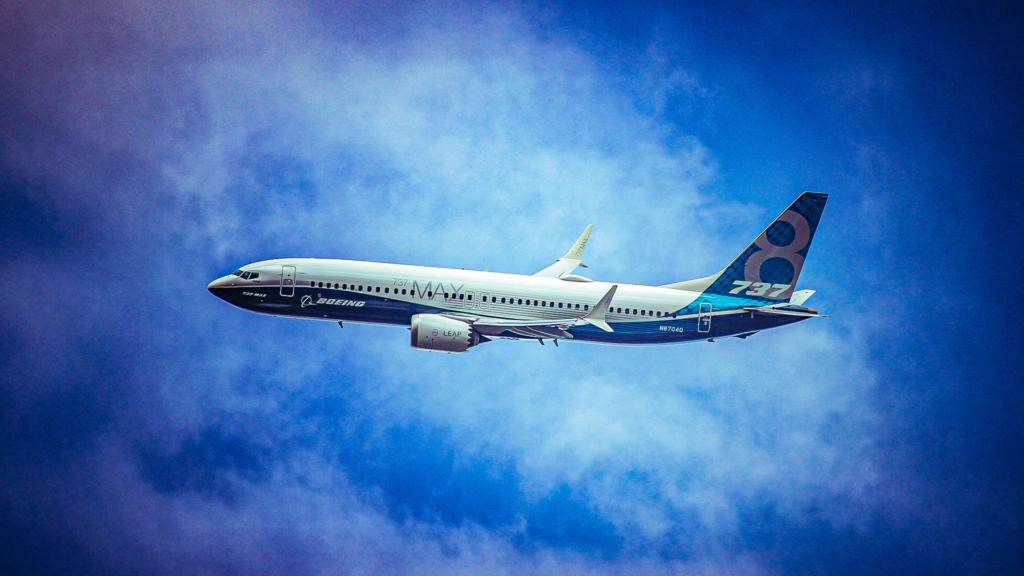
The 737-8ERX was based on the design of the immensely popular Boeing 737 MAX 8, but with a higher Maximum Take-Off Weight of 88.3 tons, compared to the 82.2 tons on the 737 MAX 8. Maximum Take-Off Weight is the maximum weight at which an aircraft is certified to take off, as defined by the manufacturer, and it includes the aircraft’s empty weight along with fuel, passengers, cargo, and crew.
This limit exists to ensure safe aircraft performance and structural integrity during takeoff and throughout the flight. Exceeding an aircraft’s MTOW can lead to reduced performance or even structural failure.
|
Aircraft |
Range |
|---|---|
|
Airbus A321 |
3,200 miles |
|
Airbus A321LR |
4,000 miles |
|
Airbus A321XLR |
5,400 miles |
|
Boeing 737-800 |
2,930 miles |
|
Boeing 737 MAX 8 |
3,550 miles |
|
Boeing 737 MAX 9 |
3,850 miles |
Boeing was able to achieve this increased Maximum Take-Off Weight on the 737-8ERX by modifying the airframe to incorporate the wings, landing gear, and central fuselage section from the larger 737 MAX 9, in addition to an extra fuel tank. The result was an aircraft with a significantly extended range of up to 4,603 miles, around 900 miles more than the 737 MAX 8. The table above compares the typical range of various narrowbody aircraft currently in commercial service.
What Happened To The Boeing 737-8ERX?
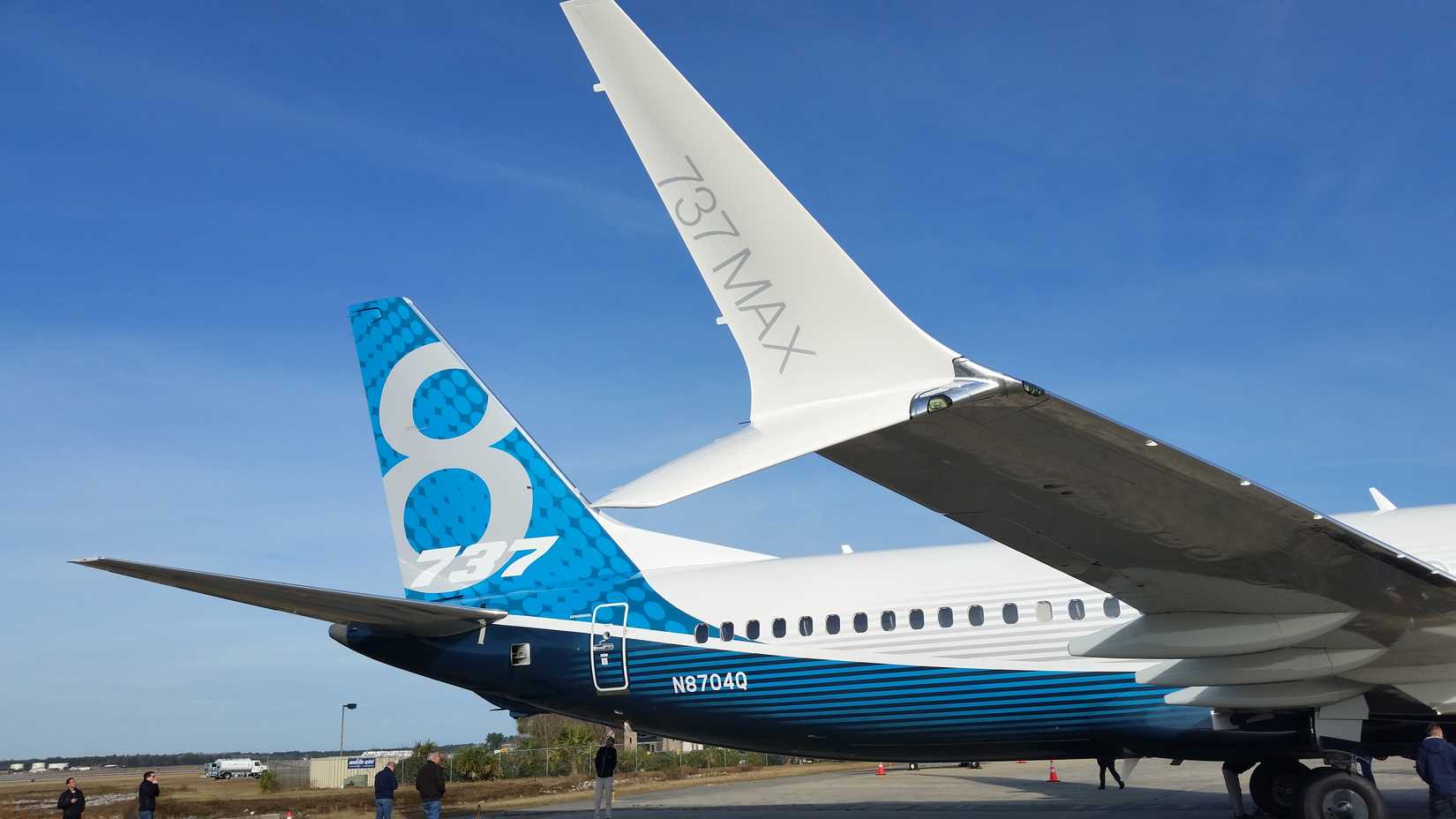
The Boeing 737-8ERX was originally due to enter commercial service in the early 2020s. However, that did not happen, so where is the aircraft now? As far as we know, no prototype was ever made of the Boeing 737-8ERX, with the aircraft never making it out of the design studio. Throughout Boeing’s history, the manufacturer has explored numerous conceptual studies, some of which have been made public, and others likely kept confidential.
The 737-8ERX is just one example of these. However, unexpected challenges often emerge in the final stages of aircraft design, preventing certain variants from advancing, which is likely what happened in the case of the 737-8ERX. That said, Boeing has continued to outline its commitment to studying new concept aircraft and to making use of the latest aircraft technologies.
Unable To Compete With The Airbus A321XLR
Although there has been no official word from Boeing, the most likely outcome is that the US manufacturer has simply decided not to proceed with the 737-8ERX. Ongoing problems with the Boeing 737 MAX series of aircraft may have caused concern, but the 737-8ERX would have also struggled to establish itself in an ever-more crowded market.
The Boeing 737-8ERX would have had a slightly longer range than the Airbus A321LR, although it would have been able to carry fewer passengers, with a capacity of around 160 passengers in a typical two-class configuration. This put the aircraft at a significant disadvantage compared to other long-range narrowbodies.
As such, it was not as much of a commercially attractive option for airlines around the world. It could also be argued that the arrival of the Airbus A321XLR likely put a final nail in the coffin of the Boeing 737-8ERX.
All About The Airbus A321XLR


As the aircraft that would have been the Boeing 737-8ERX’s closest competitor, let’s take a look at the Airbus A321XLR. The A321XLR is arguably the most ambitious variant of the A321neo family, and represents a major step forward in narrowbody aircraft design and capabilities. Launched in 2019, the A321XLR was developed in response to growing airline demand for an aircraft that could serve long-haul routes with lower operating costs.
This is particularly pertinent on thinner routes where widebody aircraft would be inefficient and offer excess capacity. With a range of 5,400 miles, the A321XLR extends the possibilities of narrowbody ops into routes traditionally operated by widebodies such as the Boeing 747 or Airbus A330. What makes the A321XLR unique and popular with airline customers around the world is its ability to combine long-range performance with the economics of a narrowbody aircraft.
One of the aircraft’s key features is its rear center tank that allows it to hold more fuel than earlier A321 models, without sacrificing cargo space. Airbus also made structural reinforcements, including a strengthened landing gear and modifications to the wing and fuel systems, to support the increased Maximum Take-Off Weight required for longer flights. These changes allow the aircraft to fly longer sectors, such as New York John F. Kennedy International Airport (JFK) to Rome Fiumicino Airport (FCO).
From a passenger perspective, the Airbus A321XLR offers many of the comforts found onboard widebody aircraft, with the aircraft featuring Airbus’ latest cabin design, made up of larger overhead storage bins, improved lighting, and quieter interiors. For long-haul travel, this enhanced cabin environment is critical in helping airlines deliver a competitive onboard experience, especially on flights lasting seven to nine hours.
As airlines concentrate more on sustainability and look to reach carbon net-zero as soon as possible, fuel efficiency is also another key element of modern aircraft design. Compared to older generation aircraft, the Airbus A321XLR offers up to 30% lower fuel burn per seat, which means lower operating costs and reduced carbon emissions. Combining all these factors, the A321XLR looks set to be a game-changer as more airlines welcome the aircraft into their fleets.
The Largest Operators Of The Airbus A321XLR
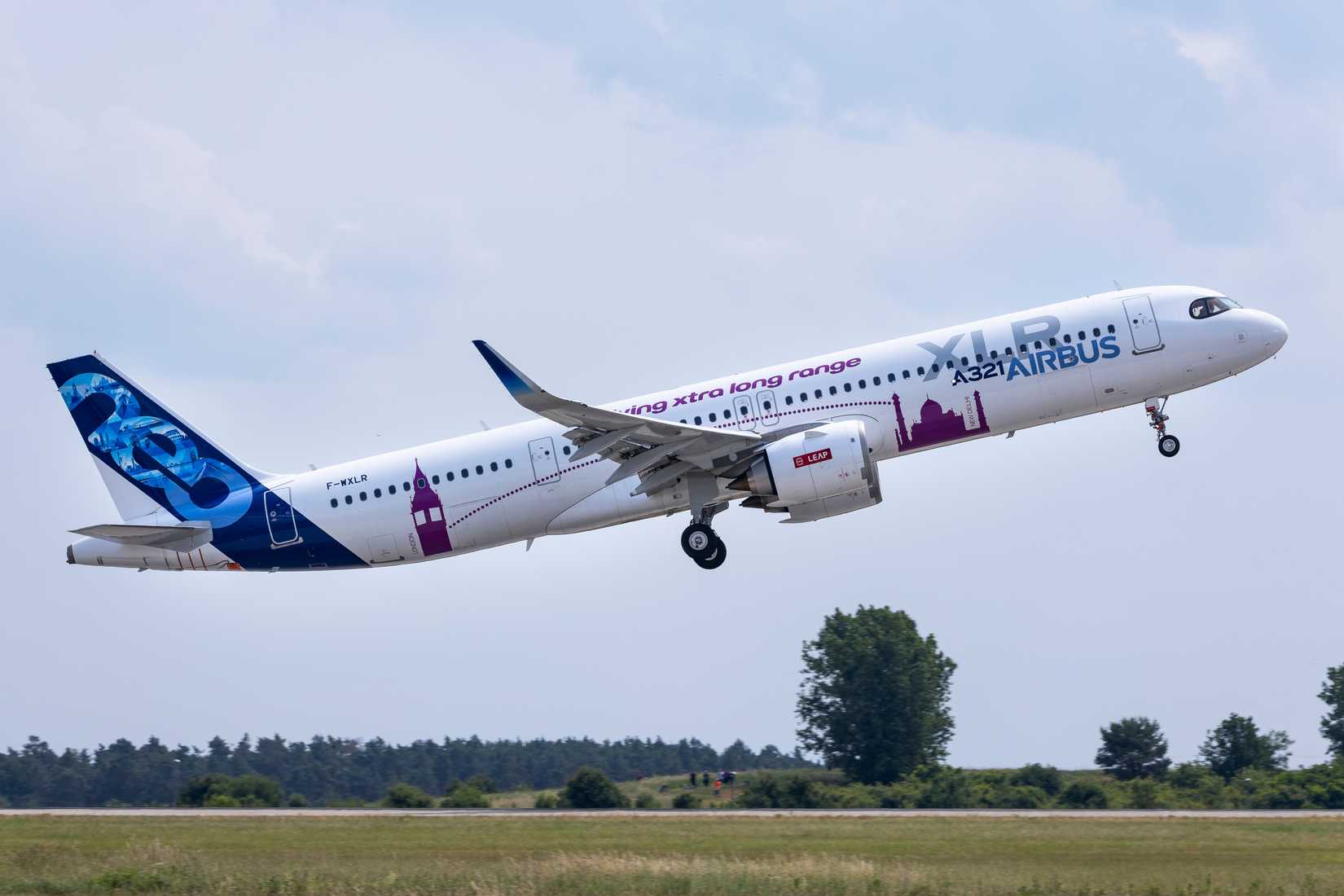
As of October 2025, only four Airbus A321XLRs have been delivered by the European manufacturer. Two of these are operated by Aer Lingus, while Iberia and Qantas currently have just one each.
|
Departure Airport |
Arrival Airport |
Airline |
|---|---|---|
|
Madrid Barajas Airport (MAD) |
Boston Logan International Airport (BOS) |
Iberia |
|
Madrid Barajas Airport (MAD) |
Fortaleza Pinto Martins International Airport (FOR)* |
Iberia |
|
Dublin Airport (DUB) |
Nashville International Airport (BNA) |
Aer Lingus |
|
Dublin Airport (DUB) |
Indianapolis International Airport (IND) |
Aer Lingus |
|
Sydney Airport (SYD) |
Perth Airport (PER) |
Qantas (launching soon) |
The table above shows some examples of routes that are operated by the A321XLR, per flight tracking data from Flightradar24. These serve to showcase the aircraft’s range and versatility.
|
Ranking |
Airline |
Number In Fleet |
Number On Order |
|---|---|---|---|
|
1 |
IndiGo |
– |
69 |
|
2 |
American Airlines |
– |
50 |
|
3 |
United Airlines |
– |
50 |
|
4 |
Wizz Air |
– |
47 |
|
5 |
Qantas |
1 |
35 |
|
6 |
AirAsia X |
– |
30 |
|
7 |
Air Canada |
– |
26 |
|
8 |
Iberia |
1 |
13 |
|
9 |
Aer Lingus |
2 |
4 |
|
10 |
Peach Aviation |
– |
3 |
In total, Airbus has received more than 500 orders for the A321XLR. The table above details some of the airlines with the largest outstanding orders for the type.
The Boeing 737 MAX Series


Had it ever materialized, the 737-8ERX would have formed part of the 737 MAX series. The 737 MAX represents the latest generation of the 737 family, designed to offer improved fuel efficiency, range, and passenger comfort compared to its predecessors. Launched in 2011 and entering service in 2017, the 737 MAX was developed in response to increasing competition from the A320neo family and growing demand for more cost-effective, environmentally friendly narrowbody aircraft.
One of the key innovations found on the Boeing 737 MAX is its CFM International LEAP-1B engines, which are larger and more efficient than the engines used on previous 737 models. These engines help reduce fuel consumption by approximately 14% compared to the older 737 Next Generation (NG) series. The 737 MAX family of aircraft is made up of four main variants: the MAX 7, MAX 8, MAX 9, and MAX 10. Currently, however, only the 737 MAX 8 and 737 MAX 9 are in service.
The latest data from ch-aviation shows that today, 
It is difficult to see where the Boeing 737-8ERX would have fitted into the crowded narrowbody aircraft marketplace, particularly when competing against the likes of the Airbus A321LR and A321XLR. As such, the US manufacturer has likely decided to concentrate its efforts on other programs instead, such as the upcoming Boeing 777X.
source