


For much of the jet age, long-haul flying was the exclusive domain of widebody aircraft. That model is now changing as airlines increasingly rely on long-range narrowbodies to serve thinner routes that could not previously support nonstop service. Advances in aircraft efficiency and range are allowing carriers to prioritize point-to-point connectivity over sheer capacity.
The Boeing 737 MAX and Airbus A321XLR sit at the center of this shift, enabling airlines to expand networks while managing risk and operating costs. In 2026, a growing number of new routes will demonstrate how single-aisle aircraft are reshaping transatlantic and long-haul travel.
United Airlines

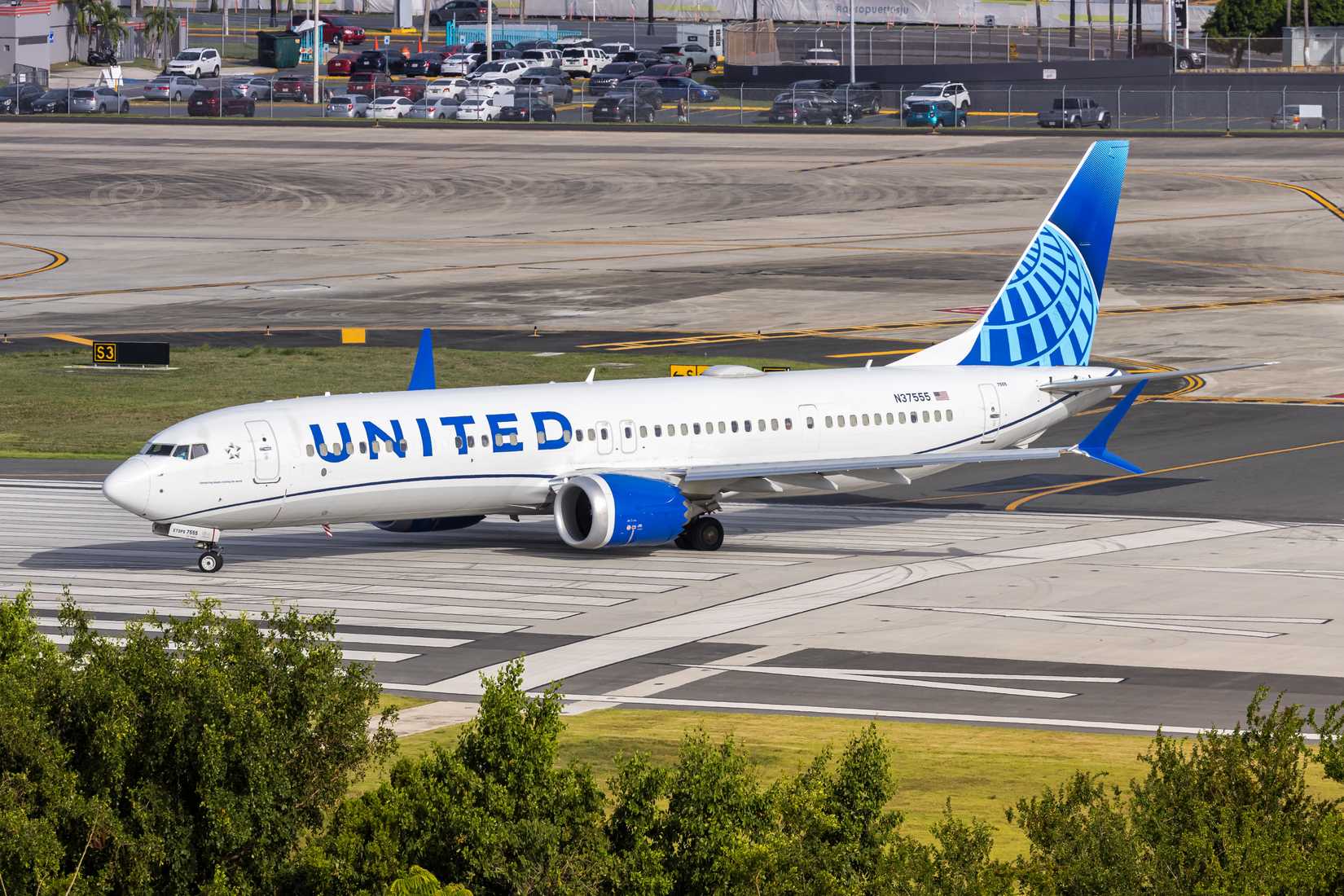


These routes highlight United’s confidence in the MAX for shorter transatlantic missions where demand supports single-aisle capacity. Neither route offers lie-flat seating, instead featuring a two-cabin configuration with Economy Plus and standard economy. Both Glasgow and Santiago de Compostela represent markets where United’s demand is high but not enough volume to justify widebody aircraft.
In Glasgow’s case, the route also marks United’s return to the city after halting service in 2019, complementing its year-round Edinburgh operation. Santiago de Compostela becomes one of the most notable additions, as United will be the only airline offering nonstop service from the US to the Galician city.
While the 737 MAX headlines some of the expansion, United is pairing these additions with a broader international push in 2026. New longer routes to Split, Croatia, and Bari, Italy, will be flown with the Boeing 767-300ER, offering Polaris business class and targeting higher-demand leisure markets. The airline will also restore and retain a wide range of seasonal routes introduced in recent years, including service to Nuuk, Greenland, and Ulaanbaatar, Mongolia, while adding frequency on key long-haul corridors such as Israel and South Korea.
For United, the growing use of the Boeing 737 MAX on transatlantic routes also signals a gradual shift away from the Boeing 757 onto lower-demand, niche international services. The 757 has long been a workhorse for United on thinner North Atlantic routes, but rising operating costs and aging airframes mean the type is approaching retirement. The 737 MAX 8 delivers substantially better fuel efficiency and lower trip costs, though it cannot match the range and capacity of the 757.


Will United Ever Catch Up To Delta In The Premium Airline Race?
Premium passengers have been behind the bulk of profit growth for commercial airlines in the years following the COVID-19 pandemic. Passengers who are willing to spend extra for a little bit of comfort, especially when traveling for vacation, have increasingly become a critical piece of any major airline’s financial picture. The traditional market segment of premium travelers has now shifted to include more than just corporate travelers. United Airlines and Delta Air Lines are the two US carriers currently duking it out at the top of the premium market, offering impressive and comfortable business class products. Nonetheless, United Airlines remains notably behind in terms of premium revenue generation and overall customer reviews. What do you think? Will United ever catch up to its rival?
Air Europa

Air Europa is continuing to build out its Boeing 737 MAX 8 network, with several new routes filed for 2026 as the type becomes a core part of its short- and medium-haul fleet. According to new schedule filings, the Madrid-based carrier plans to deploy the MAX on routes connecting Madrid with Frankfurt, Munich, London Gatwick, and multiple destinations in Spain’s Canary Islands.
These additions reflect Air Europa’s strategy of using the MAX 8 to improve efficiency on dense European trunk routes as well as high-volume leisure markets. All routes will be operated from Madrid. Several of the newly announced routes are set to launch early in 2026, with Madrid to London Gatwick beginning as soon as January 10, followed by Frankfurt later that month. Munich service is planned to start in April, while flights to Gran Canaria and Tenerife North are scheduled to begin in May.
These 2026 network additions build on previously announced plans for the 737 MAX 8’s entry into service in mid-2025. Earlier filings show Air Europa introducing the aircraft on routes from Madrid to Amsterdam and Brussels in June 2025, followed by Paris Orly later that year.
Air Canada


The 737 MAX plays a central role in connecting Canada with niche European markets that would be difficult to support with widebody aircraft. Flights to Nantes and Ponta Delgada both target markets with strong leisure traffic rather than premium-heavy demand, making the MAX’s lower trip costs particularly attractive.
The Montreal to Nantes route will become Air Canada’s longest 737 MAX service by distance, underscoring how the aircraft is being pushed deeper into the transatlantic space. Alongside the MAX deployments, Air Canada will introduce its Airbus A321XLR on routes such as Montreal to Berlin, further highlighting the airline’s commitment to single-aisle transatlantic growth.
By combining the range of the A321XLR with the efficiency of the 737 MAX, Air Canada is adding destinations while maintaining flexibility in a competitive transatlantic market. The strategy also reinforces a broader industry trend where narrowbodies are increasingly shaping the next wave of long-haul route development.

What Would Be An Ideal Replacement For The Boeing 737 MAX?
The Boeing 737 MAX has been one of the most troubled commercial aircraft families of the modern era. However, airlines still buy these jets and fly them because they work (airlines like Southwest are particularly reliant on them), and they have largely overcome their previous safety issues.
With that being said, eventually, these twinjets will have to be retired, so the question is, what’s the best replacement for them? Perhaps the long-awaited Boeing 797 could fill the gap? Elsewhere, might Airbus be making a new narrowbody, or will Embraer’s proposed jet work better? Share your thoughts in the comments!
This is user-generated content. The views and opinions expressed here are not necessarily those of Simple Flying.
A321XLR

Longhaul narrowbody travel is becoming a more common feature of airline route planning, enabled by newer aircraft such as the Airbus A321XLR and the Boeing 737 MAX. These aircraft give airlines the flexibility to serve longer routes with lower trip costs, making it easier to launch nonstop service in markets that previously required connections.
The combination of extended range, lower fuel burn, and right-sized seating has made narrowbodies an attractive tool for transatlantic expansion. As a result, passengers are now seeing nonstop routes between secondary cities that were previously unreachable without a connection.
The Airbus A321XLR sits at the center of this shift, allowing airlines to fly more than 4,700 nautical miles with a single-aisle aircraft. Carriers such as Air Canada, Iberia, and Aer Lingus are deploying the type to reach European markets from North America that would otherwise be marginal with widebodies.
The aircraft’s range allows airlines to stretch deeper into the Atlantic while maintaining competitive economics, even with premium cabins onboard. Its growing adoption signals a longer-term structural change in how airlines think about long-haul route planning.
Alongside the XLR, airlines are also pushing the limits of the Boeing 737 MAX on transatlantic missions. Alaska Airlines’ newly announced seasonal route between Seattle and Reykjavík, launching in May 2026, will become the longest nonstop 737 flight operated by a U.S. carrier. Covering 3,622 nautical miles (6,707 km), the route demonstrates how airlines are increasingly comfortable using narrowbody aircraft on flights approaching eight hours.
Take Away

The new Boeing 737 MAX routes coming online in 2026 highlight how airlines are rethinking fleet and network strategy. Rather than concentrating capacity on a limited number of major hubs, carriers are using narrowbodies to open nonstop routes between city pairs that once required connections. This approach allows airlines to better match supply with demand while expanding geographic reach.
At the same time, the rise of long-haul narrowbody flying reflects a permanent structural change rather than a temporary trend. With aircraft like the 737 MAX and A321XLR proving viable on increasingly long sectors, airlines are likely to continue moving away from older widebody and mid-size aircraft on lower-demand routes. For travelers, this means more nonstop options and greater network diversity, even if it sometimes comes at the expense of traditional widebody comfort.
source