


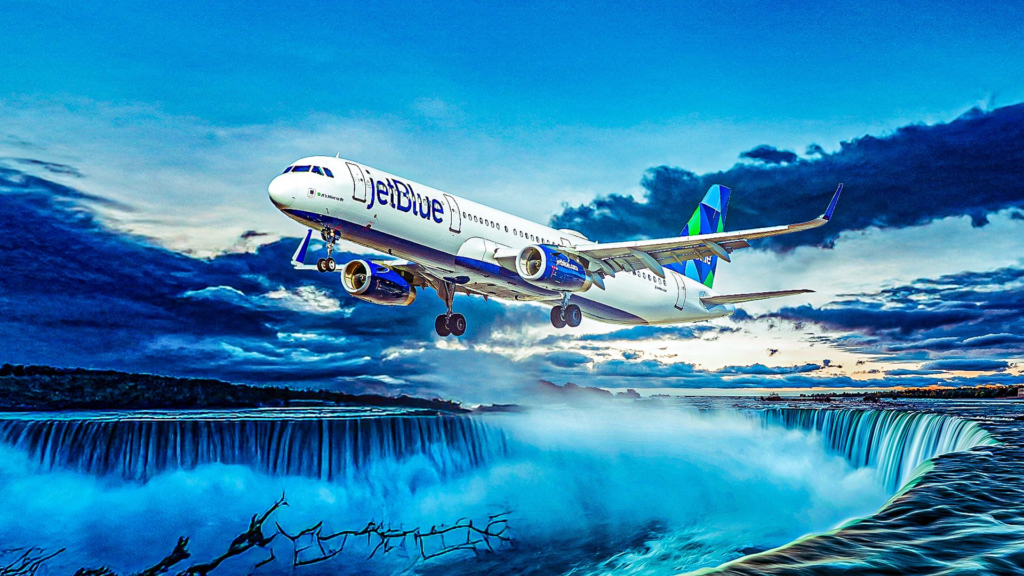
New York-based hybrid carrier JetBlue is one of the most influential airlines in the modern commercial aviation industry in the US. While not as established as low-cost giant Southwest Airlines or blessed with such a huge fleet as the ‘big three’ US legacy carriers (American Airlines, Delta Air Lines, and United Airlines), it forms a crucial part of the American airline ecosystem. Today, it flies an all-Airbus fleet.
While JetBlue’s current fleet is restricted to aircraft from just three Airbus families (A320ceo, A320neo, and A220), it still offers considerable operational diversity, which reflects the varied nature of the airline’s route network. There has been particular growth on this front in the last few years in particular, following the addition of transatlantic flights to Europe. With this in mind, let’s examine JetBlue’s fleet.
The Airbus A320ceo Series

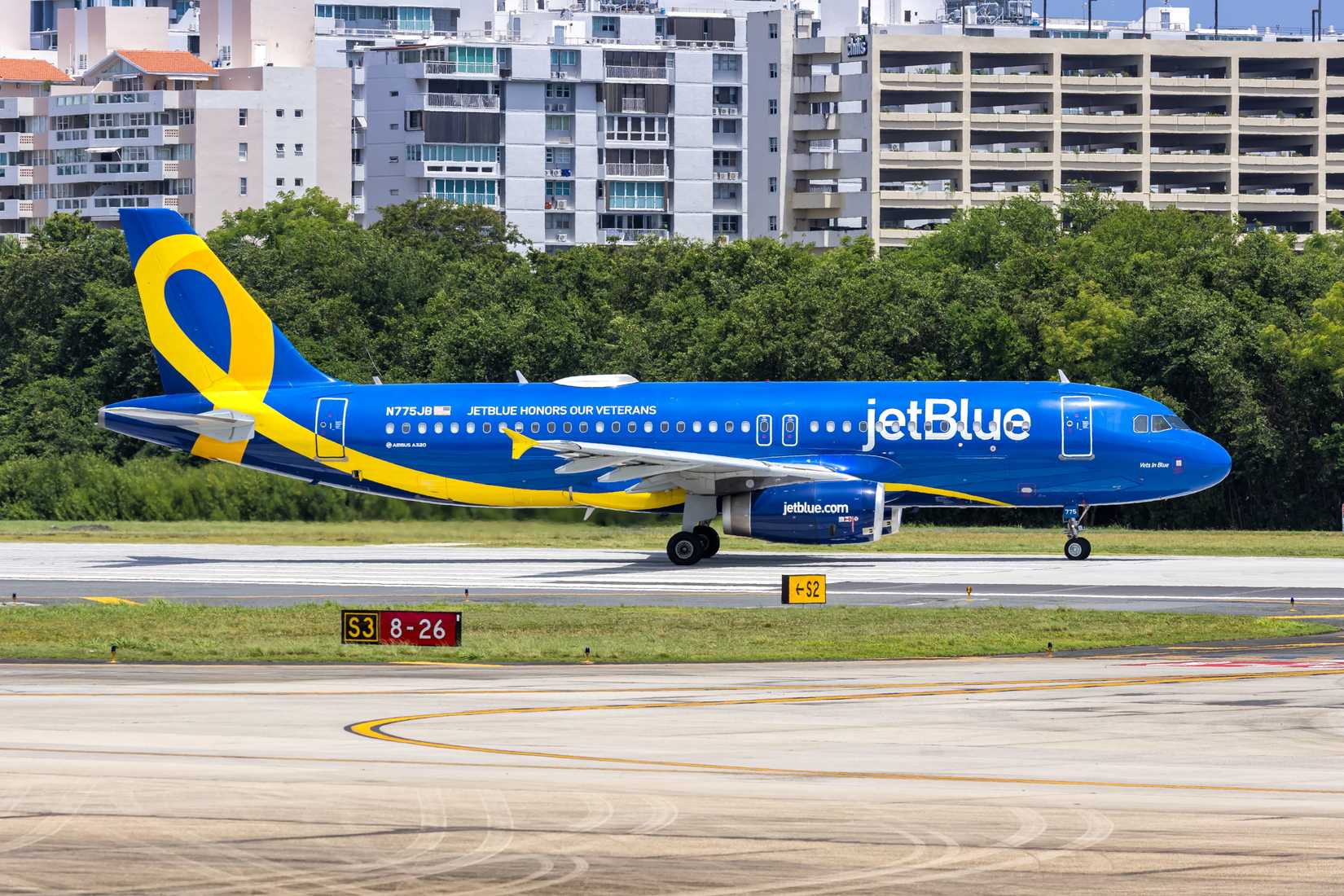
The oldest aircraft in JetBlue’s fleet come from the Airbus A320ceo family, with this series’ presence at the airline taking the form of two different variants. The most numerous of this is the Airbus A320-200, which, with 130 examples present, accounts for almost half of the carrier’s current fleet numbers. According to data from ch-aviation, these twinjets are 20.2 years old on average, and have two layouts.
Indeed, aeroLOPA shows that, while all of these aircraft have all-economy configurations, some have 150 seats, while others have 162. JetBlue also flies 63 A321-200s with an average age of 9.3 years old, with these twinjets sporting either a one-class 200-seat layout or 159 seats across two classes. Last month, JetBlue became an all-Airbus carrier following its last Embraer retirement, when it explained that:
“The E190 was instrumental in our early years and proved to deliver on critical connectivity in short-haul markets, allowing us to grow into new regions, especially in our New York and Boston focus cities.”
The Airbus A320neo Series


On the newer end of the age scale, much of JetBlue’s recent growth has been directly catalyzed by the addition of new narrowbody twinjets from the next-generation Airbus A320neo series. The carrier’s models of choice from this particular family of single-aisle aircraft are the A321neo and A321LR, of which it respectively has 28 and 11 examples at its disposal, with these aged 4.3 and 2.4 years on average.
As far as the Airbus A321neo is concerned, JetBlue also has outstanding orders for another 24 units of this particular model, which will eventually bring its total sub-fleet size for the variant to 52 examples. Much like its older A321-200s, these twinjets have either 200 economy seats or a two-class layout, with the latter configuration consistsing of 16 Mint business class suites and 144 economy class seats.
Meanwhile, JetBlue’s Airbus A321LRs, of which it also has another nine examples on order for an eventual total sub-fleet size of 20 aircraft, have an even lower-density configuration, which reflects their usage on premium-heavy transatlantic routes to destinations in Europe. Indeed, there are just 24 Mint business class and 114 economy seats onboard. Going forward, JetBlue also has 13 Airbus A321XLRs on order.
The Airbus A220 Series

Now that JetBlue has fully withdrawn its fleet of 100-seat Embraer E190 regional twinjets from service, its smallest aircraft going forward will be the Airbus A220-300. These modern five-abreast narrowbodies are fitted with 140 economy class seats, of which 30 have four inches of extra legroom.
According to ch-aviation, JetBlue’s 54 examples of the Airbus A220-300, of which 50 are currently listed by the site as being achive while three are in storage and one is undergoing maintenance, are just 1.9 years old on average. It has outstanding orders for 46 more, so will eventually fly 100.
As the youngest aircraft in JetBlue’s fleet, guests who travel on board its Airbus A220-300s benefit from a range of modern passenger experience innovations. For example, in-seat power is available with universal AC, USB-A, and USB-C outlets between seats, while passengers can use ViaSat-2 satellite WiFi free of charge. Inflight entertainment comes in the form of the Thales AVANT IFE system.
source