


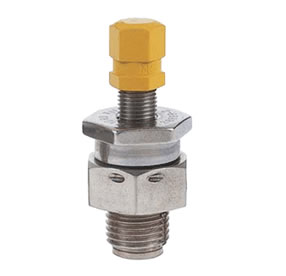
When researching components for pressurized aircraft systems, you may come across air valves. They are found in nearly all modern airplanes. Pressurized systems, such as oleo-pneumatic struts, use air valves to regulate their pressure. For a better understanding of air valves and how they are used in airplanes, keep reading.
What Are Air Valves?
Air valves are mechanical devices that control the flow of air or gas. They allow air or gas to enter or escape a pressurized system in a controlled manner.
How Air Valves Work
You can find air valves in different styles, but most rely on a spring-loaded core to control the flow of air or gas. When pressure is applied, the spring-loaded core will open. When pressure is released, the core will close.
Air or gas — typically nitrogen gas — enters the pressurized system through the air valve. The spring-loaded core prevents the system from leaking after achieving the desired pressure. Pressure can also be reduced from the system via the air valve.
Common Features of Air Valves
Many air valves are threaded. As shown in the photo above, they feature a threaded stem for secure installation. You can install them by twisting them into a threaded hole connected to the pressurized system.
In addition to a threaded stem, many air valves feature lockwire holes. Lockwire holes are small holes used for lockwire. You can run lockwire through these holes during installation to reinforce the air valve so that it doesn’t loosen over time.
While available in different sizes, air valves are machined to fine tolerances. Their strict design specifications ensures a tight and reliable seal.
Because they are designed to contain pressurized air or gas, air valves are made of high-strength materials, such as stainless steel. This allows them to withstand significant pressure — typically around 3,000 to 5,000 pounds per square inch (PSI).
How Airplanes Use Air Valves
One of the most common uses for air valves in airplanes is oleo-pneumatic struts. These landing gear assemblies combine hydraulic fluid and compressed nitrogen gas to absorb impact during landing. Air valves allow technicians to inflate the strut with nitrogen, adjust the pressure for dampening, and check the pressure during maintenance.
Air valves are also used in pneumatic reservoirs. These storage tanks are designed to supply pressurized air to various systems. Much like with oleo-pneumatic struts, air valves offer an interface for technicians to charge the tank, release excess pressure, and monitor internal pressure.
In Conclusion
Airplanes feature many pressurized systems that require air valves. Air valves control how air or gas moves in and out, while ensuring that pressure remains stable. From landing gear struts to pneumatic reservoirs, their role extends beyond simple airflow control to overall system reliability and safety.
source