


Overall, punctuality has always been and remains one of the key performance indicators for any airline. We analyzed last month’s punctuality leaderboard in order to get a better sense of what carriers are leading the charge. We analyze data from OAG on On-Time Performance (OTP) in November 2025, and find that the best individual airline performers were Hainan Airlines, China Southern Airlines, and Scandinavian Airlines (SAS). OTP is defined by most industry analysts using actual gate-arrival times, counting a flight as on time only when it reaches the gate within 15 minutes of its scheduled arrival time, all while cancellations are treated as not on time. These rules make the results more than just interesting facts as they compress thousands of daily operational decisions, including scheduling, staffing, maintenance, and disruption recovery, into a single, comparable score.
For travelers, strong on-time rankings serve as a comfortable proxy for missed connections and overall passenger stress. For the carriers themselves, they will signal whether a carrier’s network is running with slack or is right on the edge of operational meltdown. We analyze why punctuality matters financially and reputationally, what variables actually move the needle, and what last month’s top performers can actually teach the rest of the industry about building resilient operations at scale. Since we are analyzing November data, and that month is often a shoulder month for most markets, strong OTP typically reflects disciplined turns and realistic block times. The table can also shuffle when weather, ATC-related concerns, and demand surges ripple across networks each day.
Why Does OTP Matter So Much For Airlines?

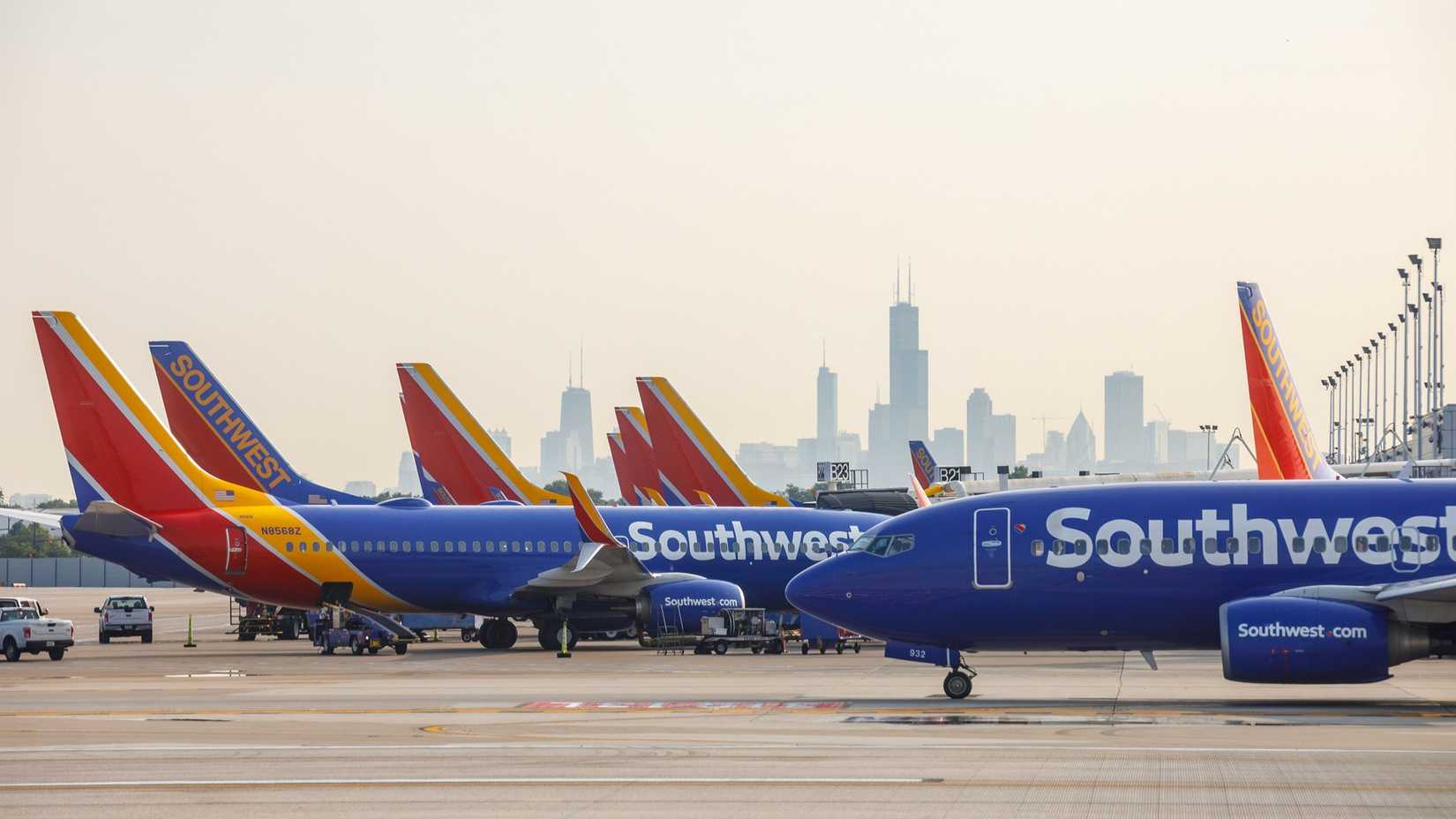
OTP is one of the rare airline metrics that matters to customers, regulators, and airlines themselves. For passengers, punctuality is the simple difference between a smooth trip and painful missed connections. Even when compensation for delays is not mandated, delays impose real-time costs that shape brand preference, customer willingness to pay, and pricing power, especially for high-yield business travelers. For airlines, minutes will ultimately translate into money. A late inbound aircraft will trigger crew duty-time issues, force reserve utilization, and inflate overtime for the crew.
Gate conflicts can also create towing, remote stands, and bussing challenges, with each adding labor and operational disruption risk. This also amounts to fewer misconnections and fewer reaccommodation charges for operators. Operational credibility allows carriers to compete more strongly for corporate contracts, alliance feed, and airport slot utilization. Chronic tardiness, on the other hand, can weaken negotiating leverage with partners and airports.
This is ultimately why monthly aircraft rankings will attract attention, as they are a simple scoreboard for complex mission execution, and they often foreshadow which airlines will earn loyalty when operations face stress. These metrics are carefully watched by investors as well, with consistent on-time performance supporting higher utilization and better unit costs, while persistent delays will expose under-staffing, maintenance deferrals, and overly aggressive growth plans. These are all ultimately factors that influence airline decisions, and they are used by consumers to inform their choices.
What Factors Influence Airline OTP?


OTP starts with an individual airline’s schedule. This includes block times, connection banks, and turn standards, all of which determine how much slack exists in a system before delays can cascade. Airlines that pad too little may look fast on paper but collapse in real operations. Airlines that pad too much can protect OTP while hurting aircraft utilization and cost optimization metrics. Airport and airspace constraints are the next big driver that carriers will have to push forward.
Congested airport hubs may amplify small disruptions through gate shortages, de-icing queues, runway configurations, and ATC flow programs. Weather here begins with the headline variable, but it is rarely just weather. It is more about how quickly an airline can plan around it. Fleet and maintenance reliability matter as well, as a single out-of-service aircraft can force last-minute swaps that break crew legality, catering, and baggage plans. Airport staffing levels are also a decisive factor. This ranges from pilots and cabin crews to ramp agents and dispatchers. Shortages in these capacities tend to lengthen turnarounds and slow overall recovery.
Operational tools also move the needle, including real-time crew tracking, predictive maintenance, and decision support that prioritizes which flights can protect network integrity. Lastly, network design influences outcomes. Short-haul, high-frequency airlines face many opportunities for minor delays, while long-haul services experience fewer events but greater recovery challenges. Great OTP for a legacy carrier is thus incredibly impressive because it reflects complete alignment across all of these verticals.


The Top Airlines & Airports Worldwide Where Flights Took Off On-Time In 2024
Aeromexico led the way in the global OTP ranking.
Hainan Airlines Tops The List

OAG has ranked Hainan Airlines as the world’s top on-time major airline performer in November 2025, with the carrier marking around 88.65% of flights arriving on schedule. The carrier operated 21,863 flights and posted a 0.62% cancellation rate. This combination of high punctuality with low cancellations actually suggests an operation that is not merely trimming the schedule to look good but executing reliably at a meaningful scale. A key advantage for any carrier chasing OTP is controllability, with concentrated hubs, repeatable short-haul patterns, and tight coordination between dispatch, ramp, and ATC shrinking variability across the board. Here are some basic statistics on Hainan Airlines’ November OTP and the carriers that sit behind it:
|
Airline: |
OTP: |
Cancellation Rate: |
|---|---|---|
|
Hainan Airlines |
88.65% |
0.62% |
|
China Southern Airlines |
87.78% |
0.49% |
|
SAS |
87.06% |
0.89% |
Hainan’s result also illustrates why gate-arrival metrics matter for the carrier. Airlines can have flights that often depart on time but still lose time in taxi or while sequencing. This consistent gate performance implies that the whole chain is being managed from pushback timing to turnaround discipline. For travelers, this shows up in fewer tight-connection heart attacks and more predictable arrivals across the board.
For the carrier itself, this translates into better aircraft utilization and less knock-on disruption, as each on-time arrival is also a clean starting point for the next departure to come. The broader takeaway is that leading OTP often comes from excellence in minutia, realistic schedules, and fast problem-solving when irregular operations might hit. Carriers with a culture that treats minutes as a strategic resource will continue to perform well. This repeatability is exactly what propelled Hainan to the top of our list.
China Southern Has Mastered High-Volume Consistency
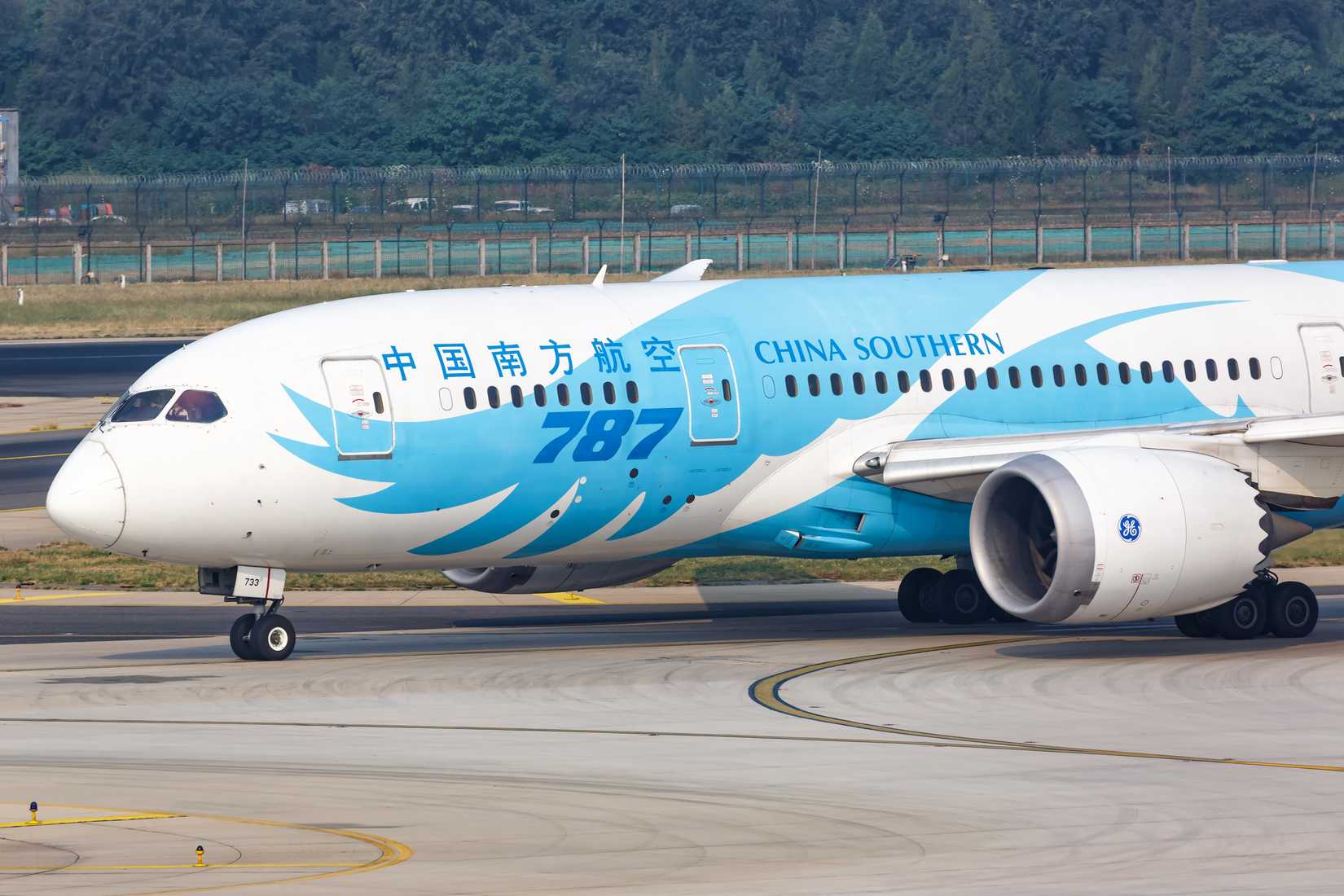
China Southern Airlines is one of the world’s largest network carriers. Placing it second among OAG’s top-performing airlines for November 2025 is thus undoubtedly impressive. The carrier delivered an on-time rate of 87.78% across more than 64,000 flights, with cancellation rates at just 0.49%. What makes this especially notable is the volume the carrier can drive, as it operates one of the largest schedules in the world, leaving very little room for localized issues to remain fully localized.
Scale is often the principal enemy of punctuality because complexity only multiplies as more aircraft rotations, crew pairings, hubs, and exposure to weather and airspace constraints multiply. To stay near the top of that size, airlines will typically lean on standardization. Consistent fleet procedures, disciplined turnaround playbooks, and strong centralized operations control can re-plan quickly when things drift. High OTP at a high frequency also hints at network smoothing, building out schedules that avoid impossible peak waves and sequencing departures to reduce overall gate crunch.
For passengers, the result is incredibly practical, as large networks can be convenient, but only if the system reliably connects. China Southern’s performance suggests that the carrier managed to keep the big airline tax under control last month, converting operational scale into dependable throughput rather than chronic delays. It is also a reminder that punctuality is not only about avoiding storms but rather about fast, consistent execution at every station.

SAS Unveils Stylish New Crew Uniforms
SAS’ new uniform builds on inclusivity and individuality.
SAS Has Also Highlighted Its Commitment To Network Discipline


The airline’s ranking implies that it kept those banks flowing, limiting the secondary delays that occur when a late inbound jet arrives to a full gate line, and the next outbound aircraft loses its slot. Execution also tends to show up in terms of airline recovery. When disruptions hit, the best operators will protect the flights that save the network, which includes key feeders, last departures, and aircraft rotations that set up the next morning rather than treating all of these delays equally.
This can ultimately preserve both OTP and completion, even if some departures are intentionally being pushed to prevent bigger downstream damage. For passengers, SAS’s month is a case study in why reliability matters on connecting itineraries. The best schedule is not always the fastest one, but most often just the one that works repeatedly.
What Is Our Bottom Line?
At the end of the day, punctuality is critical for airlines for a few different reasons. For starters, airlines need to keep aircraft utilization high, as aircraft are simply expensive depreciating assets that only make money when they are in the sky transporting passengers. This often makes things somewhat challenging when operational complications arise.
Furthermore, most airlines are seeking to capture high-yielding passenger traffic, including business travelers who fly on corporate contracts negotiated far in advance. For these customers, punctuality is critical. Therefore, airlines that focus on catering to high-spending business travelers will go out of their way to ensure their fleets stay on time.
The final thing to note about OTP is that many factors influencing performance are well beyond an airline’s control. Many delays are caused by weather, and that is certainly not something airlines can control. However, many other factors, such as operational management and recovery strategies, are certainly things over which airlines have control.
source