


Flying in business class is no longer defined solely by the seat onboard. In 2025, the ground experience has become just as influential in shaping how passengers judge an airline’s premium offering, particularly at major global hubs where long connections, irregular operations, and tightly banked schedules are now the norm. Business class lounges sit at the center of this experience, acting as places to work, eat, recover, and decompress between flights rather than simply wait for boarding.
As premium travel demand continues to recover and concentrate around a handful of global hubs, airlines have been forced to rethink what a business class lounge needs to deliver. Capacity, crowd management, dining quality, and layout now matter as much as aesthetics or exclusivity. This guide looks at some of the airlines that have built business class lounges capable of functioning reliably in real-world conditions in 2025, focusing on how design, scale, and operational strategy combine to create ground experiences that genuinely support long-haul premium travel.
Business Class Is More Popular Than Ever Before

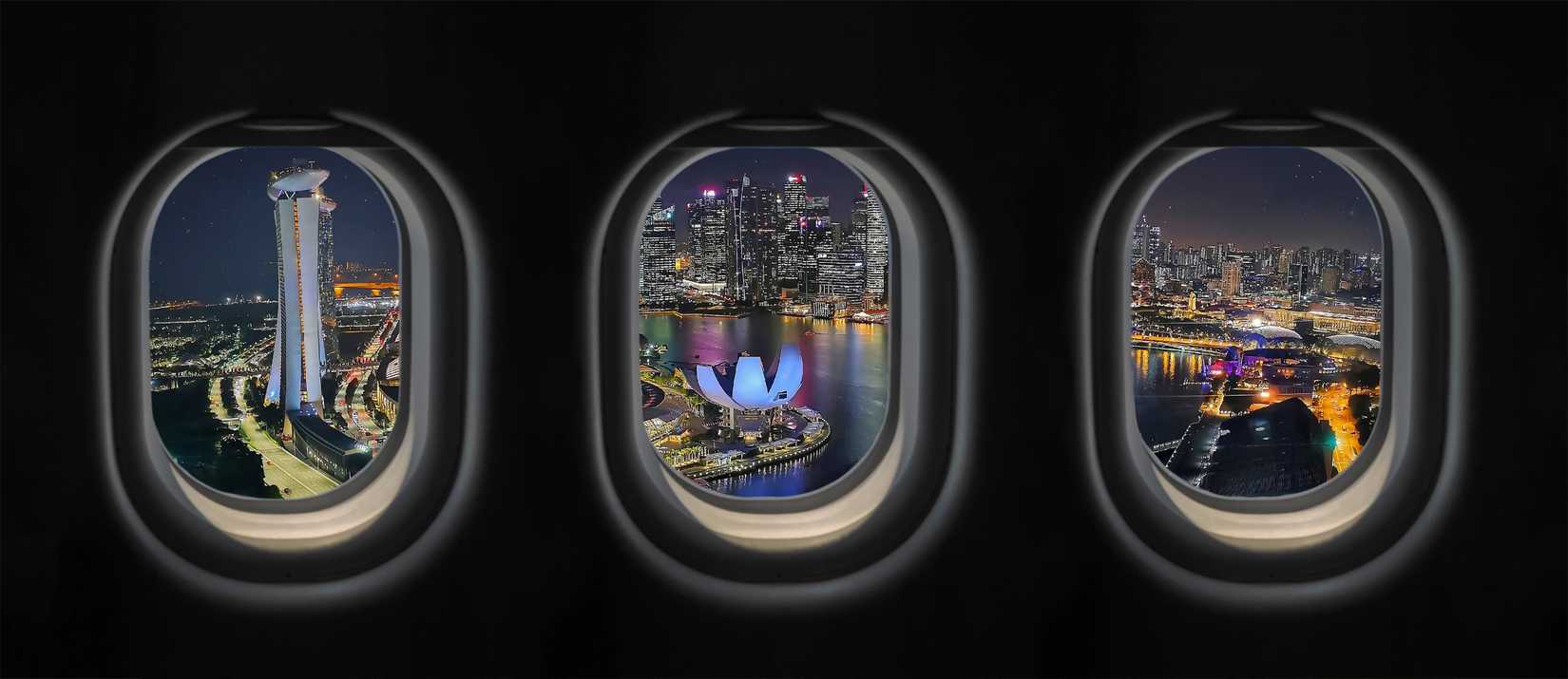
Business-class lounges have evolved from being a convenient pre-flight perk into a central pillar of the premium travel experience. In 2025, the lounge is no longer just where passengers wait for boarding, but where they eat properly, work, rest, and mentally reset after or before long-haul or ultra-long-haul sectors. As premium demand continues to recover and concentrate around major hubs, the quality of a business-class lounge increasingly shapes how travelers perceive an airline’s entire product.
This shift has been driven by scale as much as expectation. Airlines now funnel large volumes of connecting passengers through a small number of global hubs, often during tightly packed departure banks. For business class travelers, this means lounges must function reliably under pressure, handling hundreds or even thousands of guests without descending into overcrowding, long queues, or noise. Lounges that were once designed for exclusivity now need to operate more like finely tuned terminals, balancing comfort with throughput.
At the same time, the role of first class lounges has diminished across much of the industry, placing even greater weight on business class facilities. With fewer airlines offering international first class and many premium travelers flying business by default, lounges attached to business class cabins now serve the majority of high-yield passengers. In 2025, the airlines that stand out are not those offering the most extravagant features, but those that have built business class lounges capable of delivering calm, consistency, and genuine utility at scale.
Qatar Airways: How Separation Can Manage Scale

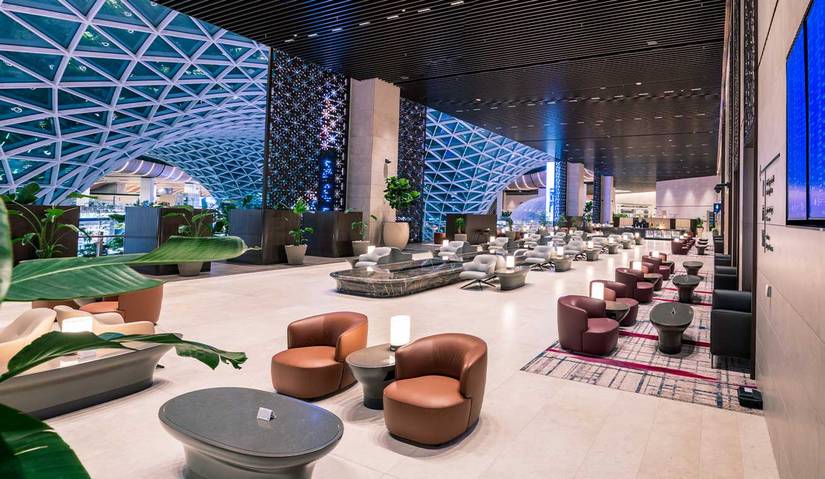
Among global network carriers, 


Unlike traditional lounges that concentrate guests into a small number of dining and seating zones, Qatar Airways’ approach emphasizes dispersion. Restaurants, quiet seating areas, workspaces, and relaxation zones are physically separated and visually distinct, reducing bottlenecks during peak departure banks. This layout is particularly effective given Doha’s role as a heavily banked hub, where hundreds of premium passengers may arrive within a narrow window from ultra-long-haul flights before departing again shortly afterwards.
What ultimately makes Qatar Airways’ business class lounges notable in 2025 is how well they perform under real-world conditions. Reviews and walkthroughs consistently point to calm acoustics, manageable crowd levels, and a sense of space even during busy periods. Rather than relying on exclusivity to preserve the experience, Qatar has invested in sheer capacity and thoughtful passenger flow, demonstrating how business class lounges can operate more like premium terminals than traditional waiting rooms.


Where Qatar Airways Will Fly Its High-Capacity Airbus A380s This Winter
The aircraft offers some exceptional long-range capabilities.
ANA and Singapore Airlines: Scale Isn’t Always Better


While some airlines pursue scale as the solution to lounge crowding, 
Singapore Airlines’ SilverKris Business Class Lounges can be found at 
|
Feature |
Singapore Airlines SilverKris Lounge |
ANA Business Class Lounge |
|---|---|---|
|
Core Design Philosophy |
Calm, refined, and highly controlled |
Precision, efficiency, and quiet order |
|
Primary Hub Locations |
Singapore Changi (SIN) |
Tokyo Haneda (HND), Tokyo Narita (NRT) |
|
Lounge Layout |
Clearly zoned dining, work, and relaxation areas |
Linear, functional layout optimized for passenger flow |
|
Dining Model |
À la carte-style hot meals with smaller buffet options |
Signature noodle bars plus quick-service hot dishes |
|
Crowd Management |
Seating segmentation reduces noise and congestion |
Fast-turnover dining minimizes dwell-time bottlenecks |
|
Ideal Use Case |
Longer layovers and pre-departure relaxation |
Short-to-medium connections and efficient transfers |
|
Atmosphere |
Quiet, polished, and understated |
Minimalist, orderly, and deliberately calm |
|
Standout Strength |
Consistency across time of day and passenger volume |
Speed and reliability during peak connection banks |
ANA’s business class lounges at 

Turkish and Emirates: A Tale Of Scale


Few airlines face the challenge of moving large numbers of premium passengers through tightly banked hubs more acutely than 


At 
Emirates, by contrast, treats the lounge as a functional extension of the terminal itself. At 

5 Most Comfortable Long-Haul Business Class Seats You Can Book Today
Best of class for biz flyers.
European Airlines: Still Falling Short?

For much of the past decade, European airlines have lagged behind their Middle Eastern and Asian counterparts when it comes to business class lounge quality. Many lounges across Europe were designed around short-haul premium traffic, high passenger turnover, and limited dwell times, leaving them ill-suited to today’s long-haul, connection-heavy travel patterns. As premium demand has rebounded post-pandemic, this mismatch has become increasingly apparent.
In response, several major European carriers have begun investing more deliberately in their business class ground product. Air France has expanded and modernized its business class lounges at 

|
Feature |
Typical European Business Class Lounge (Pre-2020) |
European Business Class Lounges (2025) |
|---|---|---|
|
Primary Design Focus |
Short-haul turnover and capacity |
Long-haul comfort and connection flow |
|
Dining Model |
Light snacks, basic buffets |
Improved hot meals, regional catering, better presentation |
|
Seating Layout |
Dense seating with limited zoning |
Clear separation between dining, work, and relaxation areas |
|
Natural Light & Design |
Functional, often enclosed |
Brighter spaces with modern finishes and better sightlines |
|
Crowd Management |
Struggled during peak waves |
Expanded capacity and improved passenger distribution |
|
Shower & Wellness Facilities |
Limited availability |
More showers and better maintenance standards |
|
Target Passenger Profile |
Short-haul business travelers |
Long-haul and connecting premium passengers |
|
Key Limitation |
Infrastructure constraints |
Still limited by slot pressure and terminal layouts |
Despite this progress, Europe still faces structural challenges that other regions largely avoid. Slot constraints, fragmented terminal layouts, and a heavy mix of short-haul and long-haul traffic make it difficult to deliver the kind of large-scale, purpose-built business class lounges seen in Doha, Dubai, or Singapore. Nevertheless, the direction of travel is clear. In 2025, Europe’s leading carriers are no longer treating business class lounges as secondary amenities, but as essential infrastructure for retaining premium travelers in an increasingly competitive global market.
Lounges Are More Important Than Ever

Business class lounges have quietly become one of the most telling indicators of how seriously an airline treats its premium passengers. In 2025, the most notable lounges are not defined by excess or novelty, but by how effectively they absorb passenger volume, reduce friction, and provide a sense of calm within some of the world’s busiest airports.
For travelers, this shift makes lounge quality a practical factor when choosing routes, hubs, and even airlines. A well-designed business class lounge can transform a long connection into a productive or restorative part of the journey, while a poorly executed one can undermine even the strongest onboard product.
Looking ahead, business class lounges are likely to evolve further as airlines experiment with access controls, dynamic capacity management, and more flexible service models. For airlines competing at the top end of the market, getting the lounge right is no longer optional, and now it is an essential part of delivering a credible premium experience.
source