



The Airbus A350 has silently become one of the most recognizable long-haul aircraft in the skies today, but its most distinctive asset is likely not going to be its curved wingtips or ultra-efficient engines, but rather the aircraft’s cabin itself. From the beginning, Airbus designed the Airbus A350’s cross-section and interior architecture around overall passenger wellbeing, before wrapping that in the airline’s “Airspace” design language. The aircraft features higher ceilings, wider sidewalls, and large overhead bins that all combine with low cabin noise, large windows, and advanced air management systems in order to create a noticeably calmer environment on long flights.
Humidity and overall cabin pressure levels remain optimized to reduce jet lag and fatigue, while carefully engineered lighting schemes help allow passengers to adjust to new time zones. Airlines, on the other hand, get a flexible interior shell that they can tune for everything from dense holiday traffic to ultra-premium flagship routes. As more carriers introduce refreshed Airbus A350 interiors and Airbus rolls out its New Production Standard (NPS) with wider, longer cabins, the aircraft is increasingly beginning to set a benchmark for how a modern long-haul cabin should feel and why cabin design matters just as much as range or fuel burn for passengers and airlines alike. For many travellers, the first step onto an Airbus A350 instantly signals a different kind of widebody experience for passengers that an airline can market.
A Brief Overview Of The Airbus A350

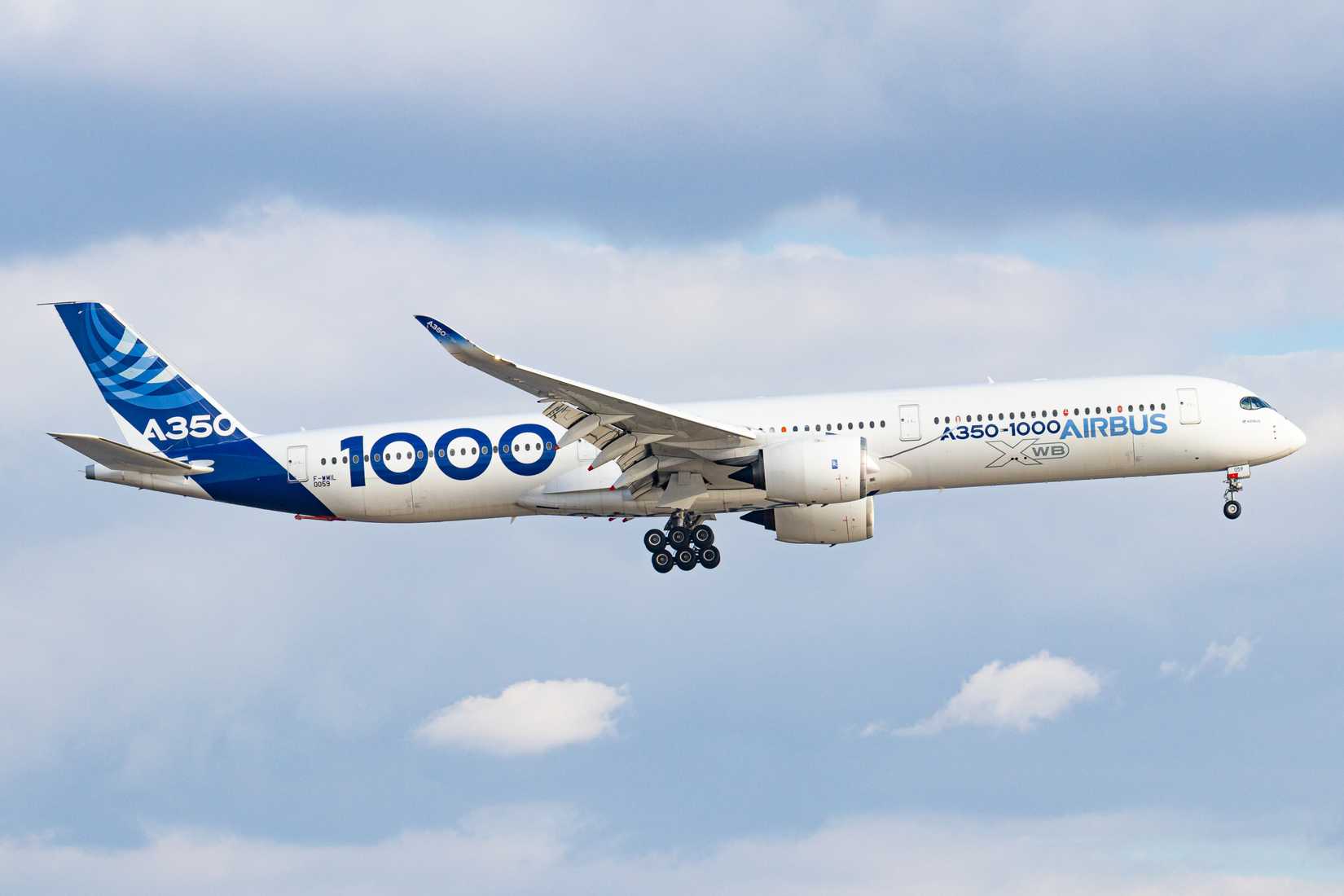
Originally launched as the Airbus XWB (which stands for Extra-Wide-Body), the Airbus A350 family was originally developed as a clean-sheet, long-range twin-engine aircraft designed to replace earlier four-engine types and to compete directly with the Boeing 787 and the 

The family today spans the Airbus A350-900, the ultra-long-range Airbus A350-900ULR, and the stretched Airbus A350-1000, in addition to the forthcoming Airbus A350F freighter, giving airlines a common cockpit and systems across multiple mission profiles. Typical three-class layouts seat roughly 300 to 380 passengers, with range figures comfortably exceeding 8,000 miles (12,875 km) on passenger variants. Airbus has continued to refine the platform using its New Production Standard, trimming weight across the board, and significantly improving take-off performance while unlocking extra usable cabin length and width. Here are some additional specifications for the Airbus A350, according to documents published by the European Union Aviation Safety Agency (EASA):
|
Category |
Airbus A350 Specification |
|---|---|
|
Service ceiling |
13,100 m (43,100 ft) |
|
Takeoff distance |
2,600 m (8,500 ft) |
|
Landing distance |
2,000 m (6,600 ft) |
Orders have now passed well over 1,400 aircraft, with hundreds already in service and a growing backlog from both established network carriers and fast-growing new market entrants. Operational data now shows that the global Airbus A350 fleet has flown well over a million sectors on more than a thousand routes, with an excellent safety record and strong overall dispatch reliability. For airlines, that translates into the ability to open thinner long-haul city pairs while upgauging older fleets on trunk routes and standardizing on a single modern widebody family for everything from overnight transatlantic runs to ultra-long-haul missions.
A Deeper Look At The Airbus A350’s Cabin

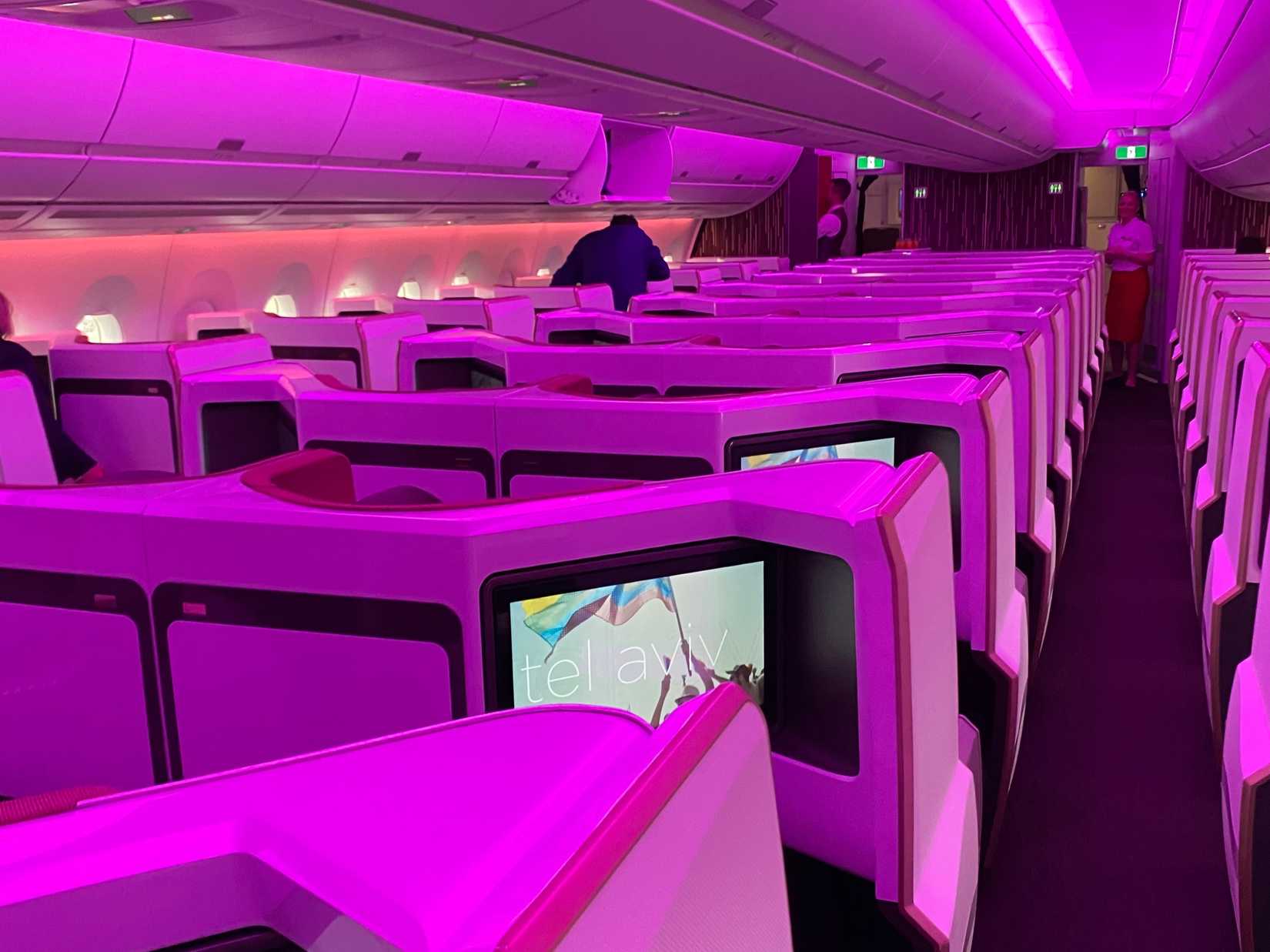
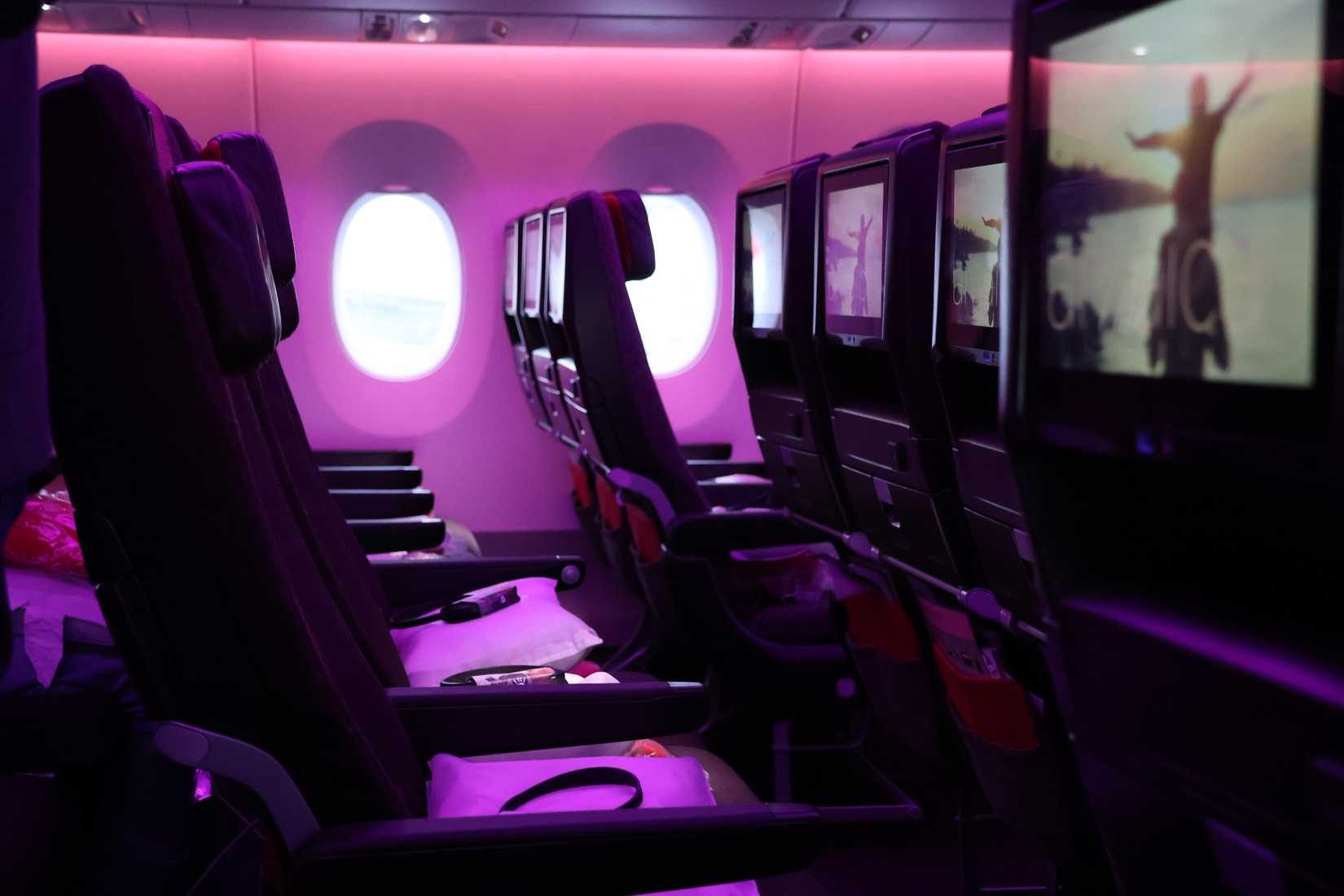
What differentiates the Airbus A350 most from its rivals is its Airspace cabin architecture. The fuselage cross-section was shaped to maximize usable interior width between the sidewalls, giving designers more shoulder room at seated eye level than earlier Airbus types and many competing jet models. That extra space can thus be spent on wider seats, broader aisles, larger armrests, or a mix of all three, depending on each airline’s philosophy. An improved cabin experience offers a lot of comfort and versatility for passengers, allowing airlines to charge more for these kinds of premium seats.
High ceilings, carefully sculpted sidewalls, and large pivoting overhead bins create a sense of openness while still giving generous space for passengers to easily stow carry-on bags. The cabin is also engineered for comfort on a microscopic level, with higher humidity, lower effective cabin altitude, and very low noise levels that all help reduce fatigue on long-haul overnight sectors. With the latest New Production Standard, Airbus has subtly widened and stretched the cabin envelope, freeing up space for larger galleys, new crew-rest arrangements, and ultimately additional seating options without the requirement to fundamentally change the feel of the aircraft’s interior.
Combined with flexible lighting, advanced connectivity, and a step-by-step modification approach, the Airbus A350 offers airlines an unusually adaptable canvas for everything from minimalist economy layouts to highly differentiated four-class flagship aircraft. Crucially, these choices can evolve, supporting midlife aircraft retrofits as airlines refresh branding or aim to adjust their cabin mixes.


Why The Airbus A350 Has Such An Ultimate Passenger Experience
Discover why the Airbus A350 offers the ultimate passenger experience — quieter cabins, roomier seats, and comfort praised by flyers worldwide.
What Makes The Airbus A350 Well-Suited For Premium Cabins?

The Airbus A350’s geometry and flight control systems make it an unusually strong platform for offering premium cabin service. The aircraft’s wide, oval-shaped cross-section supports spacious 1-2-1 business-class layouts that offer long beds and large side consoles that do not feel squeezed, all while leaving room for generous aisles and direct aisle access at every seat. Lower overall cabin noise, advanced filtration, and higher humidity, all alongside a lower effective cabin altitude, all enhance sleep quality and overall well-being.
This aligns nicely with what high-yield passengers are looking to get out of overnight flights. The latest New Production Standard adds roughly four inches of extra usable cabin width, which airlines are already channeling into wider privacy suites, door-equipped business seats, and more expansive premium-economy shells. Flag carriers are leaning heavily into this potential. Qantas is using a customized Airbus A350-1000ULR in order to house extra-spacious first and business cabins alongside a dedicated wellbeing zone on ultra-long-haul Project Sunrise flights.
SWISS is another airline that will use the aircraft to introduce new kinds of premium cabins, with the carrier debuting its new SWISS Senses four-class concept, which includes enclosed first-class suites and door-equipped business-class seats. These projects highlight how the Airbus A350 gives designers the room and range to build truly differentiated flagship products, turning the cabin into a competitive weapon on the world’s longest and most lucrative routes. For carriers chasing premium revenue, that mix of physical space, quietness, and flexibility is ultimately going to be hard to beat.
Who Are The Current Operators Of The Capable And Versatile Airbus A350?

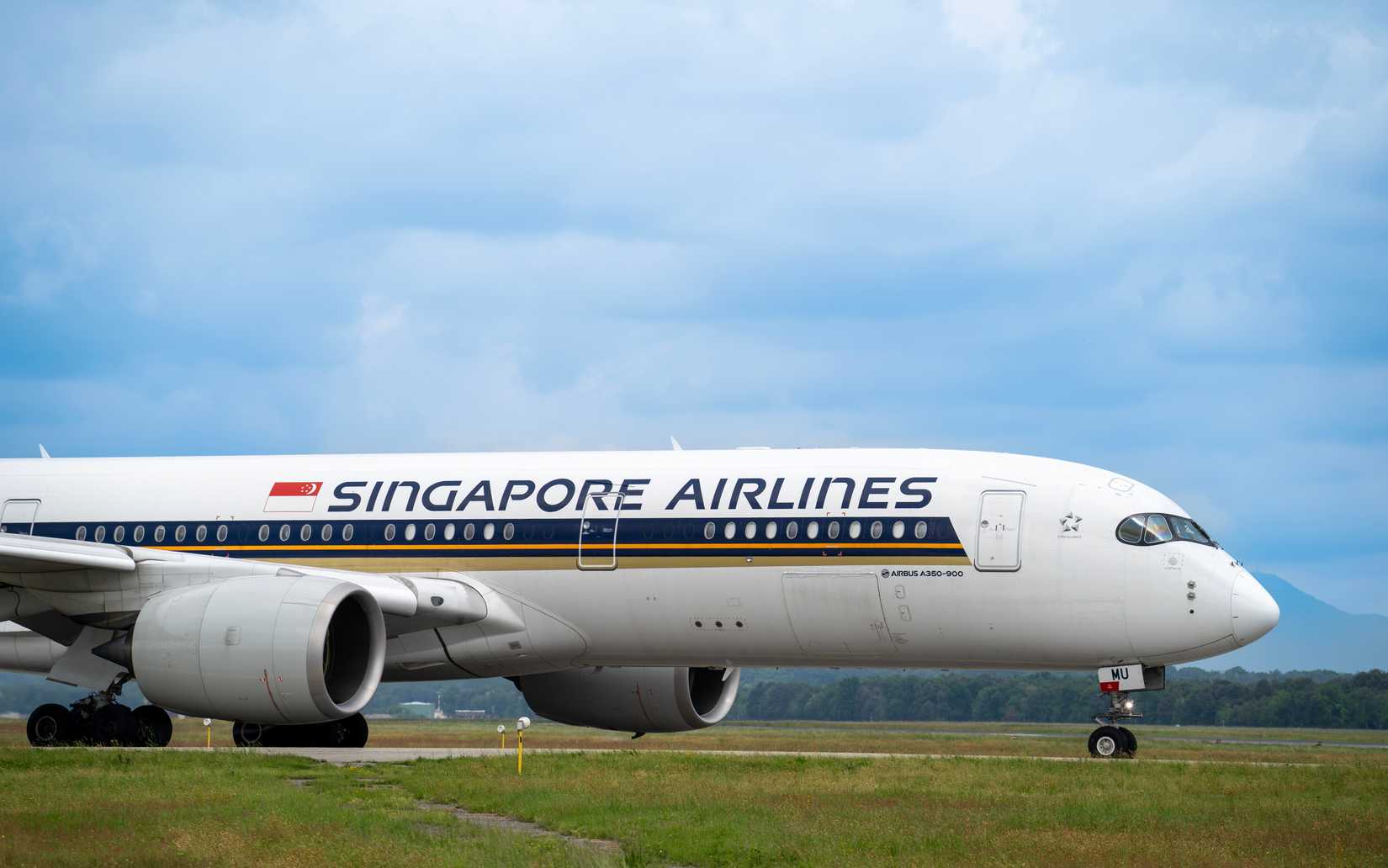
The Airbus A350 is not a niche experiment but rather a core long-haul workhorse for dozens of major airlines. As of 2025, around 68 Airbus A350s are in service worldwide with roughly 40 different operators. The largest fleets sit with Singapore Airlines, Qatar Airways, Cathay Pacific, Air France, and 
Airlines in China, including Air China and Sichuan Airlines, deploy the Airbus A350 on domestic trunk routes as well as for long-haul services to Europe and North America, capitalizing on the aircraft’s exceptional versatility and efficiency. In Europe, carriers such as Lufthansa, Iberia, Finnair, and SAS use the Airbus A350 to modernize aging Airbus A340 and Airbus A330 fleets. In the Middle East and Africa, Qatar Airways, Ethiopian Airlines, and Turkish Airlines have embraced the type for global hub-and-spoke operations.
Newer long-haul brands like STARLUX in Taiwan and upcoming operators such as IndiGo and Riyadh Air are also turning to the Airbus A350, underscoring its appeal from full-service legacies to ambitious challengers. Freighter and corporate variants are joining the mix as well, with cargo specialists and VIP customers ordering the Airbus A350F and the ACJ350 (corporate jet version), both of which help extend the family’s presence beyond traditional passenger airlines into high-yield logistics spaces and ultra-long-range private or government operations.

How Much Does An Airbus A350 Cost?
Surprisingly, it costs significantly less to operate than previous-generation aircraft.
What Is The Future Of Airbus A350 Service?
The future of the Airbus A350 service looks increasingly central to long-haul aviation. Airbus has logged more than 1,400 orders for the type across both passenger and freighter variants, with several hundred aircraft still to be delivered to both established and new kinds of carriers. In the coming years, airlines like IndiGo, Riyadh Air, and Qantas are set to introduce large Airbus A350 fleets, using the model to open new long-haul markets and replace older twin- and quad-engine aircraft. Emirates is also rolling out its brand-new Airbus A350 models on a handful of routes.
At the same time, a first wave of cabin retrofits for older models is already well underway, with early customers looking to densify layouts, shift space towards premium cabins, supporting Airbus’ dedicated Airbus A350 upgrade services, and third-party retrofit programs. The arrival of the Airbus A350F will pull the manufacturer deeper into the cargo market, all while ultra-long-range projects like Qantas’ Project Sunrise show how far the platform can be stretched in range and onboard innovation.
New premium concepts such as the SWISS Senses, which debuted on the Airbus A350-900 before spreading to other aircraft types, reinforce the aircraft’s role as a launchpad for next-generation cabins. As environmental pressure continues to intensify, the aircraft’s combination of composite structure, efficient engines, and SAF-ready systems positions the Airbus A350 as a key tool for airlines pursuing lower-carbon long-haul networks without sacrificing passenger appeal.
So, What Exactly Is Our Bottom Line When It Comes To The Airbus A350?

Taken together, the Airbus A350 is as much a story of cabin innovation as it is of engineering. Airbus gave airlines a wide canvas, which they wrapped in the branding and marketing of the company’s Airspace concept.
To be fair, this interior offers extra space, low noise, and generous natural lighting. The manufacturer also refined this design with the New Production Standard and other retrofit options. Airlines use the aircraft as a flexible canvas for everything from dense leisure layouts to ultra-luxurious ultra-long-haul flagships.
Passengers gain quieter rides, better air quality, larger bins, and comfortable seating, especially when it comes to the premium cabins. For airlines, strong economics and a future-proof cabin make the Airbus A350 a standout choice for next-generation long-haul fleets for years to come.
source