


To get to smaller European cities, you’ll likely need to connect at another airport. The hub and spoke model of travel allows passengers to travel between various points via a central hub. An airline may have one or multiple hubs, although in Europe local flag carriers typically route passengers through a single airport. However, it’s important to know which airport you should transfer to for an easier connection.
In this list, we will look at a combination of factors, primarily layout, size, interior design, and amenities, to determine the best airports for connections in Europe. This list will also only consider major airline hubs, since these are the airports with the most connections, especially those with a high number of connecting passengers.
Frankfurt Airport, Germany
Base For Lufthansa, Discover Airlines, Condor, TUI, SunExpress

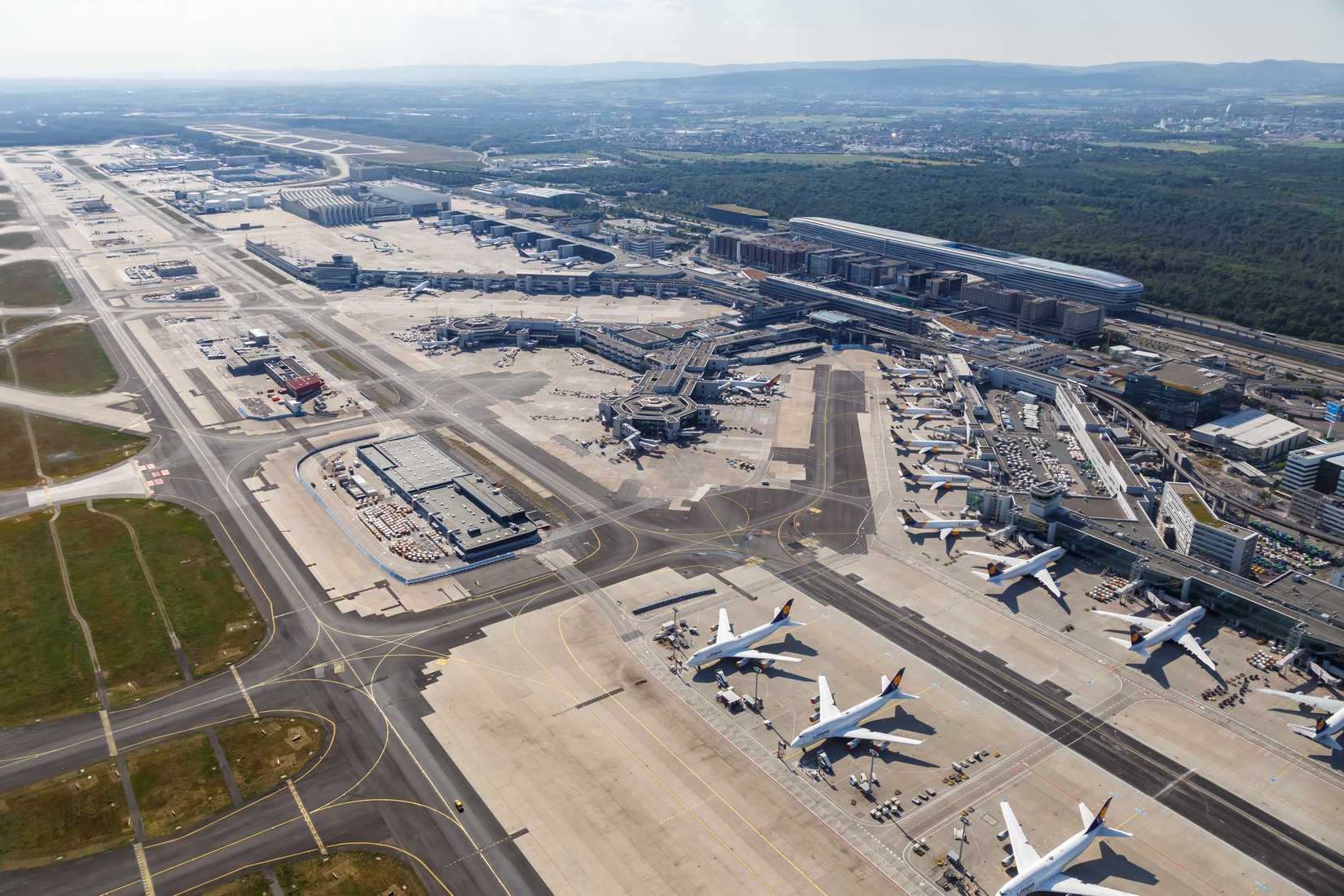


Frankfurt has two main passenger terminals: Terminal 1 has four concourses and Terminal 2 has two concourses. Lufthansa is the primary airline that serves Frankfurt, and its flights are concentrated at Terminal 1, so connections with Lufthansa or a Star Alliance partner typically don’t involve a change of terminals.
|
Frankfurt Airport Terminals |
Concourses |
|---|---|
|
Terminal 1 |
1A, 1B, 1C, 1Z |
|
Terminal 2 |
2D, 2E |
Terminal 1 is large, and its layout can be confusing. However, the airport is well signed. Ultimately, the size and level of traffic at the airport can result in long lines, but its smaller size, combined with Lufthansa and Star Alliance concentrating in one terminal, makes it easier to connect through than London-Heathrow or Paris.
Istanbul Airport, Turkey
Base For Turkish Airlines, Pegasus Airlines


Istanbul Airport, despite its size, only has one terminal. There are five concourse sections labeled A, B, D, F, and G, along with gates C and E, which are part of the main building. Concourse G is reserved for domestic flights, while the rest of the gates also handle international services. Naturally, as a newer airport, Istanbul Airport also has a fresh, modern interior design with high ceilings, wide spaces, and large windows.
The airport is known for being well signed, and its single-terminal design makes it far more straightforward to navigate than a hub such as 


The Airlines That Dominate The World’s 10 Most Connected Airport Hubs
Airport hubs act as central connection points, allowing access to a greater range of destinations. Here are the main airlines based at the top 10.
Geneva Airport, Switzerland
Base For SWISS International Air Lines, easyJet

Geneva is a secondary hub for SWISS, with Zurich taking the top spot for the carrier. It primarily hosts flights to Europe’s largest cities and vacation destinations, along with a year-round daily flight to New York-JFK. The airport has two terminals, though the smaller Terminal 2 is only used seasonally. SWISS concentrates its operations in the newer and larger Terminal 1.
Naturally, given that SWISS funnels high volumes of connecting traffic, the airport features abundant signage. A majority of connecting traffic is Schengen, and as such, not only do most passengers not need to clear customs, but there’s also a limited number of passengers who do need to go through passport control, which limits lines. The terminal itself is also fairly small.
|
SWISS Hubs |
|---|
|
Zurich Airport |
|
Geneva Airport |
Passenger volumes can be high, and the layout of Terminal 1 is also fairly unorthodox. Pier A is located directly ahead of the main shopping area, while Pier C is located to the right. Pier F is located between the two. Pier B, however, consists of two separate circular satellite buildings that are accessed via underground walkways. Pier D is located to the left of Pier B, consisting of a circular satellite building and a separate bus gate terminal building. As such, this layout can be confusing for passengers, despite the overall small size of the airport.
Dublin Airport, Ireland
Base For Aer Lingus, Ryanair


There are two terminals at Dublin Airport, with Terminal 2 hosting all IAG airlines, American Airlines, Delta Air Lines, United Airlines, JetBlue, and Emirates. It’s a small terminal that first opened in 2010, with a modern curved design that features a main building which houses most passenger facilities and is connected to Pier E, which houses the gates.
This straightforward design makes the airport easy to navigate, although walking distances can be long from the gates farthest from the main building. Additionally, there are five gates located in a separate building connected to Terminal 2 via bus, which can be confusing and inconvenient. However, only a small number of passengers fly out of these gates.
Munich Airport, Germany
Base For Lufthansa, Discover Airlines, Eurowings, Air Dolomiti, Condor, TUI

While the secondary hubs for some airlines are significantly smaller and more specialized than a carrier’s main hub, Munich hosts a significant operation that complements, and in some cases replicates, Lufthansa’s operations out of Frankfurt. The airport has two terminals, with Terminal 2 comprising two separate buildings.
Terminal 1 is the older, smaller, and less visually appealing, but 
|
Munich Airport Terminals |
Airlines |
|---|---|
|
Terminal 1 |
SkyTeam, oneworld, unaffiliated |
|
Terminal 2 |
Star Alliance, Luxair |
The satellite terminal is connected to Terminal 2 via an underground people mover, but transfers between the two buildings can still be long. Additionally, the terminal features a high number of bus gates, which can be confusing and inconvenient. However, Munich Airport as a whole is more compact and easier to understand than Frankfurt, making this undoubtedly the easier of the two for transfers.

The 10 Largest Airline Megahubs In 2025
How many of the airports on the list do you know?
Vienna International Airport, Austria
Base For Austrian Airlines, Ryanair, Wizzair

Vienna is the main hub for Star Alliance member Austrian Airlines, part of Lufthansa Group. The airport has two terminals, but Austrian and Star Alliance airlines fly exclusively out of Terminal 3. This is the newest terminal at the airport. Terminal 1 consists of two separate buildings, whereas Terminal 3 is one structure. As such, there’s no need to change buildings or terminals when flying through Vienna.
Terminal 3 consists of two main curved concourses and a third rectangular pier, making it a relatively straightforward terminal to navigate. There are a large number of bus gates, although the airport itself is fairly compact.
Although the terminal is small, the airport also receives a relatively modest number of passengers, meaning that it’s rarely congested. Walking distances are short between nearly all the gates, and the airport features numerous signs to guide passengers. As such, Vienna International Airport is one of the easiest airports in Europe for transfers.
Copenhagen Airport, Denmark
Base For SAS, DAT, Air Greenland, Finnair

Copenhagen Airport is SAS’s primary hub. Compared to many major airline hubs, Copenhagen’s airport is compact, and while there are two terminals (Terminal 2 and Terminal 3), they’re connected airside. In essence, the airport features one building with six piers.
The walking distances can be long to the furthest piers, but generally, Copenhagen is remarkably easy to navigate. The A pier is split into two connected rectangular buildings. Piers B and C are separate buildings connected to the main building, while the gates for Pier D connect the main building to Piers E and F, which are separate concourses.
|
Copenhagen Airport Piers |
Flights |
|---|---|
|
Pier A |
Schengen |
|
Pier B |
Schengen |
|
Pier C |
Non-Schengen |
|
Pier D |
Schengen |
|
Pier E |
Non-Schengen (SAS long-haul) |
|
Pier F |
Low-cost carriers |
The airport has a significant number of bus gates, which are generally viewed as less convenient than gates with jetbridges. As a whole, however, Copenhagen is easy to navigate and will make for a stress-free connection even for those unfamiliar with the airport.
Zurich Airport, Switzerland
Base For SWISS International Air Lines, Helvetic Airways, Chair Airlines


Zurich Airport is the main hub for SWISS. Already on this list is Geneva Airport, but Zurich is the airline’s primary connecting hub and undoubtedly one of the easiest connecting airports in Europe. The main reason it’s ranked significantly higher than Geneva, however, is due to the layout of the airport.
There are three terminals, labeled A/B/E, but these facilities are more akin to piers or concourses as they are connected airside. They’re linked to a single complex called the “Airport Centre” with concourses A and B (which consist of gates labeled B and D) labeled the “Airside Centre.” Terminal E is physically separated from the rest of the airport, located on the opposite side of Runway 10/28, but it is connected via an underground people mover.
Passengers connecting to or from Terminal E may experience longer transfer times, but overall, the airport is renowned for being exceptionally well-organized and compact. The straightforward layout is easy to understand, while walking times to or from Terminals A and B are short. Even transiting from Terminal E is fairly easy, although it does take more time.

Why Lisbon Is Becoming A Major Hub For Transatlantic Travel From The US
The airport is becoming a dynamic hub.
Amsterdam Schiphol Airport, Netherlands
Base For KLM, Corendon, easyJet, Transavia, TUI, Vueling
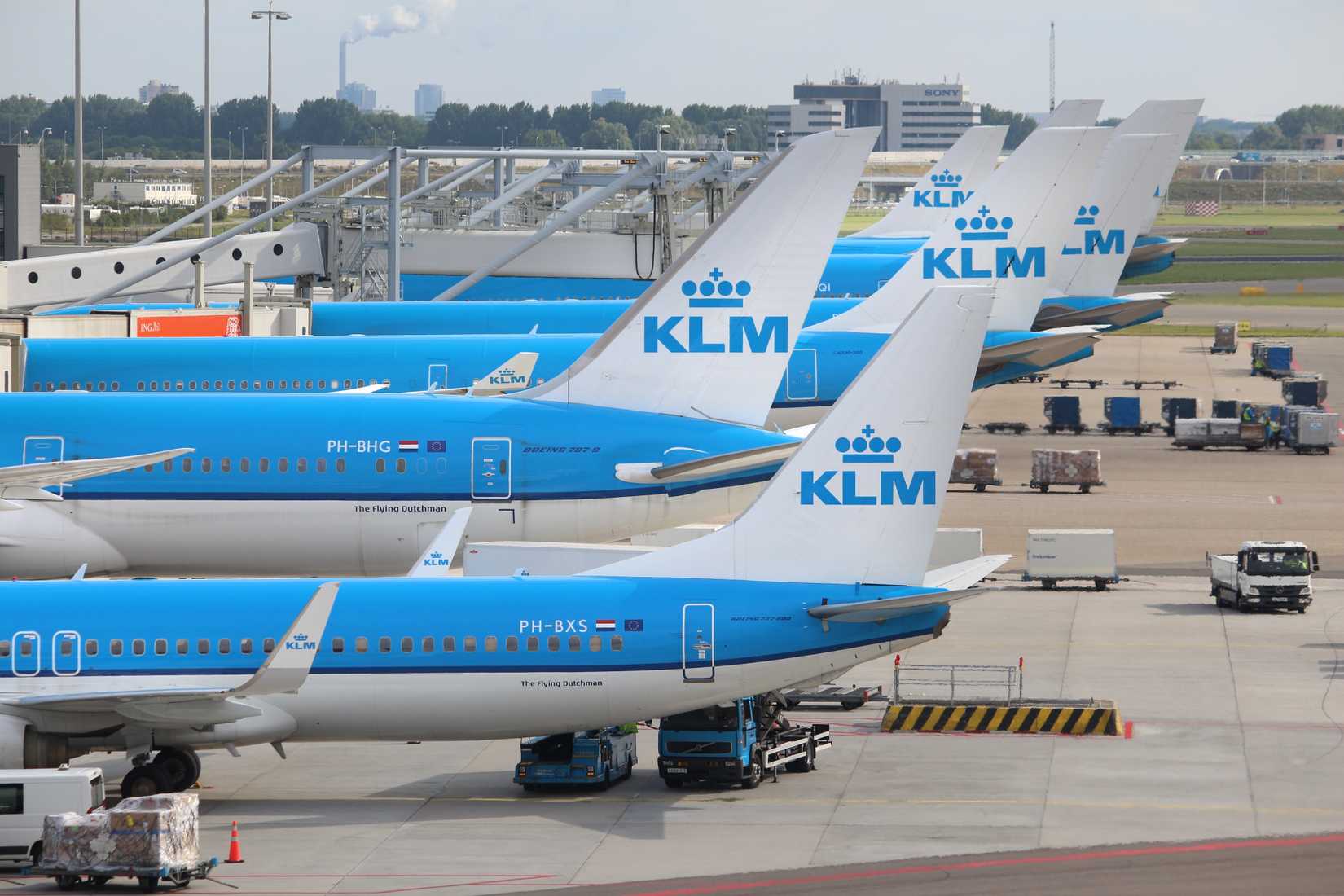
Most of the airports on this list feature either a single passenger terminal or terminals that are connected airside. Both solutions address the issue that changing terminals can be time-consuming and inconvenient. At the airports that feature multiple terminals, the primary airline tends to concentrate at just one terminal. This contrasts with an operation such as that of British Airways at London-Heathrow, which operates out of two airports.

Schiphol Airport is massive, but walking distances within most departure halls are relatively short, and there are moving walkways. With only one building, passengers don’t need to worry about transferring between terminals, and the airport features English announcements along with large, well-written signs in English and Dutch. Not only is this one of the easiest airports to transfer through in Europe, but it’s also the best European airport of its size for connections.
Helsinki-Vantaa Airport, Finland
Base For Finnair, Norwegian Air Shuttle

We’re returning to a smaller airport with the number one entry, but it’s hard to argue with the numbers for Helsinki. Finnair advertises 35 minutes as the minimum connecting time for Schengen connections, 40 minutes for non-Schengen connections, and 45 minutes for non-Schengen to Schengen, some of the lowest in the continent.
Helsinki doesn’t quite have the lowest connecting times in Europe, but its airport layout is extremely straightforward. Most of the gates feature jetbridges, with the terminal following the shape of a rectangular “C“. The airport also features extensive passenger amenities, dining, and shopping options.
In addition, Helsinki makes use of a passenger tracking system to better manage flows and features signs written in seven languages, mainly due to Finnair’s Asia network. With its compact size, excellent signage, short walking distance, and terminal layout, this is undoubtedly Europe’s best airport for connections.
source