


Electrical terminals come in a variety of styles. While most people are familiar with ring terminals and spade terminals, terminal lugs often go unnoticed.
Like all electrical terminals, terminal lugs create a secure link between a cable and a fixed point. They are known as electrical terminals because they “terminate” conductors. Cables are conductors. Electrical terminals connect cables to a fixed point, such as a device or electrical enclosure. Terminal lugs, however, feature a unique design that distinguishes them from other types of electrical terminals.
What Are Terminal Lugs?
Terminal lugs are heavy-duty electrical terminals designed for use with thick-gauge cables. They are typically used in applications involving high current loads and amperage.
In the aerospace industry, terminal lugs are often used for the following:
- Wiring harnesses
- Battery connections
- Power distribution panels
- Terminal blocks
- Junction boxes
How Terminal Lugs Work
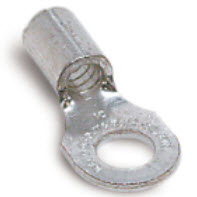
Terminal lugs feature two main components: a barrel and a tongue. The barrel is the cylindrical sleeve on one end, whereas the tongue is the ring-shaped conductive piece on the opposite end.
The barrel is designed to support the end of a cable. To use a terminal lug, you’ll need to strip a few inches of insulation from the end of the cable so that the bare conductor is exposed. You can then insert the stripped end into the terminal lug’s barrel. Using a crimping tool, compress the barrel to achieve a tight and secure connection.
The tongue connects the terminal lug to a fixed point. You’ll typically need to drive a screw through the center of the tongue. Simply position the tongue over the fixed point and tighten the screw.
Terminal Lugs vs Traditional Electrical Terminals
They may look similar, but terminal lugs aren’t the same as traditional electrical terminals. Traditional electrical terminals are designed for general purpose applications, whereas terminal lugs are designed for larger conductors with higher electrical loads and amperage.
To handle higher electrical loads and amperage, terminal lugs require a thick construction. They typically have thicker walls and stronger components. This heavy-duty design allows them to withstand greater heat and stress. Many terminal lugs also feature seamless barrels or reinforced seams for additional strength and durability.
In Conclusion
Choosing the right electrical terminal is important. Traditional ring terminals or spade terminals may not support heavy-gauge cables, which is where terminal lugs come into play. They fill a role that standard electrical terminals simply are not built to handle. Their thicker construction, higher load capacity and secure connection method make them a dependable choice for demanding environments.
source