


In recent times, I’ve been writing a series about some of the world’s popular luxury hotel groups, both big and small.
Some time back, I wrote a post about the Ritz-Carlton brand, posing the question of whether it’s the pinnacle of hospitality, or a brand full of generic luxury factories. In this post, I’d like to take a look at what’s perhaps regarded as Marriott’s other top “mainstream” brand, which is St. Regis.
It’s a brand that I feel has changed quite a bit over the years, and I can’t help but be less excited about it than in the past. The brand still has many great hotels, but not with the level of consistency we saw in the past, in my opinion. Let’s start with a bit of background, and then I’ll share my take.
Basics & background of the St. Regis brand
Nowadays the St. Regis brand is owned by Marriott, and it has just over 60 properties across the globe. The history of what ultimately became St. Regis dates back over 120 years, though the brand has really only become mainstream in the past 30 years.
St. Regis was founded in 1904, when John Jacob Astor built the St. Regis New York, as a sister property to the original Waldorf-Astoria New York, which he partly owned (this is different from the current Waldorf Astoria, which was only built in 1931). The John Jacob Astor name should sound familiar for any frequent St. Regis guest, given that some suite categories are named after him.
Not a whole lot of growth happened with the brand for many decades. In 1966, Sheraton purchased the property, and after an extensive renovation in 1991, the hotel became the flagship for the company, and was branded as the ITT Sheraton Luxury Collection.
Things really got interesting in 1997, when Starwood acquired the Sheraton brand from ITT. In 1998, Starwood decided to formally launch the St. Regis brand, with the rebranding of the the former Ritz-Carlton Aspen as the St. Regis Aspen. Then in 1999, Starwood rebranded the Carlton Hotel in Washington DC as the St. Regis Washington DC.
That’s how the modern day brand was born, and from there, the brand continued to grow. Then in 2016, Marriott acquired Starwood, and with that, the St. Regis brand. Given the size of Marriott’s portfolio, it’s of course not surprising to have overlapping brands, but it’s funny that St. Regis and Ritz-Carlton were initially supposed to be direct competitors, but now belong to the same group (which isn’t to say that individual hotels don’t compete with one another).

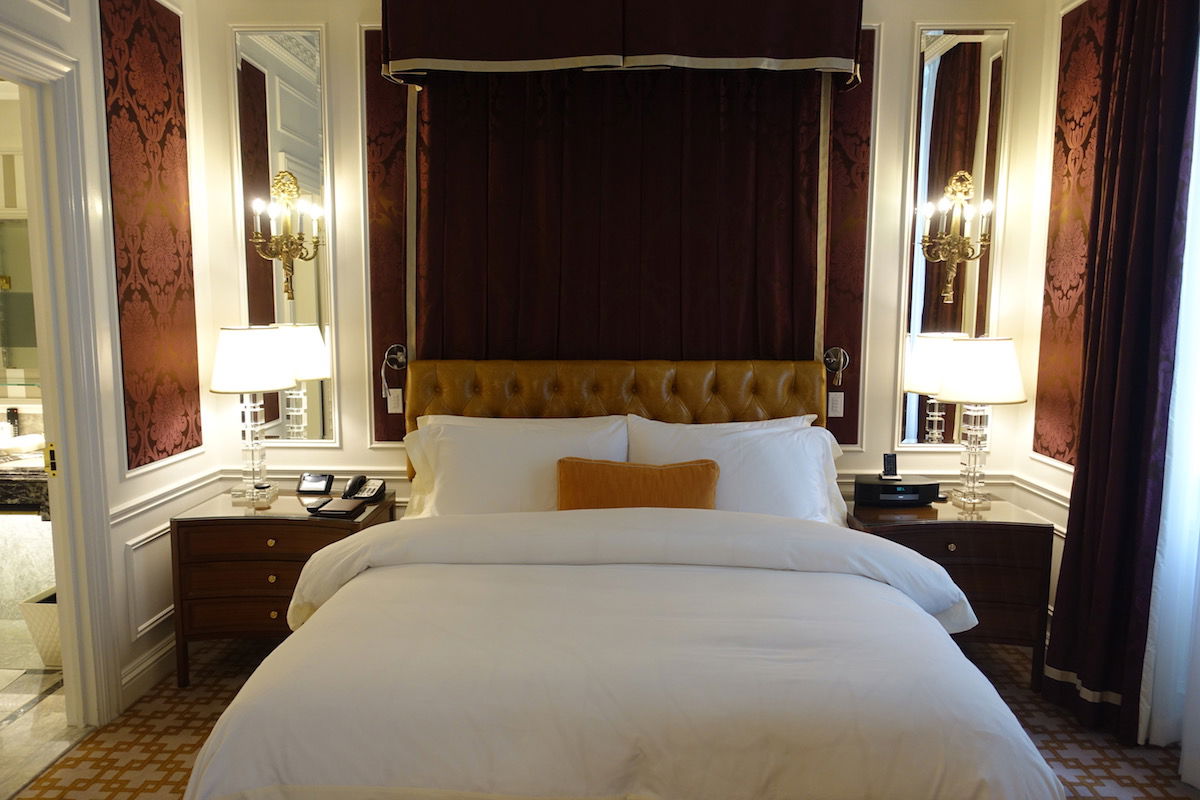
St. Regis used to be my favorite Marriott Bonvoy brand
Going back 10-15 years, St. Regis was probably my favorite major hotel brand, especially in the Starwood days, and even in the early days of Marriott having acquired the brand:
- St. Regis used to be a brand with a lot of “flagship” properties, which is to say that when a St. Regis was built, it was generally very high quality, had an ideal location, a consistent design concept, etc.
- It felt like St. Regis properties consistently had excellent service, and wouldn’t cut corners in any major ways
- I’ve always appreciated that St. Regis is a brand that fully participates in Marriott Bonvoy, so Bonvoy Platinum members can receive complimentary breakfast and other perks, while brands like Ritz-Carlton skimp on that
St. Regis properties just consistently delivered. When you think of the portfolio 15(ish) years ago, which included properties in Aspen, Bal Harbour, Bali, Bora Bora, Florence, New York, Punta Mita, Rome, San Francisco, it was really a very high quality collection of hotels.


The St. Regis brand has really been watered down over the years
I have a harder time getting excited about the St. Regis brand than in the past, and I think that probably comes down to a few primary factors (and I’m curious how others feel).
The obvious factor is what I like to call the Marriott effect. We’ve increasingly seen over the years that Marriott isn’t really in the hospitality business, but instead, is in the room count and hotel owner relationship business. Admittedly that’s technically the case for all hotel management and franchise companies, but you definitely feel it more with Marriott than with others, and it’s especially evident with luxury brands.
This is true in terms of delivery of elite benefits being much less consistent than in the past (like the St. Regis Macao just refusing to give elite members breakfast, and Marriott doing nothing about it), to just generally less consistent and personalized service (I used to love the butler service coffee feature, but nowadays I feel like the benefit comes with more terms & conditions than a sweepstakes, with little consistency between properties).
It also increasingly feels like Marriott isn’t actually holding hotel owners to any standards in terms of design, location, or vibe, when it comes to what can be a St. Regis. It’s pretty wild to me that St. Regis is increasingly becoming a conversion brand, where existing hotels with totally different designs can now become St. Regis properties.
Heck, we’re even seeing Marriott now create the St. Regis Estates brand, because… well, who really knows, but we have reason to be suspicious about the motive.
It just feels like the St. Regis brand is losing steam quite a bit. Yes, new hotels are still opening, but very few of them strike me as global “flagship” properties. The new, purpose-built St. Regis properties are mostly in what I’d consider to be secondary markets or non-ideal locations, while the more globally “mainstream” properties seem to be conversions of existing hotels, which just don’t otherwise fit the St. Regis vibe.
Again, I’m not trying to say St. Regis is dead as a brand, or anything. Instead, I’m just saying that I think at this point you have to deliberately choose whether you want to stay at each individual St. Regis, rather than it being a brand where you can just think “oh, this will be among the best in the city.”
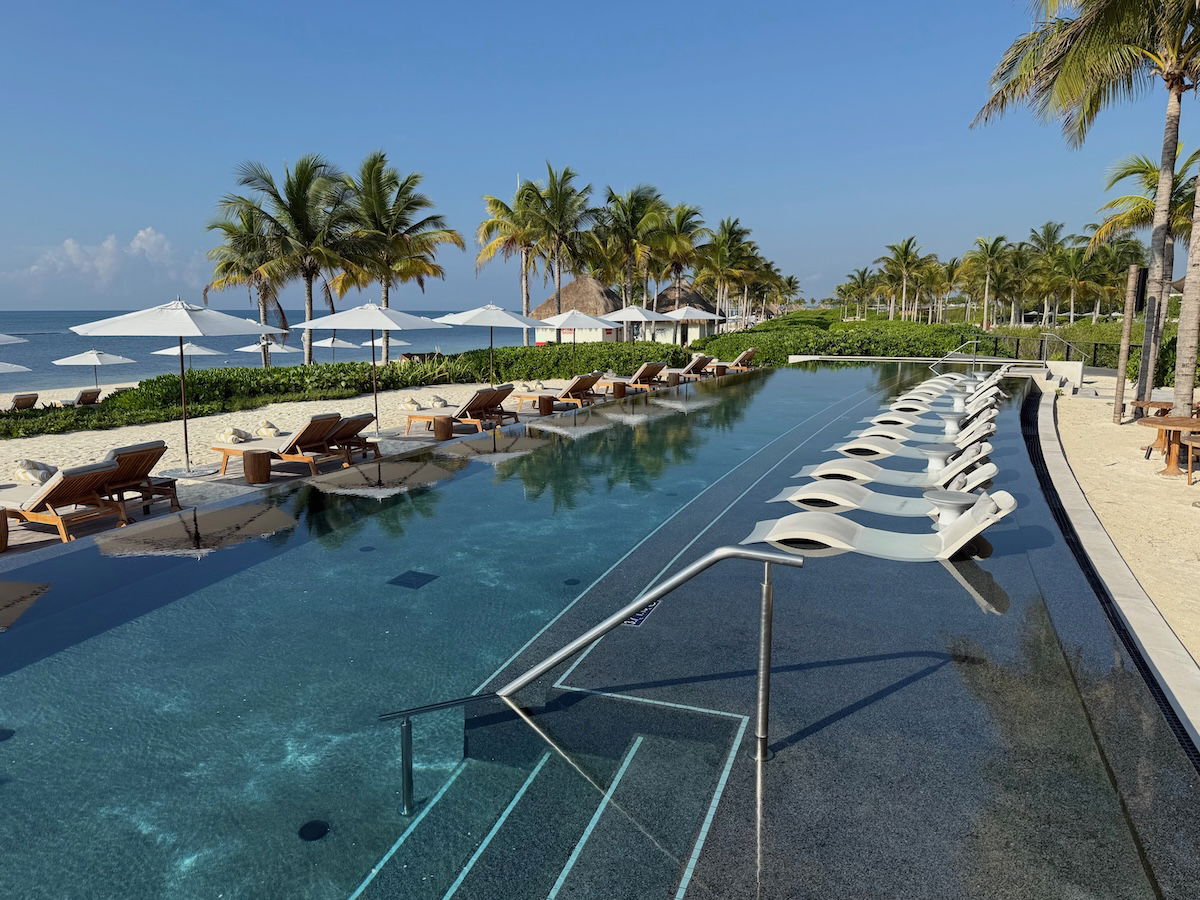
Aren’t all luxury brands being enshittified, though?
Admittedly many people would likely point out that the general enshittification of chain hotels is widespread. I’d say that’s largely true, and I get it — the hotel giants all want to grow at any cost, and appealing to investors of newly built hotels is difficult. So getting a conversion and lowering standards as needed is the next best thing, and their only option, they feel like.
I’d say if you look at the major hotel groups with points programs, there’s probably one luxury brand that’s most trending upward, and that’s Waldorf Astoria. Waldorf Astoria really is on an incredible streak in terms of winning contracts for very lucrative, flagship properties. That’s not to say that all new Waldorf Astoria properties are incredible, but I’d say it’s probably the mainstream luxury points brand portfolio that’s building the most impressive portfolio at the moment.
Am I the only one who feels that way? If others agree, I can’t help but wonder what Waldorf Astoria and Hilton are doing right, that competitors are missing…

Bottom line
St. Regis continues to be one of the better major hotel groups out there with a points program, and in particular, in the Marriott Bonvoy portfolio (given that most elite perks are honored at St. Regis properties).
However, it does feel like general standards (service, property design, etc.) have been compromised over the years. While that’s true of most major hotel groups nowadays, it seems to be especially common with St. Regis nowadays.
I still very much enjoy the St. Regis brand, and stay at the hotels when I can. However, I do a lot more research on each individual St. Regis before deciding to book it, because I think consistency has decreased hugely, and the brand as such can no longer be relied on to delivery a consistent standard.
Where do you stand on the current state of the St. Regis brand?
source