


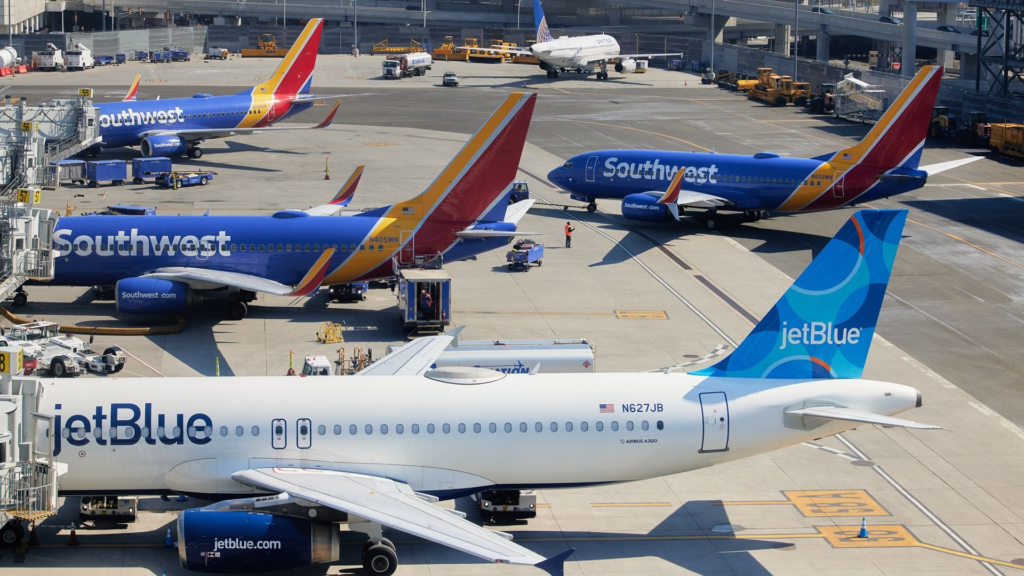


We see Southwest Airlines as providing exceptional value to those who are looking for convenient point-to-point routes, but increasingly see a weaker case to be made for the traditional kinds of travel demographics that value things like the airline’s open seating model and free checked bags, which are clearly on their way out. JetBlue offers a more appealing value proposition to customers at this time, with a strong and growing edge in premium cabins, as well as a network that is increasingly focused on serving off-the-radar destinations that modern leisure travelers are looking to frequent.
Two Carriers That Have Frequently Undergone Radical Transformation


The first and most important thing we would like to highlight about these two airlines is that they are both players that have recently undergone a process of radical transformation. Each carrier experienced prolonged underperformance compared to its industry peers, resulting in increased pressure on management to adjust operational strategy and significantly improve cash flow generation. Though these carriers’ financial transformation plans have yet to be fully achieved, we can get a strong understanding of how they have intended to reorient themselves within the market by evaluating the different ways in which they provide value to customers today.
Southwest Airlines has made the radical pivot away from its decades-old operational model and instead chosen to become more of an ultra-low-cost airline, one that primarily competes for passenger attention on price and convenience. This has harmed the carrier in some core markets, where competing head-to-head with airlines that have stronger value propositions will prevail among marginal travelers who are not swayed by Southwest’s lower fares.
JetBlue is another interesting case. The airline had spent over a decade building out a dynamic network that pushed beyond its traditional connections to leisure destinations in the Caribbean to include destinations all over the United States. The carrier also made the bold pivot to launch a full premium cabin (Mint), which featured lie-flat seating, right before the airline launched flights to destinations in Europe to much fanfare. Following a fleet simplification strategy, the airline looked to cut down costs and even further expand its industry partnerships, most notably through a collaboration with United Airlines.
Southwest’s Inorganic Transformation At The Hands Of Elliott Management

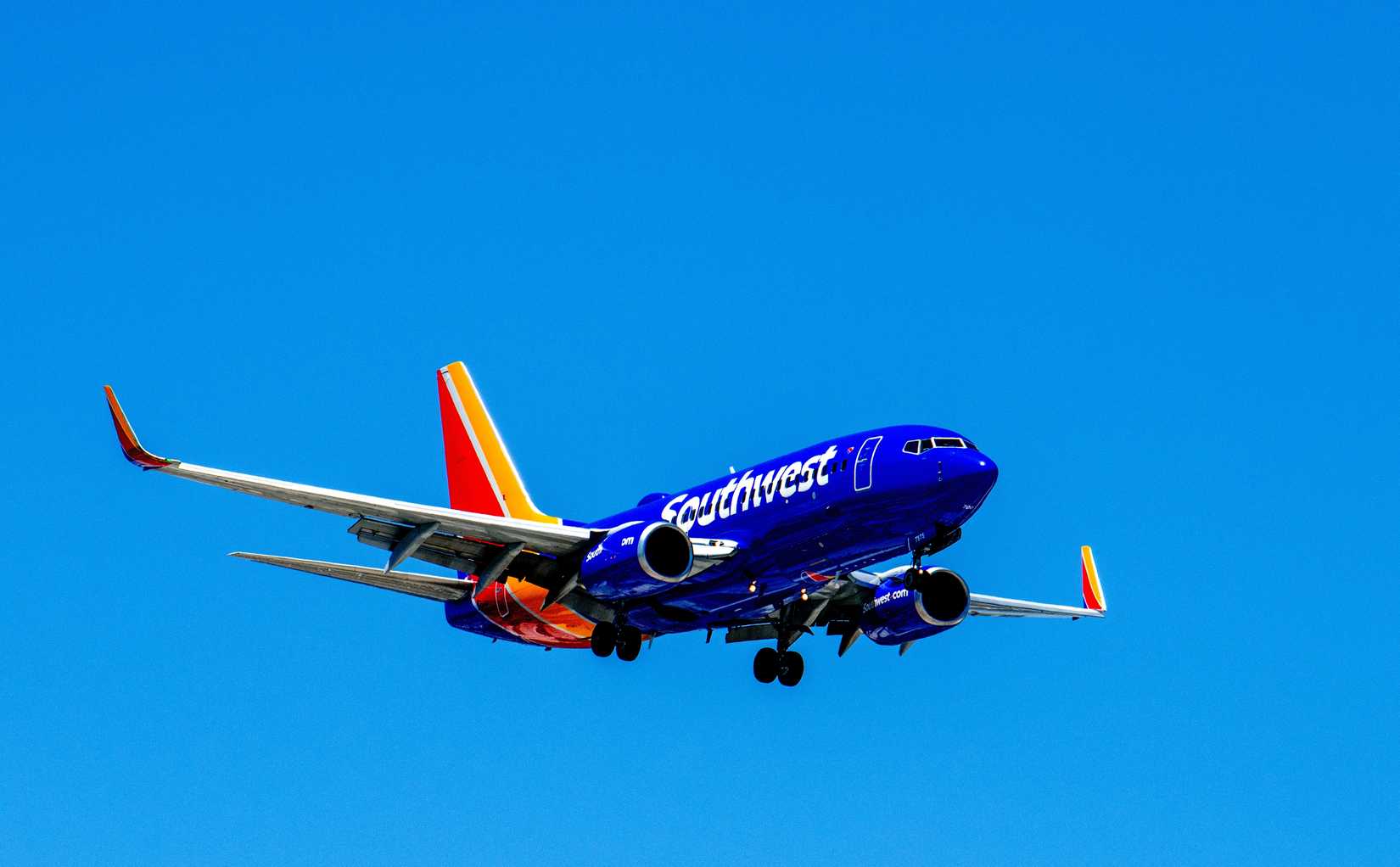
We see Southwest’s dramatic operational and strategic transformation as the principal outcome of the campaign led by activist investment fund Elliott Management against the carrier. In the summer of 2024, following years of underperformance relative to its peers, Elliott Management announced a $1.9 billion stake in the airline and launched a campaign to transform the airline radically. The carrier’s decades-old business model, as well as its boardroom (which was stacked with company veterans), was quickly put under a public microscope. Southwest initially attempted to fend off Elliott Management through $2.5 billion in share buybacks. Still, the activist proved undeterred, pushing forward one of its highest-profile boardroom campaigns in the investment giant’s extensive history.
In the final months of 2024, Elliott Management and Southwest Airlines settled their differences, with the hedge fund getting Southwest to agree to a massive slate of changes. Specifically, Elliott was able to convince Southwest to commit to around $300 million in cost reductions, including the elimination of core elements of Southwest’s business model, including free checked baggage, open seating, and no change fees for customers. Elliott was also able to appoint six independent directors to Southwest’s board, ending decades of in-house boardroom dominance. The airline also agreed to target a 15% return on invested capital (ROIC).
Today, Southwest is in the process of shifting towards the vision that Elliott has cut out for it, one that will likely increase shareholder returns in the short term. A dramatic series of transformations has shifted Southwest Airlines from a family-oriented, employee-centered company with a unique value proposition to individual customers into a low-cost airline unlike any other. When should you fly Southwest today? The company might try to tell you several things. But the answer to this is essentially just when the airline is the cheapest option or when it is overwhelmingly convenient in comparison to others.
A Longer-Term Organic Transformation

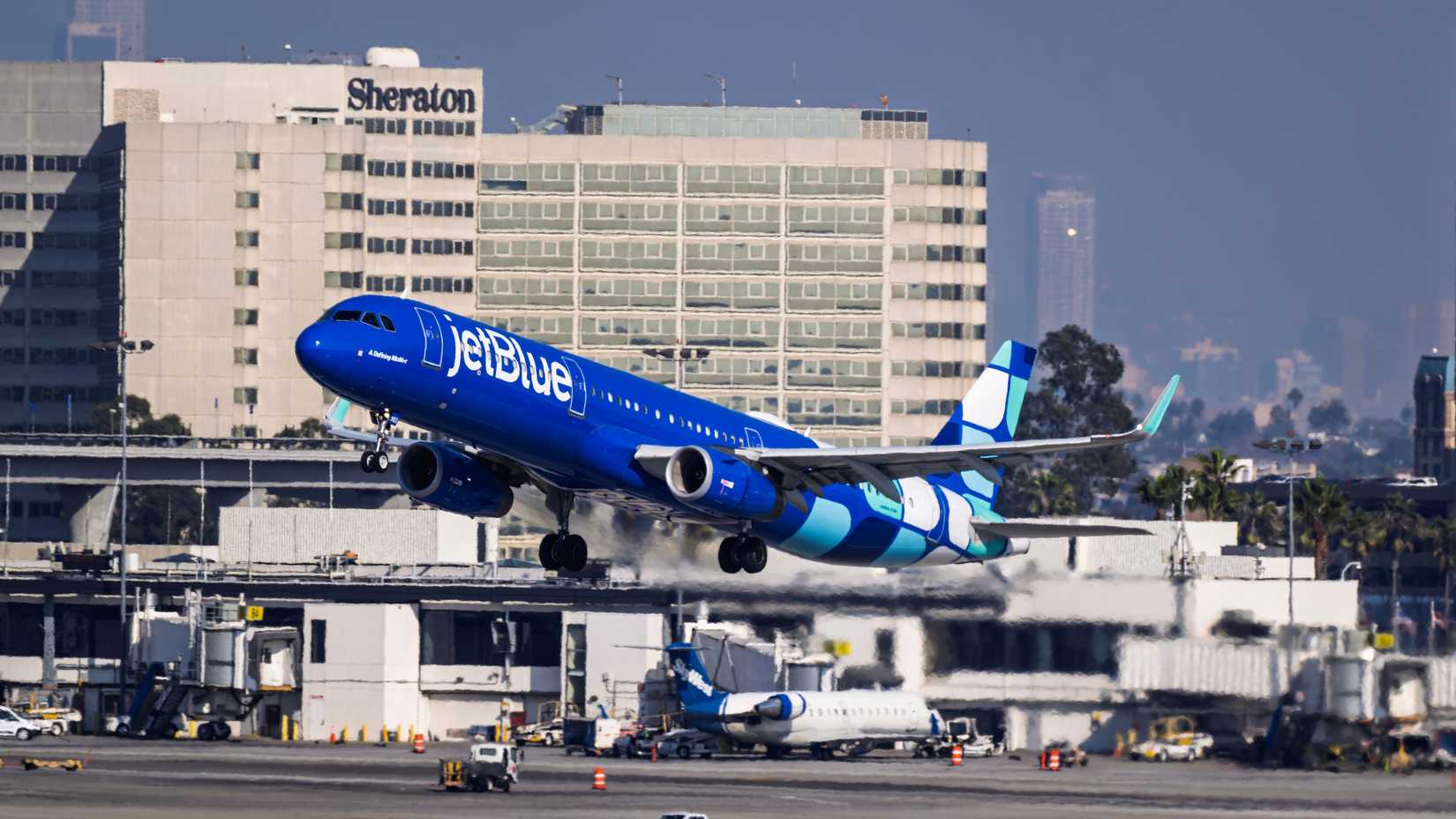
We see JetBlue’s longer-term transformation as providing an attractive value proposition to customers. Throughout the past decade, JetBlue has shifted away from being an upscale low-cost carrier that offered additional entertainment options to being a hybrid airline that provides substantial value for customers through effective product segmentation. It has managed to monetize customer choice in this process without abandoning a consumer-friendly brand. JetBlue added Mint to its product offering, a true premium cabin that offered a curated dining experience, a move that reset transcontinental expectations. The carrier then took this seemingly winning playbook onto transatlantic routes, where narrowbody Airbus A321LR jets offering unique service and boutique pricing aimed to provide exceptional value for customers, according to Live And Let’s Fly.
At this time, the airline also introduced fare families, including Blue Basic, to its system, helping win over price-sensitive shoppers while keeping add-on options available. This allows customers to pay for what they value, while also offering a premium-oriented experience if that is what interests them. The airline’s core economy-class experience was differentiated by providing free, fast WiFi, seatback entertainment, and snacks, even through the process of cabins being refreshed and re-densified.
Airline loyalty slowly evolved from a simple points-based system into an earn-on-everything structure that prioritized things like status and stronger credit card economics, all of which were designed to reward frequent flyers and avid spenders. The airline’s network strategy shifted from an East Coast point-to-point niche into one focused more broadly on targeting different kinds of cities. The airline has an established long-haul network and supportive partnerships.
How Do We Compare The Two Carriers In Terms Of Value Proposition?
We see JetBlue and Southwest as two carriers that fundamentally attempt to generate value in different ways. JetBlue elects to lean into a premium-lite business model, offering high-speed WiFi and seatback entertainment at every seat, in addition to offering more legroom than the carrier’s rivals. JetBlue Mint’s lie-flat suites are available on select routes, allowing the airline to charge up front for comfort while maintaining lower costs. Bags and extras are typically pay-as-you-go, with passengers having the opportunity to bundle these services together.
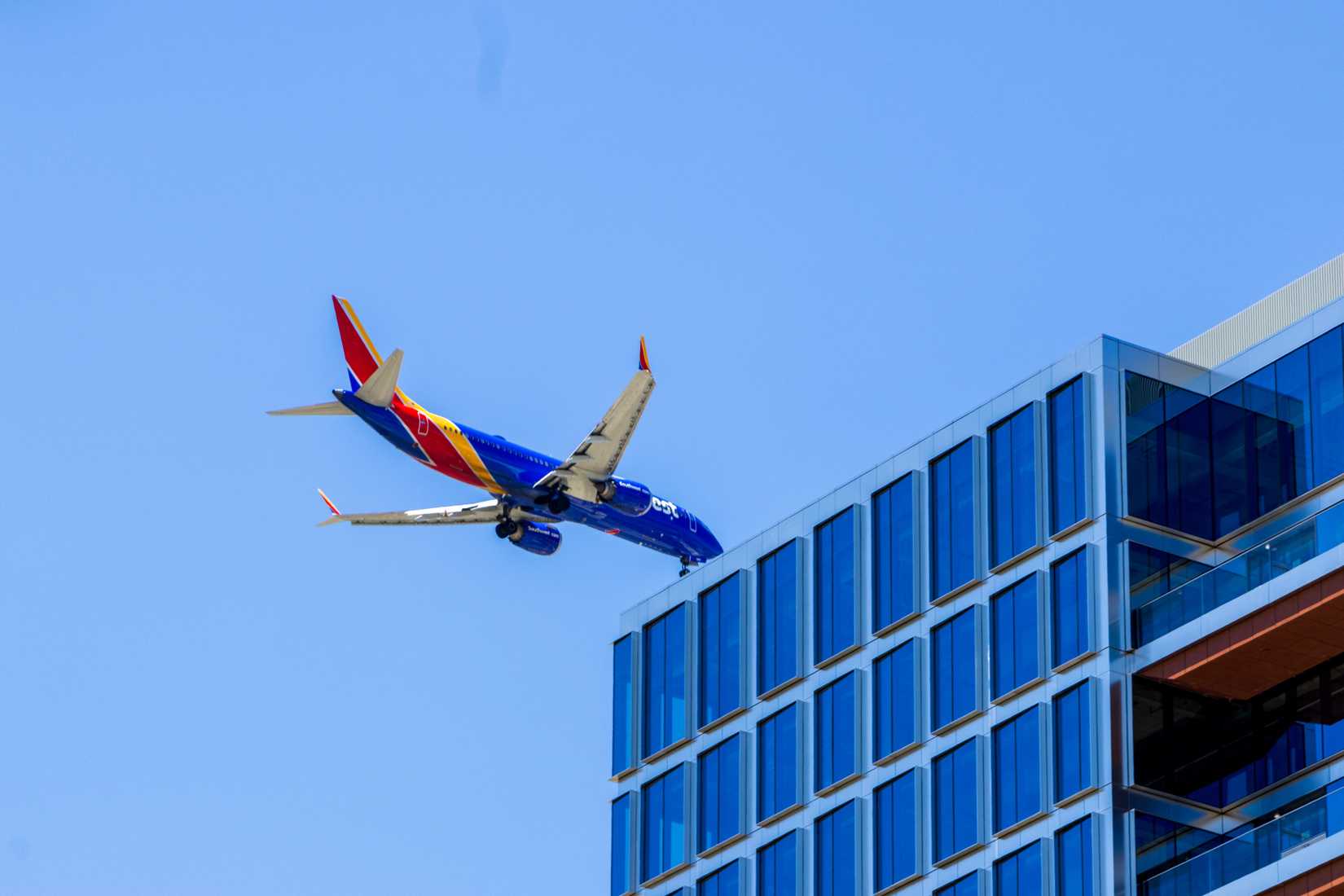
Southwest, on the other hand, is pushing towards a model defined mostly by simplicity. Tickets will get you from Point A to Point B, with limited opportunities for a premium experience. There is little to differentiate Southwest from other low-cost carriers other than its dynamic network.
|
Carrier: |
Key Value Proposition Features: |
|---|---|
|
Southwest |
|
|
JetBlue |
|
Where the two differ, in our eyes, is in network capabilities. JetBlue’s network is more centered in the Northeast, and emphasizes offering convenience to passengers looking for travel options to popular leisure destinations all across the country.
What Do Investors Think?
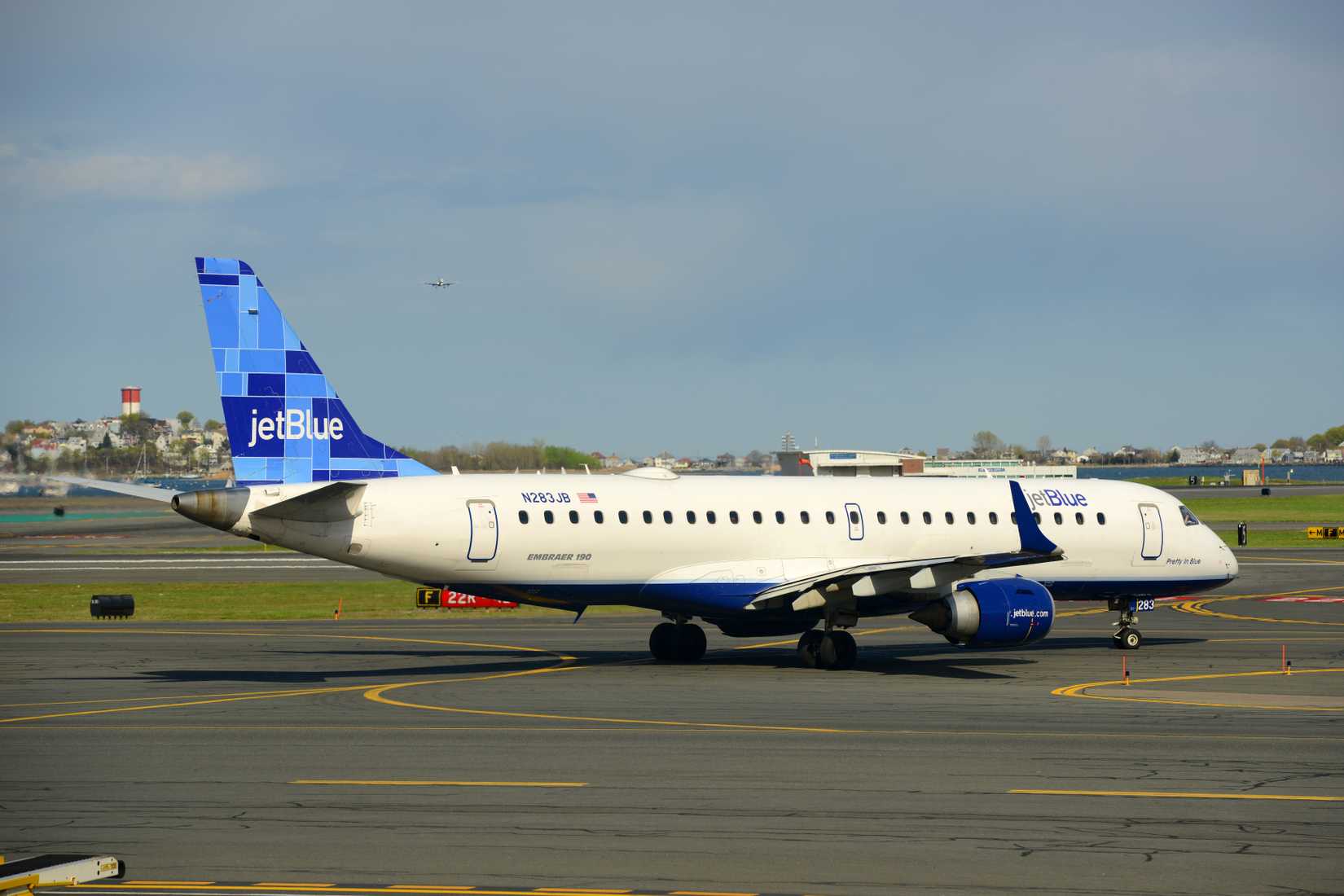
At this moment in time, analysts are not particularly excited about either stock. JetBlue has a sell rating from most analysts, while Southwest is broadly seen as a modest hold. However, there have been movements over the summer that could suggest there could be a stronger pathway forward for both carriers.
Despite a year-to-date decline of around 35%, JetBlue shares have offered steadier returns since April, with summer traffic helping to pad margins. However, the broader analyst community still maintains a sell rating for the stock, seeing a relatively weak financial outlook, according to Yahoo Finance.
Southwest shares have slid around 6% year-to-date, with continued improvements in performance over the summer mostly being attributable to stronger performance than anticipated in key leisure markets. The carrier still trades at an industry-leading price-to-earnings ratio of around 49.47.
What Is The Bottom Line?

We see both JetBlue and Southwest as carriers providing unique value to customers through differentiated business models. Southwest, specifically, has made a major operational shift since becoming involved in Elliott Management.
This operational tilt has not only changed the way the company markets itself to customers but also how it generates long-term cash flows. JetBlue, despite continued struggles, has actually built a unique kind of value proposition.
We see both carriers as airlines looking to continue growing their market share when larger carriers (particularly United, Delta, and Alaska) are increasingly cannibalizing their market shares. Investors will need to keep their eyes peeled for how these continued operational shifts will impact customer decision-making.




- IATA Code
-
WN
- ICAO Code
-
SWA
- Hub(s)
-
Baltimore/Washington International Thurgood Marshall Airport, Dallas Love Field, Denver International Airport, Harry Reid International Airport, Hartsfield-Jackson Atlanta International Airport, Houston Hobby Airport, Los Angeles International Airport, Midway International Airport, Oakland International Airport, Orlando International Airport, Phoenix Sky Harbor International Airport
- Year Founded
-
1967
- CEO
-
Robert Jordan
source