


Both airlines also have long-standing reputations for reliability and consistency, built on decades of international flying and close ties to their home hubs. Their strategies have evolved over time, but each continues to be shaped by geography, with Singapore positioned as a major Southeast Asian gateway and Hong Kong serving as one of the region’s most important financial and transit centers.
Singapore Airlines carried 26.5 million passengers in FY2024, while Cathay Pacific transported 22.8 million passengers in 2024. Despite Singapore Airlines carrying more passengers, Cathay Pacific maintains a larger widebody fleet, as well as a larger overall fleet.
Overview of Each Airline

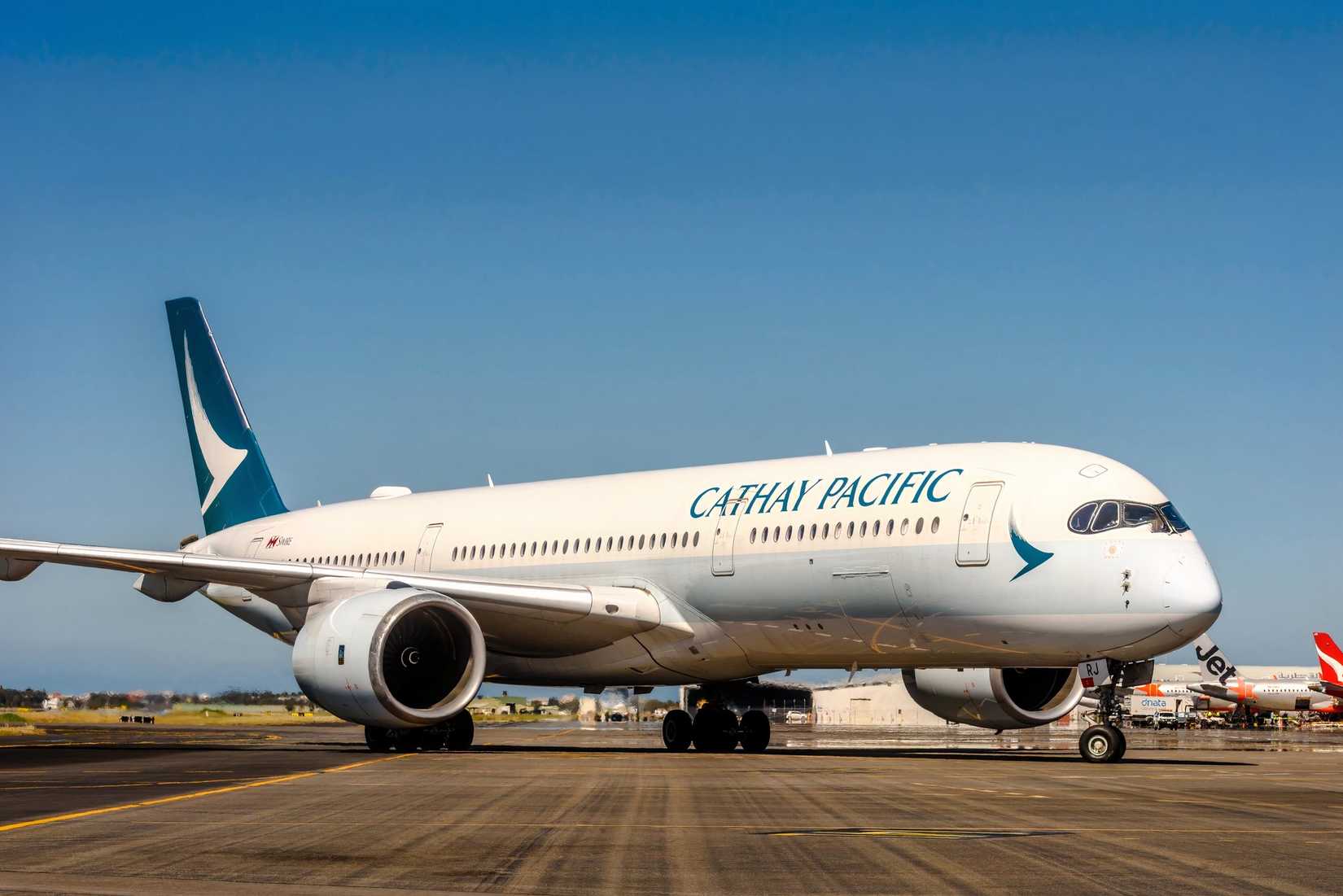
Singapore Airlines is the flag carrier of Singapore and is known for its strong focus on service and long-haul travel. The airline operates out of 
Cathay Pacific is based in Hong Kong and serves a similar mix of long-haul and regional routes. Its main hub at 
Cathay Pacific and Singapore Airlines rely heavily on connecting traffic that flows through their hubs. Many passengers are not starting or ending their trips in Singapore or Hong Kong, but are using the airports to change flights between other cities. Singapore Airlines is a member of the 
Both airlines are major players in the region and often compete on the same long-distance markets. They also rely heavily on widebody aircraft, which makes comparing their fleets and networks especially interesting.
A Look Into Their Widebody Fleets

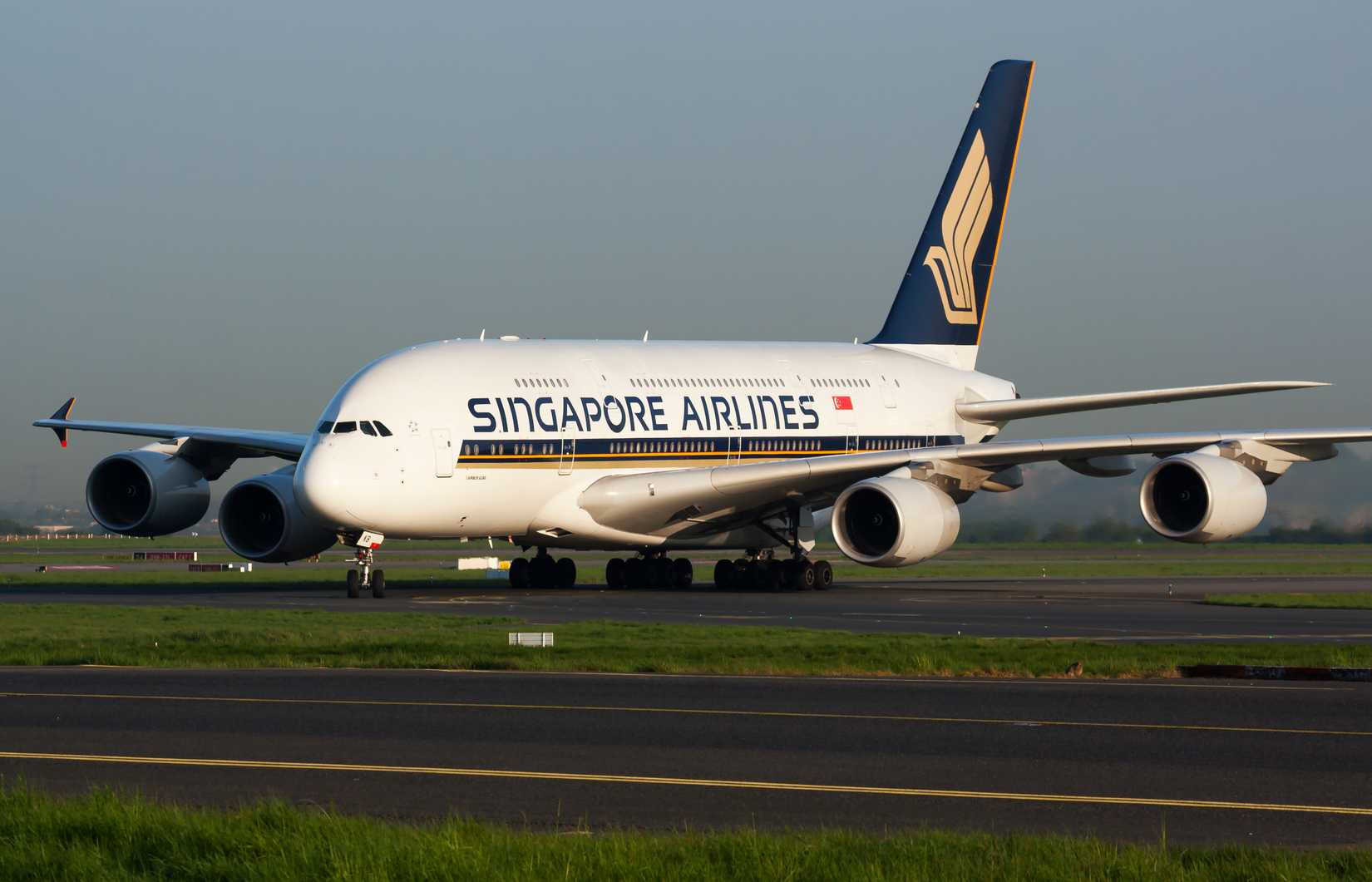
Both airlines rely heavily on widebody aircraft, and their long-haul networks are built around major Airbus and Boeing types. Cathay Pacific fields a mix of A330s, A350s, and 777s. Singapore Airlines, by contrast, is anchored by the A350 family, with additional capacity from a small but notable A380 fleet alongside its 777s and 787s.
Historically, both carriers also operated large numbers of Boeing 747s. Singapore Airlines once flew an extensive 747 fleet and previously relied on the A330 for medium-haul flying before retiring the type in 2020. Cathay Pacific similarly operated a sizable 747 fleet. Over time, both airlines shifted toward more fuel-efficient twin-engine aircraft, shaping the widebody lineups they use today.
|
Widebody Fleets (Passenger Aircraft) |
|||
|---|---|---|---|
|
Singapore Airlines |
Cathay Pacific |
||
|
Aircraft |
Quantity in Service |
Aircraft |
Quantity in Service |
|
A350-900 |
56 |
A330-300 |
41 |
|
A350-900ULR |
7 |
A350-900 |
17 |
|
A380-800 |
9 |
A350-1000 |
29 |
|
777-300ER |
21 |
777-300 |
16 |
|
787-10 |
23 |
777-300ER |
33 |
|
________ |
________ |
________ |
|
|
Total: |
116 |
136 |
|
|
Source: ch-aviation |
|||
Cathay Pacific ultimately has the larger widebody fleet, driven by its use of the A330, A350-1000, and 777-300ER. Singapore Airlines, meanwhile, operates a slightly more streamlined mix, with the A350-900 forming the backbone of its long-haul operations. Looking ahead, Cathay has an order for 30 A330-900neos, while Singapore Airlines has 31 Boeing 777X aircraft on order.

Qatar Airways To Sell Its Stake In Cathay Pacific
Interesting news when it comes to airlines holding stakes in other airlines!
Closer to the beginning of November it was revealed that Qatar Airways would be divesting itself of its stake in Hong Kong carrier Cathay Pacific. Considering Qatar Airways has invested in numerous airlines around the world, what does such a move mean for the middle eastern carrier?
What About Narrowbody Fleets?

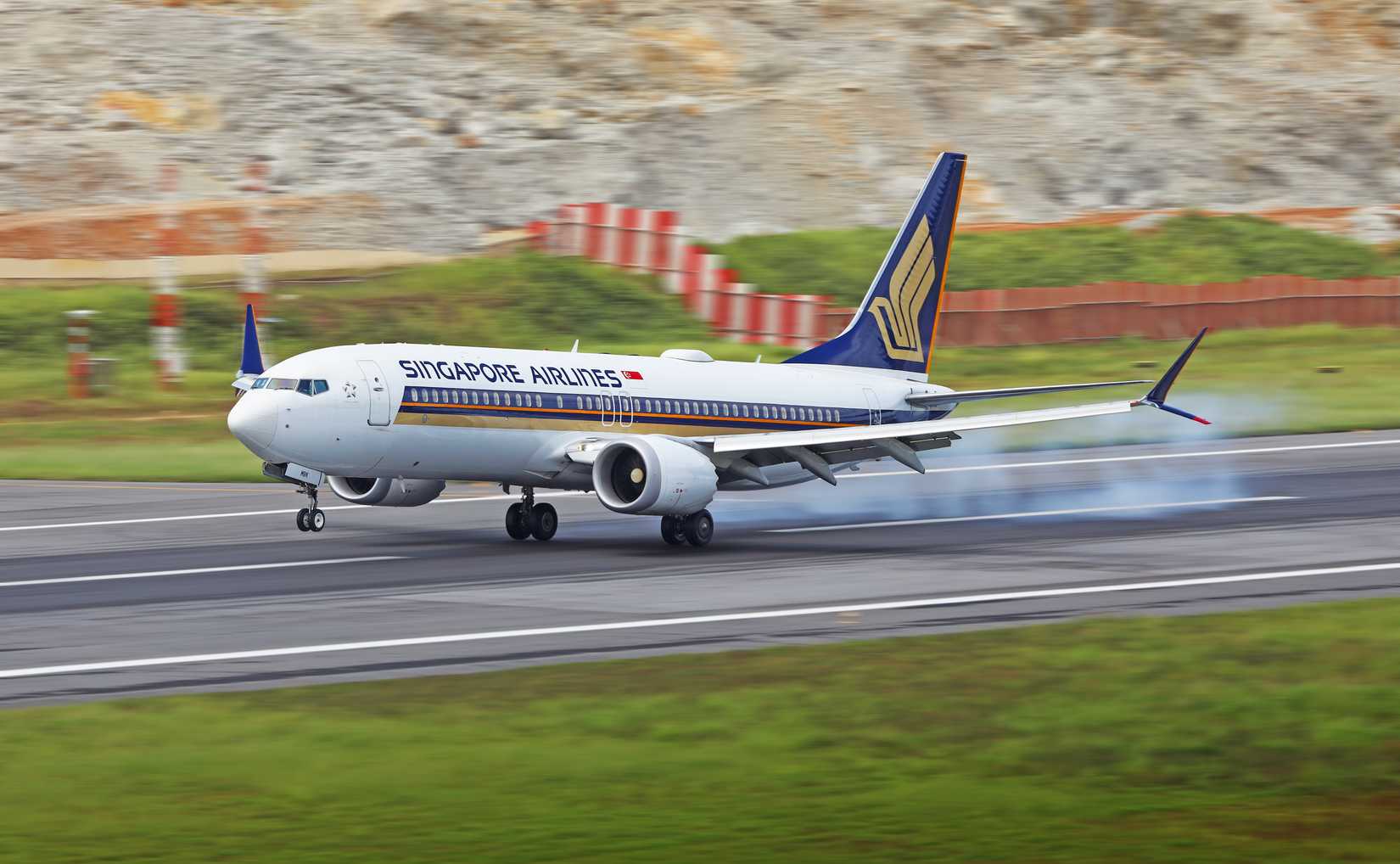
Both Cathay Pacific and Singapore Airlines operate just one narrowbody type in 2025. Cathay uses the Airbus A321neo, while Singapore Airlines flies the Boeing 737 MAX 8. Cathay Pacific has 16 A321neos in service with another 15 on order, and Singapore Airlines operates 19 examples of the 737 MAX 8 with seven still to be delivered.
Most of Cathay Pacific’s A321neo flights serve mainland China, with additional routes to nearby Asian destinations. Singapore Airlines, by contrast, utilizes its 737 MAX fleet more broadly across Asia, including service to cities such as Busan, the longest flight operated by the type.
Singapore recently retired its last 737-800, completing its transition to an all-MAX narrowbody fleet. For Cathay Pacific, the A321neo marks its first narrowbody aircraft under the main Cathay brand in the modern era.
Compared to other major Asian carriers, both Singapore Airlines and Cathay Pacific maintain relatively small narrowbody operations. Airlines like China Eastern Airlines and 
Cargo Operations


Both airlines operate significant cargo businesses, using a combination of dedicated freighter aircraft and the belly space of their passenger fleets. This dual approach allows each carrier to serve high-demand freight markets while also maximizing cargo capacity on long-haul passenger routes.
Cathay Pacific operates the larger cargo business, strengthened by its base at Hong Kong International Airport, one of the world’s busiest cargo hubs. The airline operates 20 dedicated freighters, including 747-400ERFs and the newer 747-8F, compared with Singapore Airlines’ fleet of five 777-200Fs.
|
Cargo Fleets |
|||
|---|---|---|---|
|
Singapore Airlines |
Cathay Pacific |
||
|
Aircraft |
Quantity in Service |
Aircraft |
Quantity in Service |
|
777-200F |
5 |
747-400ERF |
6 |
|
747-8F |
14 |
||
|
Total: |
5 |
20 |
|
Both airlines have also committed to the next generation of cargo aircraft. Singapore Airlines has seven Airbus A350F freighters on order, while Cathay Pacific has six on the books. The A350F features one of the largest main deck cargo doors in the industry, with a cutout width of 175 inches and a clear opening of 169.5 inches, allowing it to handle oversized freight more easily. It is also expected to be one of the most fuel-efficient freighters available, giving both carriers a significant efficiency upgrade as they modernize their cargo fleets.
Several other passenger airlines also operate large and well-established cargo divisions. Qatar Airways Cargo and Emirates SkyCargo are two of the biggest global players, each operating sizable fleets of Boeing 777 freighters and carrying significant volumes of international freight. In Asia, Korean Air Cargo and China Airlines Cargo are major operators as well, both maintaining large 747 and 777 freighter fleets that serve worldwide markets.
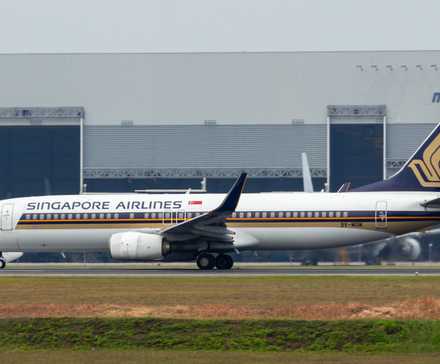
Singapore Airlines Prepares To Operate Its Final Boeing 737-800 Flight
The last service will arrive back in Singapore on Sunday morning.
Most Frequent Routes

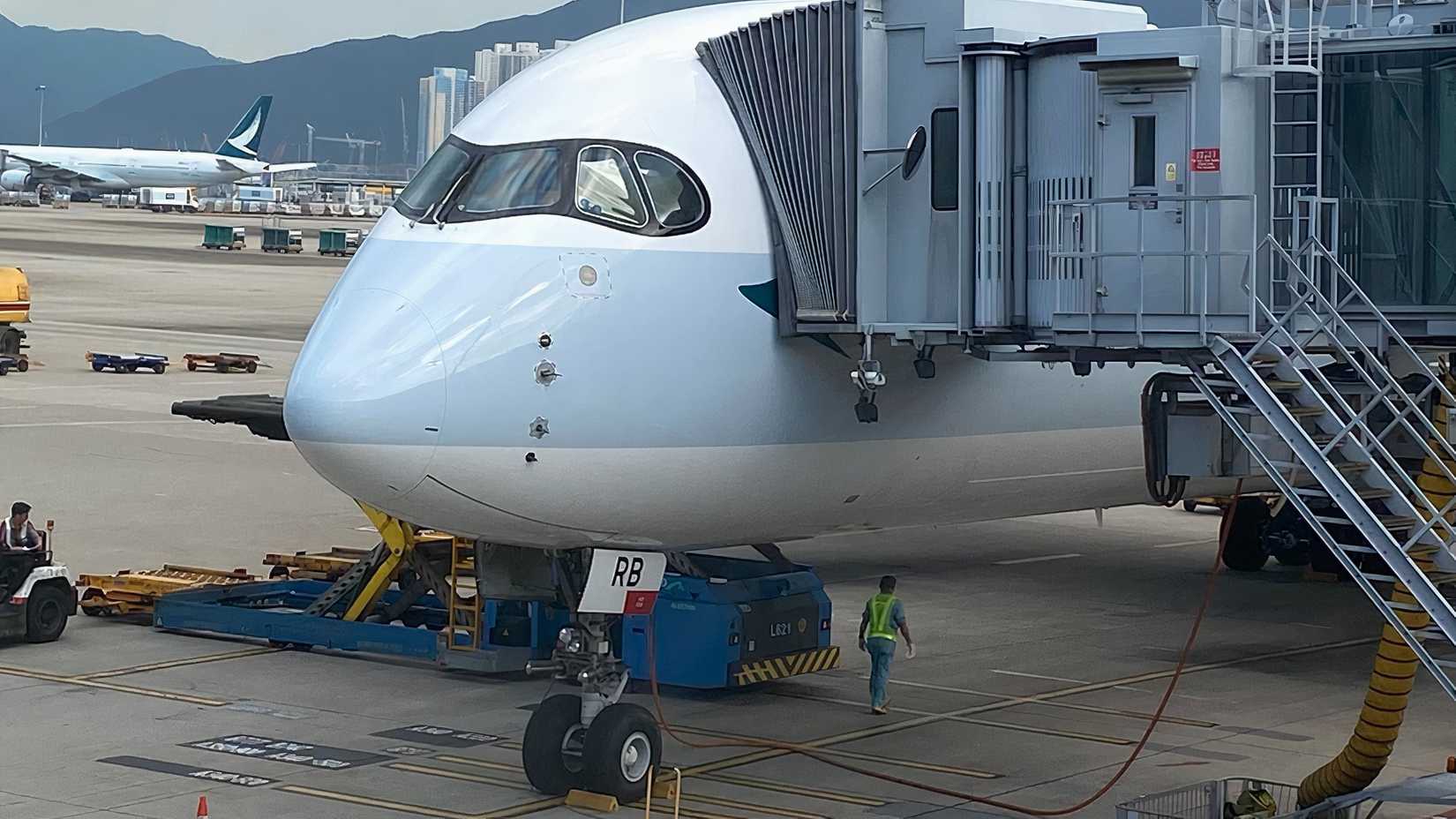
Both airlines operate extensive networks spanning Asia, Europe, Australia, and North America. Their long-haul operations attract the most attention. Still, a significant share of their schedules is built around short- and medium-haul routes that support regional connectivity and feed long-haul flights.
For Cathay Pacific, the most frequently flown route in 2025 is Hong Kong to Taipei, with 4,292 round-trip flights, according to route data provided by Cirium. This far exceeds any of Cathay’s other routes, underscoring the strong demand between the two cities despite the short distance of just 501 miles (806 km).
Other high-frequency routes include Hong Kong-Singapore (2,771 round-trip flights), Hong Kong-Bangkok (2,762), and Hong Kong-Shanghai Pudong (2,705). The large gap between Hong Kong-Taipei and all other routes underscores the importance of this short sector within Cathay’s network, especially given that Hong Kong-Singapore is roughly three times as far.
Singapore Airlines also relies heavily on high-frequency regional routes. Its busiest city pair in 2025 is Jakarta-Singapore, with 3,172 round-trip flights, followed by Singapore-Kuala Lumpur (2,791), and Singapore–Bangkok (2,190). All of these routes are under 1,000 miles, and Kuala Lumpur–Singapore stands out as one of the shortest at just 184 miles. These flights play a crucial role in funneling regional passengers through Changi Airport and supporting connections onto Singapore Airlines’ long-haul services.
What Is The Overall Takeaway?
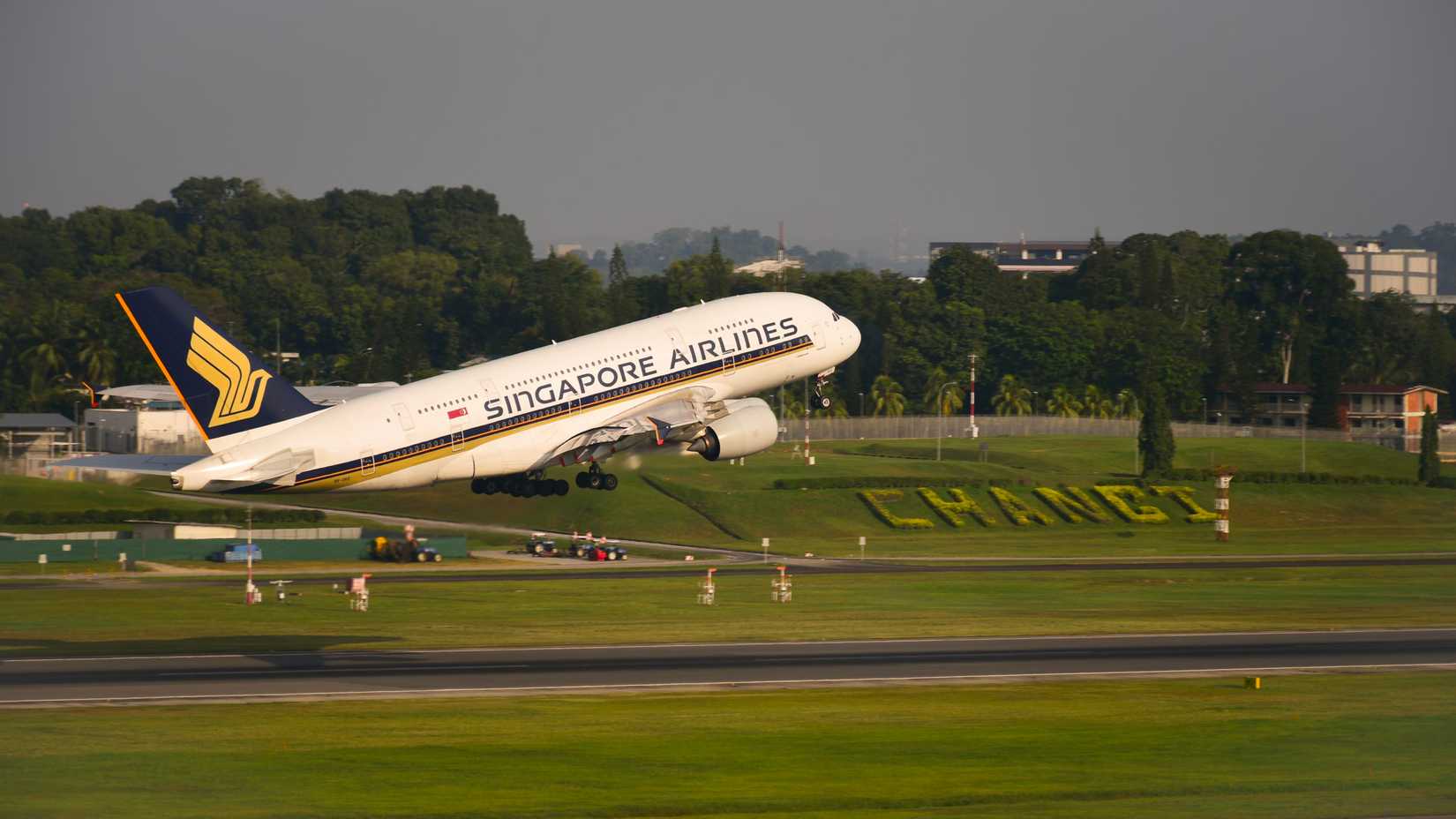
Looking ahead, both carriers are investing in next-generation aircraft. Singapore Airlines and Cathay Pacific have both committed to the Boeing 777X, while Cathay Pacific is also preparing to modernize its fleet with the A330-900neo. Both have also ordered the fuel-efficient Airbus A350F to strengthen their cargo operations.
Both groups also operate low-cost subsidiaries that broaden the types of travelers they can serve. Singapore Airlines owns Scoot, which focuses on leisure markets and price-sensitive passengers across Asia and beyond. Cathay Pacific operates HK Express, which plays a similar role for the Hong Kong market. These carriers allow each group to participate in different segments of demand while complementing their mainline networks.
Overall, each airline’s fleet choices reflect its home geography and network needs. Cathay Pacific has the larger widebody presence, while Singapore Airlines maintains a more varied mix of long-haul aircraft. Both carriers remain influential players in Asia and are positioned to stay competitive well into the future.
source