


It’s a fascinating time for the luxury cruising industry, given how the space is evolving. In particular, it’s interesting to see luxury hotel groups get into cruising, even if it’s largely just a licensing deal.
In 2022, we saw the launch of Ritz-Carlton Yacht Collection. This year we’re also seeing the launch of Four Seasons Yachts and Orient Express Sailing Yachts, and next year we’ll see the launch of Aman at Sea.
With Ritz-Carlton Yacht Collection being the established “hotel” player, it’s interesting to take an updated look at the company’s serious struggles with profitability, covered in a new Financial Times story (thanks to Stephen for flagging this).
The good news is that the company’s lenders have agreed to ease terms to keep the cruise line afloat, but the bad news is that it just really seems questionable when this endeavor will be profitable, especially with increased competition.
Ritz-Carlton Yacht Collection not meeting projections
Before we get into the details of Ritz-Carlton Yacht Collection’s financials (or at least what’s known of them, given that the company isn’t publicly traded), let me provide a simple rundown of the problem.
Long story short, Ritz-Carlton Yacht Collection is commanding average fares of somewhere around $1,900 per guest per day, which is of course excellent, in line with projections, and at the top end of the market. The major issue is occupancy. While we don’t have the full details of Ritz-Carlton Yacht Collection’s occupancy levels, we know that in the first half of 2025, cruises were, on average, roughly half full.
The company is aiming for average occupancy levels of 85-90%, and the timeline with which that’s realistic keeps getting pushed back, with the goal now being for that to happen by 2029. This is also why Ritz-Carlton Yacht Collection has been spending a ton of money on marketing (more than $100 million in 2025 alone) — the company understandably doesn’t want to lower cruise fares, but instead, hopes to attract a larger potential customer base. So when you combine low occupancy with a lot of marketing spending, that’s a rough combination.
Now, to get into a bit more detail, 55% of the company is owned by private equity firm Oaktree, with Singaporean wealth fund GIC and Mohari Hospitality holding minority stakes. Let me emphasize that the connection to Ritz-Carlton is primarily just about marketing, as it’s not like Marriott owns the cruise line, or anything.
Since launch, the company has racked up losses of around $700 million, and of course it has a lot of debt, with Credit Agricole, the company’s largest creditor, having $918 million in outstanding debt. Much of that debt was coming due, which could’ve caused major issues for the cruise line, given the risk of a default.
However, the company’s largest creditor has agreed to defer repayments linked to the financing of the company’s two newest ships. Two loans have been extended from December 2025 to January 2028, and from December 2027 to January 2033.
In exchange, the company’s controlling shareholders have agreed to inject another $275 million in equity, meaning the total capital injected is now over $1 billion.
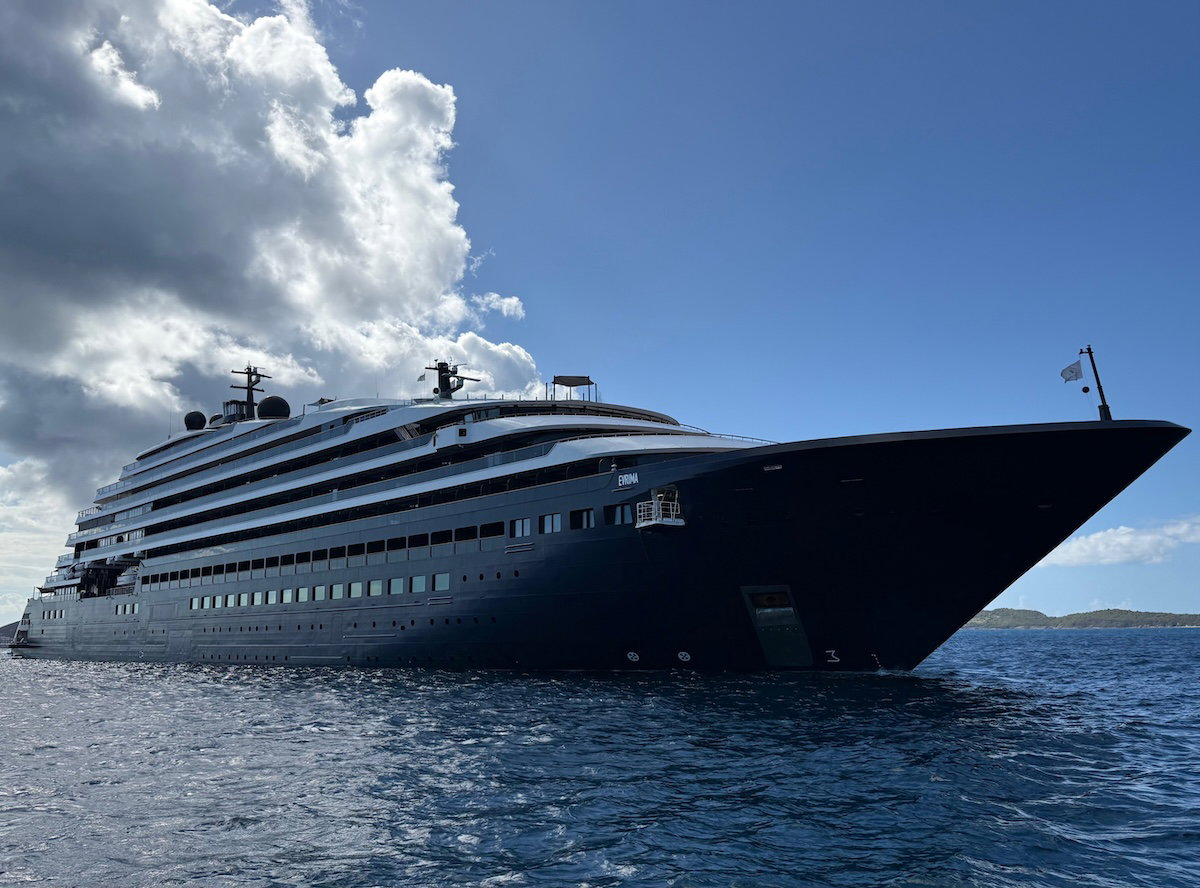
As a reminder, I recently sailed on Ritz-Carlton Yacht Collection’s Evrima ship, and had a surprisingly (to me, as a non-cruiser) lovely time.

Are these growing pains, or is there a bigger problem?
Admittedly it can take any business time to ramp up operations and become profitable, especially with the pace at which Ritz-Carlton Yacht Collection is growing, going from one ship to three ships in just a couple of years.
However, it’s clear that the business isn’t performing to projections, and capacity in this segment is only going to increase more, as brands like Four Seasons, Orient Express, and Aman, also take to the seas, with competing products (and that says nothing of MSC’s Explora Journeys, which is a bit more affordable, but still going after a similar general segment).
It makes me wonder if there’s a bigger issue with the market they’re going after. Cruising is of course an incredibly popular way to vacation, and my general impression is that the typical guest profile fits into one of three primary categories:
- The more “mainstream” and upscale cruise lines offer relatively affordable and easy vacations, and I can completely see the appeal
- The ultra luxury cruise lines are largely targeted at an older crowd, who enjoy the cruising lifestyle, have the money to pay for it, and are incredibly brand loyal
- Then you have the whole world of expedition cruising, for places that can’t otherwise easily be explored by land, like Antarctica, which has wide appeal across demographics (though sometimes they’re not kid friendly)
I think the question is, how big is the market of people who are willing to pay top dollar for a luxury cruise, outside of those typical demographics? In the cases of these hotel-branded ventures, it seems like they’re almost positioning themselves as cruise lines for people who wouldn’t typically cruise.
Yes, I think a lot of people might give this a try once, but will they continue to vacation this way? As I see it, there are two major issues:
- I think these cruise lines are largely targeted at affluent families, and that’s a tricky demographic if you’re aiming for 85-90% occupancy, since most people aren’t going to take their kids out of school for a cruise
- Especially on the high end, travel is more about “scene” than ever before, and no matter how well a cruise line is branded, I don’t think many people are willing to replace their annual “see and be seen” pilgrimage to Saint-Tropez, Mykonos, Ibiza, etc., with a cruise
With the amount of capacity coming to market all at once, I think that presents a challenge and opportunity. It’s a challenge for the obvious reason that there’s a lot of competition for a fairly new market. At the same time, with several very well regarded and “cool” hotel groups getting into the industry at the same time, it lends the concept some legitimacy, and creates a lot of chatter.

Bottom line
Ritz-Carlton Yacht Collection launched operations in 2022. Since launch, the company has struggled greatly with occupancy, given that the priority has been to maintain high fares. Since launch, the company has lost $700 million, and it seems to constantly be on the verge of defaulting on its debt.
The “hotel” cruising segment is still quite new, and with the amount of capacity being added, filling ships isn’t easy! On top of that, the market keeps getting more competitive, with Four Seasons, Orient Express, and Aman, all getting into the industry as well. That could be a challenge, but also could be an opportunity, in terms of this becoming a legitimate new sector of the cruising industry.
What do you make of this part of the cruising industry, and how do you think it will evolve?