


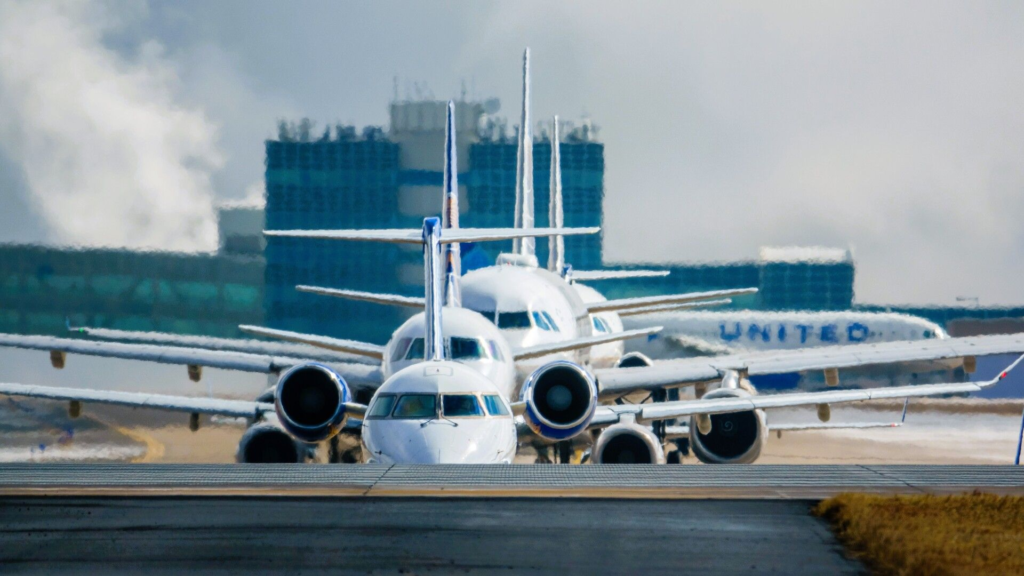
As the United States crawls towards a potential end to the government shutdown, the US aviation sector has been taking a beating. The Federal Aviation Administration (FAA) ordered a reduction in flight capacity at 40 major airports across the country, starting from Friday. As that order has gone into effect over the past few days, thousands of flights have been canceled and tens of thousands more have experienced severe delays.
The most impacted carrier thus far has been 

Over 8,000 Flights Canceled Since Friday


Looking at FlightAware data for delays and cancellations since the FAA order went into effect on Friday, over 8,000 flights have been canceled and more than 30,000 have experienced severe delays. Specifically, looking at the past three full days of data when the order has been in full force, the average cancellation rate across US airlines is 9%. This is more than double the starting rate of 4% that the FAA prescribed, which is set to build to a target of 10% by the end of this week.
The mainline fleets of the US Big Four carriers accounted for nearly 3,000 of the cancellations over this period, with Delta undoubtedly suffering the most. Between cancellations and delays, nearly half of all flights for the Atlanta-based airline have been impacted. By contrast, 
|
US Big Four Cancellations & Delays: 8-10 November 2025 (FlightAware) |
||||
|
Airline |
Cancellations |
% Canceled |
Delayed Flights |
% Delayed |
|
Delta Air Lines |
1,170 |
11% |
3,435 |
34% |
|
American Airlines |
665 |
6% |
3,459 |
34% |
|
Southwest Airlines |
646 |
5% |
4,487 |
37% |
|
United Airlines |
448 |
5% |
3,248 |
36% |
Part of the reason for this disparity is that United has focused from the outset on keeping the flight cancellations away from its mainline fleet as much as possible. CEO Scott Kirby had the following to say in an update to United employees last Wednesday:
“United’s long-haul international flying and our hub-to-hub flying will not be impacted by this schedule reduction direction from the FAA. Instead, we will focus our schedule reductions on regional flying and domestic mainline flights that do not travel between our hubs.”
Regional Carriers Are Taking The Hit

While mainline operations have undoubtedly been impacted by cancellations and delays at a far higher rate than normal, it is the smaller carriers that have taken the biggest hit. Regional operators such as SkyWest Airlines and Republic Airways, which carry out around 30% of US domestic flights on any given day, have accounted for a total of 46% of all cancellations over the past three days.
GoJet Airlines, which flies in the colors of United Express, is top of the ‘leaderboard’ with a quarter of its flights canceled over this period, followed closely by Republic with a 21% cancellation rate, five times the FAA target of 4%. SkyWest, as the largest of the regional carriers and operating flights for American Eagle, Delta Connection, and United Express, has experienced nearly as many cancellations as the entire Delta mainline fleet.
|
US Regional Airlines Cancellations & Delays: 8-10 November 2025 (FlightAware) |
||||
|
Airline |
Cancellations |
% Canceled |
Delayed Flights |
% Delayed |
|
GoJet Airlines (United) |
210 |
25% |
329 |
40% |
|
Republic Airways |
751 |
21% |
1,344 |
40% |
|
Endeavor Air (Delta) |
383 |
17% |
883 |
40% |
|
SkyWest Airlines |
1,012 |
13% |
1,858 |
23% |
|
Envoy Air (American) |
375 |
12% |
925 |
30% |
|
PSA Airlines (American) |
245 |
11% |
741 |
34% |
It is clear that just as particular airports and cities have been more severely impacted by the shutdown cancellations — notably Chicago, New York, and Atlanta — the regional airlines have also been disproportionately affected. Sadly, this means that smaller cities and towns across the US are paying a bigger price, losing what is often limited but vital connectivity to larger hubs and other parts of the country.
What To Expect In The Week Ahead

Unfortunately, even as the shutdown appears to drawing to a close, with a funding bill heading to the House of Representatives on Wednesday, the current chaos in the US aviation sector is likely to worsen before it gets better. From today, airlines are expected to cancel 6% of their flights from the list of 40 US airports, even though most are already at or above that rate. This is set to increase to 8% by Thursday and 10% by Friday.
FlightAware reports that a further 1,245 flights have been canceled on Tuesday (at the time of writing), with another 850 already canceled for Wednesday. Both numbers will surely rise. Even once the US government reopens, experts warn that the system will not “snap back” immediately, and flight disruptions will persist for up to two weeks as aircraft and crews are re-positioned and schedules are re-built. The recovery period is also likely to be complicated by the upcoming Thanksgiving travel season, which adds further pressure to the already strained system.
source