


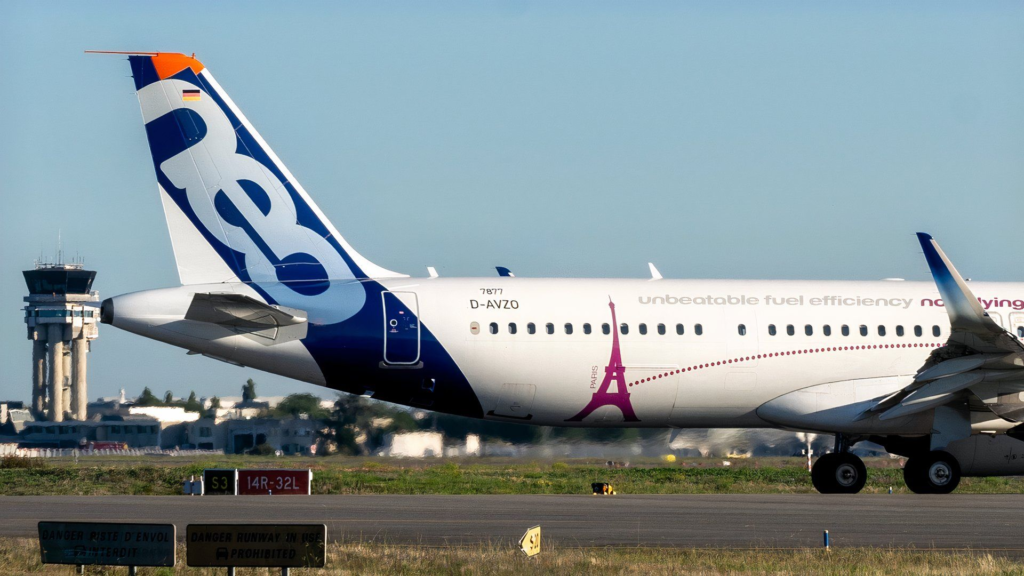


Its A321neos are the subject of this article. They are particularly notable as they have 236 seats in an all-economy layout. It is the 
Qatar Airways’ A321neos: A Summary


Registered A7-AJB, Qatar Airways’ initial frame arrived in Doha on September 26, followed by A7-AJD five days later. Flightradar24 indicates that AJB entered service on October 16, while AJD did so on October 26. Unsurprisingly, the A321neo’s activity increased markedly at that point.
As everyone knows, Qatar Airways is a premium carrier. Yet, its single-class, 236-seat A321neos are notably different from this market position and the consequent perception. In fact, the carrier packs in ten more seats than Spirit’s A321neos, which is quite something. Of course, Spirit has Go Big and Go Comfy premium options.
AirAsia also has 236 seats in its A321neos. Perhaps that’s unsurprising: Qatar Airways’ frames were originally destined for that carrier. It is also very close to what’s available with various ultra-low-cost carriers globally. For example, Wizz Air and Volaris have 239 seats, while Viva Aerobus has 240. Qatar Airways’ capacity sticks out like a sore thumb. But it is for a specific reason.
Qatar Airways Currently Has 6 A321neo Routes


All six markets have various things in common. First, they’re popular, both in terms of local demand to/from 
These things explain why all-economy A321neos with low seat-mile costs (at least compared to the carrier’s other narrowbodies) are used. It deems the routes important enough to be served, including because of their network contribution. However, it wanted more appropriate equipment—in terms of costs and capacity—to serve them.
Ignoring Qatar Airways’ premium branding, this makes sense economically. But it is not quite this simple. On all the routes except Peshawar, which is near the Afghan border in Pakistan, other aircraft are also flown. This may be because of aircraft availability or helping to attract the limited premium traffic. Except for Colombo, which is discussed later, the two-class, 132-seat or 144-seat A320ceo is deployed. The A321neo helps provide a lot of additional capacity per departure.
|
A321neo Departures: November-February* |
Doha To… |
% Of Flights On The A321neo** |
|---|---|---|
|
270 (one to five daily) |
Sharjah |
34% |
|
115 (daily) |
Medinah |
44% |
|
115 (daily) |
Peshawar |
100% |
|
66 (three to four weekly) |
Multan |
96% |
|
51 (six weekly) |
Colombo |
9% (A321neo from January 1) |
|
47 (weekly to daily) |
Sialkot |
60% (A321neo from November 3) |
|
* Each way |
** November-February only |
Colombo Will See The A321neo In 2026

.jpg?q=70&fit=crop&w=825&dpr=1)
When all equipment is considered, Qatar Airways will mainly serve Bandaranaike International Colombo Airport five times a day between November and February. Multiple types and variants will be deployed: the A321neo, A330-200, A330-300, 787-8, and 787-9. The A321neo will operate daily from January 1. For now, at least, it is only scheduled until March 28, which is the last day of the northern aviation winter based on IATA slot seasons.
Let’s consider January 1. That day, Qatar Airways will leave Doha for Colombo at 01:30 (787-8), 02:30 (A321neo), 09:15 (787-8), 18:40 (787-9), and 19:30 (A330-300). Returning, it’ll depart from Sri Lanka at 03:25 (787-9), 04:15 (A330-300), 10:15 (787-8), 11:15 (A321neo), and 19:30 (787-8). The bunching of flights—those that leave at similar times—is to cater to the higher demand for connecting flights via Doha at peak times.
source