


In the summer of 2025, the government of Portugal relaunched a project to privatize national carrier TAP Air Portugal, with the goal of selling a large stake within a year or so. All too often, not much comes of this, though it seems like this is moving along. Two major airline groups have just submitted bids to invest in TAP, so this should get interesting.
TAP Air Portugal privatization effort underway
Portugal’s government has relaunched an effort to privatize TAP Air Portugal, with the goal of selling a 44.9% stake within a year, with the possibility to give up a majority stake over time. As part of this, employees would also be offered a 5% stake in the company (meaning that the government would own 50.1% of the company).
Last summer, Prime Minister Luis Montenegro stated that he’s “convinced that there will be many interested parties.” For years there has been talk of privatizing TAP, so this is only the latest such effort, and it’s anyone’s guess how this plays out.
The latest round of privatization stalled in early 2025, when the country’s center-right minority government collapsed. The coalition returned to power after a May 2025 election, but didn’t have a majority in parliament, potentially causing a sale to be blocked.
Historically, TAP hasn’t been a terribly profitable airline, but its performance has improved over time. In 2021, the airline reported a record €1.6 billion loss, following the coronavirus pandemic. This caused a restructuring, which saw the government invest €3.2 billion in the company.
The airline has returned to profitability in recent years, though we’re talking about fairly mild profits. The company’s profits over the past three fully reported years (2022-2024) have been €65.6 million, €177.3 million, and €53.7 million.
In looking for a partner in this privatization, the government obviously hopes for as many synergies as possible, to improve the company’s long term prospect of profitability.
Last summer, Infrastructure Minister Miguel Pinto Luz stated that “we believe we can complete the privatization within a year,” emphasizing that even airlines from outside the European Union could express interest. The next step was for potential investors to prequalify for the sale, and there’s now an update when it comes to that.

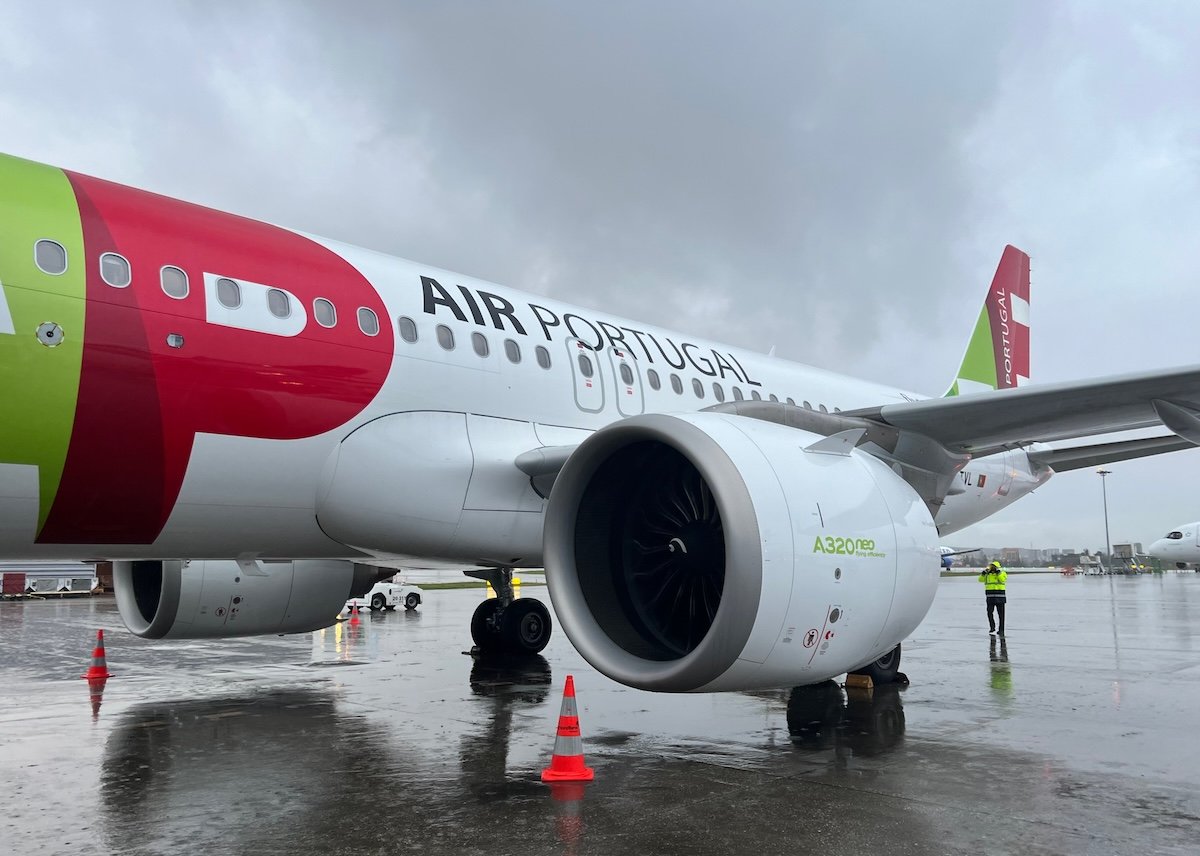
Air France-KLM & Lufthansa Group are interested
While TAP Air Portugal isn’t independently some massively profitable airline, the company offers some significant synergies for other airline groups. Specifically, TAP has a strong network to Brazil, to Africa, and to the United States. This obviously holds significant strategic value for several airlines. For that matter, a large goal with acquisitions is simply to prevent competitors from getting in on the action instead.
We know that all three of the major European airline groups — Air France-KLM, IAG, and Lufthansa — have been interested in TAP Air Portugal at one point or another, primarily due to the carrier’s strength in Brazil, with the Africa network being a secondary strength.
The challenge is, it’s kind of hard to figure out how North America operations would complement the existing arrangements of airline groups. Obviously North America to Europe flying is heavily dominated by joint ventures (split by alliance, sort of), which have a lot of pricing power.
Historically, TAP has operated pretty independently to North America, often undercutting other carriers on price, with attractive fares in all cabins, including for one-way flights. Could we see TAP join one of the major joint ventures? Obviously it would totally change the carrier’s pricing model and market position.
Then there’s the whole issue of regulatory approval. Getting regulatory approval for such a deal will be no small task, given the number of parties that have to sign off on agreements like this, and the concessions required.
As I speculated last summer, Air France-KLM and Lufthansa Group have the most to gain with TAP, purely in terms of their existing geography and networks. There’s also upside for IAG, though not as much geographically, given where Aer Lingus, British Airways, and Iberia, have hubs.
So it’s not surprising to note that both Air France-KLM and Lufthansa Group have submitted non-binding bids for TAP. Meanwhile IAG has shared that after “careful consideration,” it has decided not to proceed with attempting to invest in TAP, instead focusing on growth opportunities within the existing group.
While I haven’t seen a longer statement from Lufthansa Group, Air France-KLM CEO Ben Smith has released the following statement about the company’s interest in TAP:
“We value what TAP has built over the last 81 years: a strong Lisbon hub, a strong brand, and a unique value proposition that provides connectivity and pride to millions of Portuguese people. We firmly believe that the next chapter of the airline’s history should be written as part of the Air France-KLM Group, building on this legacy and taking TAP to the next level. TAP is a natural fit within Air France-KLM’s multi-hub strategy, and our ambition is to strengthen the operations at Lisbon while developing connectivity in other cities across the country including Porto. We look forward to the next steps of the privatization process.”
So, what happens from here? Parpublica, which handles the bidding, now has 30 days to prepare a report on each proposal’s merits, for the government. It will then select the most suitable non-binding offers, and invite those bidders to submit binding proposals within 90 days.

Bottom line
The government of Portugal is once again looking to privatize TAP Air Portugal, initially hoping to sell a 44.9% stake (with an additional 5% going to employees), but the government is open to giving up majority control over time. While the goal of privatization has been there for a long time, it sounds like serious efforts are once again ramping up.
While all three major European airline groups had expressed interest in this deal, both Air France-KLM and Lufthansa Group have submitted non-binding offers before the deadline. They have a lot to gain in terms of synergies, so let’s see how this plays out.
How do you see TAP’s privatization plans evolving?
source