


Porter Airlines has reached a symbolic midpoint in its transition to an all-jet fleet when Brazilian manufacturer Embraer delivered the airline’s 50th E195-E2 model on December 23, 2025. This achievement is striking for its speed, as Porter received its first E2 in December 2022 and launched the type into commercial service in February 2023.
In less than three years of flying, the carrier has put together a 50-aircraft narrowbody fleet while simultaneously widening its map to reach beyond Eastern Canada and into major US markets. Increasingly, this includes a handful of leisure-heavy destinations. The carrier’s 2-2 layout means that no middle seats are ever on offer. The sprint to develop this fleet is not over, as the airline continues to have outstanding firm orders for another 75 E2 models, and purchase rights for around 25 more.
A Piece Of A Major Expansion Strategy

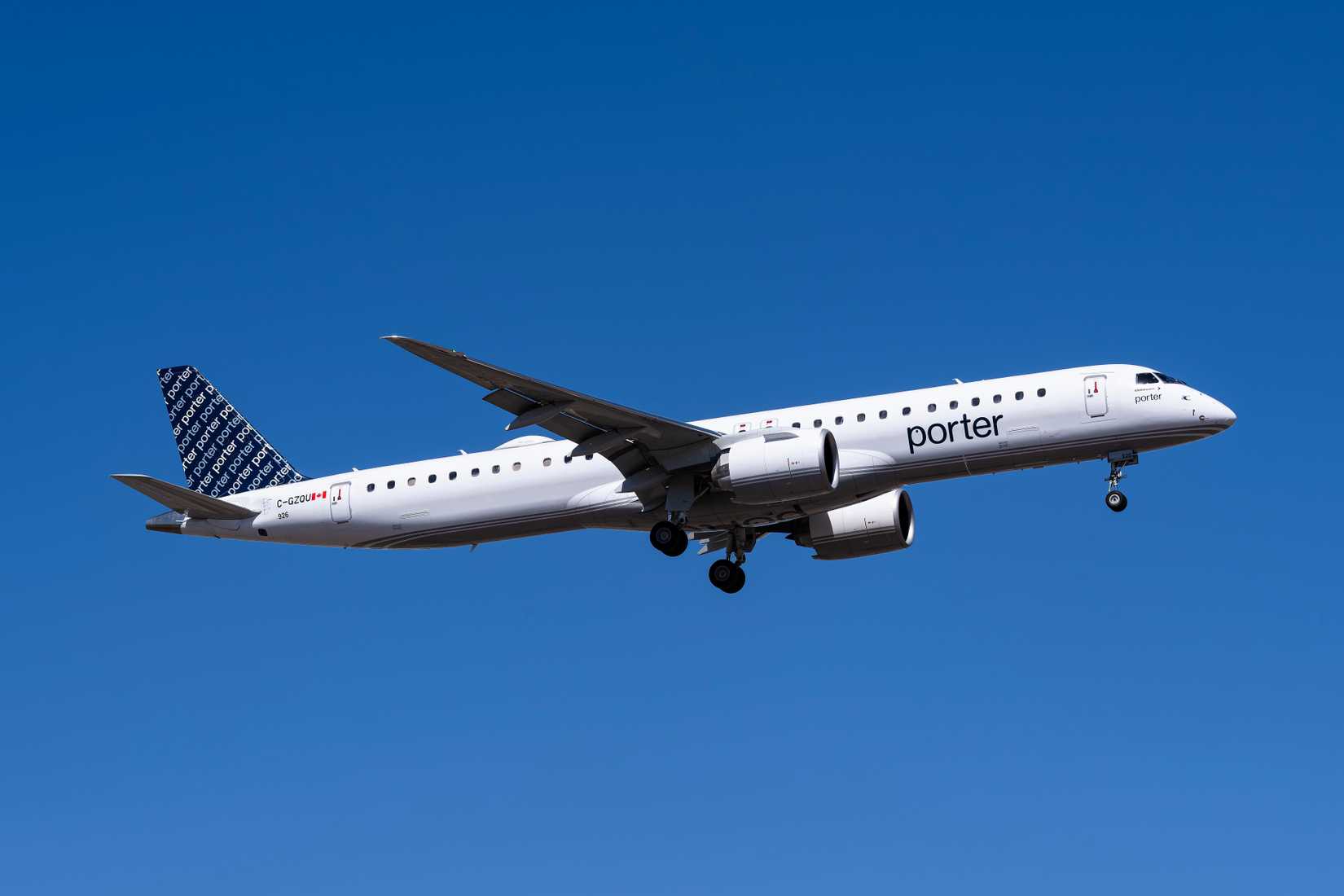
Embraer has said that the 50th delivery of its E2 model to Porter Airlines underscores a dynamic fleet expansion that has been built around the Embraer E195-E2’s economics and overall appeal to passengers. Porter’s orderbook totals 75 firm aircraft, alongside purchase rights for around 25 more models, enough to turn a regional brand into a true North American network carrier. This latest stretch of growth leans into warm-weather flying, with the carrier preparing to add 13 new routes this season, according to the latest commentary provided by the carrier.
New destinations that the carrier will be serving range from Cancun International Airport (CUN) to Nassau International Airport (NAS) from gateways like Toronto Pearson International Airport (YYZ) and Montreal Trudeau International Airport (YUL). Behind the scenes, Porter Airlines has had to industrialize its training and overall reliability pipeline, including the addition of a full-flight E195-E2 simulator in Montreal. This infrastructure matters as the E2’s range and 29% lower fuel burn open up new city pairs both mechanically and economically.
Training And Maintenance At Scale

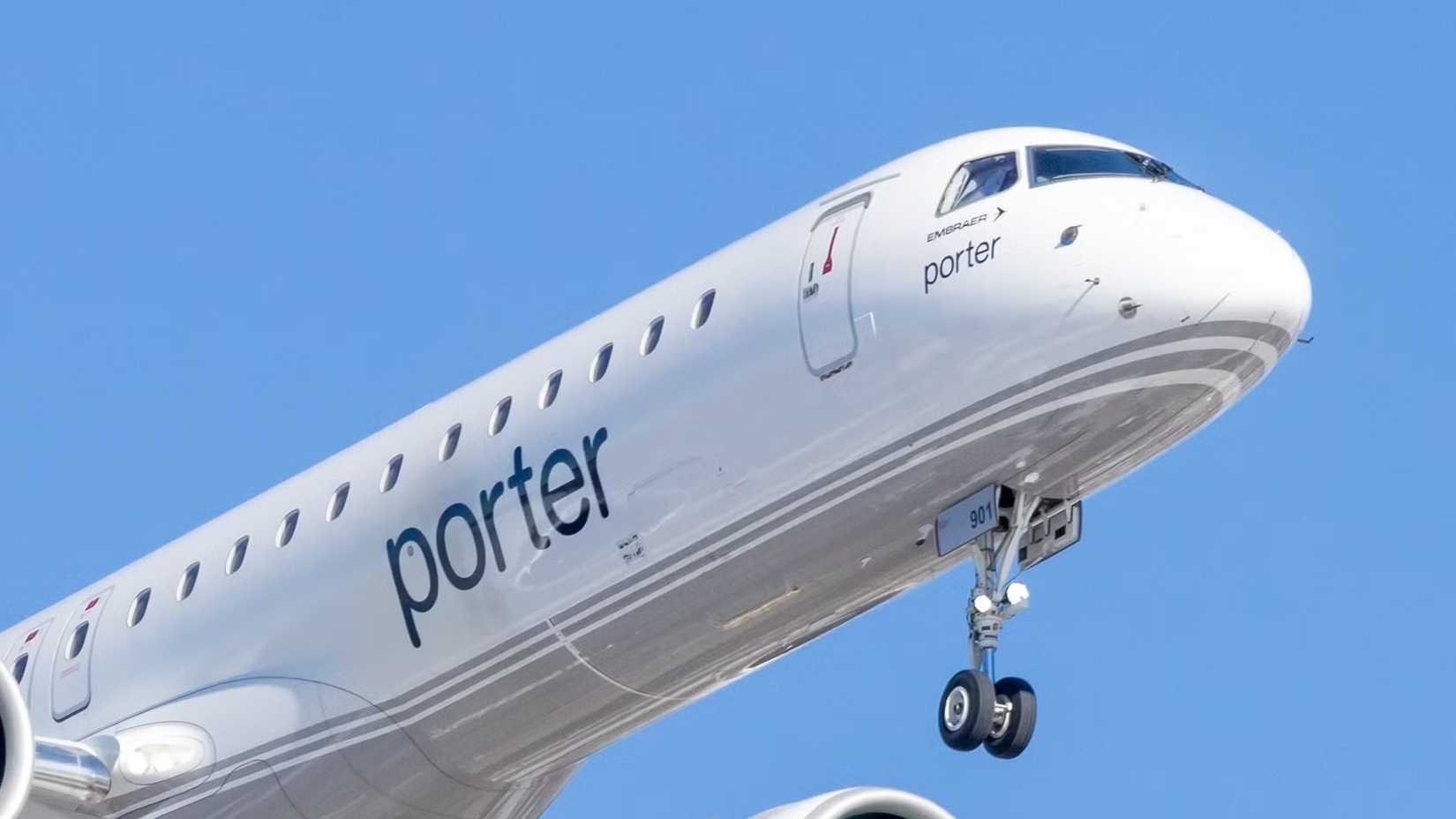
Taking delivery of new aircraft is the easy part. The challenge for airlines is turning aircraft into daily departures. Porter Airlines has had to grow pilot and cabin-crew ranks, build out its instructor pipelines, and standardize procedures fast enough so that new aircraft do not sit idle. A major enabler has been bringing E2 training closer to home, with a dedicated Embraer E195-E2 full-flight simulator being deployed at the manufacturer’s Montreal center.
Training is set to begin for a new batch of pilots in May 2025 under Embraer services. This adds throughput for both initial and recurrent training, both of which are critical when Porter already had 46 E2s delivered by mid-2025, and the carrier was still accelerating. Maintenance scales the same way, as predictable utilization demands spare parts access, line-maintenance staffing, and tight reliability tracking.
The benefit of having such a single-type jet fleet is repetition, as every extra aircraft makes the next one easier to absorb, ultimately creating a compounding learning curve that matches the delivery tempo that Porter Airlines is looking for. It also ultimately pressures dispatch, crew scheduling, and irregular operations playbooks to mature overnight.


These Are The Airlines That Have Ordered The Embraer E2
Several airlines have incorporated the E2 jets into their fleets as part of broader modernization plans.
What Does The Embraer E2 Offer To Operators Like Porter?

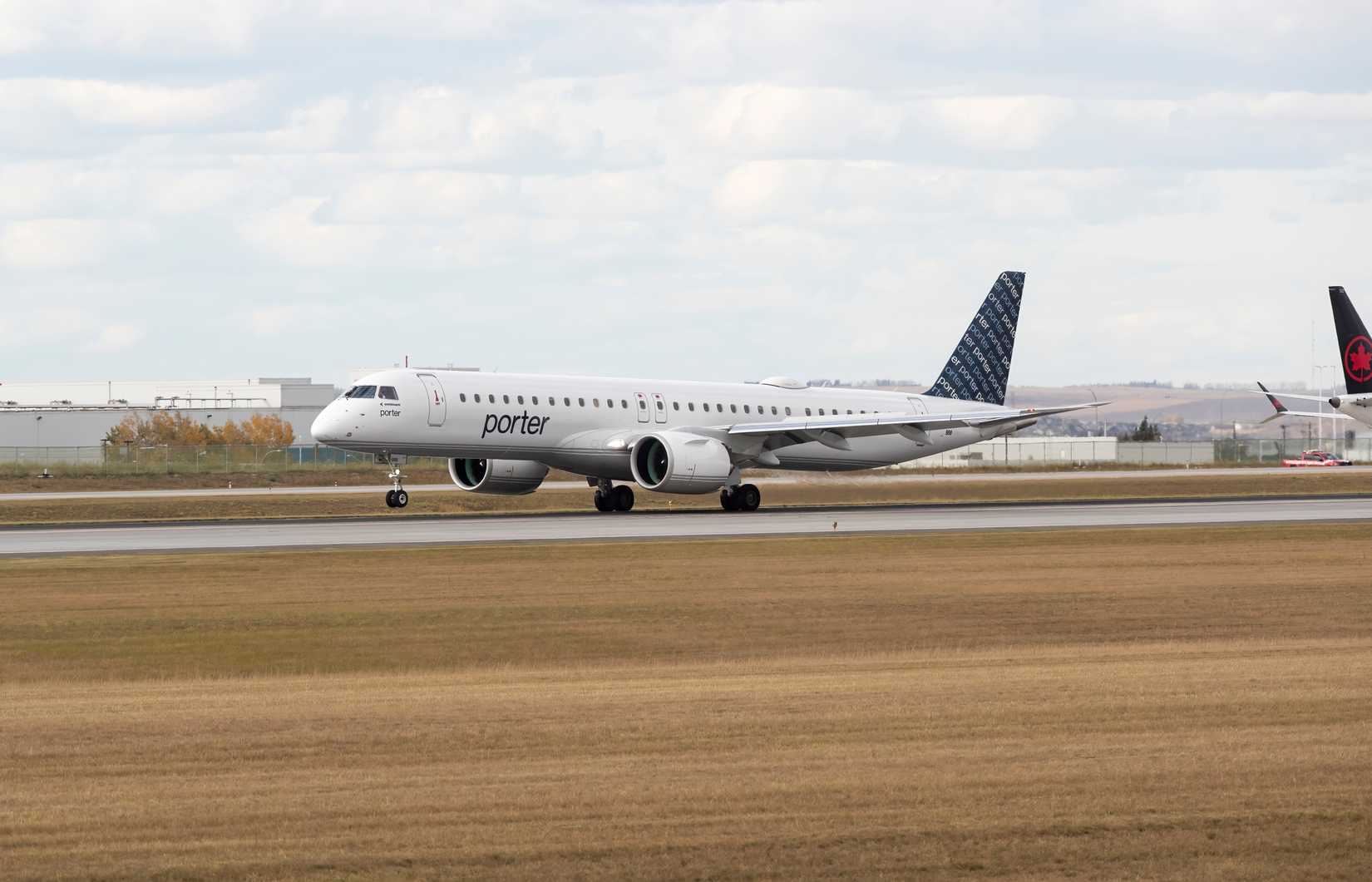
The Embraer E195-E2 is essentially a network multiplier for a dynamic carrier like Porter Airlines. The jet is big enough to make new routes meaningful while also being small enough to test markets without the operational risk of an Airbus A320 or a Boeing 737. Embraer cites up to 29% lower fuel burn versus first-generation E-Jets and a 2,500-nautical-mile (4,665 km) range.
These numbers turn mid-continent links within the United States and Caribbean leisure flying into a simple problem to manage. The aircraft’s cabin design reinforces the brand promise that Embraer is trying to push forward, with four-abreast seating eliminating middle seats, and Embraer highlighting a quiet cabin service onboard with Wi-Fi and complete seatback power.
Porter then layers on its differentiating factor, which is its exceptional in-flight experience. This comes alongside Porter’s push into sunshine markets and other kinds of leisure-oriented city pairs as jets continue to arrive. Collectively, the aircraft’s cost base and broad customer appeal allow Porter to add capacity quickly while claiming that it is raising the bar in economy, while not racing to the bottom when it comes to fares.
source