


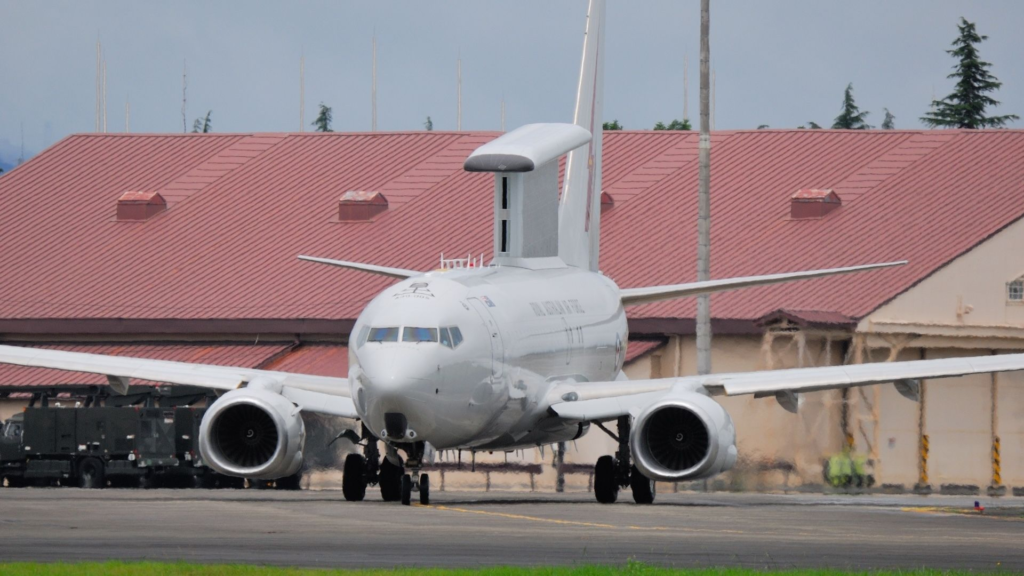
NATO has officially abandoned its plan to acquire six 

The aging Boeing E-3A Sentry is still in service with many operators, and the aircraft is due for retirement by 2035. The older-generation aircraft continues to face noise issues, and the plane’s maintenance costs only continue to rise. With the E-7A Wedgetail now off the table, NATO has to explore alternative platforms that could soon become the backbone of its European airborne early warning capabilities. The alliance is likely to favor European-built options to support local industry while preserving airborne command effectiveness.
What Are The Major Developments In This Story?


Recent commentary published by Defense News has disclosed that the US exit from the replacement program removed significant strategic and financial support for the deal, and it subsequently prompted several European allies to pull back from the acquisition of six E-7 Wedgetail aircraft. NATO currently operates 14 E-3A Sentry aircraft based out of Geilenkirchen, Germany, jets which are expected to reach the end of their service lives by 2035.
The E-3A has faced continued noise and emissions-based scrutiny. The Netherlands has emphasized that the alliance remains committed to finding a quieter successor for the type before 2035, and that it is now seeking new European industrial partners. In a statement, Dutch State Secretary for Defense Gijs Tuinman had the following words to share regarding the matter:
“The commitment remains to have other, quieter aircraft operational before 2035. The withdrawal by the U.S. in addition shows the importance of investing as much as possible in the European industry.”
What Are The Implications Of This For NATO?

NATO’s retreat from the E-7A acquisition comes along with multiple implications. Strategically, the alliance must now revisit how it will replace its principal airborne early warning platform. The decision suggests a shift towards finding solutions to pressing security issues from the European defense industry while turning away from heavy US-built platforms.
Financially, cost overruns and the US withdrawal from this acquisition program highlight the risks of NATO dependency on American funding, and they underline the need for burden-sharing among members. Operationally, the alliance now faces a capability gap unless a replacement can be effectively found and fielded prior to 2035.
Delays in this process would further hamper NATO’s ability to conduct airborne early warning, surveillance, and combat management missions, especially amid heightened regional tensions in Eastern Europe. The move is also a political statement that pushes further towards European strategic autonomy and signals to Moscow that NATO is looking to diversify its procurement efforts while increasing European industrial capabilities. This may seem like a relatively small cancellation with a relatively limited far-reaching impact, but it is emblematic of a much larger sentiment shift towards the continued growth of European industrial capabilities.
An Overview Of The E-7 And Its Capabilities

We want to quickly discuss the E-7 to analyze what exactly it is that NATO elected to turn down. The Boeing E-7A Wedgetail is an advanced airborne early warning and control platform that is derived from the Boeing 737 Next Generation airframe, one that was equipped with a multirole electronically scanned radar and an advanced battle-management suite.
The aircraft builds on prior operators’ experience, and it was selected by NATO in 2023 as the initial replacement for the E-3 Sentry, with six aircraft planned. The E-7 Wedgetail offers a longer sensor range, with modern communications and network-centric features, offering improved fuel efficiency compared with the 1950s-era Boeing 707-based E-3 Sentry airframe.
However, cost escalations, concerns over survivability in highly contested air environments, and the US abandonment of the program have cast doubt on the future role that the Wedgetail could have in the alliance’s surveillance architecture. The elimination is also bad news for Boeing, which was positioned to generate a comfortable profit on the order.
source