


NASA is targeting April Fool’s Day to launch humankind’s voyage closest to the Moon in over a half a century, after the original mission was delayed in February 2026.
The US space agency announced on March 12, 2026, that the Artemis II space crew will launch from the Kennedy Space Center in Florida on April 1, 2026, pending close-out of remaining open work.
All being well, on March 19, 2026, NASA staff plan to roll the SLS (Space Launch System) rocket and Orion spacecraft to launch pad 39B, ready for liftoff.
The significance of the Artemis II mission cannot be understated, with the four crew members venturing further into deep space than anyone has gone before.
The Artemis II crew will fly by the lunar far side at an altitude of approximately 3,000 to 9,000 miles. There, they will test the Orion capsule and carry out crucial research that should pave the way for the first Moon landing since 1972.

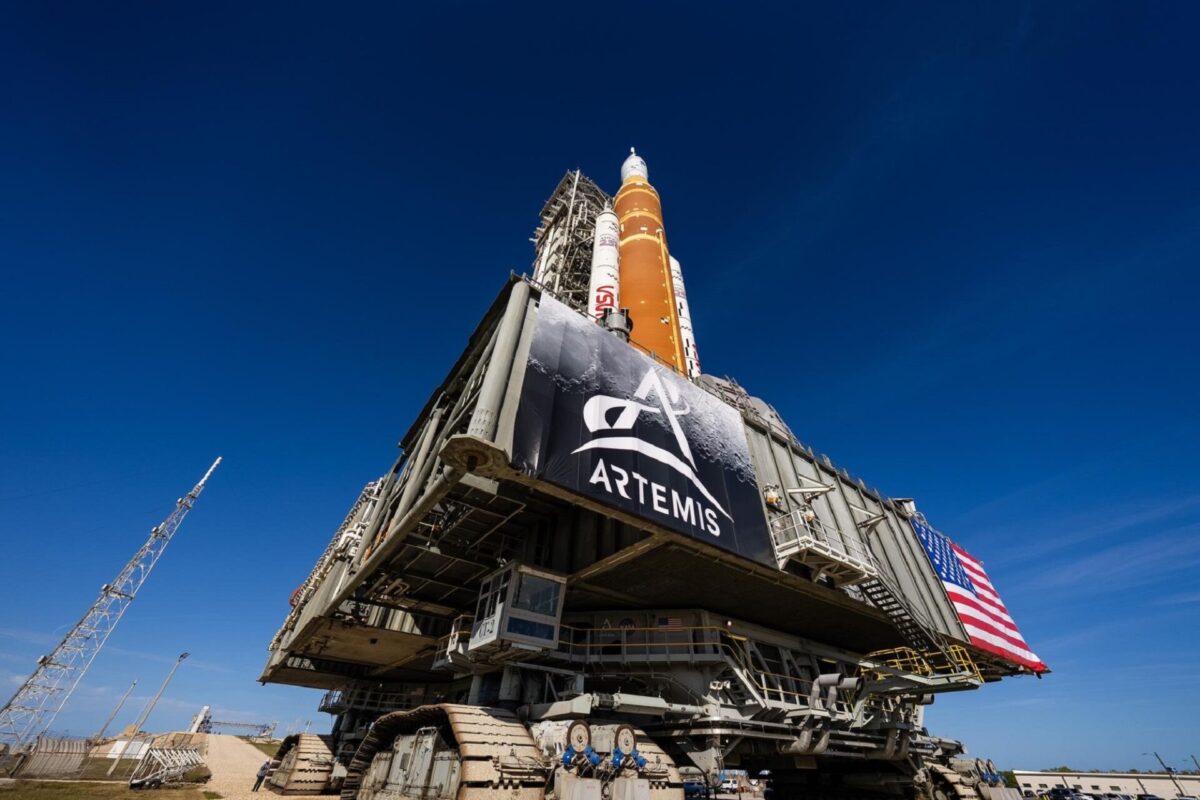
“From this unique vantage point and environment, the Artemis II crew will work with scientists on Earth to facilitate science investigations to inform future human spaceflight missions,” an agency statement said.
According to NASA, the Space Launch System offers “more payload mass, volume, and departure energy than any other single rocket”.
Meanwhile, the Orion spacecraft will “serve as the exploration vehicle that will carry and sustain the crew on Artemis missions to the Moon and return them safely to Earth”.
Orion will fly two orbits of Earth and then venture around the Moon in a figure-eight pattern before returning to Earth.
NASA delayed the first launch in February 2026, after engineers encountered technical issues during a critical prelaunch test.
“The Challenger has landed!”#OTD in 1972, Apollo 17, the final mission of the Apollo Program, landed on the Moon. Watch: https://t.co/65GBmsG8pc
📷 Gene Cernan with the flag, Challenger (the Lunar Module), and lunar rover during the mission’s first extravehicular activity pic.twitter.com/LPZjnlPlOv
— NASA History Office (@NASAhistory) December 11, 2025
Technicians have accessed the launch vehicle stage adapter to inspect components that prevented helium from flowing to the upper stage, after a wet dress rehearsal on February 21, 2026.
“Engineers determined a seal in the quick disconnect, through which helium flows from the ground systems to the rocket, was obstructing the pathway,” NASA said. “The team removed the quick disconnect, reassembled the system, and began validating the repairs to the upper stage by running a reduced flow rate of helium through the mechanism to ensure the issue was resolved.”
The agency added: “Engineers are assessing what allowed the seal to become dislodged to prevent the issue from recurring.”
source