


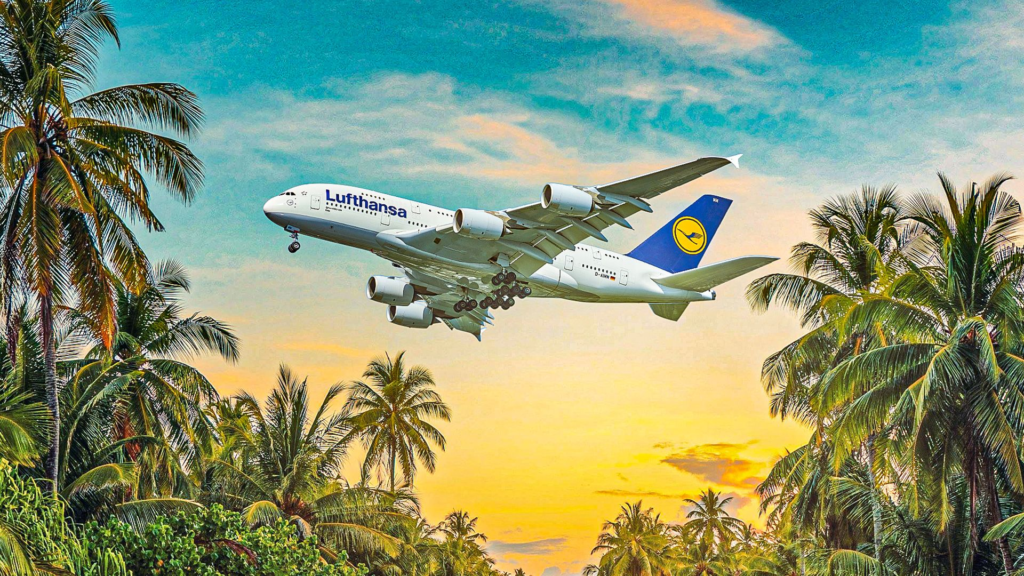
Lufthansa is reportedly planning to keep its double-decker Airbus A380 widebody quadjets active into the next decade. While the Cologne-headquartered German flag carrier and 

Perhaps the most notable development on this front came yesterday, when the German national airline’s Chief Executive Officer confirmed that it plans to keep its Airbus A380 fleet active for at least another five years. This would take it into the early 2030s, which is a prospect that, it is fair to say, would have seemed remote at best at the start of the decade amid the pandemic.
Five More Years


Yesterday, Lufthansa announced its third-quarter financial results for June to September of 2025. The outlook was good from an economic perspective, with record revenues and steady profits being among the reasons for the German flag carrier to be cheerful as far as money went. However, according to Air Data News, the presentation also involved interesting fleet revelations.
Specifically, delivery delays concerning the Airbus A350-1000 and Boeing 777-9 widebody twinjets are forcing Lufthansa to grant new leases of life to its older quadjets. According to ADN, Lufthansa CEO Carsten Spohr said yesterday that the A340-600 will thus remain in service until mid-2026, while A380 operations will be extended for “five years plus,” taking them into the early 2030s.
Simple Flying has reached out to Lufthansa for further information on this matter. We will update our coverage upon receiving a statement from the airline concerning the future of its A380 fleet.
A Lifeline For The Superjumbo

According to Aviation Source News, 
Such has been the renaissance of the ‘superjumbo’ at the carrier that, as Aviation Source News notes, these aircraft are being refitted with fresh cabins that include new business class seats. As such, the extension of their service life, which Spohr has called a “business necessity” amid other jets’ delivery delays, will see Lufthansa get a greater return on investment on these refits.
Some might wonder why Lufthansa doesn’t lease aircraft to cover the gaps left in its fleet, network, and schedules by the delivery delays that are continuing to plague its orders for the Airbus A350-1000 and Boeing 777-9. However, per Aviation Source News, reactivating stored jets already at its disposal, or extending active planes’ service lives, is quicker and more cost-effective.
Lufthansa’s Airbus A380 Operations In A Nutshell


According to present fleet data made available by ch-aviation, Lufthansa currently has eight examples of the Airbus A380 at its disposal. Of these, six are listed by the site as being active at the time of writing, while one is in storage and the other is undergoing maintenance. These quadjets are 13.6 years old on average, and, historically, Lufthansa has flown another six.
Data from aeroLOPA shows that the German flag carrier favors a four-class layout on these quadjets. This consists of eight first suites, 78 business class flatbeds, 52 premium economy recliners, and 371 economy class seats, giving it a total capacity of 509 passengers. Lufthansa operates its Airbus A380s on select high-demand long-haul routes out of its hub in Munich (MUC).
Data from Cirium, an aviation analytics company, shows that, this November, the German flag carrier has penciled in 190 flights with the type, with Bangkok (BKK) and Los Angeles (LAX) being its top destinations. These routes are served daily, while the airline also deploys its A380s from Munich to San Francisco (SFO) five times a week, and Delhi (DEL) three times a week.
source