


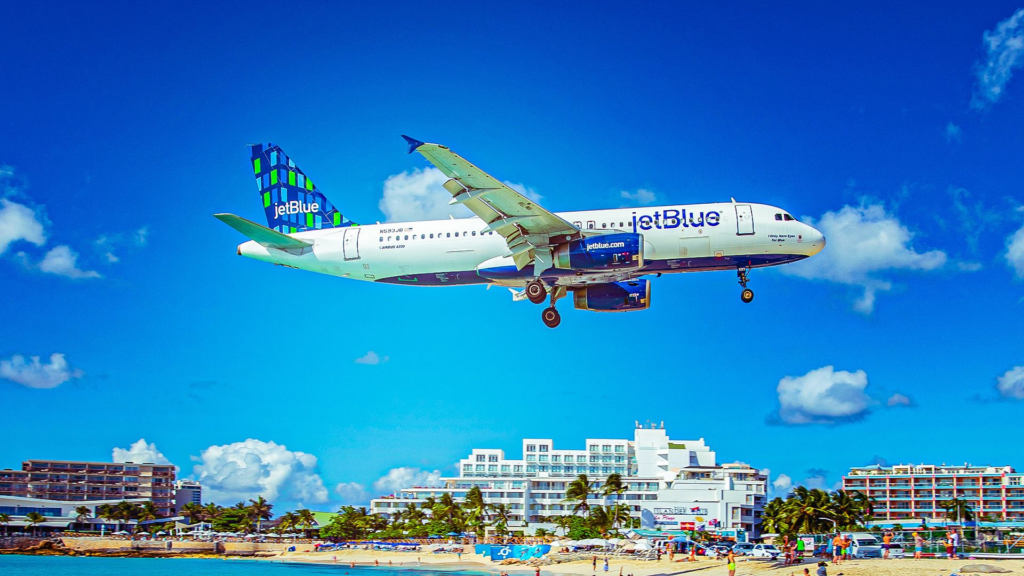
A JetBlue airliner heading to 


The aircraft was taken out of service after safely touching down. Responding to a comment request, the airline stated that the plane is being inspected to find the cause and ensure it is safe to fly before returning to the air.
A Scary Ride To Tampa


JetBlue Flight 1230 landed in Tampa at 14:19 EST after declaring an emergency, according to FlightAware. ABC News reported that the pilots told air traffic control (ATC) that the three injured passengers may have suffered lacerations. The airline confirmed that medical personnel met the aircraft after touchdown and transported flyers requiring care beyond first aid to local hospitals.
According to communication between the pilots and ATC, the weather was calm when the plane experienced the sudden loss of control, making a mechanical issue the only suspected cause. One Reddit commenter who claimed to be on board Flight 1230 said that the plane jerked slightly before abruptly jerking into what felt like a full nose-down dive for 30 seconds or more.
The anonymous passenger online said that the service struck the cabin ceiling along with any loose objects and fluids, creating a chaotic and scary scene. The JetBlue official statement following the incident was simple and to the point, reaffirming that the airline is focused on safety, but the investigation has just begun, saying:
“The safety of our customers and crewmembers is always our first priority, and we will work to support those involved.”
Why Did It Happen?

JetBlue is investigating its aircraft, and the Federal Aviation Administration (FAA) will also be involved, given the high risk of a worse outcome from such a serious mechanical issue. The flight profile data on FlightAware shows that the plane dropped from 35,000 feet to 18,000 in five minutes. A control malfunction with such a significant impact on handling at a lower altitude could possibly have led to a crash if the failure occurred in a different phase of flight.
Typically, these types of violent altitude changes in commercial flying happen when a jet flies through severe turbulence that was unforecast. All the public information so far indicates that no weather factors were involved, so the next likely causes are engine failure or a stall. There was no report of engine issues, and since the plane was cruising at altitude, a stall scenario is highly unlikely. That essentially leaves just the flight control surfaces and flight computer as potential causes.
A mechanical failure in the system of controls on the wings and tail could induce a sudden nose-down attitude, but so could an error in the flight management system (FMS), also known as autopilot. All commercial airlines use autopilot for the majority of the time that a plane is airborne because it saves fuel and reduces wear and tear, which means it was likely active at the time of Flight 1230’s terrifying drop.
The Risks Of Autopilot Overreliance

The Maneuvering Characteristics Augmentation System (MCAS) was found responsible for the crash of Lion Air Flight 610 and Ethiopian Airlines Flight 302, in 2018 and 2019. MCAS is an FMS program on the 737 MAX designed to automatically push the aircraft’s nose down in specific high-angle-of-attack situations. Its purpose is to make the MAX handle like older 737 models that had different engines and flight characteristics.
Boeing had not even trained the aircrew on MCAS, or even made operators aware of its existence prior to the disasters. The combined death toll was 346 souls between the two mishaps, and led to the longest and most widespread global fleet grounding in commercial aviation history, as well as a complete stoppage of 737 MAX production until changes were made.
JetBlue exclusively flies Airbus A220 and A320 family jets, which have no history of any FMS-caused mishaps to date. The planes have an unmarred safety record and even surpassed the Boeing 737 in September to become the best-selling jet airliner of all time. Until the full investigation by JetBlue, the FAA, and possibly the National Transportation Safety Bureau (NTSB) is complete, we will simply be left to speculate how Flight 1230 fell from the sky on a clear, sunny day.
source