


For half a century, the Boeing 747 was a titan of long-haul travel, with the iconic shape of its distinctive humped fuselage dominating the world’s airports and skies. Recent years have seen its popularity dwindle, with its decline brought about by the industry’s shift towards efficient long-haul twinjets to serve point-to-point rather than hub-and-spoke routes, and accelerated by the onset of coronavirus.
Even with the onset of the health crisis, production of the ‘jumbo jet’ was beginning to wind down, with relatively low orders for the latest 747-8 model meaning that the final example was delivered just over two years ago, at the start of 2023. However, while the 747 is no longer available to buy on a brand-new basis, there is still a reasonable market for second-hand examples in the cargo and private sectors. With this in mind, let’s take a closer look at how much 747s are worth today.
A brief history of Boeing 747 prices

In the more than five decades since the Boeing 747 first rolled off the production line, changing technology (and the subsequent development of new variants), industry trends, and currency inflation have seen the cost of the jumbo jet alter significantly over the years. For instance, when Pan Am got the 747 program up and running with an initial order of 25 747-100s in April 1966, it did so, according to the Lewiston Morning Tribune, for a combined total cost of some $525 million.
This figure equated to $21 million per aircraft, which, according to Dollar Times, is equivalent to more than $208 million in today’s money. At this juncture, it is, of course, worth remembering that airlines will rarely pay the list price for their commercial aircraft, particularly when ordering in bulk. Indeed, manufacturers tend to offer some form of discount to foster loyalty and encourage greater quantities, meaning that Pan Am’s initial order would likely have cost more ‘by the book.’
In terms of later variants from the 747 family, previous analysis by Simple Flying found the list price of the 747-200 model to have been $39 million in 1976, which is equivalent to almost $222 million in today’s money. This variant was followed off the production line by the 747-300, which had a list price of $83 million in 1983 (equivalent to more than $268 million today). As it happened, this variant sold comparatively poorly due to the fact that it was quickly overtaken by the 747-400.
As for the 747-400 itself, this was the most popular variant of the Boeing 747, accounting for 694 of the widebody quadjet family’s 1,573 total deliveries according to the company’s data. This aircraft had a list price of $156 million in 1991, which is equivalent to almost $368 million in today’s money. As for the 747-8, the latest version of the jumbo jet had a list price of $315 million in 2008, with this figure later climbing to almost $420 million, as per Boeing’s historical data.
The Boeing 747-400 in today’s market


The comprehensive aviation database at ch-aviation provides useful insight into the market value of various aircraft that remain active today. While the site lists active examples of several older variants from the Boeing 747 family, the oldest type of the jumbo jet for which it provides information concerning the market value of a given aircraft is the 747-400. At present, 205 of these quadjets remain active across all variants, with its primary use now being as a cargo aircraft.
medium
You would probably expect the value of an aircraft to align with its age, and there is a rough correlation between these two factors. However, it is interesting to note that the active example of the Boeing 747-400 listed by ch-aviation as having the lowest market value today is not the oldest one out there. The plane in question is a passenger-carrying Mahan Air 747-400 with the registration EP-MEE.
According to ch-aviation, this aircraft is 34.6 years old, and currently has a market value of $10.11 million. The jet has 460 seats onboard in a two-class layout, and previously flew for United Airlines (1990 to 2005) and Blue Airways (2006 to 2008) before joining Mahan Air (initially as EP-MNA) in November 2008. Meanwhile, despite being around a year older, the 35.6-year-old Kalitta Air 747-400BCF registered as N740CK, which is the oldest active 747-400, is valued at $15.61 million).
At the other end of the scale, the active example of the Boeing 747-400 with the highest market value at the time of writing, as per data from Collateral Verifications LLC compiled by ch-aviation, is OE-IFM, a 16-year-old ASL Airlines Belgium 747-400F(SCD). This aircraft has a current market value of $47.51 million, and is also the second-youngest active 747-400 out there. The youngest is Kalitta’s N782CK, at 15.87 years old, and it has the joint second-highest value, at $45.88 million.
The Boeing 747-8F has already begun to depreciate

In the automotive industry, it is often said that a brand-new car immediately loses a significant proportion of its value the moment that it leaves the showroom. While there is no hard and fast rule for exactly how much is lost once a customer has driven it away, the AA notes that this can be between 10% and 40% in the first year, with this rising to 60% after three years. Despite the fact that Boeing delivered its newest unit of the 747-8F less than two years ago, a similar trend has emerged.
Indeed, this is evidenced by the fact that ch-aviation’s value for N863GT, which was the last-ever Boeing 747-8F to be delivered and is just over two years old, is already less than half of its list price. The aircraft, which flies for Atlas Air and had racked up 7,151 flight hours across 1,109 cycles at the time of the last measurement, currently has a market value of $165.7 million, with its lease rate clocking in at $1.7 million. In this instance, the youngest aircraft has the highest value.
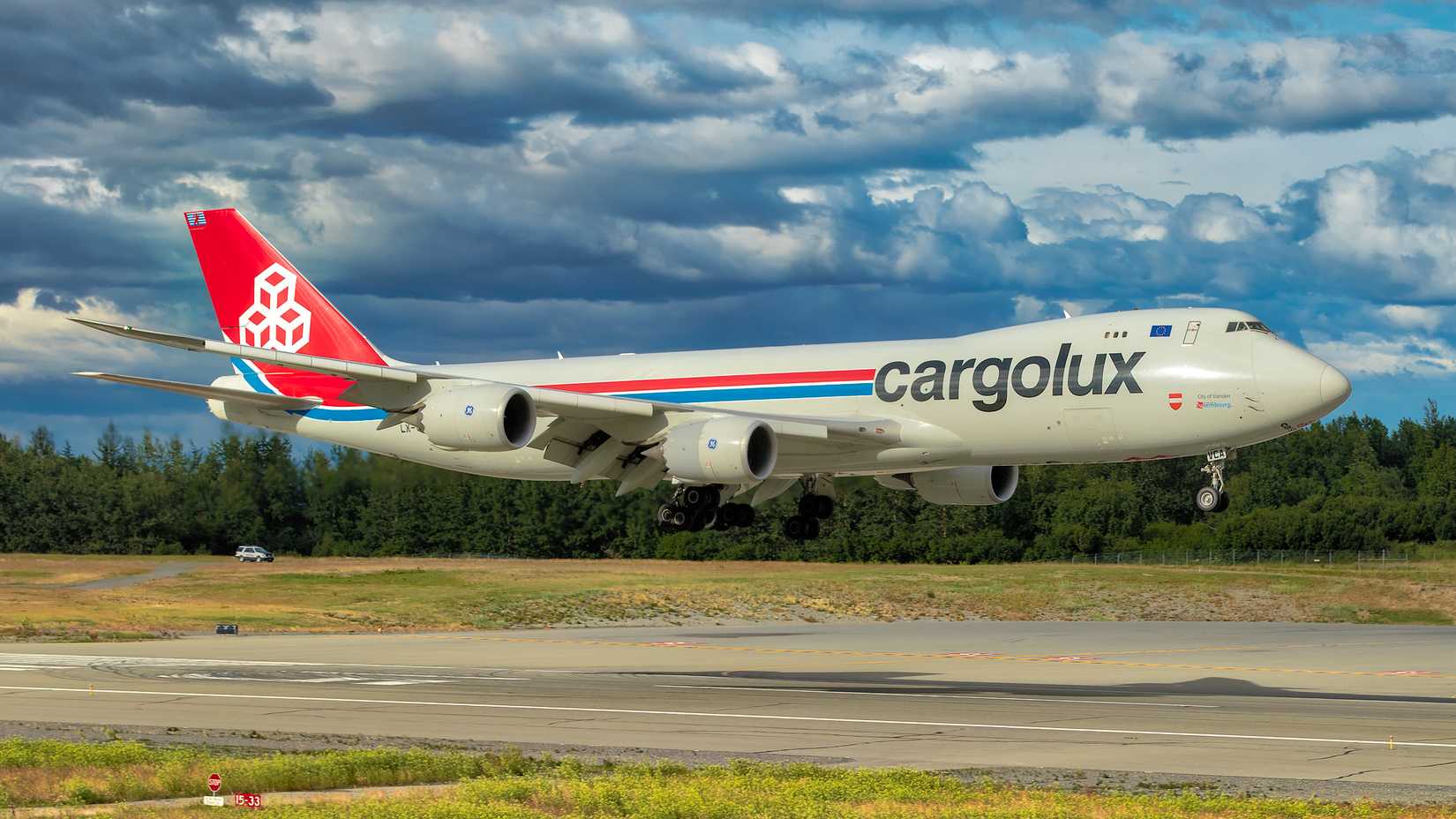
Given that the newest examples of the Boeing 747-8F are just a handful of years old, it is unsurprising to see that there is a relatively strong trend present in terms of the relationship between the aircraft’s age and its reported market value. However, this is not the case at the other end of the scale, with the $96.99 million figure ascribed to Cargolux’s LX-VCA, the oldest active 747-8F, not being the lowest.
Indeed, this aircraft is 15.13 years old, but there are several younger examples with lower market values. The lowest figure is $81.08 million, which ch-aviation ascribes to multiple different examples of the Boeing 747-8F that are currently aged between 13 and 14 years old. Similarly, the Cargolux aircraft has a lease rate of $850,000, compared to $750,000 for the younger examples with a lower value.
Passenger examples have lost value much quicker


The passenger model of the Boeing 747-8, officially known as the 747-8I (with the ‘I’ suffix standing for ‘Intercontinental’), was, in many respects, the right aircraft at the wrong time, and came in an era when airlines were moving away from large widebody quadjets. Still, a select handful of carriers have made the type work for them operationally, including 

Interestingly, these aircraft have begun to lose value at a much quicker rate than their cargo counterparts. Indeed, according to ch-aviation, the youngest active example of the 747-8, a 7.76-year-old Korean Air jet registered as HL7644, has already seen its market value drop to just $50.21 million after less than eight years of service. This is around half that of the aforementioned Cargolux jet, despite that plane being twice as old. Of course, there are several important factors at play here.
For instance, as discussed, the Boeing 747-8 is a more popular aircraft in the cargo sector, giving operators of the type a greater chance of being able to sell their examples on than their passenger counterparts. This leads to a longer lifespan, meaning that, while being older, the Cargolux jet likely has more flying still ahead of it, hence the higher value (despite racking up more annual hours on average).
At the other end of the age spectrum, the oldest active example of the Boeing 747-8F is a 13.13-year-old Lufthansa plane registered as D-ABYA. This quadjet has a current market value of just $40.89 million, a figure that it shares alongside three other 747-8s at the German flag carrier with ages of between 12 and 13 years old. These aircraft also share the lowest market lease rate figure, at $375,000, showing that, among passenger examples of the 747-8, age directly correlates to value.
While most people associate private jets with smaller aircraft, there are also a select handful of private 747-8s still left in the world’s skies today. Ascertaining the exact value of these can be a difficult undertaking, but one area that is worth focusing on as we conclude is the aircraft’s interior. According to Corporate Jet Investor, buyers of brand-new private 747-8s will have had to spend an extra $25-50 million on the interior alone, making them the domain of the richest of the rich.
source