


Air Force Global Strike Command (AFGSC) is currently undergoing an era of significant transformation to balance sustaining today’s force with modernizing for tomorrow’s fight. The multi-type bomber fleet will be consolidated into a two-type structure. Currently, there are just over 140 bombers in service. The fleet is expected to remain stable and potentially even see significant growth in the total number of airframes over the coming decades. AFGSC comprises over 33,000 Airmen and civilians between two numbered Air Forces. The 8th Air Force commands the bomber fleet while the 20th Air Force is responsible for Intercontinental Ballistic Missiles (ICBM).
Surprisingly, the United States Air Force is actually not the largest operator of strategic bombers. The People’s Liberation Army Air Force (PLAAF) of the People’s Republic of China (PRC) has a higher total, with around 200 airframes believed to be operational. However, these aircraft are all antiquated designs from the early years of the Cold War, adopted from Soviet airframe engineering. With that said, let’s dive into the USAF armada of heavy-hitting, big-wing bombers. The USAF can proudly boast a flight line that includes iconic warbirds famous for their raw power, as well as the most cutting-edge stealthy warplanes in the world.
The 2025 Roster

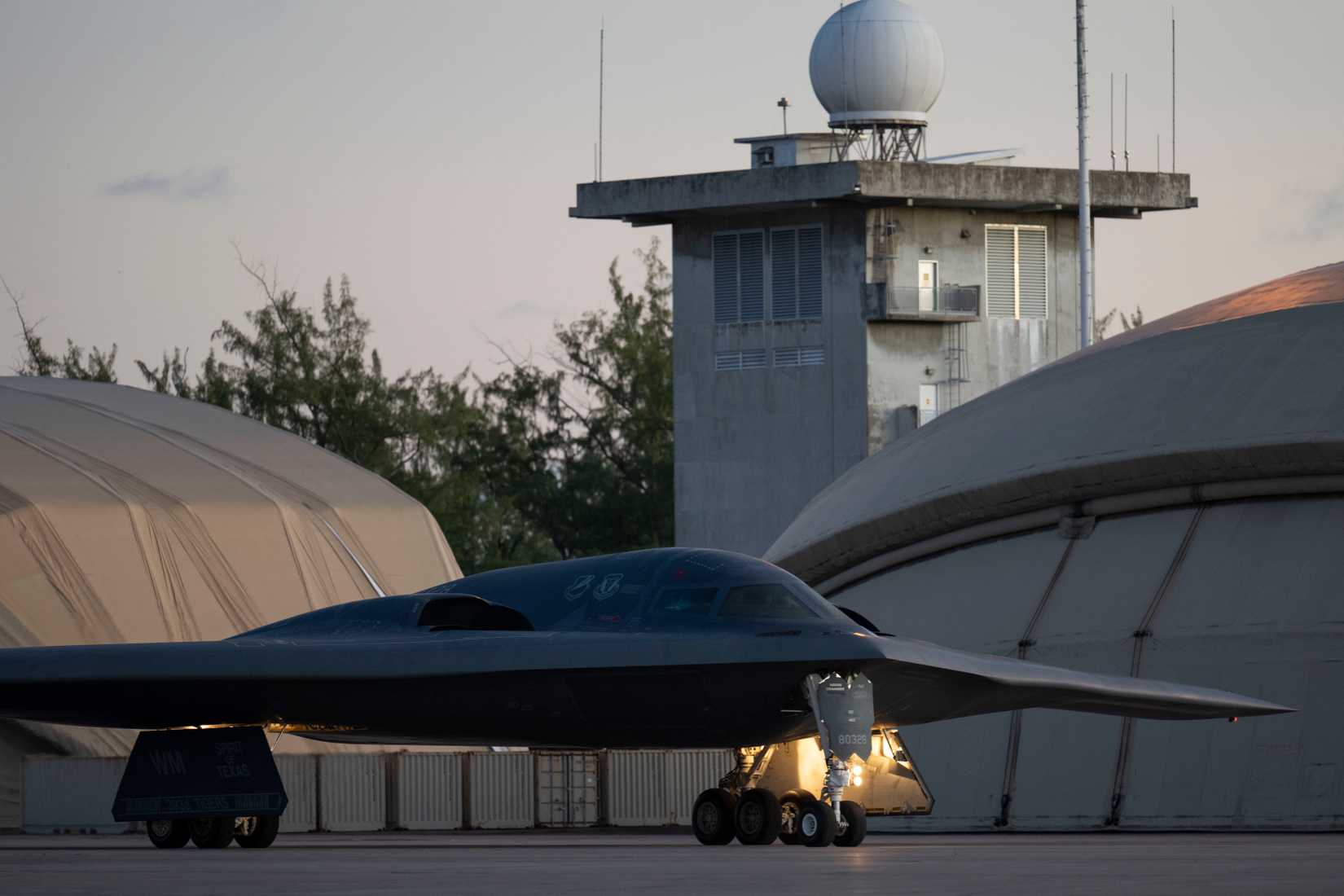
There are only three militaries in the entire world that still have any strategic strike aircraft, also known as bombers. The USA and PRC are two, with Russia being the third. The Russian Air Force has a smaller fleet in the United States, and its losses have been mounting since the invasion of Ukraine began. It’s difficult to estimate the exact number, but it is believed to be around 100 aircraft.
Here is the current official number of bombers in the USAF, according to data released by Air & Space Forces Magazine at the end of 2024:
The B-52 first debuted in the 1950s. Meanwhile, the B-1 is around half a century old, and the B-2 is getting up there in years as well. The Air Force is mapping out a path to retirement for the B-2 and B-1, but notably does not plan to retire its oldest bomber for many years still. The B-52 is expected to continue serving alongside the forthcoming, sixth-generation bomber, the B-21 Raider.
Bomber Country


AFGSC oversees a number of bases across the continental United States that are responsible for the nation’s strategic bomber and ICBM forces. The headquarters is located at Barksdale Air Force Base, Louisiana. There are five main operating bases for the entire fleet. The base has each host’s different platforms and units with facilities designed to support their unique aircraft.
Below is a quick breakdown of the bases and which aircraft they support.
|
Air Force Global Strike Command (AFGSC) Bases |
Bomber Platform |
|---|---|
|
Whiteman AFB |
Northrop Grumman B-2 Spirit |
|
Barksdale AFB & Minot AFB |
Boeing B-52 Stratofortress |
|
Dyess AFB & Ellsworth AFB |
Boeing B-1B Lancer |
The current B-2 base, Whiteman Air Force Base (AFB) in Missouri, is planned to become the future operating base for the B-21 Raider. Tinker AFB is expected to house sustainment and maintenance activities for the future B-21 force as well.
Raider: The Future Of Airpower
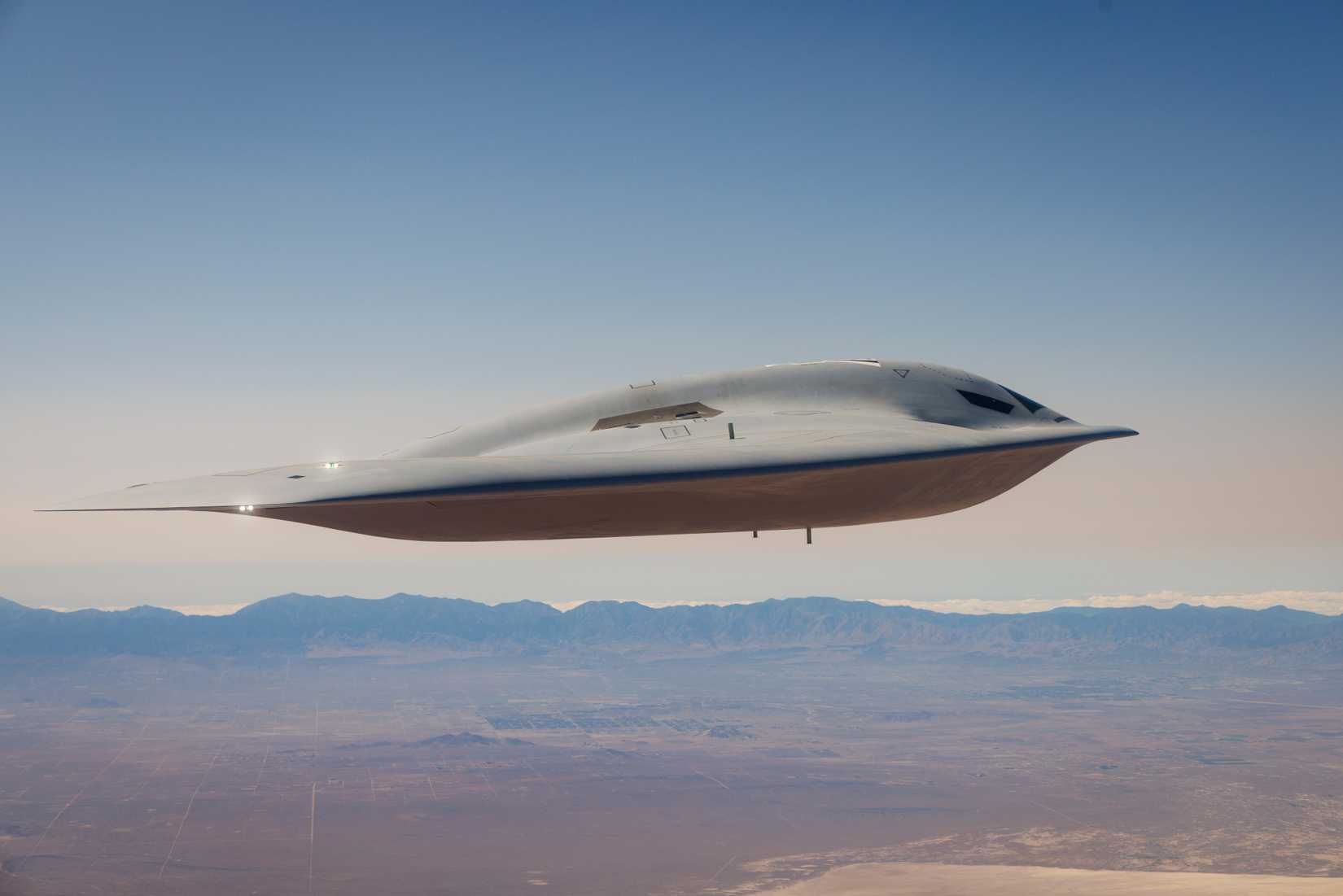
Currently in testing at Edwards AFB, the B-21 Raider built by Northrop Grumman, will be the first sixth-generation aircraft in the world when it enters service. The aircraft appears to simply be a scaled-down B-2 Spirit at first glance, but represents a highly refined design built on the original technology pioneered by the stealthy flying wing that came before it as the world’s first fifth-generation stealth bomber.
The B-21 Raider will be smaller and have only two engines, compared to four in the B-2, a move designed to overcome the extremely costly, labor-intensive maintenance demanded by the Spirit. The new bomber will have a smaller payload but will be more readily deployable to disperse the bases and have the same or greater range with a far more effective multi-spectral stealth profile.
The Air Force plans to acquire at least 100 B-21s, which will form the backbone of the future bomber force, but there is speculation that the final total may reach as many as 200 airframes. The B-21 Raider will fundamentally reshape the Air Force’s strategic strike bomber fleet by creating a modernized, two-asset structure, combining the stealthy, penetrating B-21s and “missile truck,” non-stealthy B-52s.


The Impending Reboot Of The US Air Force
America’s Air Force has a paradigm change on the horizon.
Recapitalizing The BUFF

The “big ugly fat fellow” (BUFF), sometimes also referred to as the Boeing B-52 Stratofortress, is slated to go on serving the USAF for at least a century. The Air Force and Rolls-Royce are getting a reengining program underway as we speak. New engines are anticipated to improve fuel efficiency by 30 to 40% and dramatically reduce both maintenance on the ground and aerial tanking support requirements.
The Commercial Engine Replacement Program (CERP) will replace the Pratt & Whitney TF33 turbofan engines with RR F130 engines. The new variant has been dubbed the B-52J and is expected to exceed the 100-year mark before it is retired. To complement the new power plants, the “J” will also get modernized radar, avionics, communications, weapon systems, and more.
Of the three strategic bombers currently in service with the USA, only the BUFF is expected to serve alongside the B-21 as part of the long-term strategy. The B-1 and the B-2 will both be phased out as soon as sufficient numbers of B-21s become available to maintain Force Readiness levels and allow the legacy airframes to be mothballed in the “boneyard” at Davis-Monthan AFB.

How Many B-52 Stratofortresses Were Built?
The legendary B-52 Stratofortress, behemoth of the sky built to fight the unthinkable war, nearly a century later the fleet continues to serve.
The B-2’s Sunset Tour

The B-2 Spirit fleet is planned for retirement by the early-to-mid 2030s, when it will be fully replaced by the new B-21 Raider stealth bomber. The Air Force will operate the B-2s for at least another decade to bridge the gap until enough B-21s are operational. The B-2 will not be in service for as long as the B-52 Stratofortress, primarily due to its high operational and maintenance costs and small fleet size.
The USAF is the sole operator of the first fifth-generation heavy bomber ever made, the Northrop Grumman B-2 Spirit. The flying wing remains shrouded in secrecy because of the long list of revolutionary technologies that were invented during its development. The official USAF webpage lists just 21 Spirits delivered before the factory line shut down in 1997.
There are currently 19 airworthy, following one crash in Guam and another that was written off due to an incident at Whiteman Air Force Base (AFB). The number of bombers available decreases once more due to depot maintenance. When the Soviet Union fell apart and the Cold War abruptly ended, production was famously halted.
To keep the small B-2 fleet operationally relevant against evolving threats, the Air Force and Northrop Grumman are implementing a number of upgrades. The B-2’s low-observable, radar-absorbent materials are being enhanced to further reduce its radar cross-section (RCS). The fleet will integrate new weapons, and upgraded beyond-line-of-sight satellite communications systems will allow for faster transfer of mission-planning data.

This Is How Powerful The B-2 Spirit Bomber Is
The B-2 is famous for its stealth, but how much punch does it pack? Let’s find out.
Last Dance Of The BONE

Commonly known as the “Bone,” the Rockwell B-1 Lancer is slated for retirement by the mid-2030s as the USAF transitions to the new B-21 Raider. However, the remaining fleet is currently undergoing significant upgrades to remain a vital part of the US strategic bomber force until its replacement is fully operational.
The B-1 was originally developed by Rockwell (now Boeing) to use six external hardpoints for nuclear missiles. Those were disabled under nuclear non-proliferation treaties, the START agreement, in the post-Cold War era. The jet bomber still uses one pylon for sensors on many missions, but not the others, until a new program began.
Boeing’s Load Adaptable Modular (LAM) pylon will be used for new, advanced standoff munitions currently in development, including: the hypersonic AGM-183A Air-Launched Rapid Response Weapon (ARRW), the air-breathing Hypersonic Attack Cruise Missile (HACM), and the C-3 variant of the AGM-158C Long-Range Anti-Ship Missile (LRASM).
The USAF is also hedging against any delays in the B-21’s arrival by bringing the capability to the B-1 as a deterrent against near-peer rivals. Air & Space Forces Magazine quoted Jennifer Wong, Boeing’s director of bomber programs, who explained the LAM will be “like Legos,” easily reconfigurable on the flightline:
“What this does for the B-1 is, it does keep it in the fight longer, it keeps it relevant, and again, takes some of the workload off the B-52… We’ve actually had other, I’ll say ‘weapons providers’ come talk to us about possibly working with them to integrate their weapon onto it and get it tested onto a B-1… We are weapons-provider agnostic. It could be a Boeing weapon, it could be somebody else’s weapon.”
To bridge the “bomber deficit” until the B-21 is fully operational, the remaining B-1B fleet will receive upgrades as part of the B-1 Embracing Agile Scheduling Team (BEAST) program and other modernization efforts. The Air Force has already retired 17 of the least serviceable airframes and plans for a complete phase-out once the B-21 Raider enters service in sufficient numbers, likely around the early-to-mid 2030s.
source