



In the world of commercial aviation, the terms narrowbody and widebody describe more than just the shape of an aircraft; they define its mission, its power needs, and even the engines that make it fly. From the more compact Airbus A320 and Boeing 737 families to the larger Boeing 777 and Airbus A350, the contrast between narrow and wide fuselages has profound implications for engine design, fuel efficiency, and operational economics.
At the heart of this distinction are the engines themselves. Widebody aircraft rely on some of the most powerful turbofan engines ever built, each one capable of producing anywhere between 60,000–100,000 pounds of thrust. At the same time, narrowbodies use smaller, more efficient powerplants optimized for shorter routes. Understanding how these engines differ in size, design, and purpose reveals why certain aircraft dominate short-haul markets while others rule the skies on long intercontinental routes.
Engine Size And Thrust Requirements

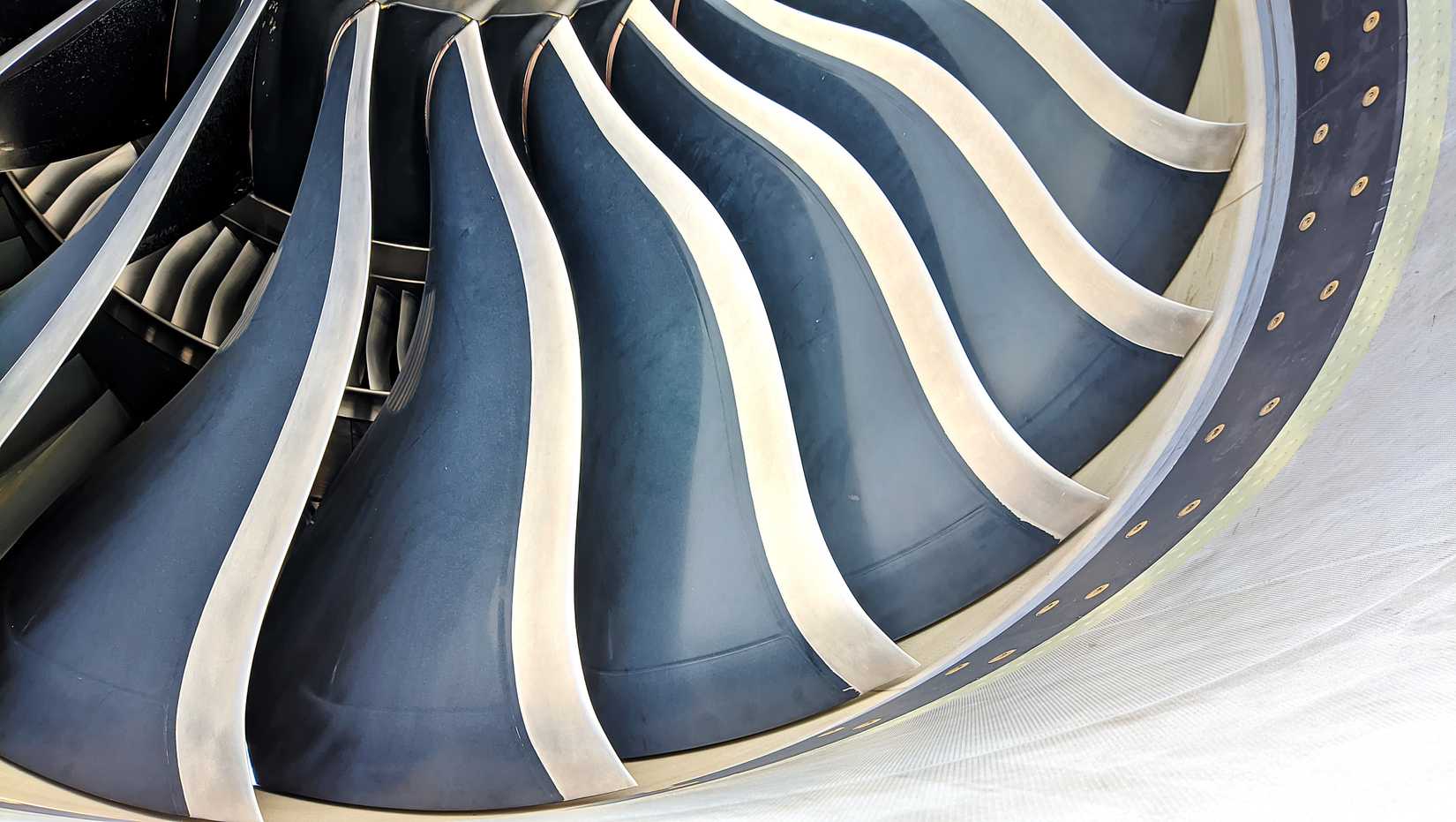
Widebody aircraft engines are engineered for power above all else. For example, the Boeing 777’s GE90 engine measures roughly 11 feet (3.4 meters) in diameter, almost as wide as an entire 737 fuselage, and can generate up to 115,000 pounds of thrust. Such immense power is essential for lifting heavy aircraft loaded with passengers, cargo, and fuel across oceans and continents.
By contrast, narrowbody jets such as the A320neo or 737 MAX use engines like the CFM LEAP or Pratt & Whitney PW1100G, which produce around 25,000–35,000 pounds of thrust, with some widebody engines reaching upwards of 40,000 pounds of thrust. These smaller engines are fine-tuned for short- and medium-haul routes, emphasizing efficiency and quick turnaround times over raw power. Their reduced thrust allows for lighter structures and lower maintenance costs.
The thrust disparity underscores a fundamental design difference: widebodies prioritize endurance and payload, while narrowbodies focus on agility and economy. Engine designers must therefore balance size, weight, and efficiency differently depending on an aircraft’s range and purpose.
Aerodynamic And Structural Considerations


General Electric | Simple Flying
Widebody aircraft present greater aerodynamic and structural challenges than their narrowbody counterparts because of their size and power requirements. A typical widebody fuselage can exceed 18 feet (5.5 meters) in diameter, up to approximately 23 feet (7.1 meters) on the Airbus A380, nearly twice or triple that of a 737 or A320, which average around 12 feet (3.7 meters). This larger cross-section increases the pressurization loads the structure must withstand, meaning engineers need stronger, heavier materials and reinforced joints. Studies have shown that wider fuselages produce higher bending stresses along the wing root and cabin floor, requiring thicker spars and additional structural support to prevent deformation during flight.
Aerodynamically, the larger frontal area of a widebody increases drag, but the aircraft compensates through advanced wing designs and higher lift capabilities. For example, the Boeing 787’s long, flexible composite wings improve efficiency despite its wide fuselage, while the Airbus A350 employs curved winglets and high-aspect-ratio wings to reduce induced drag. Narrowbody aircraft, such as the A320neo, rely on smaller, thinner wings optimized for lower speeds and shorter ranges, which keeps drag and fuel burn minimal. These aerodynamic trade-offs reflect each category’s mission profile: endurance and payload for widebodies, agility and economy for narrowbodies.
Engine integration further highlights these structural differences. Widebody engines like the GE90 or trent XWB are so large that the wings must be engineered to withstand enormous torque and vibration loads. This requires strong pylons and ample ground clearance, shaping the entire undercarriage design. Narrowbody aircraft, with smaller engines mounted closer to the wing, face fewer of these constraints but must still balance aerodynamic flow and clearance; the 737 MAX famously needed its engines mounted higher and farther forward to accommodate the larger LEAP engines. In essence, every structural and aerodynamic element, from fuselage width to wing sweep, must harmonize with the engine’s size and mission, illustrating how deeply engine design influences aircraft architecture.
Fuel Efficiency And Range Optimization


Fuel efficiency lies at the heart of modern engine design, and both widebody and narrowbody aircraft approach this goal from different directions. Widebody engines, such as the GE90, Trent XWB, and GE9X, use ultra-high bypass ratios and advanced lightweight materials like carbon-fiber fan blades and ceramic composites to achieve optimal performance at high altitudes over long distances. Their massive fans move enormous volumes of air efficiently, reducing specific fuel consumption even while producing upwards of 100,000 pounds of thrust. Because long-haul flights spend most of their time at cruise speed, these engines are optimized for steady-state efficiency rather than repeated cycles of takeoff and landing.
Narrowbody engines, by contrast, emphasize flexibility and fuel economy across frequent, short-duration flights. Powerplants such as the Pratt & Whitney PW1100G and CFM LEAP-1A use geared turbofan technology and composite fan blades to reduce drag and improve thermal efficiency. These designs allow engines to operate quietly and consume up to 15–20% less fuel than previous generations. They also reach peak efficiency faster, an advantage for aircraft that perform multiple takeoffs and landings per day. Airlines flying high-frequency regional or domestic routes benefit from this responsiveness and lower per-flight fuel cost.
Another factor influencing efficiency is the trade-off between aircraft range and payload. Widebodies like the Boeing 787 or Airbus A350 are designed for ultra-long-haul missions, up to 8,000 nautical miles (14,800km), with optimized fuel storage and wing aerodynamics that reduce drag over time. Narrowbodies, while smaller, are pushing boundaries too; the A321XLR, for instance, can fly over 4,700 nautical miles (8700km) thanks to auxiliary fuel tanks and improved engine performance, narrowing the gap between traditional narrowbody and widebody capabilities.
Maintenance And Lifecycle Economics

Engine maintenance represents one of the largest operational costs for any airline. Widebody engines, due to their complexity and higher thrust levels, require more extensive overhauls and costlier replacement parts. Each inspection can involve thousands of hours of labor and millions of dollars, making maintenance scheduling critical for profitability. That being said, the cost per flight hour or per seat-mile is often lower for widebodies due to utilization and capacity, which offsets some of the higher absolute costs.
Narrowbody engines, on the other hand, are designed for high-frequency, short-duration use, with modular components that simplify inspections and reduce downtime. Their smaller size and simpler architecture mean they can often be swapped or serviced quickly, minimizing aircraft ground time, a key advantage for budget and regional carriers.
The economics of engine life cycles heavily influence fleet strategy. Airlines flying short, dense routes prefer narrowbody aircraft for their lower maintenance burden and flexibility, while global carriers operating intercontinental flights accept the higher cost of widebody engine upkeep in exchange for capacity and range.
Technological Innovations In Engine Design


The evolution of both engine types reflects decades of technological progress. Widebody engines have pioneered advances such as composite fan blades, ceramic matrix composites (CMCs), and ultra-high bypass ratios. These improvements enable massive engines like the Rolls-Royce Trent XWB and GE9X to deliver record-breaking thrust with reduced noise and emissions.
For narrowbodies, breakthroughs such as the Pratt & Whitney geared turbofan (GTF) and CFM LEAP have revolutionized performance. By decoupling fan and turbine speeds, these engines achieve better fuel efficiency and quieter operation. The result is a new generation of aircraft, such as the A320neo and 737 MAX, that consume up to 20% less fuel than their predecessors.
Both sectors now benefit from digital monitoring, predictive maintenance, and 3D-printed components, allowing engineers to track performance in real time and prevent failures before they happen. The boundary between widebody and narrowbody technology continues to blur as each adopts the other’s innovations.
The Future Of Widebody And Narrowbody Engines


Looking ahead, sustainability and alternative fuels will define the next era of engine design. Widebody manufacturers are exploring hybrid-electric assist systems and hydrogen-compatible combustors to reduce emissions on long-haul flights. These engines may integrate variable-cycle technology to adapt efficiency levels to different flight phases.
Narrowbody engines, meanwhile, are leading the charge in sustainable aviation fuel (SAF) adoption and electric hybridization. Because short-haul routes are ideal for testing emerging propulsion technologies, narrowbodies could become the first commercial aircraft type to integrate hybrid or hydrogen systems at scale fully.
In both cases, the line between “small and efficient” and “large and powerful” is becoming increasingly blurred. As engineering continues to evolve, the defining traits of widebody and narrowbody engines will shift toward a common goal: cleaner, quieter, and smarter flight.
source