


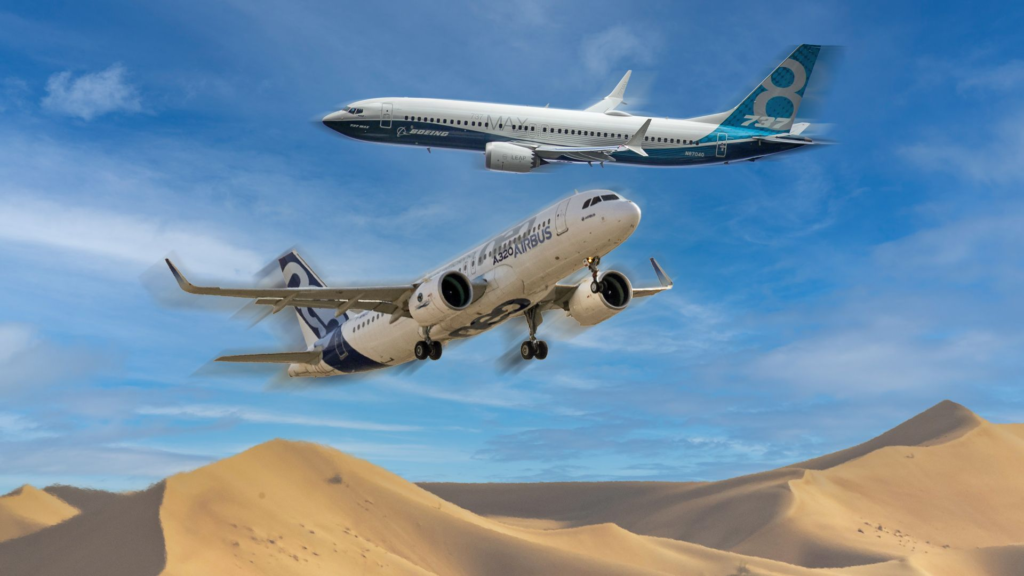
When airlines discuss whether to amply their fleets with a Boeing 737 MAX or an Airbus A320neo, the discussion almost always begins with performance: range, seat count, efficiency. But behind the scenes, cost is often the go-or-not-go factor. From list prices to real transaction values, from maintenance expectations to long-term residuals, the true economics of each aircraft matter far more than any press-release number.
And yet, here’s the twist: neither Airbus nor Boeing publishes real transaction prices anymore. That means the only way to understand what these jets really cost is by combining the puzzle pieces: list prices, industry benchmarks, leasing data, appraisal estimates, and fleet-planning trends.
List Prices: The Starting Point (But Never The Ending One)

The first and most widely misunderstood metric in aircraft pricing is the list price. 

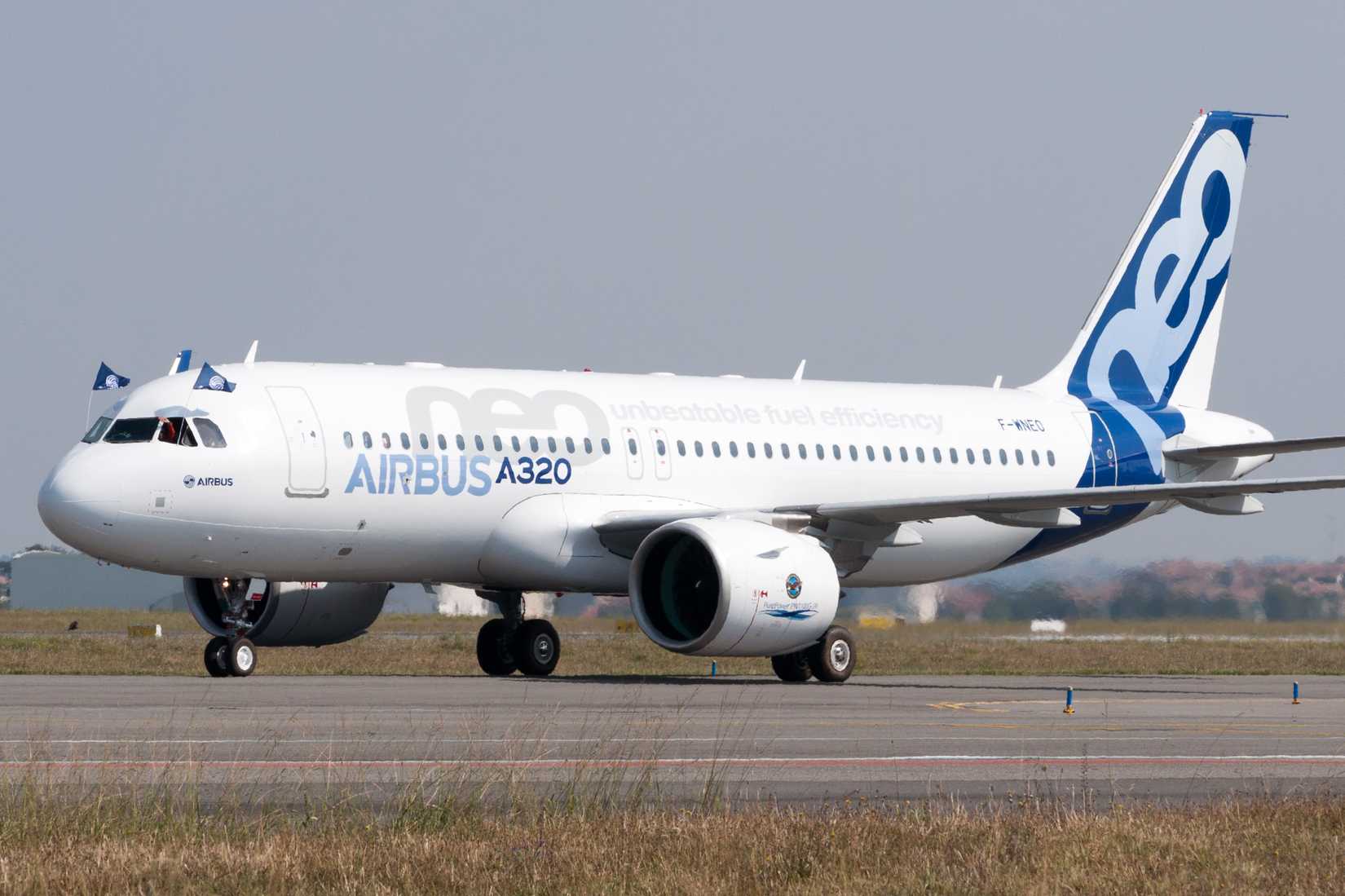
From publicly available archives, Airbus’ most recently quoted list price for the A320neo (110.6M in 2018) aligns with figures cited in Yahoo Finance’s 2024 cost explainer on the family, and Boeing’s 737 MAX 8 list figure of $117 million resembles the historical pricing referenced by Statista.com and Business Insider. But industry analysis, such as a 2023 aircraft-pricing breakdown by Axon Aviation, reaffirms that net prices for a narrowbody generally fall between $50 million and $65 million, depending heavily on configuration, contract length, delivery timing, and negotiation leverage.
While list prices offer a baseline, they rarely reflect true acquisition cost. In fact, they often serve more as a symbolic anchor for marketing, financing, and negotiation narratives. For this reason, airlines and lessors rely far more on market valuations. Ishka Global’s 2023–2024 pricing benchmarks, for instance, list typical market values for nearly new A320neos around $58 million, with the 737 MAX 8 at roughly $52 million, a concrete example of how market dynamics differ from catalog numbers. These valuations form the foundation for the real-world comparison in this guide.
Configuration, Variant and Delivery Factors

Airlines often talk broadly about “the A320neo” or “the 737 MAX,” but each family is actually a spectrum of aircraft, each with different seating capacities, structural limits, and optional equipment. These variations can change the price by several million dollars. Engine choice alone can shift the price significantly: the A320neo offers either the CFM LEAP-1A or the Pratt & Whitney PW1100G, each with different acquisition and long-term maintenance economics.
Delivery timing is just as influential. With Airbus and Boeing both holding massive backlogs, commercially acknowledged to stretch deep into the 2030s, airlines with urgent fleet requirements often pay a premium for accelerated delivery slots. Conversely, carriers with flexibility can secure deeper discounts. Industry commentary, including observations from leasing analysts in Ishka’s pricing reports, notes that availability often matters more than list price divergence in today’s market.
|
Family |
Variant |
Seat Range |
Typical Market Position |
Relative Cost |
|
A320neo Family |
A319neo |
120–150 |
Smaller markets, lower demand |
Lowest |
|
A320neo |
150–180 |
Baseline model |
Mid |
|
|
A321neo / XLR |
180–244 |
Long-range, high-capacity |
Highest |
|
|
737 MAX Family |
MAX 7 |
138–153 |
Limited customer base |
Lowest |
|
MAX 8 |
160–178 |
Core model |
Mid |
|
|
MAX 9 / MAX 10 |
178–230 |
Capacity-focused |
Higher |
Because of these variables, airline executives often tell analysts that “no two MAX aircraft cost the same” and “no two A320neos cost the same,” a sentiment echoed in aircraft-evaluation discussions on Axon Aviation’s pricing portal. Cabin densification, optional avionics, long-range tanks (for the Airbus A321XLR), and even paint complexity can add unexpected cost variations. The result is that while families overlap directly in competition, individual aircraft often differ materially in final pricing.


Will Boeing Ever Build A True Airbus A321XLR Competitor?
Will Boeing’s cautious approach cost them the middle-market? The A321XLR’s dominance grows as Boeing weighs its options.
Operating Economics: Acquisition Versus Lifecycle Cost

Acquisition cost is just one side of the equation, but the biggest financial impact arrives during the next 20–30 years of flying. Airlines evaluate aircraft by total cost of ownership: fuel burn, engine performance, maintenance hours, downtime risk, crew training costs, and residual value. A cheaper aircraft that burns more fuel or demands more maintenance over time can end up far more expensive than a pricier option that performs consistently.
Fuel burn is usually the single most influential factor. Both the A320neo and 737 MAX promise roughly 15–20% better fuel efficiency than the previous generation, and in most mission profiles the difference between the two families is marginal, often measured in fractions of a percent. Maintenance costs, however, remain more complex. Pratt & Whitney’s PW1100G has notably suffered durability issues, prompting operators to accelerate shop visits. By contrast, CFM’s LEAP engines have shown better reliability, though not without challenges.
Crew training and fleet commonality, however, are where the costs can swing dramatically. An airline deeply invested in Airbus narrow-bodies will avoid costly pilot retraining by selecting the A320neo, which intentionally mirrors the cockpit philosophy of its predecessors. A Boeing operator, meanwhile, benefits from the continuity between the 737NG and 737 MAX, preserving simulator setups, training pipelines, and spare-parts inventories.
|
Factor |
Impact on Cost |
Which Aircraft Benefits More? |
|
Fuel burn |
Largest long-term expense for most airlines |
Practically tied; varies with mission profile |
|
Pilot training & commonality |
Saves millions per year for fleets with common type ratings |
A320neo for Airbus fleets; MAX for Boeing fleets |
|
Maintenance & reliability |
Affects dispatch rates, spare-part needs, operational flexibility |
Close; depends on engine choice for A320neo |
|
Residual value |
Determines financing attractiveness & long-term ROI |
Historically, the A320neo is slightly stronger. |
|
Fleet compatibility |
Reduces transition costs dramatically |
Depends on existing fleet mix |
Residual value, the value of an aircraft in the secondary and leasing market, is the final pillar. Historically, the Airbus A320 family has held slightly stronger resale and lease rates than the 737, partly because of the explosive success of the A321neo. But this, too, varies by region, market cycle, and delivery slot availability.
Market Trends And Current Pricing Dynamics


Airline economics are increasingly intertwined with the leasing market, which tends to act as an impartial arbiter of aircraft value. By 2024, lease rates for the A320neo and 737 MAX 8 were frequently cited as around $400,000 per month for new or nearly new examples, a clear indication that financiers see the two models as fundamentally comparable assets.
Ishka’s pricing benchmark confirms this trend: while the A320neo’s baseline value remains slightly stronger, the MAX has regained parity through production recovery and strong demand for narrowbodies. What complicates pricing more than anything else in today’s market is availability. With backlogs for both manufacturers stretching into the 2030s, delivery timing has become a powerful bargaining lever. Airlines needing aircraft quickly might pay a premium for earlier slots, while others with flexibility can negotiate steeper discounts.
Delivery timing is now one of the most influential pricing variables. Airlines willing to wait four to six years for delivery can negotiate significantly better net prices. Those needing short-term lift, often due to retirements or rapid growth, sometimes pay millions more for earlier slots. This timing premium, highlighted in Axon Aviation pricing case studies, further blurs simplistic comparisons between Airbus and Boeing numbers.

Boeing 737 MAX Vs. Airbus A320neo: Which Has More Orders?
Airbus leads in narrowbody commitments.
Why Two Look-Alikes Cost Similar, But With Different Strategic Fits

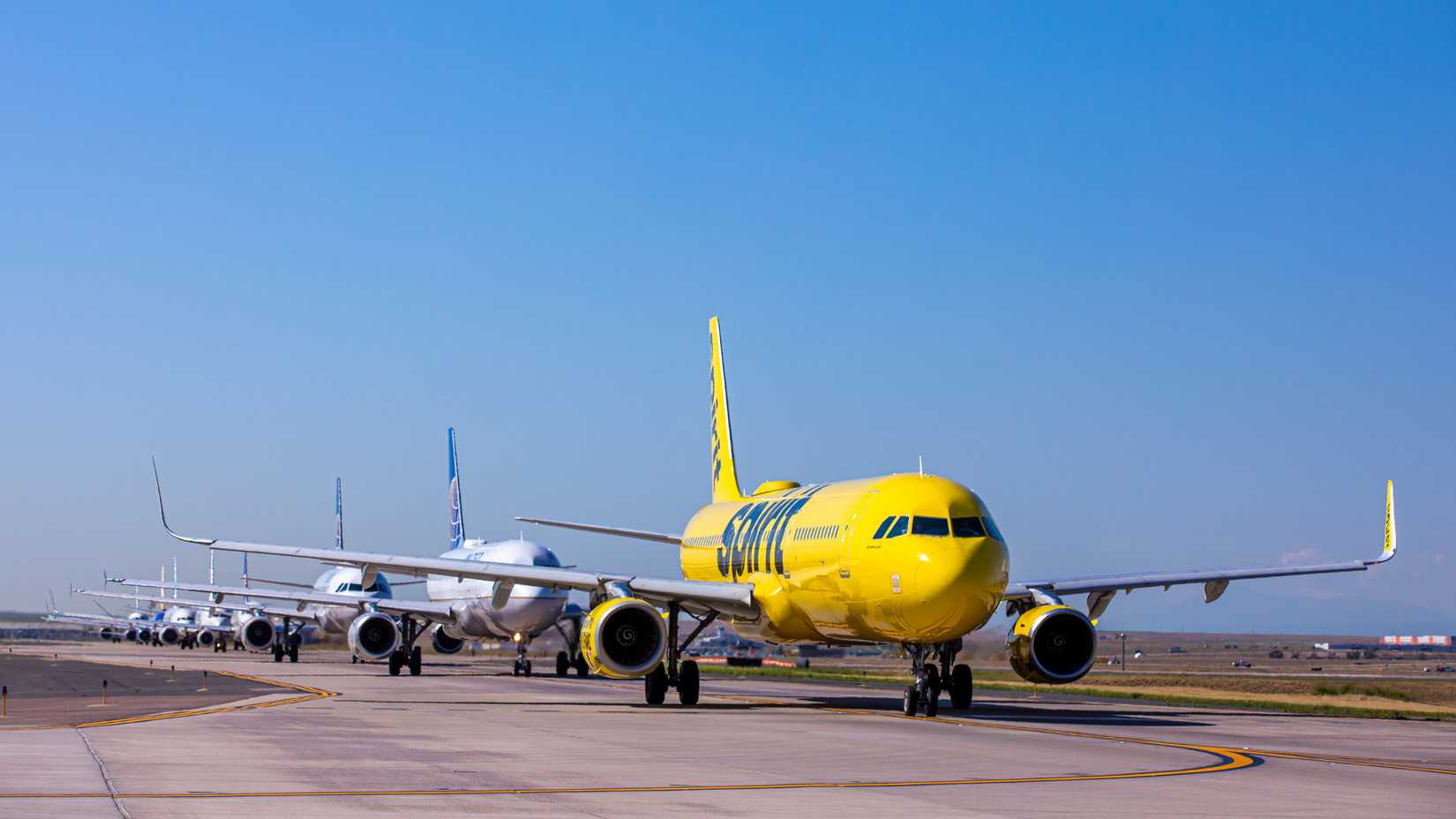
The A320neo and 737 MAX families compete directly: both are single-aisle jets tailored for short to medium-haul operations; both claim efficiency gains of 15–20 %; both are core to almost every airline’s future narrowbody fleet. But even if the A320neo and 737 MAX 8 may look nearly interchangeable on an airport ramp, their design philosophies diverge in subtle ways that shape their cost profiles. Yet they reflect different strategic philosophies, and that impacts cost and fit.
Airbus emphasized commonality across the A320 family: cockpit layout unchanged, pilot type ratings shared. That gives an operator with existing A320-series aircraft a strong cost argument when picking an A320neo, saving training and maintenance interface costs. Boeing, meanwhile, introduced the 737 MAX as a renewal of the popular 737 NG series, emphasizing incremental benefits and fleet transition ease for existing 737 operators.
But there was a catch that no one expected that became evident after two serious accidents that highlighted the issue with the MCAS system, and, subsequently, had to change the flight training procedure for the MAX pilots who were already typed rated for the NG series, leading to extra costs. The cost advantage thus often accrues not just to list price, but to the operator’s existing fleet, with a slight advantage of all-Airbus fleet airlines, thanks to the cockpit commonality of all current Airbus aircraft, not just the A320 series.
As we can see, for airlines, this means the “cost” of each aircraft depends less on the aircraft itself and more on the surrounding fleet. For this reason, many airlines’ decisions appear predictable: Frontier Airlines , JetBlue , IndiGo, and Wizz Air remain heavily Airbus-oriented; 

It is an insight repeatedly emphasized in fleet-planning seminars and by leasing analysts. Even a difference of a few million dollars in the aircraft’s net price can be overshadowed by savings in training, maintenance integration, and spares.
In Brief: Keep Going With The Same Brand

So what does all this mean in real decision-making? Here are some takeaways:
- Don’t treat the list price as actual cost, expect deep discounts, especially for volume orders and early deliveries.
- Compare fleet commonality and transition costs more heavily than raw list price: pilot training, maintenance, and spare-parts synergy matter.
- Focus on residual value and lease market: if both aircraft type values converge, the pay-back period aligns closely.
- Understand delivery timing: premium for early slots, opportunity cost for deferred delivery.
- Account for configuration and customization: fuel efficiency improvements, cabin upgrades, new variants can change costs materially.
Ultimately, for many airlines, the difference between choosing the A320neo or the 737 MAX comes down to the way each fits into the broader machinery of an airline’s operations.
For an Airbus operator, the A320neo’s commonality can deliver huge savings over its lifetime. For a Boeing operator, the MAX offers the same advantage but with some extra training. And for lessors and financiers, the two aircraft are now close enough in value that either one can serve as a reliable long-term asset.
As the narrow-body market continues to evolve with new variants (such as the 737 MAX 10 or A321XLR), supply chain pressures, and sustainability demands, the cost dynamics will keep shifting. But at present, for both aircraft, the acquisition cost is comparable; what separates them is how each airline uses its existing fleet, training pipeline and future growth strategy.
source