


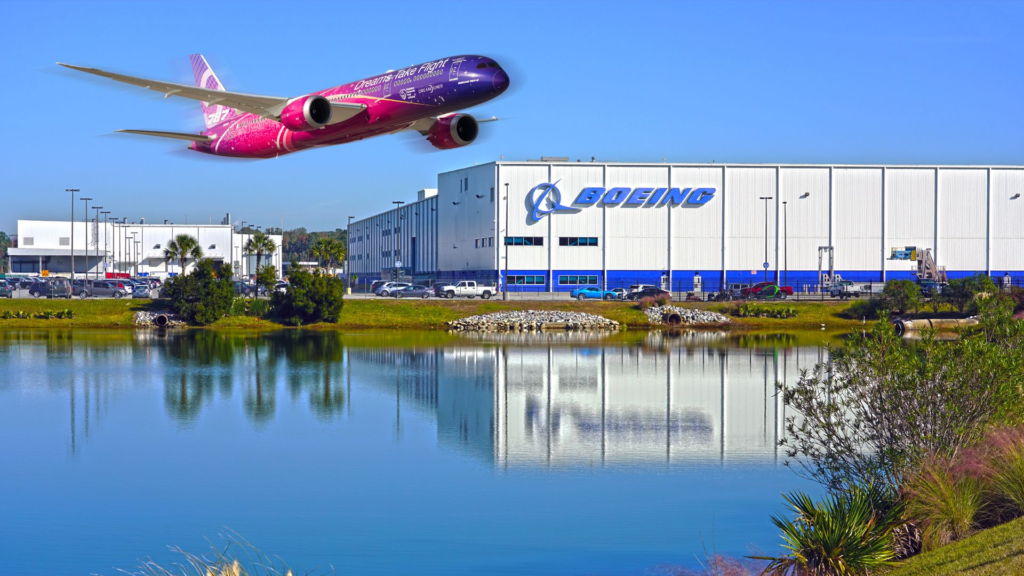
The world’s economy is more interconnected than ever before. Despite the hardship that COVID-19 created for the aerospace industry and the disruptions caused by US President Trump’s tariff ploys, business is booming. The resurgence in air travel demand following the Coronavirus Pandemic has helped coalesce the aviation supply chain that circles the globe, and Boeing’s production has been steadily ramping up as a result.
Globalization 4.0, as the World Economic Forum calls it, has made it easier and simpler than ever before to operate a production apparatus with major component manufacturing and material sources spread between the far corners of the map. The supply chain of America’s legendary planemaker, Boeing, encompasses over 5,000 suppliers in more than 150 countries.
At the same time, Boeing has relocated some manufacturing stateside and is even bringing one of its more important suppliers, Spirit AeroSystems, back into the fold through a merger. The decision was motivated by the ongoing struggles of its 737 MAX line and has helped the assembly line improve in quality assurance (QA). Every product in the Boeing line, not just the 737 MAX, has a complex web of logistics behind the curtain.
Let’s break down the gears that make up the impressive machine that is Boeing and how its industry-leading aircraft are put together by American workers and partners around the planet.
The Boeing Renton Factory

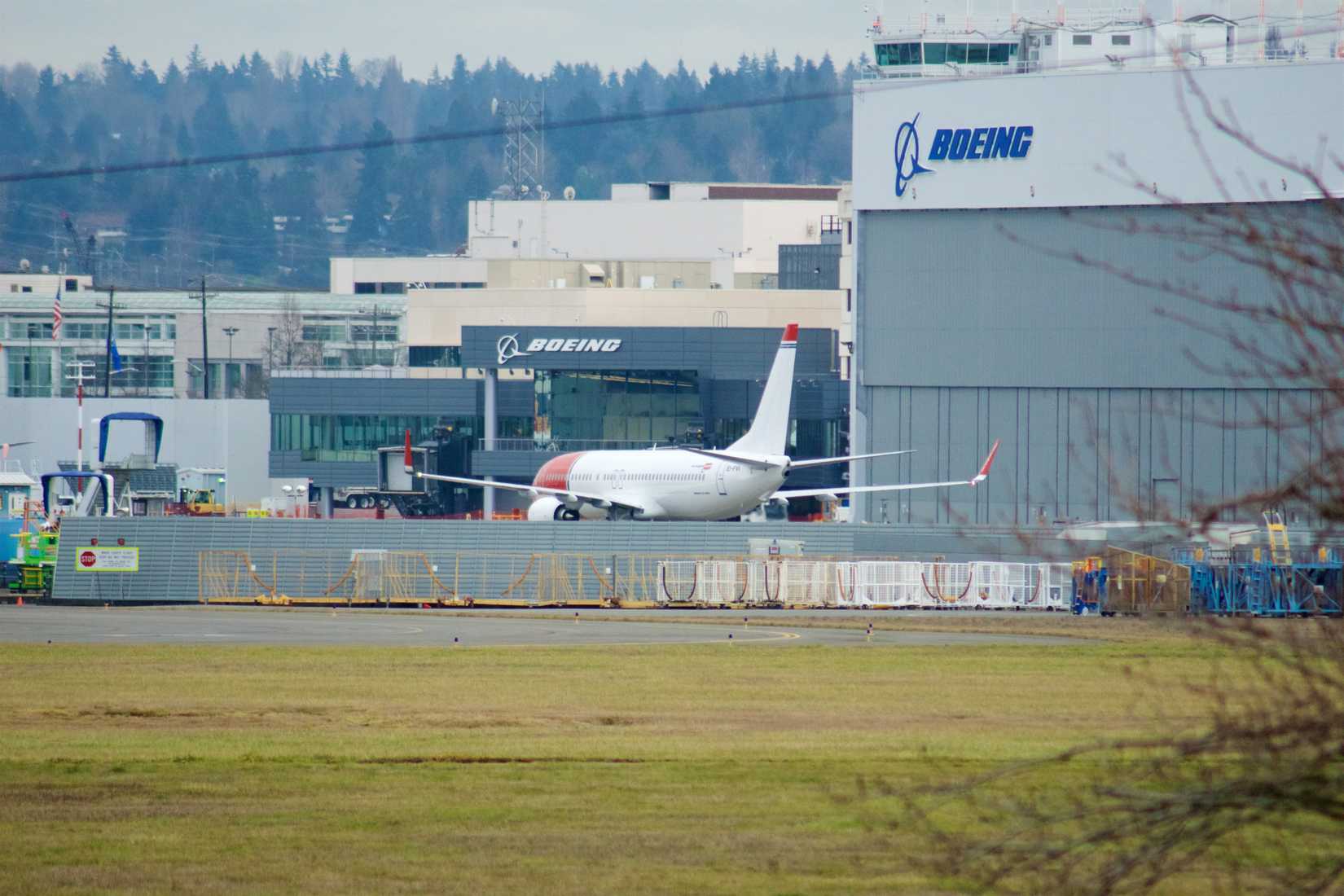


The 737 MAX is the newest model in the family line of Boeing’s best-selling aircraft. Despite struggles and tragic accidents that caused fatal mishaps, the MAX has sold in record numbers. The Poseidon is a Navy submarine hunter and maritime patrol aircraft, and a military derivative of the 737-800. As the quality measures of the MAX assembly line have improved, and when the other two variants are certified, this site’s output will skyrocket.

The Renton plant is near the city of Seattle and Boeing Field (BFI), where the company first got its start in the 1900s. Beginning as nothing but a sandy flat on the bank of the Duwamish River, today it stands as King County International Airport, or Boeing Field. The Seattle area is home to the cradle of America’s finest aerospace company and a powerhouse of the global aviation industry today.
The Everett Plant


Boeing’s Everett, Washington, factory is famous for being the largest manufacturing building in the world, by volume. Over 472 million cubic feet of space across 98.3 acres are thousands of American workers who assemble the 747, 767, 777, and 787 jetliners. Proudly producing the “Queen of the Skies” until 2023, as the 747 is known, the Everett site is developing the 777X and will eventually be the production location for what is set to be the biggest twinjet ever made.
The 767 was the twinjet that laid the foundation for the 777 family to supplant the 747 as the apex widebody airliner. The 767 pioneered long-range flying by twinjets, which led to the Extended-range Twin-engine Operational Performance Standards (ETOPS). Allowing twin-engine airliners to fly transoceanic and transcontinental routes paved the way for the success of the 777 aircraft family, laying the foundation for the upcoming 777X.
The 787 also directly benefits from the legacy of the 767, even though it is a clean-sheet design and produced at a different location. The 777X also draws on the 787 for its interior design, which features customizable LED lights, a more spacious cabin, and the largest windows on any jet. The window change was an industry first for a series update design, but more stunning are the folding wingtips and the GE9X engines, which will be the largest and most powerful in the world, as well as being highly fuel efficient.
North Charleston

Heading over to the East Coast, Boeing’s factory in Charleston, South Carolina, is the final assembly line for the 787 Dreamliner. The plant employs several thousand technicians who solely produce the 787, Boeing’s first clean-sheet airliner design in decades. The aircraft has been a highly successful widebody and brought in steady revenue for the company, as struggles with the 777X’s certification and 737 MAX quality issues have hurt the bottom line.
The 787 has proven to be much loved by operators and flyers alike. The jet’s efficiency and low maintenance needs have made it a highly flexible asset for airlines that can continue flying when traffic dips without breaking the bank. On the customer side, the modernized cabin with a spacious layout, adaptive lighting, state-of-the-art amenities, and large windows affords the most welcoming architecture aboard any mainline widebody jet on the market.
Boeing Zhoushan


The facility at Zhoushan, Zhejiang Province, China, is a completion center in a joint venture between Boeing and Commercial Aircraft Corporation of China (COMAC). The plant is focused on 737 MAX final assembly and outfitting for delivery to customers in the People’s Republic of China (PRC). Primarily performing painting and interior installation, jets are transferred to a Boeing site within China before final release to new owners.
This location is the first overseas production facility ever established by Boeing. CGTN Africa reported that He Dongfeng, president of COMAC, said in 2023:
“Zhoushan and Seattle are located at the two sides of the Pacific Ocean. In the past, most people living in Seattle didn’t know about Zhoushan, but now they come to work here. Our completion center has linked us together.”
A third of the total 737 deliveries in the world now go to China. The joint endeavor with COMAC was first announced in 2015. The first delivery of a plane that passed through Zhoushan’s doors took place in 2018. The site was developed to process around 100 aircraft per year. Tensions over the tariffs threatened by Donald Trump have interrupted deliveries at different points, even forcing some planes to be flown back to the US.
Spirit Aerosystems Aboard

After the door plug of an Alaska Airlines 737 MAX jet was ejected midair in early 2024, Boeing initiated a widespread quality control (QC) and safety culture enhancement for the second time. The 2020 global fleet grounding was the longest in history, as the Lion Air and Ethiopian Airlines 737 MAX crashes killed almost 350 passengers and crew. The quality lapse that led to the door plug failure was a further blemish on the type’s record.
The company was once renowned for safety and engineering quality, as flyers would say, “if it’s not Boeing, I’m not going.” To reclaim the public’s trust and restore the reputation of its best-selling airplane family, Boeing moved to remerge with Spirit. The Kansas-based aerostructures maker had been a part of Boeing years before, when it was split off as the companies sought to streamline. Spirit makes over 70% of the parts that go into a Boeing 737 MAX.
The Federal Aviation Administration (FAA) has overseen enhanced QC measures of the 737 MAX line, which is hosted by the Renton factory. A production cap of 38 planes per month has been instituted on the series, and only the 737 MAX 8 and 9 have been certified, with the MAX 7 and 10 still working through issues. It is hoped that the merger will prevent any more quality failures for the rest of the 737 MAX production.
Getting Back Up To Steam


The 737 MAX is the fastest-selling plane in Boeing’s history, with thousands in the backlog. Airbus recently took the crown for best-selling airliner in history when its A320 family surpassed 12,250 aircraft in the type’s historic sales volume. Boeing is aiming to ramp up the output with the MAX 7 and 10 certifications next year.
The FAA has inspected every 737 MAX that leaves the Renton plant since the Alaska Airlines incident. The low numbers of output have hurt Boeing’s production totals and bottom line. Recently, however, the FAA saw fit to increase the monthly cap from 38 to 42. As the iconic aerospace giant reassures the government and the public that its planes are no longer at risk, that number is expected to steadily rise.
Southwest Airlines has ordered hundreds of the 737 MAX 7 alone, and the MAX 10 is highly anticipated by the “big three” (American, United, and Delta Air Lines) as well as many carriers around the world. We will have to wait and see how quickly the titanic industrial might of Boeing can spool up to deliver record numbers of the latest and greatest iteration of its most beloved and iconic airliner.
source