


French President Emmanuel Macron announced the extension of France’s nuclear deterrent to eight European nations, alongside the expansion of France’s nuclear warhead stockpile.
In an event held at the ‘Ile Longue’ naval port near Brest, in front of the nuclear armed ballistic missile submarine (SSBN) Le Téméraire, French President Emmanuel Macron announced a significant update to France’s existing nuclear posture, cementing the role its fellow European nations will play in the future.
The United Kingdom, Germany, Poland, the Netherlands, Belgium, Greece, Sweden and Denmark have agreed to participate in a new “advanced deterrence” strategy using their conventional forces to enhance the protection of Europe and the overall striking power of France’s Force de Dissuasion (France’s Nuclear deterrence force).
In front of a nuclear submarine, Macron announces that France will expand its nuclear arsenal, and open to stationing nuclear arms across Europe.
Everyone sings La Marseillaise.
Got to hand it to him, Macron knows how to produce stunning visuals. pic.twitter.com/rqD4nYabpG
— Oleksiy Sorokin (@mrsorokaa) March 2, 2026
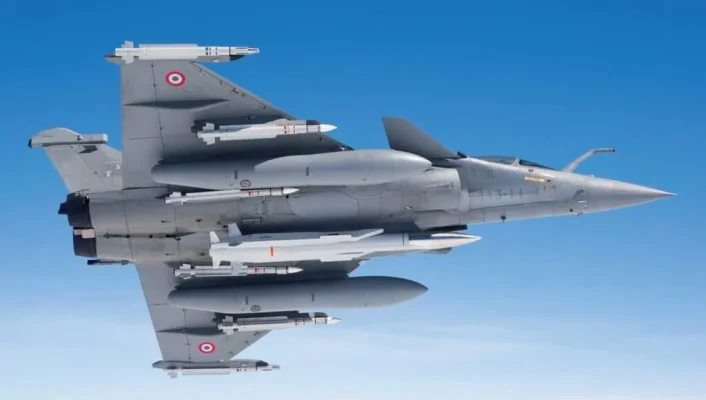
Macron laid out that nuclear-capable Rafale B fighters would be spread out across Europe on temporary deployments as an “archipelago of forces” that would complicate the decision making of any nation wanting to use extreme force against France or its allies. Alongside these deployments, allies will also be invited to take part in French nuclear exercises, in a similar manner to NATO’s Conventional Support to Nuclear Operations programme.
Here, non-nuclear NATO allies fly conventional missions to support the successful deployment of nuclear weapons, providing fighter cover for strike aircraft, tanker support and electronic warfare support. This is a significant step forward for France’s nuclear policy, which has never been committed to Europe in this manner before.

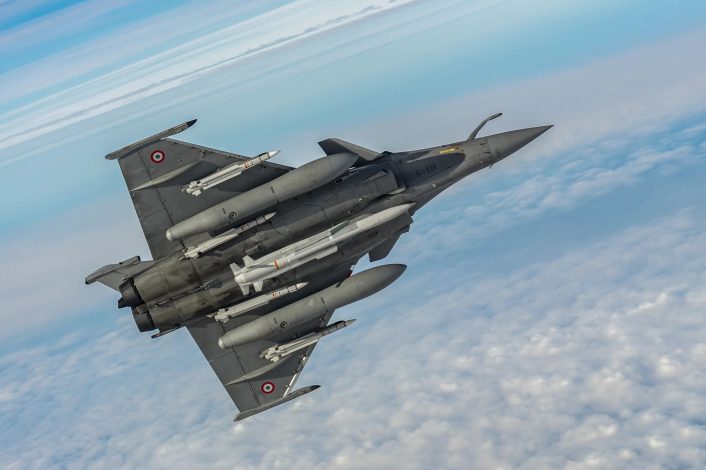
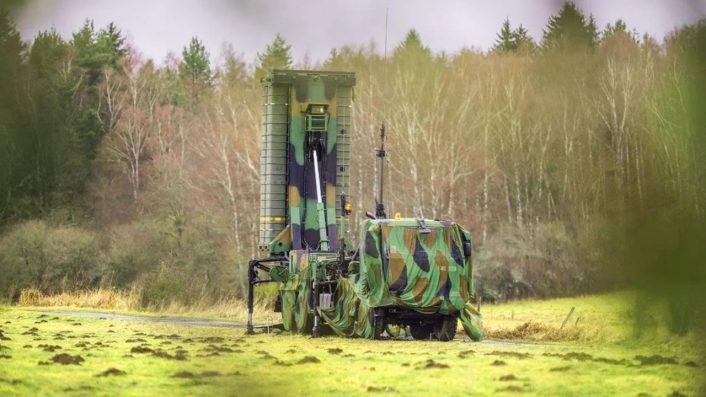
As well as aircraft and base support, Macron suggested that allied nations would assist in establishing “auxiliary” capacities under the new nuclear doctrine, with space-based alarm systems, air defences and long-range missiles touted as the primary contributions.
Emmanuel Macron is set to announce France 🇫🇷 new nuclear detterance ☢️towards Europe 🇪🇺
His plane was seen escorted by 4 Rafale fighter jet en route for the « Île Longue » nuclear submarine base in Brest.
Follow the crucial updates for Europe here ⬇️
🧵THREAD🧵⬇️ pic.twitter.com/6C6WQgWexN
— Clément Molin (@clement_molin) March 2, 2026
Macron emphasised the JEWEL programme, which aims to provide Europeans with the sovereign capabilities to detect missiles in the same manner that the US is able to do with its assets in space as well as its bases at RAF Flyingdales, in the UK, and Pituffik Space Force Base, in Greenland. Alongside this, Macron mentioned the involvement of the next generation variant of the SAMP/T surface to air missile system which is also being adopted by Ukraine and Denmark. The last system of note was a reference to the European Long-Range Strike Approach (ELSA) programme aiming to develop a 2,000km cruise/ballistic missile for European wide adoption.
These systems add a European dynamic to France’s deterrent, reducing reliance on the United States and securing non-nuclear strategic options to manage escalation before nuclear use. This form of burden sharing, or “épaulement” (shouldering), also helps to offset the large costs of the French nuclear deterrent, allowing the rest of Europe to make up for any shortfalls in French non-nuclear capability.

Whilst Macron explains that the presence of nuclear capable aircraft in European bases is not an explicit nuclear guarantee, any potential attacker against that nation would have to take into consideration a potential French nuclear response.
As with current United States nuclear sharing doctrine and the British commitment of its nuclear deterrent to NATO, the overall decision to use a nuclear weapon remains solely with the head of state, in this case the French President. Notably, this remains unchanged from previous French nuclear doctrines fueling possible European desires for their own nuclear deterrent independent of France, the UK or USA.
“A strengthening of our arsenal is indispensable.”
On 2 March 2026, speaking at the Île Longue submarine base in Britanny, the President of the French Republic announced a strengthening of France’s nuclear arsenal.
At a “geopolitical tipping point fraught with risks” – marked… pic.twitter.com/hAt3Kmyzhd
— Ministère des Armées et des Anciens combattants (@Armees_Gouv) March 5, 2026
To enable the deployment of French aircraft across Europe, it was also announced that the nuclear warhead count of the French nation would increase from the current number of 290, with the future figure left vague so as to provide further uncertainty to any opponent’s decision making. This would likely see an increase in the future number of nuclear cruise missiles the French Republic would have access to, enabling the deployment of Rafales across the continent, whilst also maintaining a number within France itself.
It is important to note that France’s nuclear doctrine remains focused on deterring an attack through the promise of causing “unacceptable damage” to the opponent, with both the air launched warning shot and the submarine launched strategic weapons tailored to this goal. Macron made clear that the rise in warhead count is not being done to join an arms race, nor is it being made along the lines of introducing a ‘flexible response’ strategy, in which tactical weapons are reintroduced to French service. Instead, the increase is being done to ensure the deterrent remains viable against the rise in the number of threats from adversarial nations such as Russia, China and North Korea.

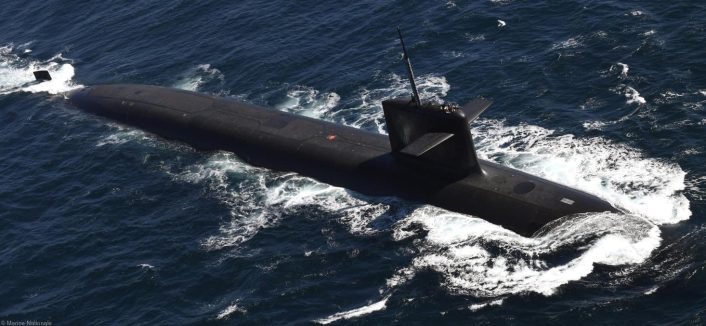
Also included in his speech was the announcement that France’s next generation SSBN will be named the Invincible-class, with the first in service, L’Invincible, expected to set sail in 2036. Previously known as the SNLE-3G (Nuclear ballistic missile submarine – 3rd generation) programme, this new class of submarine will replace the four vessels of the Triomphant class SSBN: Le Triomphant, Le Téméraire, Le Vigilant and Le Terrible.
“The coming half-century will be an age of nuclear weapons. France, determined, free and confident will fully play its role,” said Macron.
Europe’s Desire for Independent Deterrence
In a previous speech made in 2020, Macron updated France’s nuclear policy by laying out its “European dimension”, whereby an extreme attack on Europe by an adversary could threaten France’s national sovereignty and thus could act as an impetus for the use of nuclear weapons. This week’s speech acts as a codification of this under the properly addressed strategy of “advanced deterrence,” allowing fellow European nations to feel more secure about their national security.
The last six years have seen heightened tensions amongst the nuclear powers, with China’s bellicose attitude to Taiwan, Russia’s invasion of Ukraine and its provision of nuclear weapons to Belarus, North Korea’s deployment of ground forces to Europe, renewed fighting between Pakistan and India as well as the current war ongoing in Iran over Tehran’s nuclear ambitions.
France has authorised US forces to use its bases in the Middle East as Washington and Israel continue their attacks against Iran. Paris says the temporary move will help “protect our partners in the Gulf.”
Al Jazeera’s Natacha Butler reports from Paris. pic.twitter.com/SrCP65Vmgt
— Al Jazeera English (@AJEnglish) March 5, 2026
Alongside this, the United States’ current ‘National Security Strategy’ is similarly bellicose towards European autonomy and sovereignty, pushing for Europe to re-arm itself whilst also criticising them over their cultural make-up and their economic policies. Combined with President Trump’s attitude to Ukraine, NATO and European security as a whole, France’s expansion of its nuclear deterrent allows Europeans to feel a shred of reassurance.
Since President Trump’s return to power in 2025, non-nuclear states in Europe have been asking for nuclear support from Britain and France due to the sudden uncertainty presented over Trump’s support for their security. In particular, this fear saw Germany and Poland look to France specifically for guarantees due to their possession of air launched nuclear weapons that can be deployed all over Europe if the need arose.
Visite aux sous-mariniers du SNLE “Le Terrible”. pic.twitter.com/Eu9dYmrXCO
— Emmanuel Macron (@EmmanuelMacron) July 4, 2017
Poland had been particularly interested in a form of nuclear sharing, initially with the U.S., due to its unique history with Russia which included several invasions and severe historical repression over the last 200 years. However, Poland was rebuked from joining NATO’s nuclear sharing program by the U.S. several times due to fears that placing nuclear weapons in a country so close to Russia would be escalatory.
France’s new doctrine tears up this fear, allowing for France to directly station said nuclear capable aircraft in Poland if the need arose, much to the delight of the current Polish government. However, this idea has been complicated by comments made by the Polish presidency, which cast doubt on the proposal still preferring for Poland to join U.S. nuclear sharing.

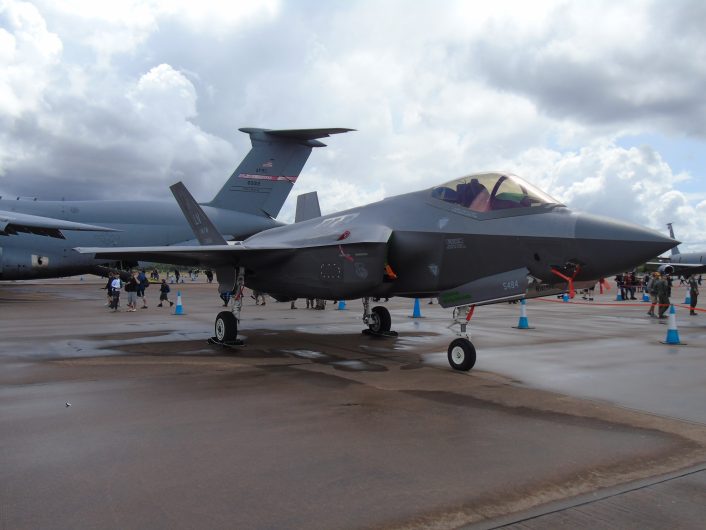
It is important to mention that France’s new doctrine is not explicit nuclear sharing, with only French aircraft allowed to operate the French nuclear deterrent, unlike the NATO nuclear sharing that allows non-nuclear NATO nations to carry American B61-12 free fall nuclear bombs. It is in this regard that France aims to compliment the existing nuclear defence structure that NATO operates, rather than to outright replace it.
This could prove disappointing for Germany, amongst other European nations, as Chancellor Friedrich Merz had floated the concept of French weapons being deployed by German aircraft as it does with U.S. weapons.
Before Macron’s speech, the most significant development in European nuclear deterrence occurred in July 2025, when Britain and France signed the ‘Northwood Declaration’ declaring that both nations would coordinate their nuclear deterrents together. In a joint statement “France and the United Kingdom agree[d] that there is no extreme threat to Europe that would not prompt a response by [both] nations.”
As a result, A UK-France Nuclear Steering Group was set up between the French Presidency and the British Cabinet Office to discuss nuclear policy, planning and joint operations. This culminated in the UK sending representatives to France’s recent ‘Poker’ nuclear exercises, which saw a dozen aircraft and air defence assets combine to simulate a nuclear strike. These exercises ended with a test launch of the ASMP-A nuclear cruise missile, which is currently being replaced by newer models.

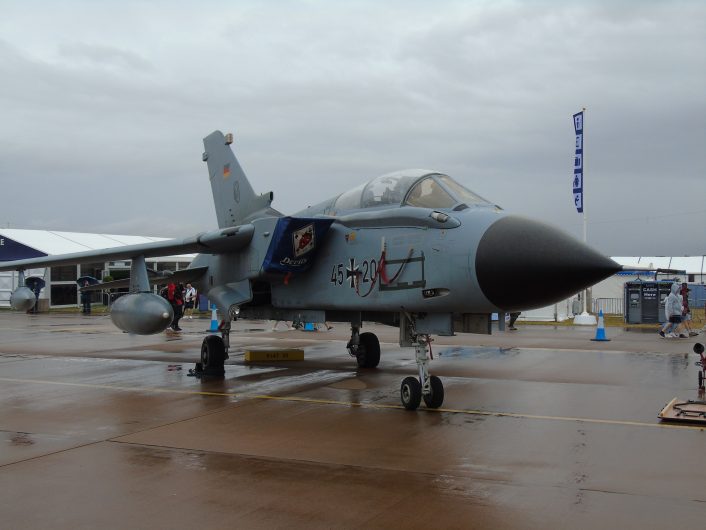
Immediately following Macron’s speech on Monday, a statement was released by the French Presidency declaring the establishment of a Franco-German steering group for nuclear weapons, in the same framework as the Franco-British group. Germany has been chosen as the main continental power that France will work with in the field of nuclear deterrence and, as such, it will be the first nation to join France in nuclear exercises and in visits to key French strategic sites.
The steering group will also lead discussions on conventional weapons, missile defence and French nuclear capabilities which were discussed earlier in the article.
Europe’s Nuclear Deterrent
Europe currently has three different nuclear deterrent capabilities, based around the two European nuclear powers, France and the UK, as well as a nuclear sharing capacity provided by the U.S.
As already stated, France maintains its four SSBNs of the Triomphant class: Le Triomphant, Le Téméraire, Le Vigilant and Le Terrible. Each carries 16 M51 submarine launched ballistic missiles (SLBM), with each housing between six and ten warheads to allow for the destruction of multiple targets with a single missile. Each M51 has an estimated range between 5,000-6,200 miles, allowing it to hit Moscow from the North Atlantic.
Dassault Rafale B approaching Leeuwarden air base in the Netherlands pic.twitter.com/MHfPzJ2J8a
— Destroyer Escort (@Destroye83) March 1, 2026
Alongside these, France also operates 50 Rafale B fighter aircraft, each capable of carrying the ASMP-A or ASMPA-R 300 kiloton nuclear tipped cruise missile, with around 54 cruise missiles currently in service. It is these aircraft that will be deployable around Europe, possibly carrying live nuclear weapons if the need arose, although during training exercises an inert variant is likely to be carried.
These missiles act as a final warning before the use of a city-busting SLBM, and are intended to be used against a major military target to ward off any catastrophic attack on France and now its eight allies.
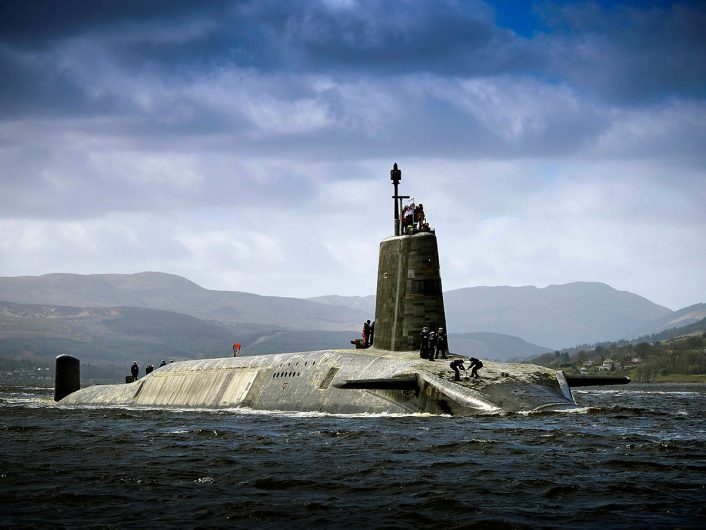
The United Kingdom operates four SSBNs in the form of the Vanguard class submarine: HMS Vanguard, HMS Vengeance, HMS Valiant and HMS Victorious, each equipped with 16 vertical launch missile tubes, although regularly only eight Trident 2 D5 missiles are carried. Each missile contains a number of warheads and acts in a similar manner to France’s continuous at sea nuclear deterrent (CASD).
However, the UK has officially declared its nuclear deterrent to NATO, with an attack on NATO viewed as an attack on the UK itself, whereby it would consider using nuclear weapons under “extreme circumstances.” The Trident nuclear missile is of the strategic variety, in that it is intended to be used against counter value targets, cities or military bases of high importance.

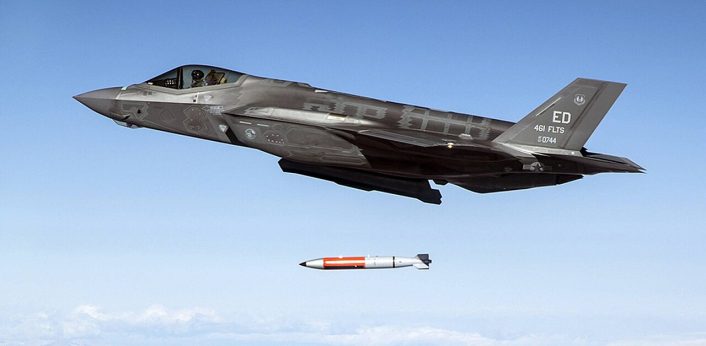
The U.S. maintains nuclear sharing deals with Germany, Italy, Belgium, the Netherlands, Turkey and with the United Kingdom, which is set to join when it accepts delivery of 12 F-35A aircraft in the near future. Under this deal, NATO nations are able to carry the B61 nuclear weapon on behalf of the U.S. with a number of bombs pre-positioned around Europe for this very scenario.
Luftwaffe and Italian Tornado IDS aircraft, alongside Turkish, Dutch and Belgian F-16 Fighting Falcons, were the original deployment aircraft for the bomb. However, these are now being supplanted by the F-35A Lightning II, in the case of every nation except Turkey.
Europe is protected by a multi-layered nuclear deterrent provided by three key allies, but in a world in which the rules of the international world order are breaking down, more may be needed to preserve peace in Europe. To this end, Macron stated that “The field of rules has turned into a field of ruins… That is why we are right to harden our position and we made the decisions I have just announced.” We hope that the world can still manage to hold itself back from the brink of catastrophe.
source