


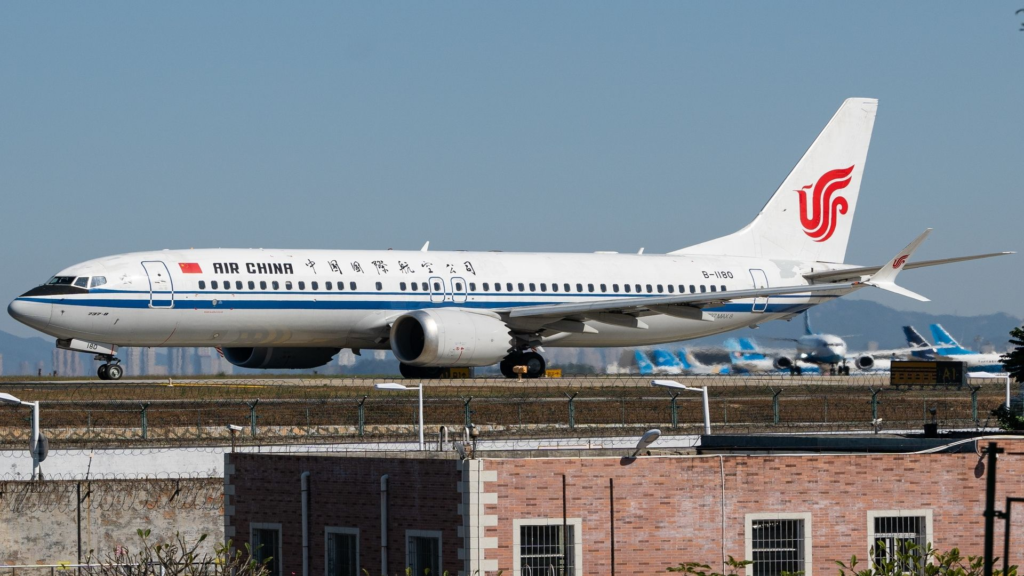
Boeing has appointed former White House advisor Landon Loomis as the new President of 

The US manufacturer has been caught in the crosshairs of trade wars between the two countries over the last few months. Despite delaying deliveries in China earlier this year, Boeing is expected to land a big deal in the country soon. Meanwhile, the US is threatening to choke off exporting parts to Chinese operators.
A New Appointment In China


As reported by CNBC, Loomis’ appointment is effective immediately. He will be responsible for day-to-day operations, strategy, and senior government relations from Beijing, while retaining his current role as Boeing Vice President of Global Policy. Loomis will succeed Alvin Liu, who was appointed in August 2023. Liu had succeeded Sherry Carbary after she retired following a 34-year career at Boeing.
Prior to joining Boeing in 2019, Loomis served for five years as a trade attaché at the US Embassy in Beijing. He was responsible for overseeing the aviation portfolio and other programs, and later held a role as special advisor to former Vice President Mike Pence for two years. Boeing believes his expertise and experience working in China make him the right candidate for the job. Brendan Nelson, President of Boeing Global, said:
“Landon will continue to build upon our longstanding partnership and presence in China, drawing upon his deep industry and government experience and his own experience living and working in China.”
Fresh Tensions Between The US And China
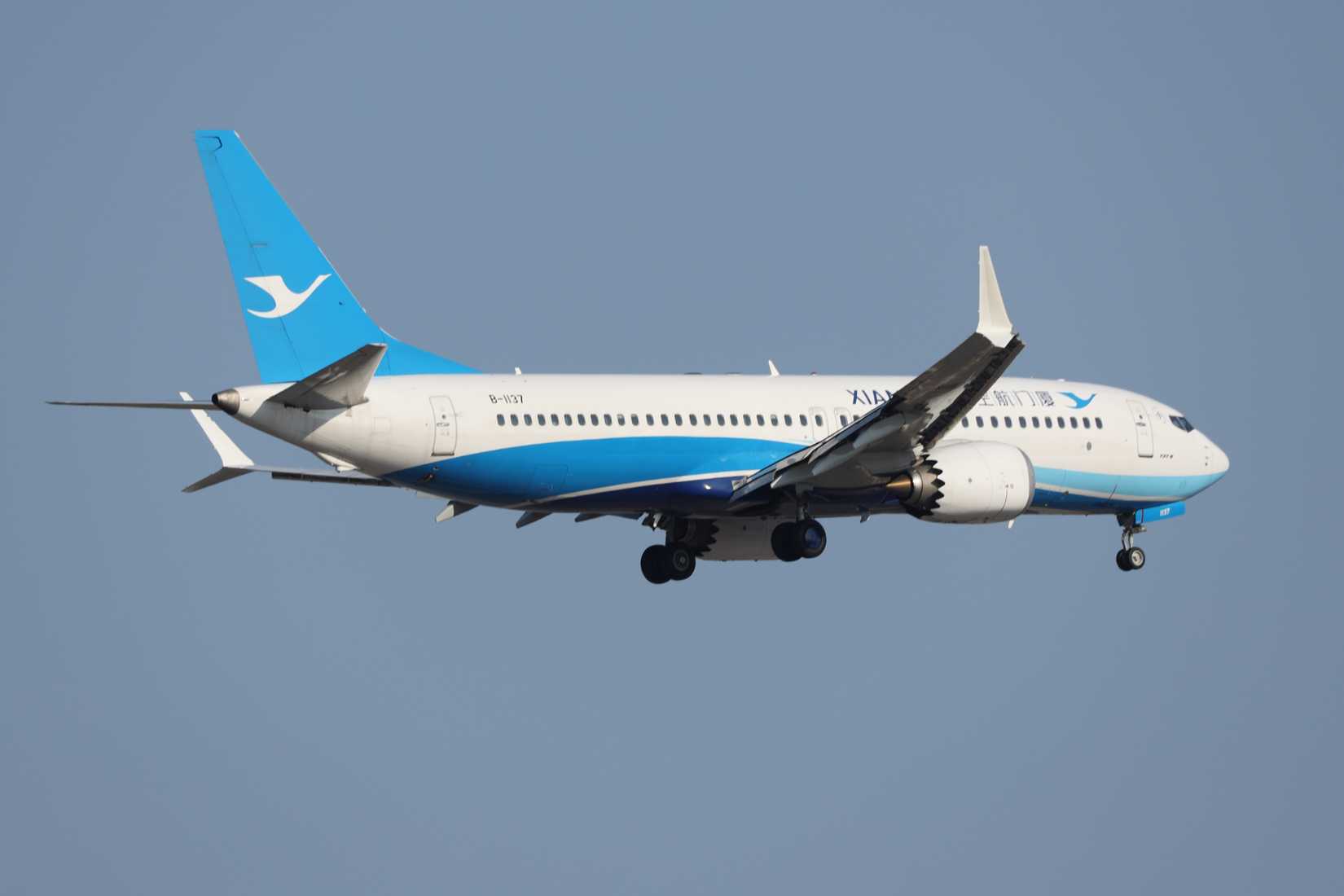
This year has seen different waves of trade wars between the US and China. Boeing, as one of the US’ largest exporters, has constantly been used as a bargaining chip. In April, a Boeing 737 MAX destined for China was forced to return to the US after the Chinese government ordered the country’s airlines not to take delivery of Boeing jets. This came after US President Donald Trump increased tariffs on Chinese imports.
The trade wars eased in the following weeks and deliveries quietly resumed. However, earlier this month, Trump threatened to cut the supply of aircraft parts to China. In response to China’s export limits on rare earth minerals, the US could impose export controls on Boeing parts. China reportedly has over 1,800 Boeing aircraft in service and orders for over 200 more.
Last month, Bloomberg reported that Boeing was in talks to sell up to 500 jets to China. US Democratic Representative Adam Smith told the press that US lawmakers, on a rare visit to China, raised a deal with the country’s leaders, which would see China commit to buying more Boeing jets. It is unclear when the deal will be finalized, but it would be China’s first major order for Boeing aircraft since 2017. Meanwhile, on October 22, Boeing’s European rival Airbus opened its second Final Assembly Line (FAL) for the A320 Family in Tianjin, China.
More Tensions Between The Countries


In addition to the trade wars involving Boeing, the US is also in a fight with Chinese operators over their flights to the United States. Earlier this month, the Department of Transportation (DOT) proposed banning Chinese airlines from overflying Russia on passenger and cargo operations to the US. The department cited compliance requirements under a longstanding bilateral air transport agreement.
However, major Chinese carriers have urged the US government not to go forward with its plans to ban them from overflying Russia. Air China, China Southern, and China Eastern filed comments regarding the proposed rule, with 
Russia banned US operators from overflying its airspace in 2022, responding to sanctions imposed after it invaded Ukraine. Many European carriers are also not allowed to overfly Russia, putting them at a competitive disadvantage on East-West flights and vice versa.
source