


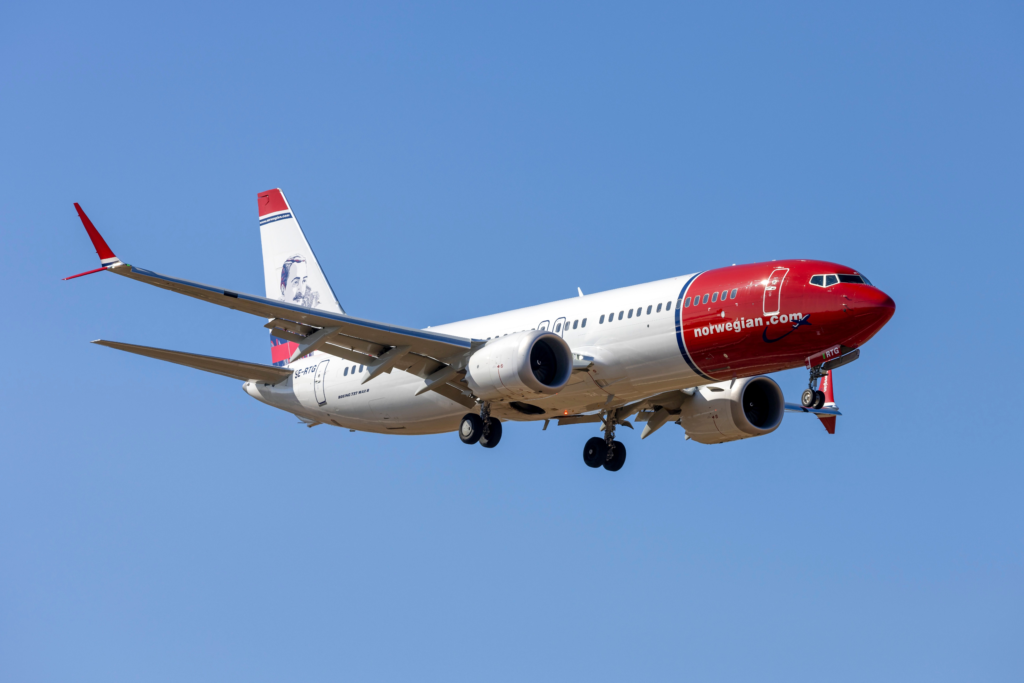
Last month, I took a business trip from Palermo / Punta Raisi Airport, Italy, to Stockholm Arlanda Airport, Sweden, with Norwegian air shuttle on a Boeing 737 MAX. It wasn’t my first time flying with the MAX, but it was my first time flying with this low-cost airline, and I must admit, it was a delightful surprise!
I am a frequent flyer throughout Europe, the Caucasus, and the Middle East, and over 80% of my flights are, logically, with Ryanair, Wizz Air, or easyJet — the famous European low-cost trio. This time, it was a pleasant discovery of another European low-cost airline, with service and overall comfort that exceeded those of other LCCs. Norwegian is known for catering primarily to Nordic vacationers traveling to Mediterranean hotspots and popular summer destinations, from Portugal to Egypt. But mine was not a standard trip — I was probably the only one traveling in a business suit, surrounded by elderly Swedish couples returning home from the typical Arab-Norman architecture and culture trip to Sicily.
Norwegian connects almost all major tourist destinations in Italy with the biggest cities in Sweden and Denmark (but surprisingly, not Norway, despite the airline’s name, as of 2025).
Check-In

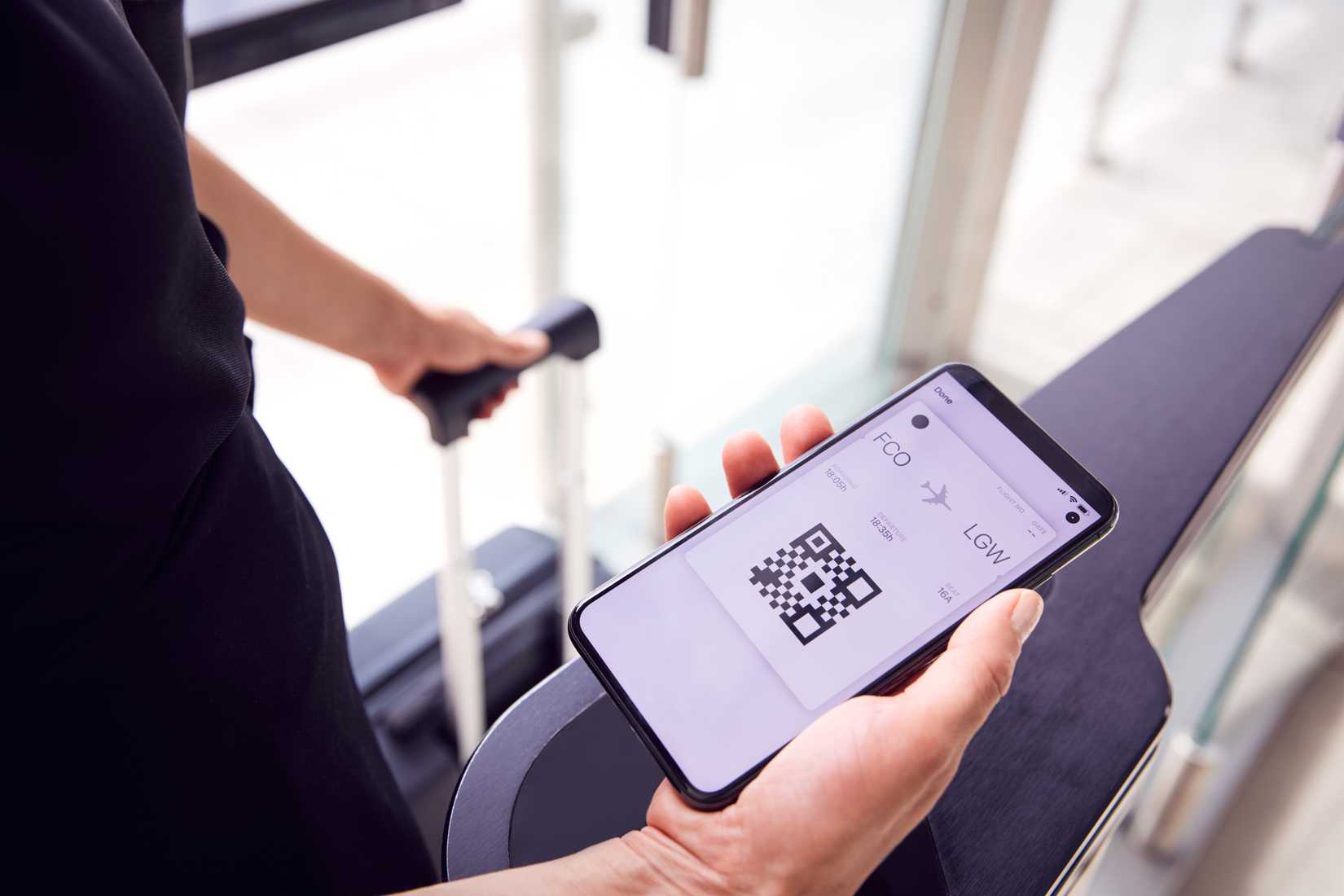
Check-in was a breeze: follow the steps on the Norwegian website to receive your digital boarding pass. As long as I had no extra bags, I went straight to the boarding area upon arrival at the airport. For those with the luggage, you had to go to the Norwegian counter.
Palermo Punta Raisi, also known as Palermo International Airport in Southern Italy, is a relatively small airport with a single terminal, making it easy to follow all the steps. The airport is well-connected to the city of Palermo, located approximately 20 miles (35 km) away, by train, bus, and shared taxis. Arriving two hours before the departure is more than enough. If you don’t have any checked-in bags, even an hour and a half would be enough.
Departure Airport Experience


As long as there is only one terminal at Palermo Airport, both Schengen and extra-Schengen flights depart from the same boarding area. Once there is a rare non-Schengen flight, there are two improvised booths on floor level -1, which, with no e-gates, serve as passport control. When there are no extra-EU flights, that area is mainly used by LCCs during peak times. Overall, security checks are always pretty fast and efficient.
The whole terminal is clean, and there is only one duty-free store where you can purchase typical Italian sweets, pesto, pasta, wine, perfume, as well as books, magazines, and magnets. There is also a pharmacy located just before the security checkpoint. If you are hungry, there are two restaurants after security (more like a snack bar; if you’re familiar with the Italian “Autogrill” bar concept, you’ll know what to expect). Essentially, you can purchase a variety of croissants, sandwiches, ready-made meals, and beverages. Luckily, there are also several vending machines located throughout the terminal, including one situated behind the passport control. There is also one lounge, the Gesap – Alitalia Lounge, but it’s very small with just basic amenities and not as luxurious as other lounges at major intercontinental hubs.
Boarding


Although this airport may be your ideal shopping paradise, it is very efficient in terms of security checks and boarding procedures. My gate was just straight after the security check, so in theory, I could have arrived even less than an hour in advance. However, as I am definitely not a fan of the “Airport Theory” trend, which is about arriving at the airport as late as possible before your flight, I arrived one hour and fifteen minutes before boarding and still had some time to read an aviation magazine while sipping a cup of tea. There were no delays.


The boarding was through the jet bridge, as you can see from the photo above, but there was a catch: this jet bridge ended in a staircase and an elevator for the disabled, so we had to go down and then board the plane by walking to it. I was hoping to see a special tail, as many Norwegian Air Shuttle planes feature portraits of famous people, but our plane had a blank canvas instead.
The Seat

Here comes the best part: the seat! I’ve been flying with Ryanair’s MAXes for the last couple of years, and their plastic seats have always been very cramped and uncomfortable, even compared to their older NG series. I was expecting to suffer for over two hours again, but then I found a spacious legroom area that was enough to accommodate my big backpack and stretch my legs. Additionally, the leather seats with pockets in front were definitely an upgrade compared to the Ryanair MAXes I’ve seen before.
However, since Norwegian is another LCC, there was no in-flight entertainment, no USB ports, no Wi-Fi, no onboard music, or screens anywhere. But there was another in-seat pocket with an in-flight travel magazine and a menu. The menu was pretty impressive, with a vast variety of snacks, meals, beverages, and alcoholic drinks (both international and some traditional Scandinavian spirits), comparable to those of the airport restaurants (with the same above-average prices, though).
Overall, the cabin looked new, and it was clean everywhere. I didn’t feel tired or uncomfortable during the flight.
In-Flight Service And Entertainment
Why on Earth would you need in-flight entertainment if you could enjoy such breathtaking scenery from your window during almost the whole flight? During the flight, we could see Mondello Beach with the Caribbean-white sand in Palermo, the mysterious Ustica Island, the gorgeous Vesuvius Volcano in Naples and the Apennine Mountains of central Italy, the city of Split and the Croatian Riviera with hundreds of islands, the wild-west-like canyons in Bosnia, crystal-clear Lake Balaton in Hungary, the snowy Tatry Mountains between Slovakia and Poland, and the endless golden autumn forests and numerous lakes of Sweden.
I could easily “rawdog” the whole flight just by looking outside, but the temptation to have lunch to see if they had everything mentioned on the menu (yes, they had absolutely everything from the list), study the cabin interiors better, see the lavatory, and once again compare it with other airplane lavatories, and, of course, practice some conversational Swedish was too strong. Regarding the Swedish service, it was excellent, with flight attendants being extremely polite and multilingual (I heard them switching frequently between English, Swedish, and Italian).
Meals And Beverages

Norwegian offers two different menus: one for short flights under two hours and another for long flights over two hours and 15 minutes. Mine was a long one, so I could choose from a full menu that included some hot meals. I was hoping to find my favorite Thai chicken curry with basmati rice, which you can usually find on Ryanair and on Transavia long flights over two hours, but to my disappointment, it wasn’t on the menu. Instead, there was a warm chicken wrap/kebab, which was also OK. The food was served twice during the flight, and you could order drinks at any time. Norwegian often updates its menu, so you can find the most recent one with the prices on their website.
Arrival Airport Experience
The approach was as smooth as the landing was. However, as Arlanda is a rather large airport, it took over ten minutes to taxi to the gate and another ten minutes to disembark. My flight was within the Schengen zone, so I didn’t have to go through passport control. However, my Turkish colleagues, who were attending the same conference, didn’t have the same smooth experience, as it took over an hour for them to go through passport control upon arrival from Istanbul (extra-Schengen flight).
As soon as I entered the terminal, I was pleasantly surprised by a complete absence of any noise — it was, in fact, as silent as a grave. The windows were probably soundproof too — I could see the planes take off, but I couldn’t hear the engines. It was definitely a pleasant experience after the totally opposite experience of the hustle and bustle in Italy, where a small airport terminal in Palermo produced as much noise as a rock concert, with people talking loudly everywhere.
Stockholm Arlanda made an excellent impression. It’s big yet very well organized, clean, with many shops, food courts, snack bars, and restrooms every 100 feet (30 meters) or so. The airport is also well-connected to the city center. There are two options: a cheap one is a bus, and a more expensive, but faster option is to take an Arlanda Express train. I chose the second one because I had to attend a business meeting in an hour. You could buy tickets from numerous ticket machines located on your way to the underground train station. It takes about 20 minutes to reach the central train station of Stockholm, which was another pleasant surprise, but that’s another story.
The Flight Details

According to planespotters.net, the aircraft I flew was a brand-new Boeing 737 MAX 8 registered in Sweden with the registration number SE-RTL. It was delivered directly from the Boeing Factory in Seattle to the airline in November 2023. This aircraft is used extensively on popular tourist routes across Spain, Morocco, and Italy during the summer, as well as serving winter destinations in Scandinavia.
|
Key Fact |
Value |
|---|---|
|
Registration |
SE-RTL |
|
Type / Variant |
Boeing 737 MAX 8 |
|
Age |
2.3 years |
|
Operator |
Norwegian Air Sweden (part of Norwegian Air Shuttle) |
|
First Flight |
August 1, 2023 |
|
Delivery Date |
November 15, 2023 |
Our flight was on time, as were the majority of Norwegian flights, according to Flightradar24 statistics. Overall, I would rate my experience ten out of ten, and I will definitely fly on this airline again!
source