


Yesterday, a 

However, the aircraft in question isn’t just any Boeing 747, but, rather, one that will later be used by the United States Air Force as a ‘doomsday’ plane. Known as the E-4C, these jets will replace the aging E-4 aircraft that currently serve this role for the USAF, with the Sierra Nevada Corporation having been contracted to convert them. As such, it is thought that it may be in Hamburg for this conversion.
An Unlikely Transatlantic Odyssey


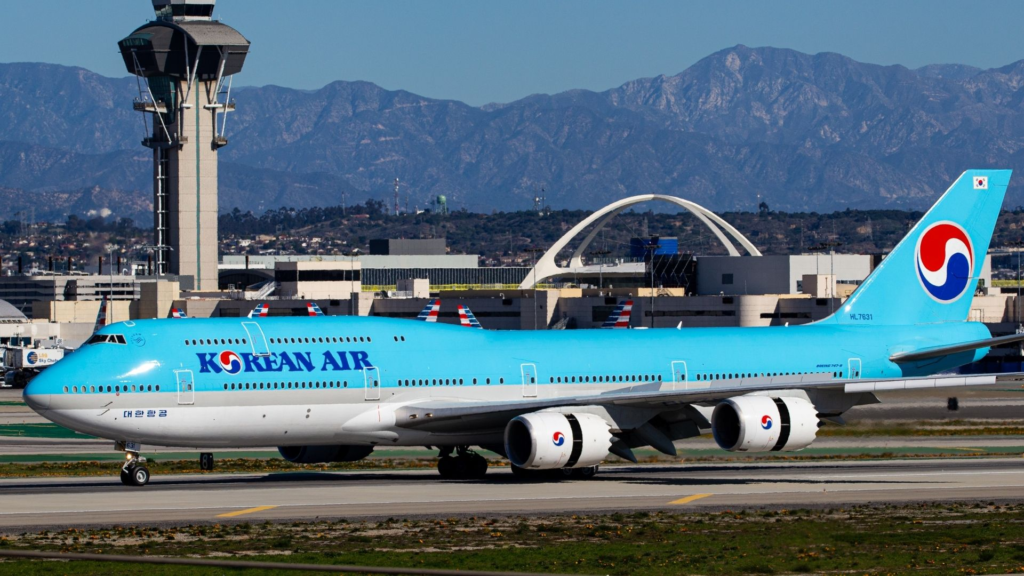
According to Flug Revue, the aircraft in question bears the registration N747EF. Current fleet data made available by ch-aviation shows that it is presently just over 10 years old, having been delivered to Korean Air back in September of 2015 as HL7631. The South Korean flag carrier withdrew it from use in October of 2024, by which time it had amassed a grand total of 29,871 flight hours across 3,199 cycles.
The jet is actually one of five ex-Korean 747-8 aircraft that no longer serve the Seoul-based SkyTeam founding member, with the airline now only having five examples of the type left in its fleet. After leaving the carrier, HL7631 was ferried to SNC in Dayton, where it became N747EF, with the firm acquiring it after winning the contract to deliver Survivable Airborne Operations Center (SAOC) jets. On this, SNC explains:
“Under the SAOC contract, SNC will modernize and deliver a replacement for the USAF’s current fleet of E-4B ‘Nightwatch’ aircraft with a modern E-4C aircraft. This highly specialized aircraft serves as an airborne command center trusted by the President and other top national security leaders to ensure continued critical airborne command, control, and communication during national emergencies.”
The Jet Is Thought To Be In Hamburg For Conversion Purposes


According to Flightradar24, N747EF, which retains the light blue fuselage of Korean Air but has been stripped of the carrier’s iconic former Pepsi-esque logo, took off from Dayton at 20:00 on September 29. After eight hours and five minutes in the air, it landed in Hamburg at 10:06 the following morning.
This transatlantic journey represented the aircraft’s first flight for almost two months, with it having last taken to the skies on August 8th. At the start of that month, the jet undertook four circular test flights that started and ended in Dayton and ranged in duration from 26 minutes to almost four hours.
Reporting by aeroTELEGRAPH on the matter notes that Hamburg Airport happens to be home to the headquarters of Lufthansa Technik, the maintenance division of the German flag carrier. While, according to Flug Revue, Lufthansa Technik is yet to comment, it highlights that it is likely involved in the conversion process, given that it has already helped convert another ex-Korean 747-8 for the nation’s government.
Why Does The US Need A New Doomsday Plane?


As previously covered by Simple Flying, ‘doomsday’ planes are military aircraft that a country’s government can use as flying communication centers in the event of a major catastrophe. As pictured above, this is the reason for the distinctive satellite hump on the top of the USAF’s Boeing E-4 jets.
While these aircraft are capable, they are also not getting any younger, with the first of the four jets (three E-4As and one E-4B with nuclear electromagnetic pulse protection) having taken its maiden flight as long ago as June of 1973. They have already been kept in service for much longer than planned.
Indeed, while the E-4C Survivable Airborne Operations Center was officially launched in 2019, the E-4 had been touted for retirement as early as the mid to late-2000s. However, with no suitable replacement available, they were upgraded and kept in service as a stopgap. Having won the contract, Sierra Nevada Corporation will work with Rolls-Royce to get its converted 747-8s operational in the 2030s.
source