


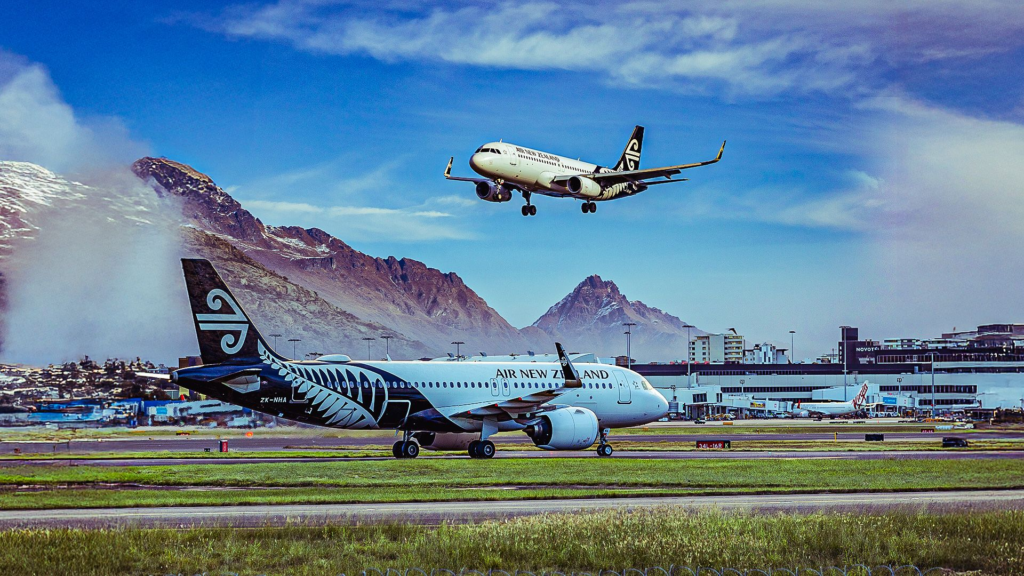
A scheduled Air New Zealand flight between Christchurch and Sydney was forced to make an emergency landing on Friday, October 24. The flight, operating at NZ211, experienced a hydraulic failure mid-flight, as the aircraft was halfway across the Tasman Sea.
As a precaution, emergency services at Australia’s busiest airport, 

Hydraulic Failure Over The Tasman Sea


Departing from Christchurch Airport (CHC) on October 24, the flight was scheduled to depart at 06:35, but was eventually pushed back to 06:56. The early morning flight to Sydney has a block time of three hours, 35 minutes. The service was scheduled to arrive in Sydney at 08:15. Partially across the Tasman Sea, the pilots identified that the aircraft had experienced a hydraulic failure.
There are no major diversion airports or land masses between Australia and New Zealand, which then resulted in the airplane needing to make an emergency landing at Sydney, landing at SYD by 08:17. The airplane was met with lights and sirens by emergency crews on the ground. A passenger noted the experience was quite surreal, but everyone onboard remained calm. It is understood that the aircraft remained stationary on the apron for up to two hours while being assessed by engineers before being towed to the gate. Nathan McGray, Air New Zealand Chief Safety and Risk Officer, explained:
“Emergency services met the aircraft on arrival as a precaution. The aircraft landed safely, and our engineering team will now carry out inspections to ensure the aircraft is safe to return to service.”
Notified Mid Flight


The aircraft operating the service, an Air New Zealand Airbus A320neo (registration ZK-NHC, serial number 08833), can seat up to 165 passengers in a single class configuration. The passengers onboard NZ 221 were notified of the technical issue mid-flight and were briefed on the emergency procedures. At the time of writing, the airplane remains on the apron at Sydney and is yet to return to scheduled service.
The corresponding service between Sydney and Queenstown (NZ232) was cancelled. Affected passengers were then rebooked onto alternative indirect services via other key Air New Zealand hubs such as 
Data from ch-aviation identifies ZK-NHC as a six-year-old Airbus narrow-body aircraft, having first been delivered to Air New Zealand in March 2019. The airplane is configured for its short-haul international operations, with all seats including seat-back entertainment screens. Passengers onboard Air NZ international short-haul flights have the option to select between three fare types, which include seat only, ‘The Works’ (movies, meals, and baggage), and Works Flexi (which offer additional flexibility when compared to other fare types).
Air New Zealand’s New Chief Executive Officer


The 
Within his first month, Nikhil is already suggesting to Radio New Zealand that the airline may need to look at situational subsidies to maintain its full network of domestic routes. Earlier this year, the airline cancelled its latest domestic route, which connected Wellington to Invercargill, due to the tough economic environment. Nikhil reminded the public that the ongoing cost of jet fuel, wages, and other costs continue to be factors that have led to increased airfares for the New Zealand public.
Other considerations to lower airfares are looking at variable redemption, where discounted flights would exclude the opportunity to earn airpoints, or boosting domestic flights during the middle of the day. Air New Zealand is 51% owned by the New Zealand Government, and is set to make a first-half loss of up to $31 million (NZ$55 million), which is weaker than estimated, due to lower passenger numbers and higher operational costs.
source