


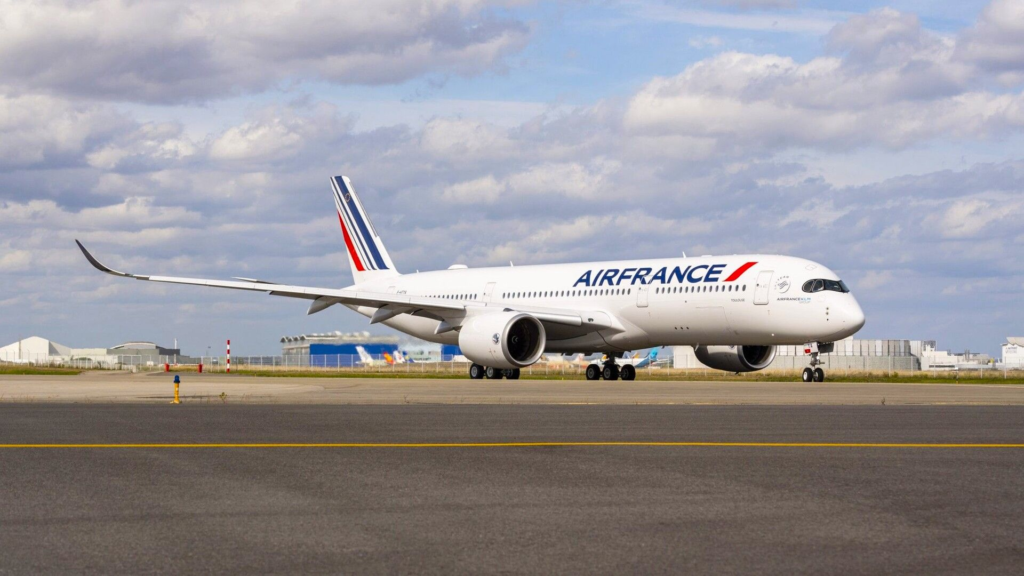
Two back-to-back incidents in the skies over Europe on Sunday served to remind how incidents of smoke and toxic fumes on commercial airliners are on the rise. The first occurrence saw an Air France flight to Seoul have to make an emergency diversion due to fumes and a burning odor in the cockpit. Later in the day, an 

Avid readers of Simple Flying will know that these are far from isolated incidents, with reports of smoke or toxic fumes in the cockpit and/or cabin showing a sharp increase in recent years. Air France has had a particularly tough time of it, with at least ten incidents over the past year and a half when flights have been forced to make diversions and/or emergency landings .
Air France A350 Diverts To Munich


The first incident of the day involved an Air France Airbus A350-900 (registration F-HUVC) performing the airline’s daily Flight 264 from 

The crew immediately donned their oxygen masks and made an emergency diversion to 
A day later, F-HUVC remains on the ground in Munich awaiting inspections. An Air France spokesperson later stated that the diversion was made out of an abundance of caution, and that the airline was working to ensure that all passengers were re-booked to Seoul with the minimum of further disruption:
“The safety of our customers and crews is our utmost priority, and while this event is unfortunate, we are grateful to the crew who are highly trained to handle such situations.”
Iberia A330-300 Makes A Return To Madrid

The second incident of the day was an Iberia Airbus A330-300 (registration EC-LUX) which was performing Flight 381 from 
San Juan is one of ten US destinations that Iberia currently flies to, and the airline operates the route ten times weekly using a mix of A330s and A321XLRs. It just recently added its ninth destination on the US mainland with a new A330-300 route to 
|
Iberia’s All-Airbus Transatlantic Fleet |
|||
|
Aircraft Type |
Operational |
Seats |
Avg Age (Years) |
|
A321XLR |
4 |
182 |
0.7 |
|
A330-200 |
12 |
288 |
8.8 |
|
A330-300 |
8 |
292 |
12.3 |
|
A350-900 |
23 |
352 |
4.7 |
The A330-300s, like the one that experienced Sunday’s incident, are the oldest of the four types used for transatlantic operations. They have a less-dense configuration than their -200 cousins as they have fewer economy seats (242 vs 269) to make space for a larger business class cabin and a premium economy cabin of 21 seats, which the -200s don’t have.
Smoke And Fumes Troubles For Air France
Air-France-A220.jpg?q=49&fit=crop&w=825&dpr=2)
The Wall Street Journal recently brought renewed attention to the issue of smoke and fumes from engine oil or hydraulic fluids entering cabins and cockpits through what’s known as the bleed-air system. The Journal says that crew reports indicate “the frequency of such events has climbed dramatically in recent years”, with symptoms ranging from odd smells to more serious neurologic and respiratory harm.
Air France has experienced more than its fair share of these types of incidents in recent times, with at least ten occurances over the past year an a half. These include the following:
- October 24, 2025 (Paris to Reunion): A 777-300ER returned to Paris about an hour and a half after takeoff due to “a smell of hotness” in the cabin, with reports indicating the cabin became uncomfortably hot.
- August 14, 2025 (Paris to Casablanca): An A320-200 flight to Casablanca reported fumes in the cabin while over the Cantabrian Sea and diverted to Madrid.
- August 8, 2025 (Paris to São Paulo): An A350-900 diverted to Lajes Air Base in the Azores after the crew detected an unusual burning odor on board.
- June 28, 2025 (Paris to Stockholm): An A220-300 was forced to make an emergency landing in Stockholm after the crew reported smoke on board during the descent.
- June 26, 2025 (Paris to Budapest): An A319-100 experienced toxic fumes in the cabin during descent, prompting the deployment of passenger oxygen masks and an emergency landing in Budapest.
- February 6, 2025 (Paris to Bologna): An A220 en-route to Bologna diverted to Milan after the crew reported smoke on board. The flight was canceled and passengers were bussed to their destination.
Air France is not the only European airline affected, and the European Union Aviation Safety Agency (EASA) has commissioned several studies on cabin air quality. A major ongoing program is the CAQ III project, in collaboration with the Fraunhofer Institute, which is studying the potential toxic effects of engine oil degradation products to gather data and inform future standards. EASA has also published technical reports and guidelines with recommendations on how to prevent exposure to fumes.
source