


Canada’s defense minister has confirmed that Ottawa’s review of its plan to purchase 88 Lockheed Martin F-35 fighter jets is still ongoing, with no timeline given for a final decision.
Canadian Defense Minister David McGuinty made the remarks before the Senate’s defense committee on April 27, 2026, saying the government was taking the time needed to examine the fighter fleet question thoroughly. He also confirmed that buying jets from non-US manufacturers remained an option under consideration.
“The review of the purchase of the F-35s is continuing,” McGuinty said. “We are taking the necessary time to study very, very closely the question of the fighter fleet.”
A review more than a year in the making
Canada signed a C$19 billion (approximately $13.9 billion) contract to acquire 88 F-35As in early 2023, ending years of delays and a prolonged procurement process. In March 2025, Prime Minister Mark Carney ordered a military review of the deal, citing concerns over Canada’s over-reliance on the US defense industry amid deteriorating trade relations between Ottawa and Washington.
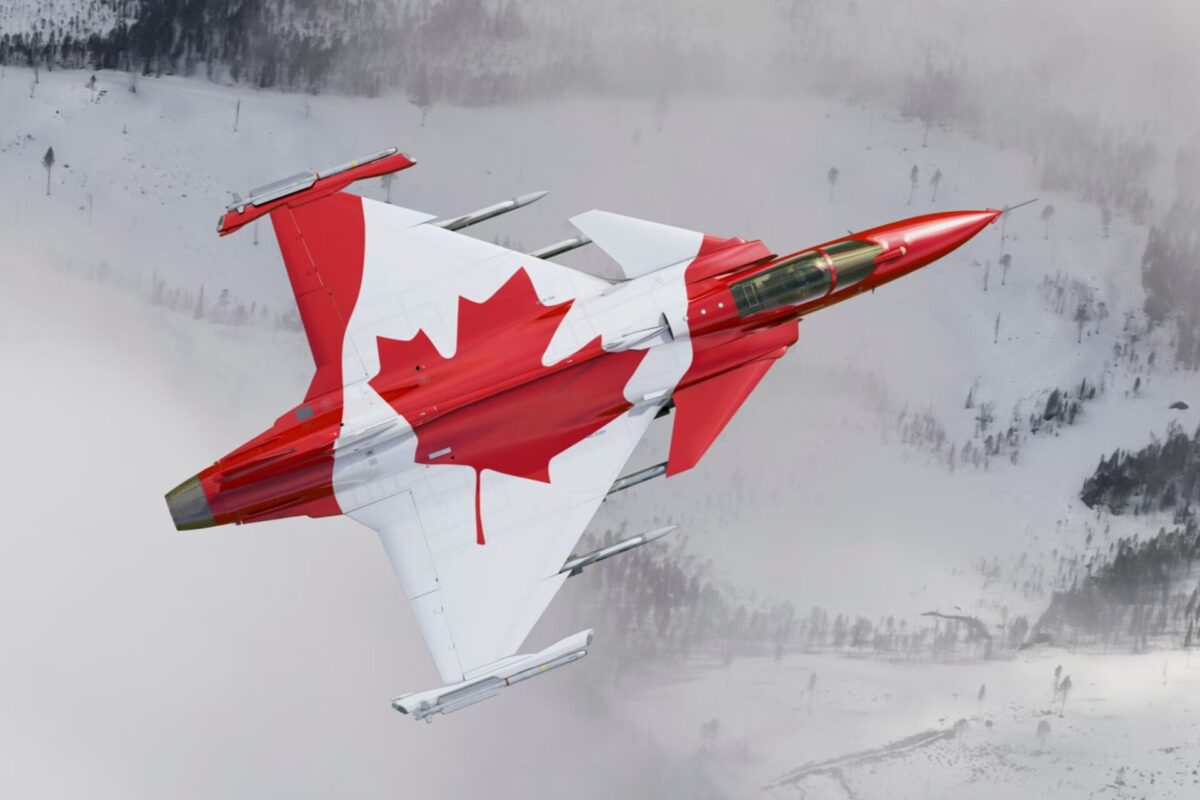
The review was originally expected to conclude around September 2025, but has continued well past that deadline. One scenario that has been floated is a partial fleet split, under which Canada would reduce its F-35 order and procure some Saab Gripen jets from Sweden to fill the gap. Saab’s chief executive said in late March 2026 that the company could deliver Gripen jets to Canada within five years.

Ottawa has already made a legal financial commitment for the first 16 F-35 aircraft, and has quietly begun payments for long-lead components on an additional 14 jets to preserve its production slots.
Despite the political uncertainty, Canadian defense ministry officials were reported in August 2025 to have argued strongly internally that Canada should proceed with the full F-35 purchase. Internal evaluation data released in late 2025 showed the F-35 had outscored the Gripen by a wide margin across all major capability categories in the original tender process.
Geopolitical pressure from both sides
The review is playing out against a backdrop of unusually tense US-Canada relations. US Ambassador to Canada Pete Hoekstra warned earlier this year that backing out of the F-35 deal could put the North American Aerospace Defense Command partnership at risk, suggesting the US might need to deploy US fighter jets into Canadian airspace to compensate for any capability gap.
McGuinty, when asked whether the delays reflected concern about President Donald Trump’s reaction, framed the extended timeline as a sign of fiscal responsibility.
“What it says, I hope, for Canadians, is that we’re being very responsible,” he said.
Eyes on a sixth-generation program
In the same Senate committee appearance, McGuinty also confirmed that Canada is looking into obtaining observer status in the Global Combat Air Programme, the multinational sixth-generation fighter jet initiative led by Japan, the United Kingdom, and Italy. No final decision on that question has been made either, he said.
GCAP grew out of the UK’s Tempest program and aims to field a successor to the Eurofighter Typhoon. Canadian participation, even in an observer capacity, would mark a notable step toward diversifying the country’s defense aviation partnerships beyond the US.
Saab has separately suggested that Canada could become a partner in its own next-generation combat aviation program, known as KFS, alongside Sweden.
source