


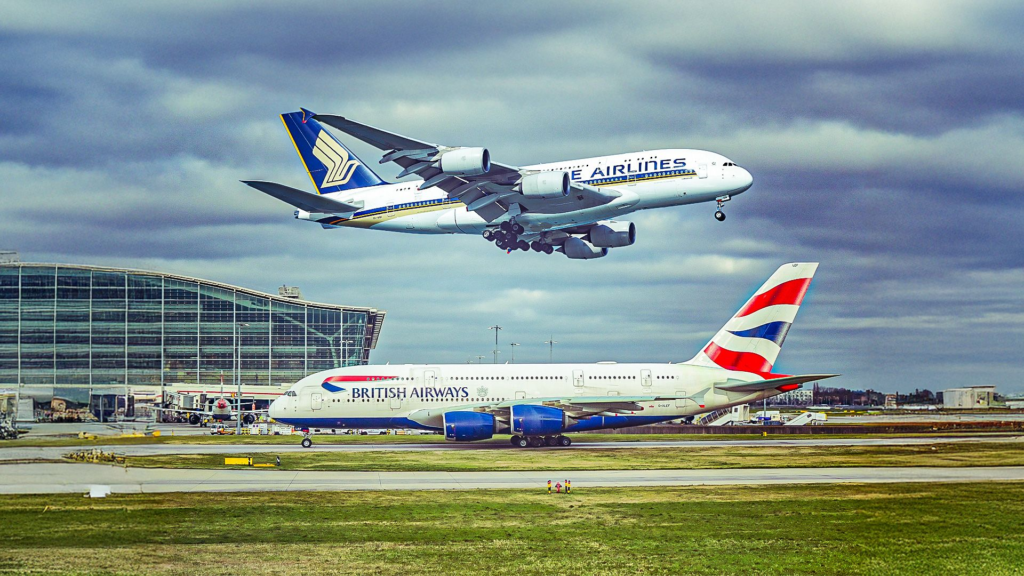
While its use in service is slowly on the decline, the Airbus A380 is still a highly valued workhorse for many of the largest airlines in the world. 


As the aviation landscape evolves toward sustainability and efficiency, the A380’s relevance has shifted from being a mass connector to more of a status symbol. This makes comparing its use across both carriers especially meaningful. It reveals not only operational strategy but also how each airline defines excellence in an era increasingly focused on modernization.
A Leader Since The Start

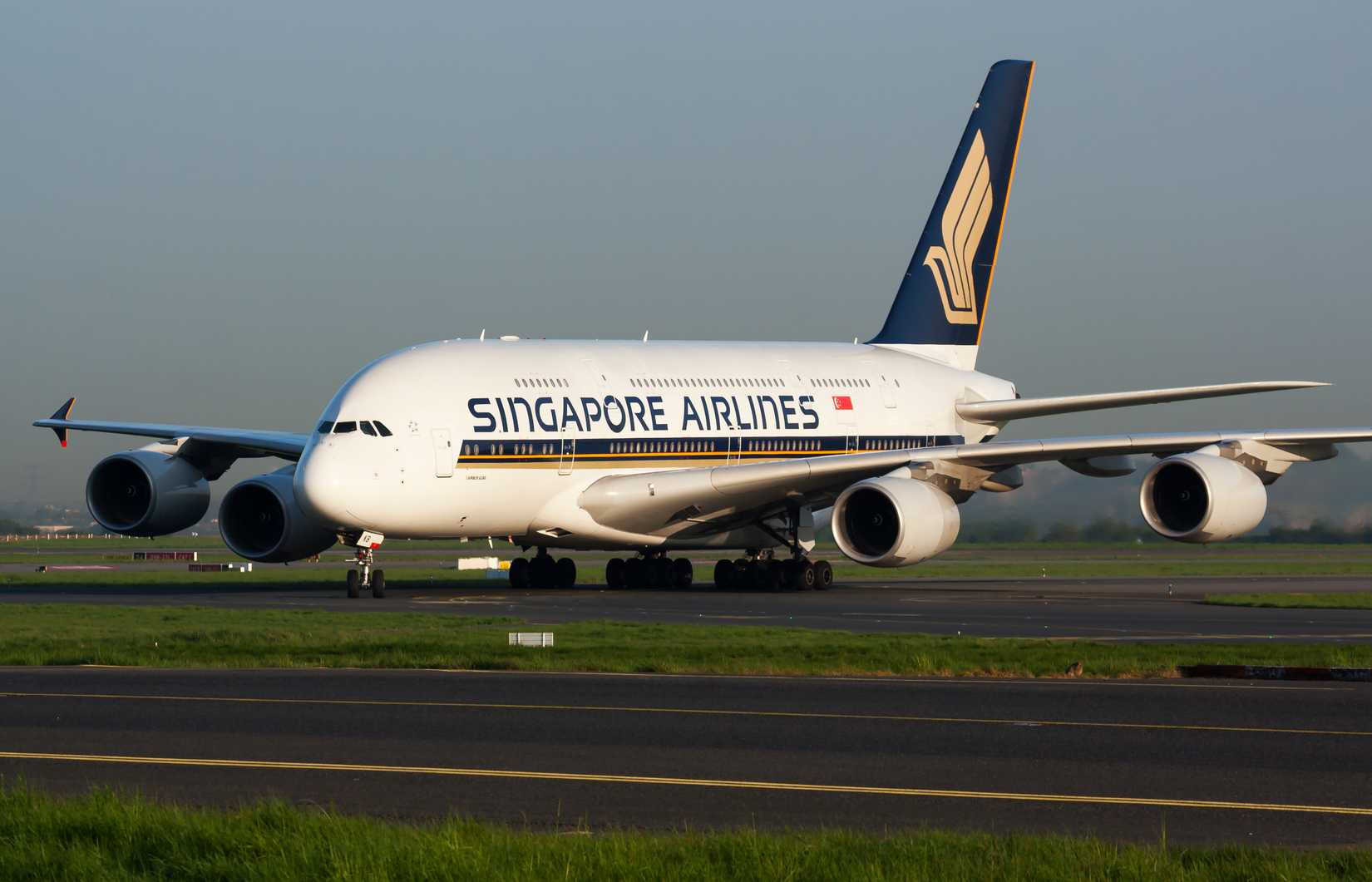
With all factors taken into consideration, Singapore Airlines leads, but not by a wide margin. Both carriers excel at operating the A380; however, Singapore Airlines uses it as a flagship of design and service innovation, while British Airways employs it as a symbol of consistency and capacity. One celebrates the aircraft’s grandeur; the other utilizes its practicality. The result is two interpretations of excellence, but ultimately, only one redefines it.
Singapore Airlines’ A380 experience has evolved into something closer to private aviation than commercial travel. Singapore Airlines was the first to introduce the A380 in 2007, and still today it stands as a landmark in service quality and passenger experience. Its latest Suites Class transforms the upper deck into a series of personal sanctuaries, each enclosed and furnished with a separate bed and armchair. While British Airways offers an impressive and polished product, particularly with its updated Club Suite, it still delivers a more conventional interpretation of the premium experience.
Singapore Airlines’ long-standing partnership with Airbus has enabled its A380 fleet to serve as a testing ground for continuous improvement, allowing the airline to refine the efficacy of the aircraft within its fleet continually. British Airways’ entry was more pragmatic, using the aircraft primarily on high-density routes where Heathrow’s slot limitations demanded larger capacity. The results are precise: Singapore Airlines’ A380 is an emblem of luxury, while British Airways’ is an emblem of dependability.
A Difference In Opinion

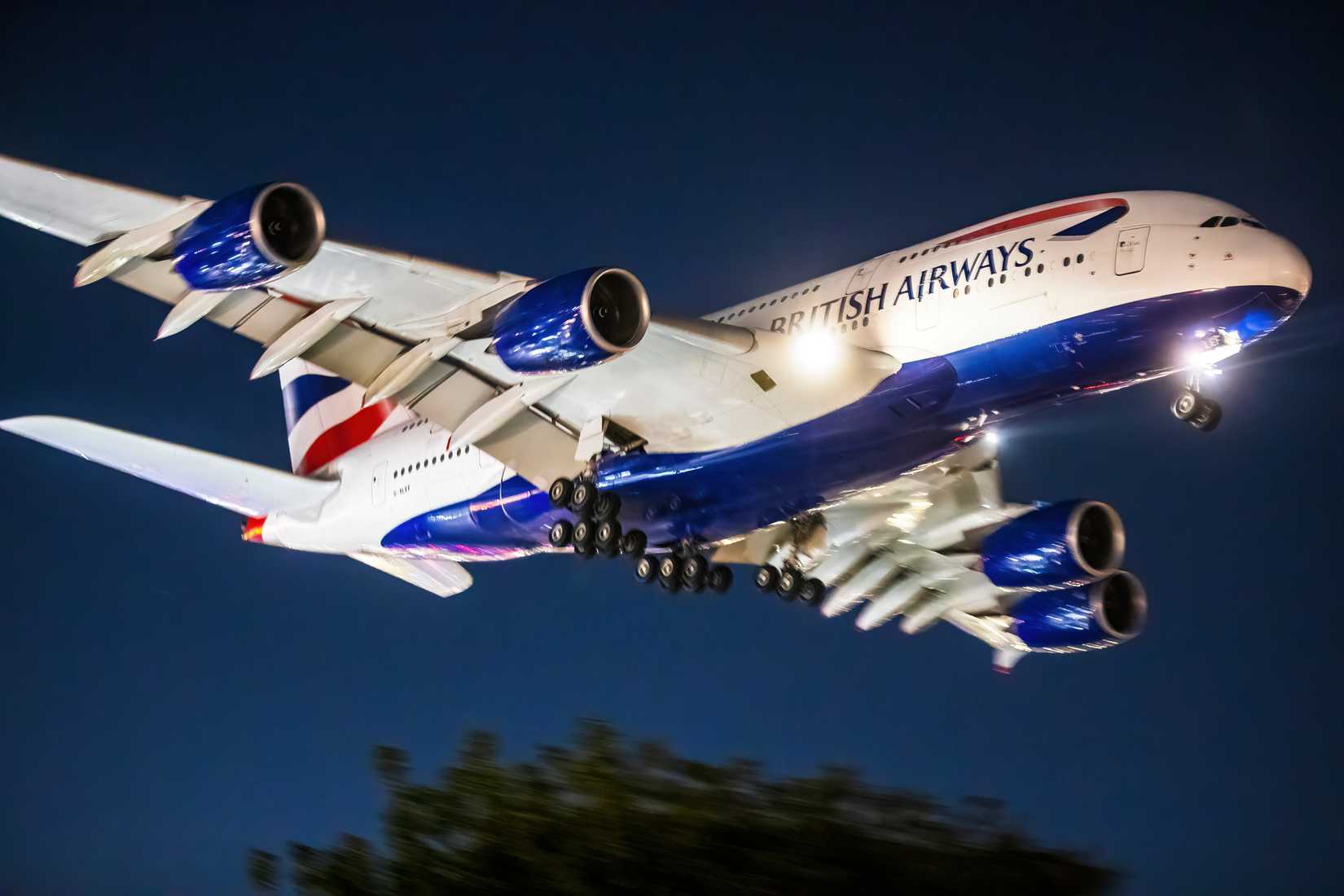
Several factors determine how effectively each airline uses its A380. These range from the age and management of their fleets, their chosen route networks, and the philosophies guiding how the aircraft fits into their future plans. These factors reveal the different ways in which ambition and practicality manifest in the skies.
Singapore Airlines has already begun planning the gradual retirement of its A380s by 2026, signaling its focus on next-generation efficiency and sustainability. British Airways, meanwhile, remains committed to keeping its A380s flying indefinitely, positioning the type as a long-term asset for its busiest global markets. For Singapore Airlines, the aircraft is on borrowed time, and so its overall focus is much more on maximizing its current potential until its next successor fully arrives. For BA, there is still no clear successor, and with no current plans for retirement, does British Airways see the aircraft’s value in a different way than Singapore Airlines?
|
Airline |
Aircraft Type |
Total Active |
Maintenance |
Avg. Age (Years) |
Projected Retirement |
|---|---|---|---|---|---|
|
Singapore Airlines |
Airbus A380-800 |
10 |
2 |
11.2 |
JAN–MAR 2026 |
|
British Airways |
Airbus A380-800 |
11 |
1 |
11.6 |
Not announced |
Singapore Airlines focuses its A380 fleet on flagship routes, connecting major global hubs with premium-heavy demand. By using Changi International Airport as a major global hub, Singapore Airlines can maximize the aircraft’s incredible capacity to help match the demand, all while providing exceptional service. British Airways adopts a much broader strategy, balancing prestige with efficiency across North American, Middle Eastern, and African routes. They also operate slightly more flights compared to Singapore Airlines, across a larger route network. For BA, the A380 is still providing efficiency for their route network despite many other airlines dropping the aircraft due to efficiency concerns.
|
Airline |
Main A380 Routes |
Monthly Flights |
Total Seats |
ASM (Available Seat Miles) |
Avg. Stage Length (mi) |
|---|---|---|---|---|---|
|
Singapore Airlines (SQ) |
SIN–LHR, SIN–SYD, SIN–FRA, SIN–DEL, SIN–BOM |
420 |
197,820 |
925,430,220 |
4,678 |
|
British Airways (BA) |
LHR–JNB, LHR–LAX, LHR–SFO, LHR–MIA, LHR–DXB, LHR–IAD |
424 |
198,856 |
967,697,080 |
4,866 |
How Has It Been Perceived?

Many across the industry describe Singapore Airlines’ A380 as an “ambassador of brand philosophy”. An airline that consistently ranks as one of the top airlines globally, Singapore Airlines focuses heavily on service quality, and the A380 is an excellent aircraft type to help achieve its service goals. British Airways, in contrast, has positioned its A380 as a reliable capacity solution for Heathrow’s slot-restricted environment. It has ended up becoming a workhorse of elegance rather than a showpiece of luxury.
Aviation analysts highlight these differences in intent. Singapore Airlines continues to invest in its A380 product, with refurbishments that include upgraded suites and refreshed lounges. British Airways, on the other hand, has focused its attention on the Club Suite program, which is not unique to the A380 but a modernization that unites its entire long-haul fleet.
These philosophies mirror the broader identities of both carriers. Singapore Airlines represents precision, calm luxury, and relentless refinement. British Airways symbolizes heritage, reliability, and the trust of decades of transatlantic leadership. Both are success stories, but one stands apart for redefining what flying on an A380 truly feels like.
Could Others Have A Better Answer?


To fully understand their approaches, it’s worth placing both airlines in the wider context of A380 operations. Emirates remains the undisputed leader in numbers, while Qantas and Lufthansa have selectively reintroduced their fleets. Against these giants, both British Airways and Singapore Airlines focus on quality rather than quantity.
Emirates uses its A380s to dominate global markets, but its uniform product sacrifices some individuality. Singapore Airlines emphasizes refinement and privacy, offering a more intimate, boutique-style of luxury. British Airways focuses on delivering a consistent premium experience rather than extravagant luxury while still maintaining a unique factor that is otherwise somewhat lacking from other operators.
|
Airline |
Fleet Size (Active) |
Signature Feature |
Market Focus |
|---|---|---|---|
|
Emirates |
94 |
Onboard bar & shower spa |
Global |
|
Singapore Airlines |
10 |
Enclosed Suites Class |
Asia–Europe–Australia |
|
British Airways |
11 |
Club Suite retrofit |
Transatlantic & Africa |
|
Qantas |
9 |
Family-friendly layout |
Australia–UK/US |
While Emirates built an empire of grandeur and Qantas refined its aircraft for practicality, Singapore Airlines and British Airways continue to represent the A380’s middle ground. That is balancing capacity with class. In that balance, however, Singapore Airlines consistently tips toward perfection, but that does not mean British Airways should lack recognition.
High Risk High Reward

Both airlines face similar realities: high maintenance costs, an aging fleet, and increasing environmental pressure. Singapore is beginning to phase out and move into its next stage, while British Airways is still figuring out what the best step is to take.
Operationally, both carriers occasionally substitute A350s or 777s on scheduled A380 routes, meaning the “superjumbo experience” isn’t always guaranteed. What’s more, it seems almost inevitable for both carriers that this new generation of widebody aircraft, which already drives so much of their existing route network, will ultimately replace the superjumbo entirely. For travelers booking specifically to fly on the A380, these changes can be disappointing but reflect the evolving nature of post-pandemic fleet deployment.
For travelers, now the key is to verify aircraft type before booking, particularly for premium cabins such as Singapore Airlines’ Suites or British Airways’ Club Suite. Unfortunately, the decline is already underway even for both carriers that still champion the A380 despite its challenges. While both remain exceptional, not every route or aircraft has the latest configuration.
Who Comes Out On Top

Ultimately, Singapore Airlines stands as the clear winner. It continues to represent what the Airbus A380 was meant to be. Not merely large, but extraordinary. British Airways delivers excellence through professionalism and consistency, yet Singapore Airlines elevates the experience to something timeless. It is important to note that there are others that use the A380 to provide an exceptional experience, such as Etihad with their Residence product.
The A380 may no longer define the future of aviation, but for now, it defines what air travel could be when ambition meets craftsmanship. Whether through British precision or Singaporean grace, the superjumbo continues to inspire and serves as a reminder that even as the skies change, some experiences remain unparalleled.
source