


This morning, a 


Pictures that have emerged from the accident site show that the aircraft broke apart as a result of the runway excursion, with the front part of the plane coming to a rest against a sea wall. Its escape slides were deployed, and all four members of the crew who were onboard the Boeing 747 are said to have survived the crash. However, the jet also collided with a patrol vehicle, resulting in the deaths of two ground staff.
What Do We Know So Far?


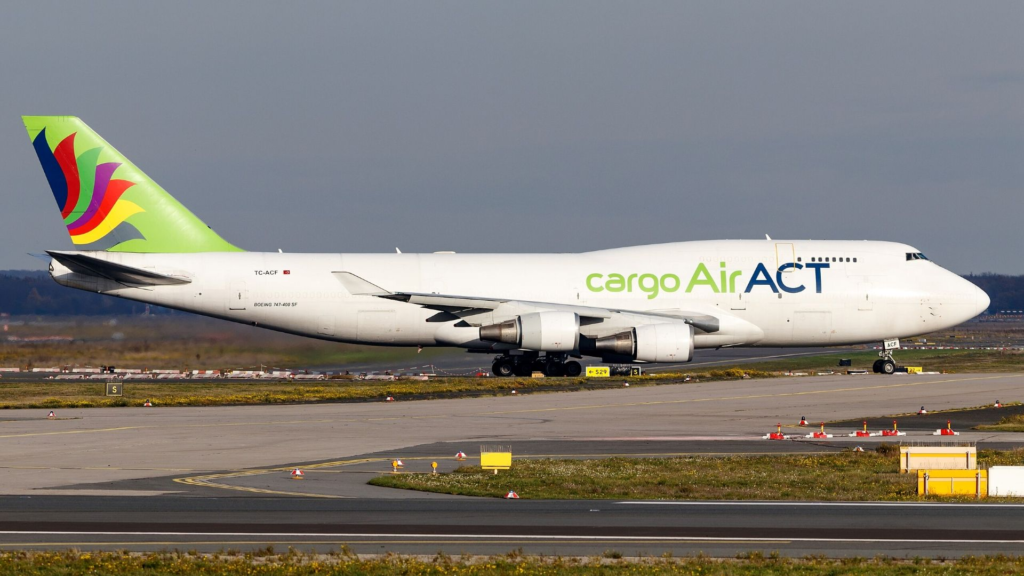
According to the BBC, the flight in question was an Emirates service numbered as EK9788. Tracking data made available by Flightradar24 shows that the flight, which connects Dubai with Hong Kong, was operated by an Air ACT Boeing 747-400F that bears the registration TC-ACF. It departed from the United Arab Emirates at 16:59 yesterday and, reached Hong Kong after just under seven hours in the air.
However, upon landing, the otherwise uneventful flight took a dramatic turn of events when the double-decker widebody quadjet veered off the runway to the left and into the sea. In doing so, it collided with an airport patrol vehicle, which sadly resulted in the deaths of two ground staff. Meanwhile, the four crew members onboard the jet survived the impact, with an Emirates spokesperson telling The Independent:
“The crew are confirmed to be safe, and there was no cargo onboard.”
No Distress Signal


As further information regarding this accident continues to emerge, a curious detail is the fact that, according to the BBC, the aircraft did not send out a distress signal. Likewise, Hong Kong’s Airport Operations Executive Director, Steven Yiu, stated that the patrol car was “a safe distance from the runway” when the jet touched down, adding that “normally, the plane is not supposed to turn towards the sea.”
As such, these details imply a degree of suddenness to the incident, as opposed to a crash in which an aircraft’s crew are aware of an issue and the increased likelihood of an accident. The four crew members onboard the Boeing 747 were able to escape via its emergency exits, and were spotted and rescued by the airport’s fire service. These staff were reportedly on the scene within two minutes of the crash.
For now, the BBC notes that an investigation into the incident has been launched, with particular attention being paid to the plane’s path after landing, given that its crew were given the correct instructions to exit the runway. The airport also has signage to help guide pilots from the landing strip to the apron. Data from Flightradar24 shows that the jet veered to the left just under halfway along Hong Kong’s runway 07L.
The Aircraft Involved


According to present fleet data made available by ch-aviation, TC-ACF was a 32.44-year-old Boeing 747-400F cargo aircraft that was operated by Air ACT under the ownership of HK Express. Based out of Dubai Al Maktoum Airport, also known as Dubai World Central, the jet was primarily engaged in operating wet-lease freight flights on behalf of Dubai-based UAE flag carrier Emirates’ SkyCargo division.
The plane didn’t always carry cargo. Indeed, after first flying back in May of 1993, it was delivered the following month to Japanese passenger airline All Nippon Airways. It served ANA for almost 17 years, with ch-aviation showing that its time at the carrier came to an end in February of 2010. Planespotters.net notes that, for seven years of this tenure (1999-2006), it wore a Pokémon-themed paint scheme.
After being withdrawn by ANA, the jet was stored first in Xiamen and then in Tel Aviv, with the latter of these cities being the location in which it was converted to carry cargo. Upon the completion of this work, it was subsequently ferried to Istanbul in August 2011, where it joined Air ACT as TC-ACF.
source