



By Bjorn Fehrm
March 27, 2026, ©. Leeham News: We have started a series of articles about the Blended WingBody (BWB) as a potentially more efficient passenger-carrying airliner design than the classical Tube And Wing (TAW) configuration.
In the second article last week, we saw that the aircraft skin surface area, which creates the dominant skin friction drag, was smaller than that of the same capacity Boeing 767 for the 250-seat JetZero Z4, but not for the 165-seat Ascent1000, compared with the Boeing 737 MAX 8.
Both the Z4 and the Ascent1000 had a larger wingspan than the 767 and 737-8, but this is comparing future concepts with older aircraft. The Ascent1000 has folding wingtips to fit in the 36m gate, which a TAW replacement for the MAX 8 would also have. The Z4 and the 767 must use widebody gates.

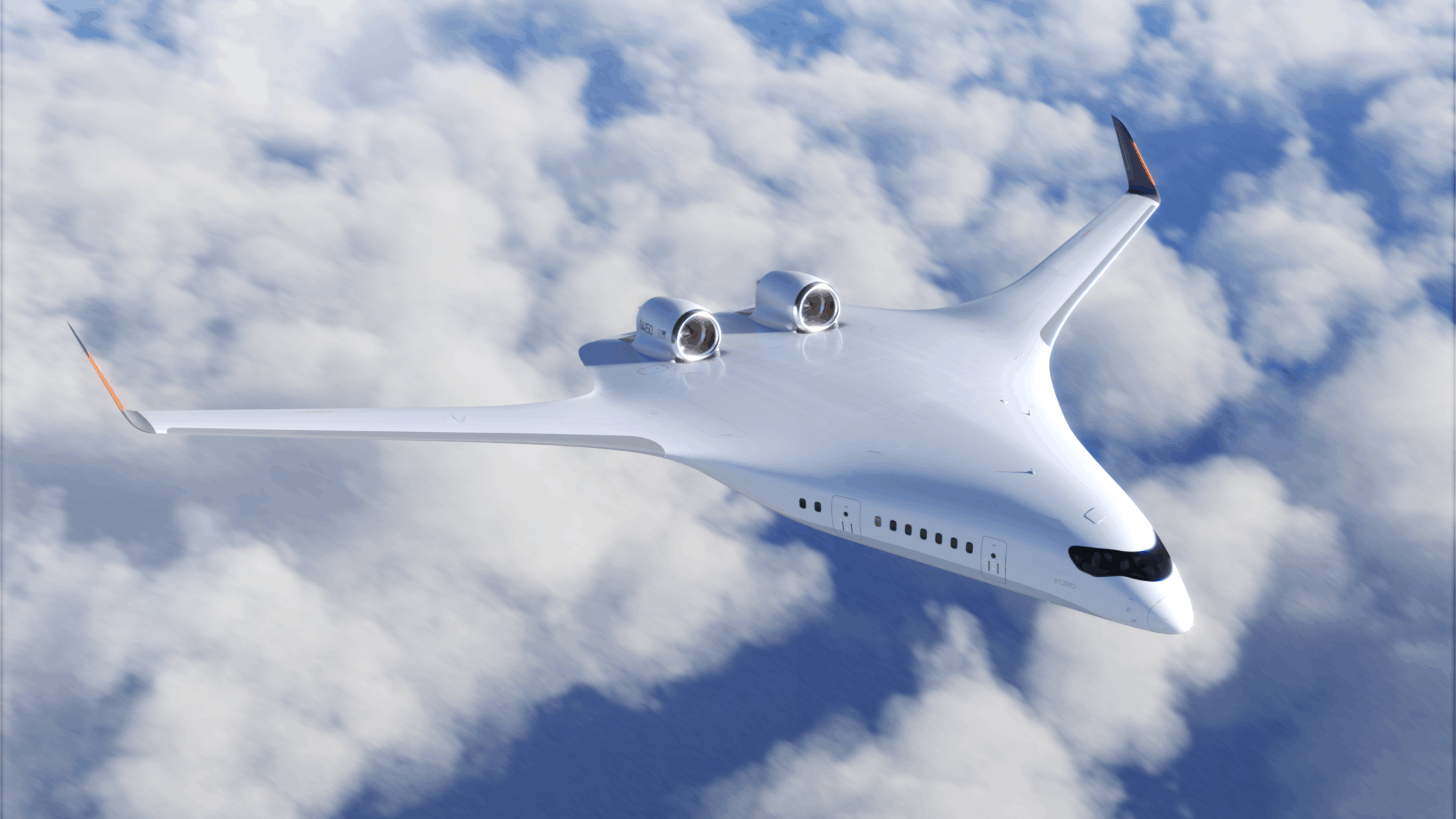
Figure 1. The JetZero Z4 BWB. Source: JetZero.
Why do the BWBs have such large wetted areas when they lack a fuselage and empennage? It’s because they lack a tailplane! Why does a lack of a tailplane force a larger BWB wing?
The lack of a tailplane is a problem for a Blended Wing Body
It sounds strange, doesn’t it? Getting rid of the empennage and the fuselage to put it on is the very point of a BWB?
Yes, but it has consequences, some of which are not good at all. We started the series by saying that a BWB is not about getting more lift at cruise, it’s about reducing the drag at cruise. Normal Tube-And-Wing (TAW) aircraft actually have more wing than needed for the cruise. When a normal TAW flies around with too large a wing, the BWB flies with a far too large wing at cruise.
Why? Because the cruise is done at around Mach 0.8 and at over 30,000ft, which is over 450 kts relative to the air. The lift needed from the wing is the weight of the aircraft, which is around 70 tonnes times g if we use SI units, i.e., 685kN or 154,000lbf (for lb force, as weight is a force).
At this speed, a 737 wing of 130m2 has a lift coefficient Cl of 0.5 when on a maximum payload and range flight at FL350. It results in an Angle of Attack (AoA) of about 5° for the wing and around 2 ° for the fuselage. The Ascdent1000 needs even less Cl, around 0.2 at FL350, as it has a lifting surface of over 400 m2. The MAX 8 could fly more efficiently with a slightly smaller wing. The BWB could reduce its wing area by 2/3 and be better off at cruise. Why is this not done?
The Takeoff and Landing is the Problem
The reason the aircraft have large wings is that they also need to fly at speeds below 150kts, not only at 450kts. And at this 1/3 of the speed, the wing lift once again has to compensate for the weight. Lift scales with the square of the speed relative to the air. So it means the wing is not producing 1/3 the lift at the same angle of attack, but 1/9th the lift. So, we need 10 times the lift per unit wing area to fly the slower-than-150-kts approach and landing.
The first thing an airplane designer does is to fly the aircraft at an increased angle of attack at low speed. But there is a limit to what AoA can be used. The pilots must see the runway through their cockpit windows; the passengers get uncomfortable above a cabin floor angled about 5 degrees; and a typical wing stalls above 13 degrees AoA.
To fix the problem, airplane designers equip the wing with high lift devices, which achieve two things;
- They increase the wing’s maximum lift, allowing takeoff and landing at low speeds.
- They achieve the needed lift for takeoff and landing at a lower angle of attack.
But there is a negative with deploying a lift-increasing flap from a wing’s trailing edge. It creates a strong nose-down pitching moment. Anyone who has piloted a general aviation aircraft knows the feeling in the stick or yoke when the flaps are deployed, you need to pull against the nose-down force.
The TAW compensates the nose-down force by applying nose-up force with a vertical tailplane sitting on a long lever-arm. The BWB doesn’t have a vertical tailplane. It has elevons (a combined aileron and elevator) positioned at the trailing edge of the wing (Figure 2), and sometimes a cruise-trim elevator at the extreme rear of the aircraft.

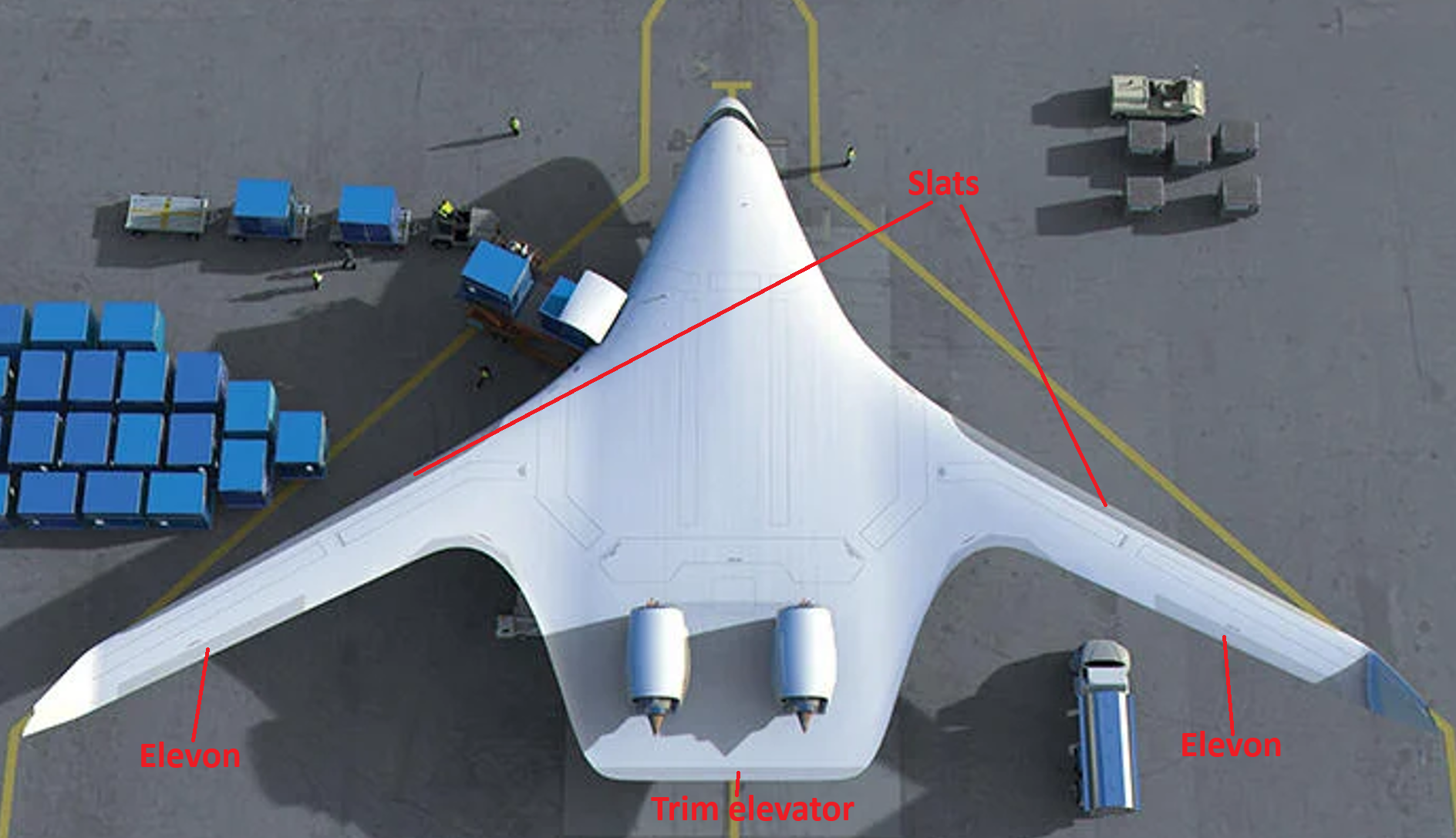
Figure 2. The JetZero Z4 planform with its movables. Source: JetZero and Leeham Co.
The elevons and the elevator generate a nose-up moment when deflecting upward. But this changes the wing’s mean cord angle to a lower angle of attack. So the wing now generates less lift at a given AoA. The result is that a BWB doesn’t have any flaps as it can’t mitigate the nose-down moment these generate. It does have slats or Krueger flaps on the leading edge of the wing to make flying at the high AoA needed for takeoff and landing safe by increasing the AoA for stall (Figure 3).

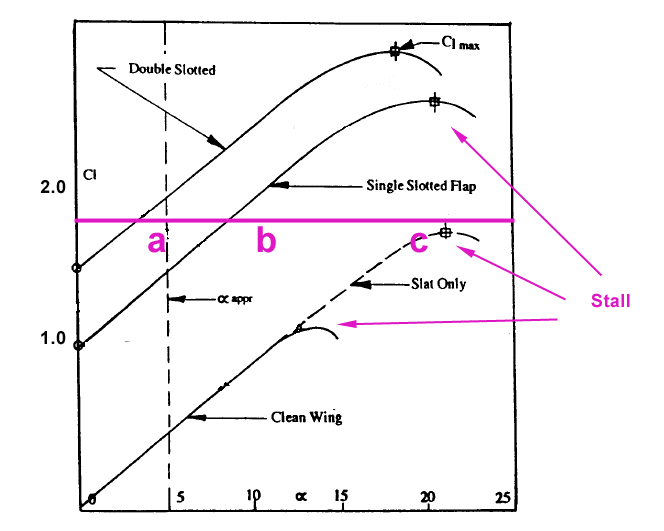
Figure 3. The typical Cl versus AoA characteristics of a wing. Source: Airbus and Leeham Co.
Figure 3 shows three areas for the operation of a wing:
- The slat extends the non-stall operation of a wing to higher AoA (from 13° to 20°)
- Area a is below 5° AoA with a clean wing (lowest curve). This is the cruise domain. Cl stays below 0.5.
- Area b is the approach and landing area, now with either single-slotted flaps or double-slotted flaps deployed. We can see that, if we need a Cl of 1.8 to counter the aircraft’s landing weight, which is typical for an approach at 140kts, we need an AoA of 8° with a single slotted flap, or just 4° with a double slotted flap.
- Takeoff is run with slats deployed and flaps at a low angle, producing a curve somewhere between the clean and single-slotted curves.
If a BWB has slats but no flaps, we are at the lowest curve. For the same wing area and a Cl of 1.8, we need an AoA over 20°, which is then at the stall of the wing. The fix for the BWB is to increase the wing area to lower the needed Cl for landing.
Lift scales linearly with wing area as long as we are below stall. So, to have a reasonable AoA, we need twice the wing area to only need Cl = 0.9 from the graph. This is still at an AoA of ~10°, which is high for a passenger aircraft.
BWB designers will design the wing and forebody to reduce the cabin angle for landing and to achieve landing lift at a slightly lower AoA than in Figure 3. But the principle of lift versus AoA with or without flaps remains. It explains why BWBs have such a large wing area. They can’t take off and land at low enough speeds otherwise.
Related
source