


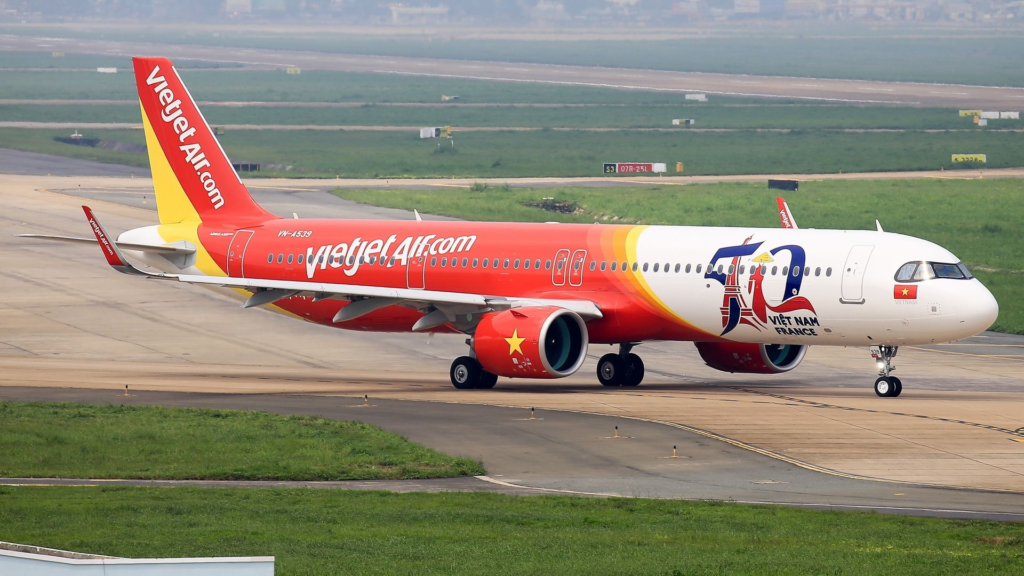
Vietnamese low-cost carrier Vietjet has confirmed an order for 100 Airbus A321neo aircraft as part of its fleet modernization strategy. The order brings its total commitment for the A321neo to 280 aircraft.
Vietjet is already a large Airbus customer and A321neo operator. With its growing order book, the carrier will more than triple its fleet in the coming years. Meanwhile, Airbus continues to grow its backlog for the A320neo family, with over 7,100 A321neos ordered by nearly 100 customers as of September 30, 2025.
Vietjet Seals The Deal

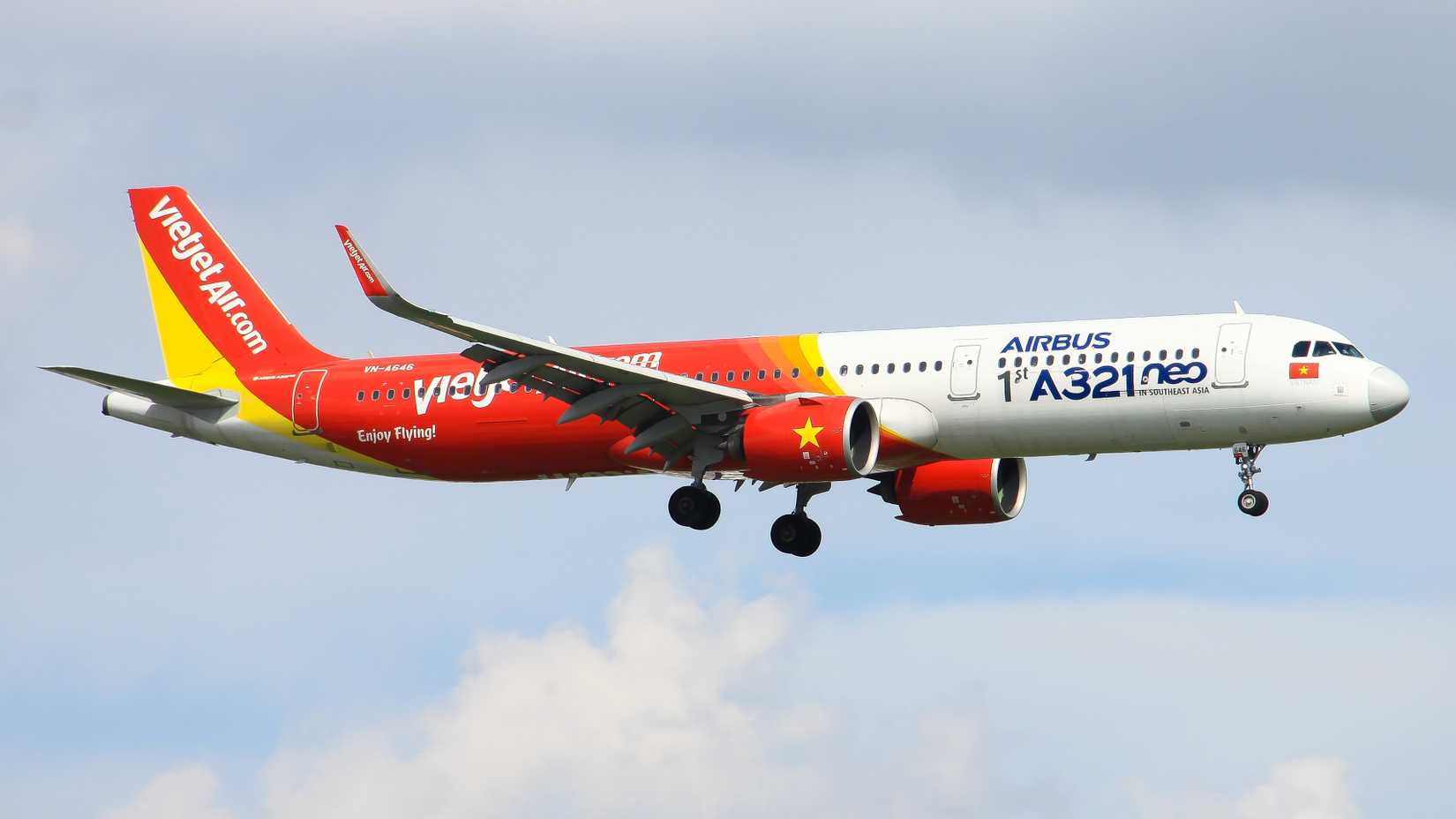
The deal comes as Vietjet converted its Memorandum of Understanding with Airbus into a firm order for 100 A321neos. The MoU was signed at the Paris Air Show in June, marking a significant milestone for both companies. At the time of the agreement, Airbus reported that the carrier had options for an additional 50 aircraft. The finalization of the contract reflects Vietjet’s commitment to fleet modernization and network expansion.
The A321neo is the largest member of the A320neo family, offering longer range and more seating capacity. Airbus markets the aircraft as being 20% more fuel-efficient and 50% quieter than previous-generation single-aisle jets. As with the manufacturer’s other in-production aircraft, the A321neo is capable of operating with 50% Sustainable Aviation Fuel (SAF), with a target to increase to 100% within the next five years. Speaking about the order, Vietjet Chairwoman Nguyen Thi Phuong Thao said:
“This is not merely a commercial contract, but a symbol of trust, aspiration, and a shared vision for sustainable development and global connectivity.”
Growing The Partnership With Airbus

The A321neo order follows Vietjet’s May 2025 order for 20 A330-900s. The contract doubled the airline’s firm orders for the A330neo to 40 aircraft. The new-generation widebody will allow the Vietnamese carrier to increase flights on high-capacity routes across Asia-Pacific and launch new long-haul routes to Europe. The A330-900 is the larger of the two A330neo variants.
Vietjet currently operates an Airbus-strong fleet, although it briefly leased a COMAC C909 for six months and took delivery of its first 737 MAX. Including aircraft operated by Vietjet Thailand and Vietjet Qazaqstan, the group has 121 aircraft, comprising A320-200s, A321-200s, A321neos, and A330-200s. The airline also has orders for over 400 aircraft, including the A321XLR and Boeing 737 MAX. Last month, Vietjet welcomed its latest Airbus A330, with registration VN-A820.
Vietjet flies to over 18 domestic destinations and 37 international destinations in the Asia-Pacific region. Its Airbus single-aisle jets are deployed to nearly 50 destinations, while the widebodies are deployed to seven destinations from Ho Chi Minh City. According to Cirium, an aviation analytics company, the top widebody route is from Ho Chi Minh City to Hanoi. The route sees up to 37 weekly flights. It is followed by Nha Trang to Hanoi with daily flights and Melbourne to Ho Chi Minh with five weekly flights. The top narrowbody route is also between Hanoi and Ho Chi Minh with up to 117 weekly flights each way.
Growing The A320 Family Order Book

As of the end of September 2025, Airbus has received over 11,200 orders for the A320neo family, including 7,142 A321neos. The manufacturer has delivered 1,859 A321neos worldwide. Some of the largest customers include IndiGo and Wizz Air. Prior to the Vietjet deal, Airbus had received 289 A321neo orders in 2025, including 75 from Avolon, 55 from BOC Aviation, and 40 from United Airlines.
In total, the company has received orders for 610 aircraft and delivered 507 to 79 customers in 2025. Airbus is aiming to deliver 820 aircraft this year. The company would have to deliver an average of 104 aircraft each month for the remaining quarter to meet this target. By the end of September 2024, it had delivered 497 aircraft, while chasing a lower revised target of 770 aircraft.
Meanwhile, the European manufacturer is expecting to pick up an order from Air China Cargo for six A350 Freighters, with options for an additional four. The deal, worth up to $4.65 billion, has already been approved by Air China Cargo’s Board of Directors, but is awaiting approval from shareholders. The A350F, which is expected to enter service in the second half of 2027, continues to gain momentum in Asia.
source