


Australia has chosen to retire its fleet of 10 Leonardo C-27J Spartan tactical transport aircraft and replace them with commercial airframes, the country’s 2026 National Defence Strategy (NDS) confirmed on April 16, 2026. The decision pulls the Italian-built airlifter out of Royal Australian Air Force (RAAF) service barely a decade after its introduction.
The NDS document states that the Spartan fleet will give way to “a commercial aircraft fleet to support personnel and logistics transport across the Pacific”. No firm retirement date or replacement type has yet been announced.
The C-27J retirement is one of nine priorities laid out for the RAAF under the new strategy, which frames the air force’s future around long-range intelligence, surveillance and reconnaissance and enhanced strike capability. Other items on the list include the integration of the AGM-158 JASSM-ER and LRASM on the F/A-18F Super Hornet and F-35A; the development of hypersonic weapons; investment in the MQ-28A Ghost Bat uncrewed combat aircraft; and the acquisition of a modern joint air battle management system.
A short and troubled service life

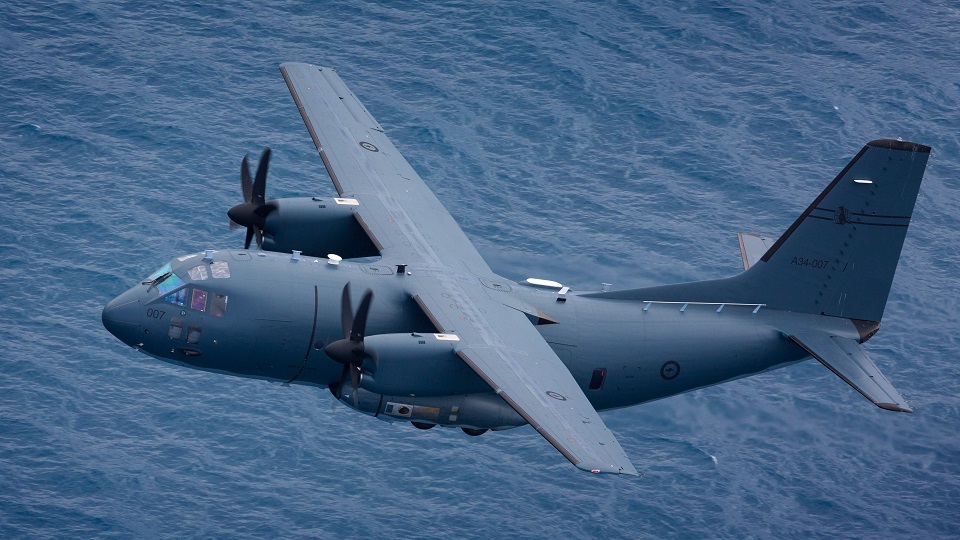
The RAAF’s C-27J Spartans were ordered through a US Foreign Military Sales deal in May 2012 and built by what was then Alenia Aermacchi, now part of Leonardo.
The FMS route was a legacy of a joint venture between Alenia and Lockheed Martin that had brought the Spartan into the US defense ecosystem for the Joint Cargo Aircraft program, which the US Air Force later canceled. The type was selected over the Airbus C-295 when the latter fell short of several RAAF capability requirements.
The first aircraft arrived in Australia in 2015, with the last of the 10 airframes being delivered in 2018.
Operated by No. 35 Squadron at RAAF Base Amberley, the C-27J is the smallest of the RAAF’s three fixed-wing transport aircraft, flying alongside the Lockheed Martin C-130J Hercules and the Boeing C-17A Globemaster III.
The Spartan has faced persistent sustainment difficulties since entering Australian service. Reports have pointed to poor availability rates, driven by supply chain problems. These were likely compounded by the FMS procurement route, which channeled sustainment through US intermediaries. Leonardo’s own support network is used by most other operators.
In 2021, the Australian Defence Force formally refocused the aircraft toward humanitarian assistance and disaster relief (HADR), rather than supporting overseas combat operations as originally intended. The type proved its value in that role during Australia’s 2019-2020 bushfire crisis and, more recently, it helped to provide Queensland flood relief, reaching airstrips that were too short or too soft for larger aircraft.
Sustainment headaches forcing the early retirement of military aircraft types have become a something of a pattern in Australia. Canberra previously ditched its NH90 Taipan battlefield helicopters in favor of new UH-60 Black Hawks, and the Tiger armed reconnaissance helicopter is due to leave Australian service by 2028.
C-130J expansion to offset the loss
While the NDS points to commercial aircraft as the C-27J’s replacement, the RAAF also has 20 new C-130J Hercules on order from Lockheed Martin, with first deliveries expected in 2028. This order replaces the current fleet of 12 C-130Js, though it represents a net gain of eight airframes.
Commercial aircraft could take over the Spartan’s lighter-duty tasks, such as moving personnel and palletized freight across the Pacific. Meanwhile, the additional C-130Js could compensate for the loss of a rear-ramp-equipped tactical airlifter in more demanding mission sets.
The C-27J’s role in Australia’s Pacific Air Program, which provides persistent regional airlift, aerial surveillance, and aviation training to Pacific Island partner nations, is a key consideration. The NDS emphasizes that any replacement must sustain that commitment.
One plausible candidate is the ATR 72-600, a twin turboprop already widely operated by Pacific airlines and available in a purpose-built freighter variant capable of carrying up to 9.2 tonnes of cargo. The Turkish Navy already operates the type in a dedicated military transport configuration, designated the TMUA (Turkish Maritime Utility Aircraft), providing a direct precedent for the kind of personnel and logistics role described in the NDS. The ATR 72-600 lacks the C-27J’s rear cargo ramp and short-field performance on unprepared strips, but those capabilities may be less critical for routine Pacific transport duties.
E-7A Wedgetail replacement also flagged
The new strategy also signals that Australia is beginning to plan for a successor to its Boeing E-7A Wedgetail airborne early warning and control aircraft. Australia was the launch customer for the E-7A and it currently operates six of the type.
The move is notable given that the Royal Air Force and the US Air Force have yet to introduce their own E-7As into operational service.
Australia recently deployed an E-7A Wedgetail to the UAE as part of its contribution to defensive operations in the Middle East, underscoring the platform’s continued operational relevance even as long-term replacement planning begins.
Implications for other Spartan operators
Australia’s decision adds to questions about the Spartan’s long-term sustainment outlook. Leonardo currently counts 15 nations as Spartan customers, with approximately 87 aircraft in operational service worldwide.
Lithuania, which operates three C-27Js that have been in service since 2006, faces similar sustainment difficulties and had considered replacing them with Embraer C-390 Millennium aircraft. Ultimately, the country postponed the procurement to around 2030 and opted to modernize its existing fleet through 2036. Lithuanian military officials have cited parts availability problems, closely mirroring those reported in Australia.
Leonardo has been actively marketing a Next Generation version of the C-27J with new avionics, winglets and expanded mission capabilities, and recently secured a sale of four C-27J maritime patrol variants to Saudi Arabia. However, the loss of Australia as an operator, plus the potential arrival of 10 young second-hand airframes on the market, could affect the competitive landscape.
source