YFQ-44A Fury Drone Makes History with First AIM-120 AMRAAM Missile Launch
The YFQ-44A Fury drone has successfully fired its first AIM-120 AMRAAM missile from Edwards Air Force Base, marking a significant milestone for U.S. Collaborative Combat Aircraft.
2 min readvia Twz Air
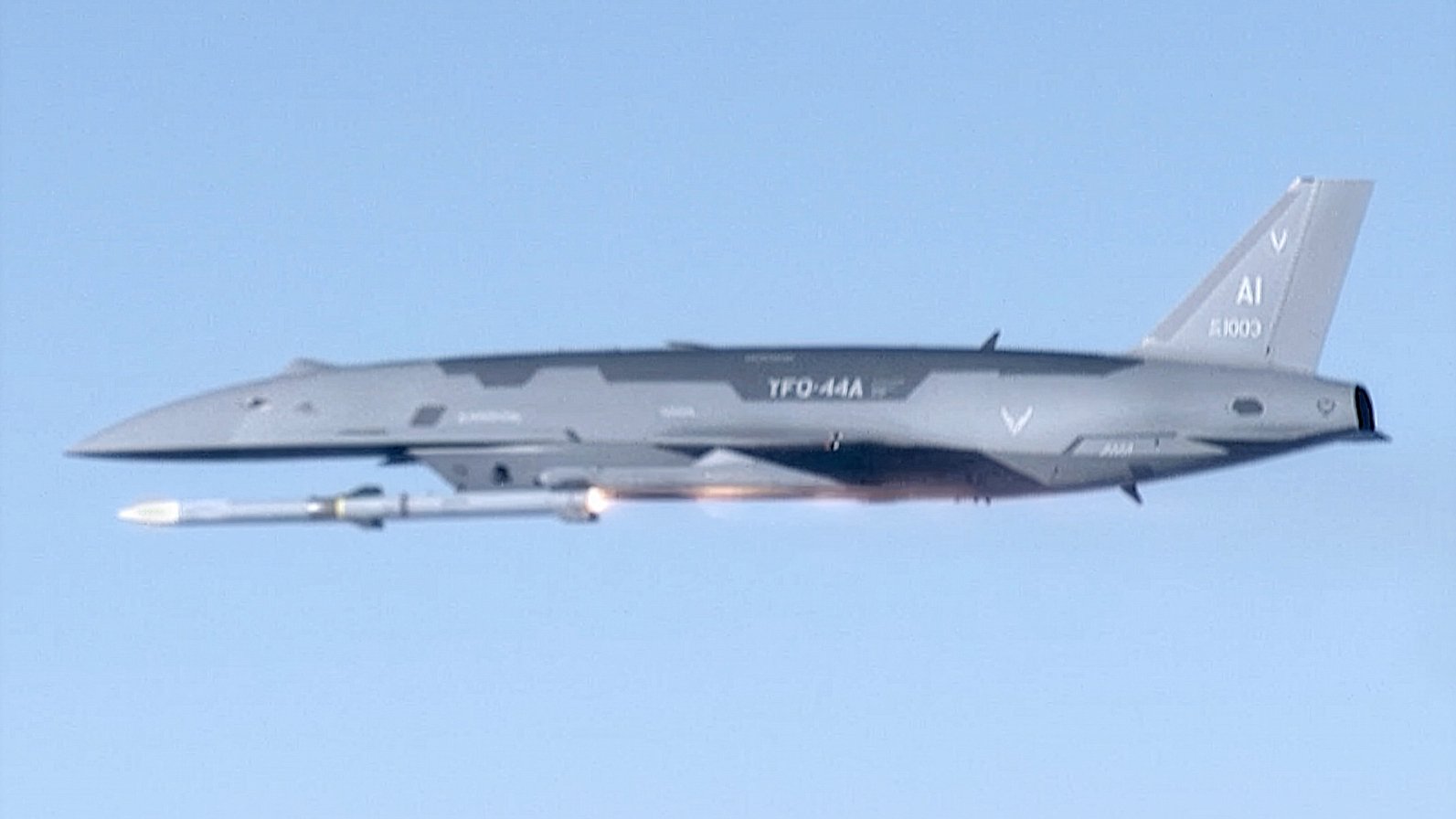
The YFQ-44A Fury drone, as part of the U.S. Air Force's Collaborative Combat Aircraft (CCA) program, successfully launched its first AIM-120 AMRAAM missile from Edwards Air Force Base in California. The missile launch was part of a test that involved executing an end-to-end, beyond-line-of-sight strike against a simulated target. This event marked the first occasion on which a U.S. Collaborative Combat Aircraft drone engaged in a live air-to-air missile firing.
The YFQ-44A Fury drone fired its first AIM-120 AMRAAM missile.
What has been confirmed
Confirmed details from the event include the firing of the AIM-120 AMRAAM missile by the YFQ-44A Fury drone, marking a U.S. first in drone capabilities. The test operation took place at Edwards Air Force Base under the 412th Test Wing’s Air Dominance Combined Test Force. Orders for production versions of both the YFQ-44A and its counterpart, the YFQ-42A, have been officially announced, confirming the progression towards wider operational deployment.Why it matters
This test represents a significant advancement in the development of the U.S. Air Force's drone capabilities, showcasing the evolving role of unmanned systems in air dominance. For a commercial aviation audience, the success of such technology underscores the broader implications for airspace management and integration into current defense strategies. The deployment of advanced combat drones like the YFQ-44A could influence future aerial defense policies and practices.FlyMarshall context
While the advancements in military aviation often seem distant from commercial operations, developments like this one contribute to the evolving technology that eventually finds its way into civilian applications. Innovations in autonomous systems and drone technology can lead to improved safety, efficiency, and operational flexibility in commercial air travel, potentially influencing future drone integration in commercial airspace.What happens next
Following this successful test, the focus will likely shift to further evaluations and eventual operational deployment of the YFQ-44A and YFQ-42A drones. The announced production orders indicate that these models will soon transition from testing phases to active service, further enhancing U.S. capabilities in air combat technology.Continue reading
This is an excerpt. The full story, written and reported by Twz Air, continues on their site.
Read Full Story at Twz Air