US Army Trains Pilots for Future Tiltrotor Operations with Marine Aircraft
The US Army will train pilots on the US Marines' V-22 Osprey in preparation for the Bell V-280 Valor tiltrotor aircraft, set to enter service by 2030.
2 min readvia Simple Flying
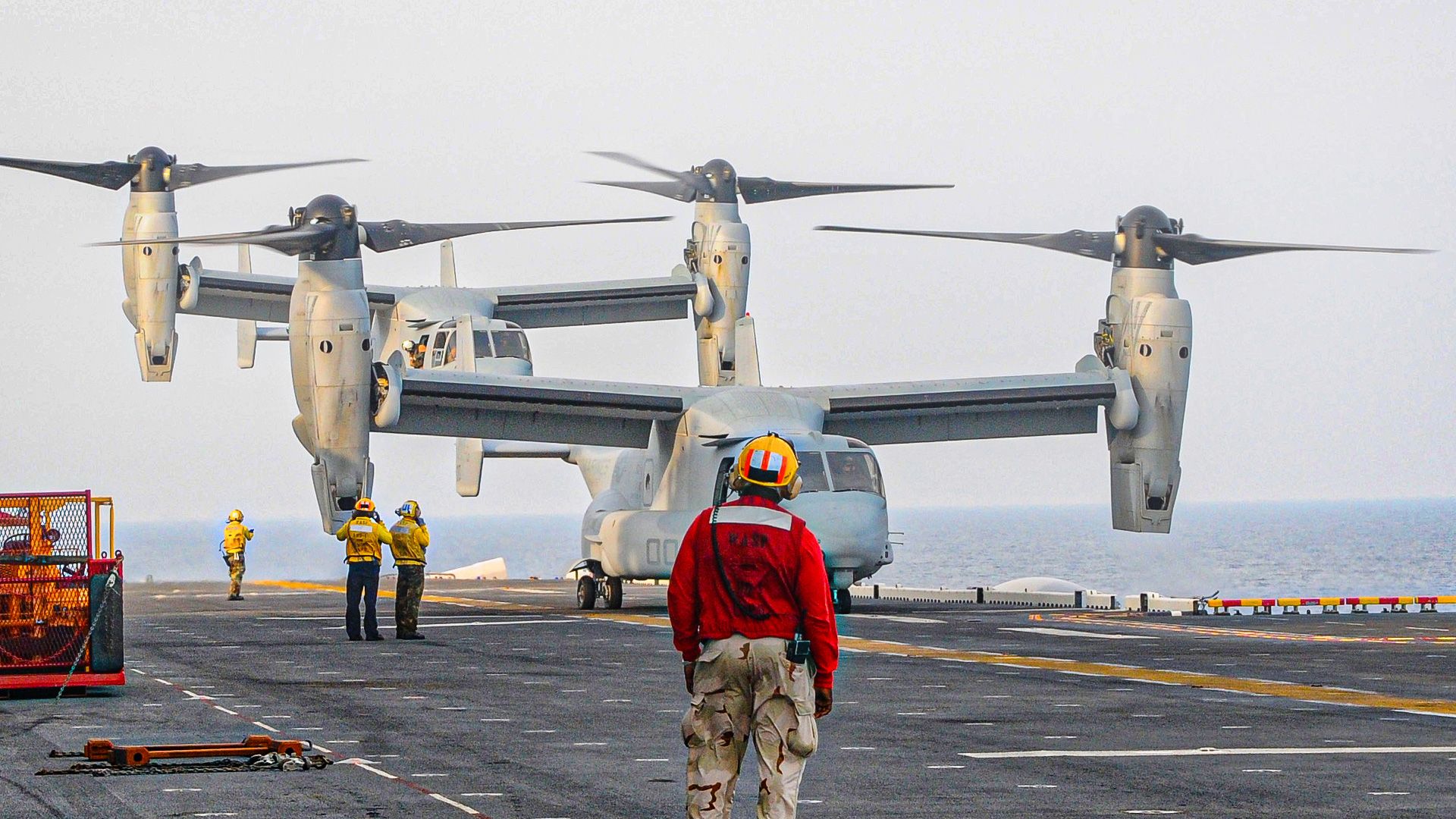
The US Army is preparing its pilots for a new era of aviation by using the US Marines' Bell V-22 Osprey aircraft for training. This training will equip pilots with the skills needed to operate the Army's first tiltrotor aircraft, the MV-75 Cheyenne II, which is projected to enter service in 2030 as part of the Army's Future Long Range Assault Aircraft Program.
The MV-75 Cheyenne II will be the US Army's first tiltrotor aircraft, entering service in 2030.
What has been confirmed
The US Army has confirmed that it is training its future tiltrotor pilots with the US Marines' Bell V-22 Osprey. The MV-75 Cheyenne II, derived from the Bell V-280 Valor design, is set to become the first tiltrotor aircraft in the US Army's fleet by 2030. It will have a cruise speed of 280-300 knots and a combat range of 500-800 nautical miles. The 101st Combat Aviation Brigade is involved in the transition to tiltrotor operations, which will include a shift in tactical doctrine and the adoption of cross-service training using virtual prototypes.Why it matters
This story is significant for the US commercial aviation sector as it highlights the Army's shift to tiltrotor technology, which offers higher speeds and greater range than traditional helicopters. These advancements could influence aviation technology and operational strategies across multiple sectors, pushing the limits of what aircraft can achieve in terms of speed and efficiency. The tactical adjustments made for the MV-75 Cheyenne II are particularly focused on operations in the strategically crucial Asia-Pacific region, underscoring the growing importance of technological advancement in military aviation.FlyMarshall context
Understanding the technical leap represented by the MV-75 Cheyenne II offers insights into broader aviation trends, such as increased reliance on advanced aerodynamics and operational versatility. Tiltrotor technology, like that used in the V-280 Valor, represents a hybrid capability that could influence commercial aviation designs, especially in regions that demand rapid responsiveness and greater range from transport aircraft. The development of virtual prototyping for pilot training also mirrors trends seen in commercial aviation, where simulation plays an expanding role in crew proficiency.What happens next
In the lead-up to the Cheyenne II's service entry in 2030, the US Army will continue cross-service training with the US Marines and develop comprehensive virtual prototypes. This preparation will include adjustments to tactical doctrine to leverage the aircraft's capabilities in greater speed and range, focusing on potential deployments within the Asia-Pacific Theater.Continue reading
This is an excerpt. The full story, written and reported by Simple Flying, continues on their site.
Read Full Story at Simple Flying