SpaceX Scrubs Starship Launch Due to Engine Issues at Starbase
SpaceX aborted a Starship launch from Texas after some Raptor engines on the Super Heavy booster failed to start.
1 min readvia Ars Technica
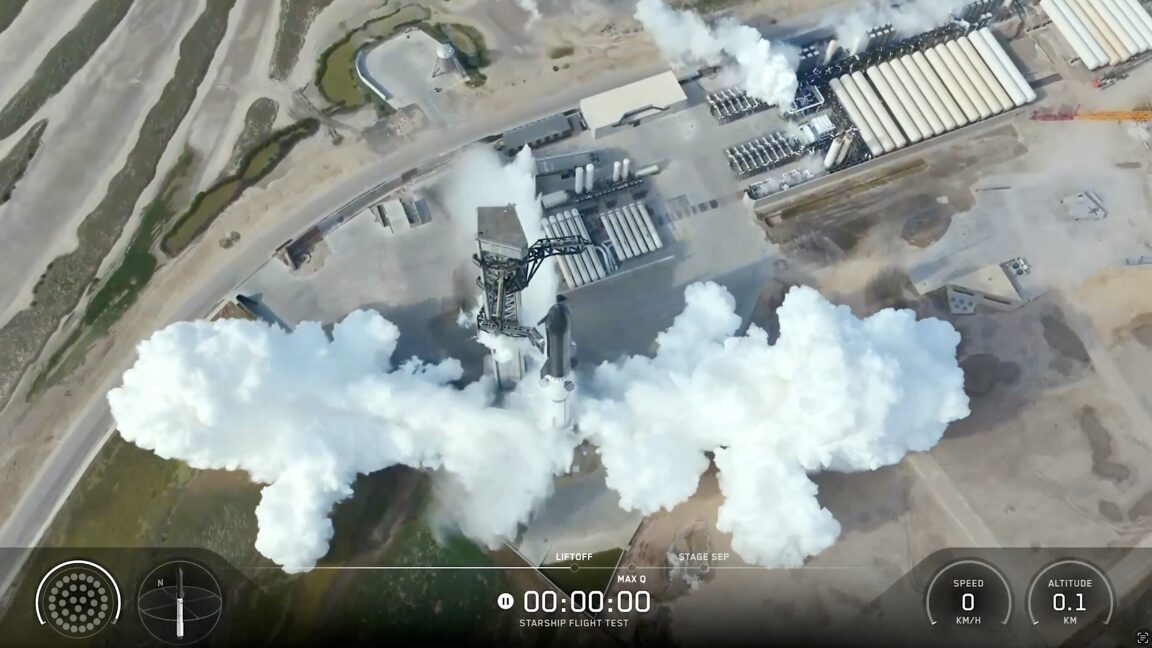
SpaceX halted a planned launch of its Starship spacecraft at Starbase, Texas, after some of the engines on its Super Heavy booster did not fire as expected. This forced an abort of the launch, which was intended to further SpaceX's testing of its next-generation orbital spacecraft.
The Super Heavy booster is powered by 33 methane-fueled Raptor engines.
What has been confirmed
The launch attempt took place at Starbase, Texas. The issue involved several of the 33 Raptor engines on the Super Heavy booster, powered by methane, that failed to ignite. SpaceX has confirmed plans to replace two of these engines ahead of another launch attempt.Why it matters
Reliable engine performance is crucial for the success of space missions. Ensuring that all engines ignite properly is fundamental for launching large and complex vehicles like the Starship, which play a crucial role in future missions that may include crewed flights and interplanetary travel.FlyMarshall context
While aviation and space operations differ greatly, the rigorous testing and verification processes prior to launches mirror the safety protocols in commercial aviation. Both domains rely on robust mechanical systems and thorough redundancy to prevent failures and ensure safety for passengers and crew alike.What happens next
Elon Musk has suggested the possibility of a relaunch early next week, contingent upon the successful replacement of the two problematic Raptor engines. SpaceX intends to achieve a controlled splashdown for the booster post-launch, which will be a key milestone in their continuous development of reusable spaceflight technologies.Continue reading
This is an excerpt. The full story, written and reported by Ars Technica, continues on their site.
Read Full Story at Ars Technica