Global Collaboration: How the Boeing 787 Comes Together
The Boeing 787 Dreamliner, assembled in the United States, benefits from an international network of suppliers contributing key components from nine countries.
1 min readvia Simple Flying
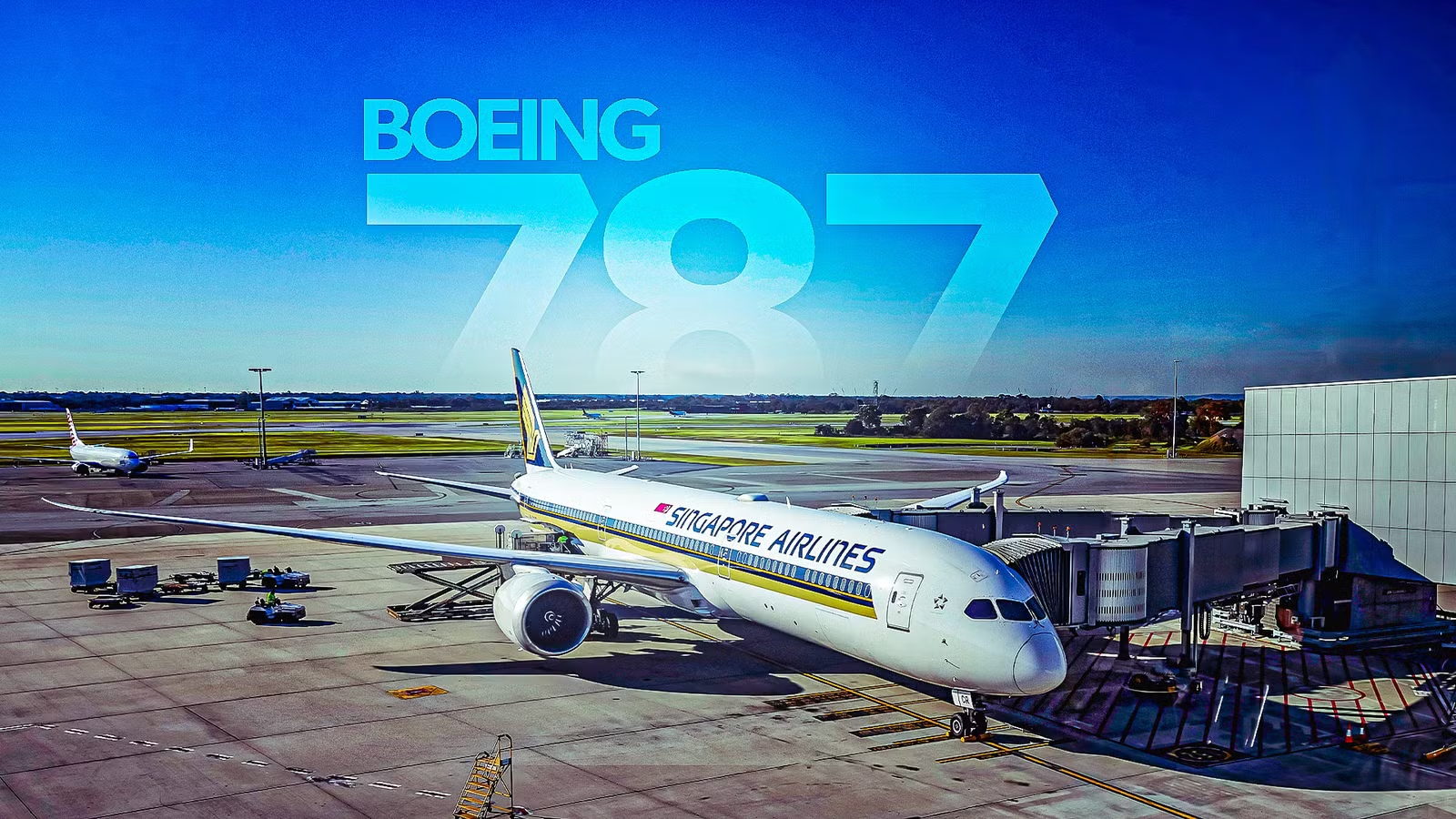
The Boeing 787 Dreamliner is assembled in the United States, but its construction is a global effort involving components from nine countries. Japan, for example, supplies approximately 35% of the aircraft's airframe, with Mitsubishi Heavy Industries manufacturing the wing boxes. Parts like the center fuselage and horizontal stabilizer are produced in Italy, while South Korea provides the aft fuselage and wingtips.
What has been confirmed
The 787's assembly in the United States is confirmed, as is the involvement of nine countries in its component production. Japan's Mitsubishi Heavy Industries manufactures crucial wing boxes, and Italy's Leonardo facility handles specific fuselage sections. South Korea supplies the aft fuselage and wingtips. The United States contributes the forward fuselage and vertical fin. Rolls-Royce in the UK produces engines and certain nacelle components. Additionally, Australia's Boeing Aerostructures manufactures moving parts like trailing edge flaps.Why it matters
Understanding the global nature of the 787's production is important for US aviation professionals and industry watchers, highlighting the interconnectivity of modern aerospace manufacturing. This collaboration not only supports thousands of jobs worldwide but also ensures that American aerospace benefits from cutting-edge technology and expertise from other nations.FlyMarshall context
FlyMarshall passengers flying on the Boeing 787 benefit from a technology-packed aircraft made possible by an international collaboration. The Dreamliner is well-known for its fuel efficiency and passenger comfort owing to design improvements made by this global network of suppliers.What happens next
Boeing will continue to rely on this international supply chain for ongoing 787 production and other future models. As aerospace technology evolves, cooperation among these global partners will become an even more vital component of aircraft development.Continue reading
This is an excerpt. The full story, written and reported by Simple Flying, continues on their site.
Read Full Story at Simple Flying