


Envoy Air has recently announced that it has taken delivery of a brand new Embraer E175. As first posted on Facebook on November 25, 2025, the new plane is registered as N320BK and was flown from Brazil to the US on the same day. From there, the aircraft performed operational flights and will soon enter service.
According to ch-aviation, Envoy Air now has 133 E175s in its fleet, consisting exclusively of the Embraer E-Jet family. The airline is a wholly owned subsidiary of American Airlines and operates under the regional American Eagle banner. It is the world’s third-largest operator of the Embraer E-Jet family, and has an additional 26 examples on order as Envoy Air continues to grow its fleet.
The Newest E175 In Envoy Air’s Fleet

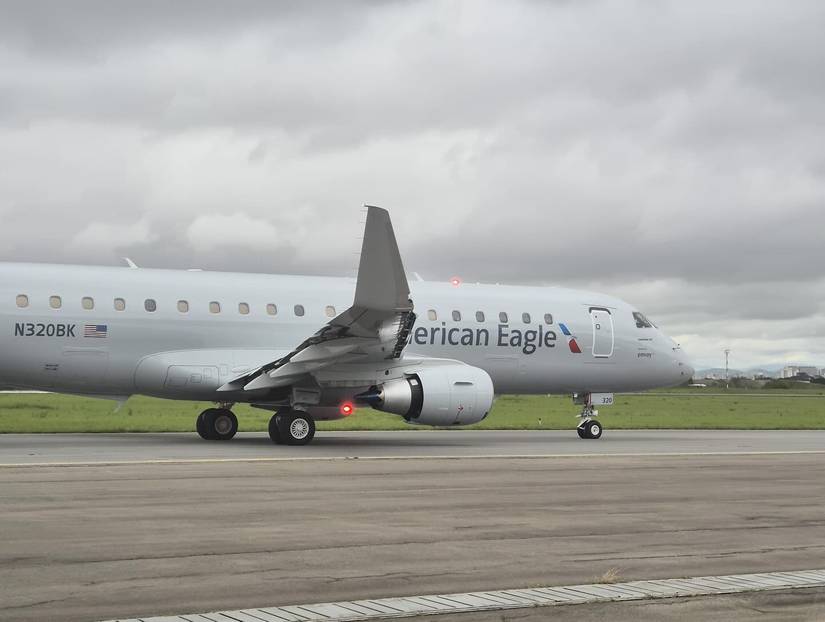
N320BK is Envoy Air’s latest Embraer E175. It’s an E175LR that bears the tail number “320” and the carrier took formal delivery of the aircraft on Tuesday, November 25. As per data from Flightradar24, the plane first flew from Embraer’s production facility in San Jose dos Campos Airport to Manaus-Eduardo Gomes International Airport, likely for refueling. From there, N320BK then traveled to Fort Lauderdale Hollywood International Airport, after which it was ferried to Dallas/Fort Worth International Airport and then to Abilene Regional Airport.
Abilene is home to a heavy maintenance base for Envoy Air, and the aircraft will likely be inspected here before formally entering revenue service. Like the rest of Envoy Air’s E175 fleet, N320BK is configured with 12 first class seats, 20 Main Cabin Extra seats, and 44 Main Cabin seats, for a total of 76 seats. The E175 at American Eagle and other US regional airlines is capped at 76 seats due to scope clauses.
N320BK will feature the new interior standard for American Eagle and American Airlines. First class seats will have dark blue leather seats with tilted horizontal stitching and tan headrests, a design that is carried over for Main Cabin Extra. Main Cabin seats have two-tone blue seats with dark blue headrests. Additionally, this aircraft will come with powerports and in-flight Wi-Fi.
Looking At Envoy Air And American Eagle’s Fleet


Envoy Air is wholly owned by American Airlines, and it operates flights using regional airliners under the American Eagle brand. As a whole, American Eagle flights are operated by five airline partners, using a mix of 50-seat Embraer E145 aircraft, 65-seat Bombardier CRJ700 and Embraer E170 aircraft, and 76-seat Bombardier CRJ900 and Embraer E175 aircraft.
SkyWest Airlines and Republic Airways are independent companies that operate for all three major US carriers (along with 

Envoy Air is the largest of American’s three subsidiary regional airlines, and it’s also the largest carrier operating for American Eagle. It has 176 aircraft, of which 133 are Embraer E175 aircraft. The E170 fleet is made up of only 43 aircraft, and it’s a smaller, older, less efficient aircraft, although Envoy Air is slowly growing this fleet as well through the acquisition of used examples. The airline previously operated the ERJ145, but retired these aircraft in favor of the E175.
Changes At US Regional Airlines


Envoy Air is continuing to receive new deliveries of the Embraer E175. What’s weird about this is that it’s part of the last-generation E-Jet family, rather than the newer Embraer E-2. However, the proposed E175-E2’s weight exceeds the limitations specified in the US pilot scope clauses. Airlines can buy them, but the aircraft have to be crewed by mainline pilots and flight attendants. As such, it has no future in the US market, and the aircraft’s development has been put on hold indefinitely.
With the CRJ out of production, the Embraer E175 has become essentially the only turbofan-powered airliner that regional airlines can order. Because carriers have limits on how many regional aircraft they can operate, many of the E175s and used E170s/CRJ900s that are being acquired by regional carriers are being used to replace 50-seater jets. The new planes are larger and thereby more economical to operate.
In addition, the ERJ145s that American operates, for example, are some of the oldest in the American Eagle fleet. These aircraft are also generally disliked by passengers and are configured in an all-economy layout. As such, they are slowly going away as larger regional jets continue to join US regional fleets.
source