


When flying on a budget, comfort is often the first thing sacrificed. But among Allegiant Air, Spirit Airlines, and Frontier Airlines – America’s three major ultra-low-cost carriers (ULCCs) using similar fleets based on the Airbus A320 family, which airline actually offers the most comfortable cabin? With millions of passengers flying these carriers each year, the competition for customer satisfaction, legroom, and seat experience is fierce. For travelers looking to strike a balance between savings and comfort, understanding the differences in seat configurations and cabin layouts can make all the difference.
In our article, we will have a detailed comparison of the seat offerings and cabin layouts of Allegiant, Spirit, and Frontier. We’ll explore which airline offers the most legroom, the widest seat width, the most comfortable premium offerings (if any), and how the overall cabin experience compares. Drawing directly from the detailed seat maps and configuration data provided by Aerolopa and the official websites of the companies, we aim to answer the ultimate passenger question: who’s packing in the most comfort, even in an ultra-low-cost seat?
What Is The Short Answer?

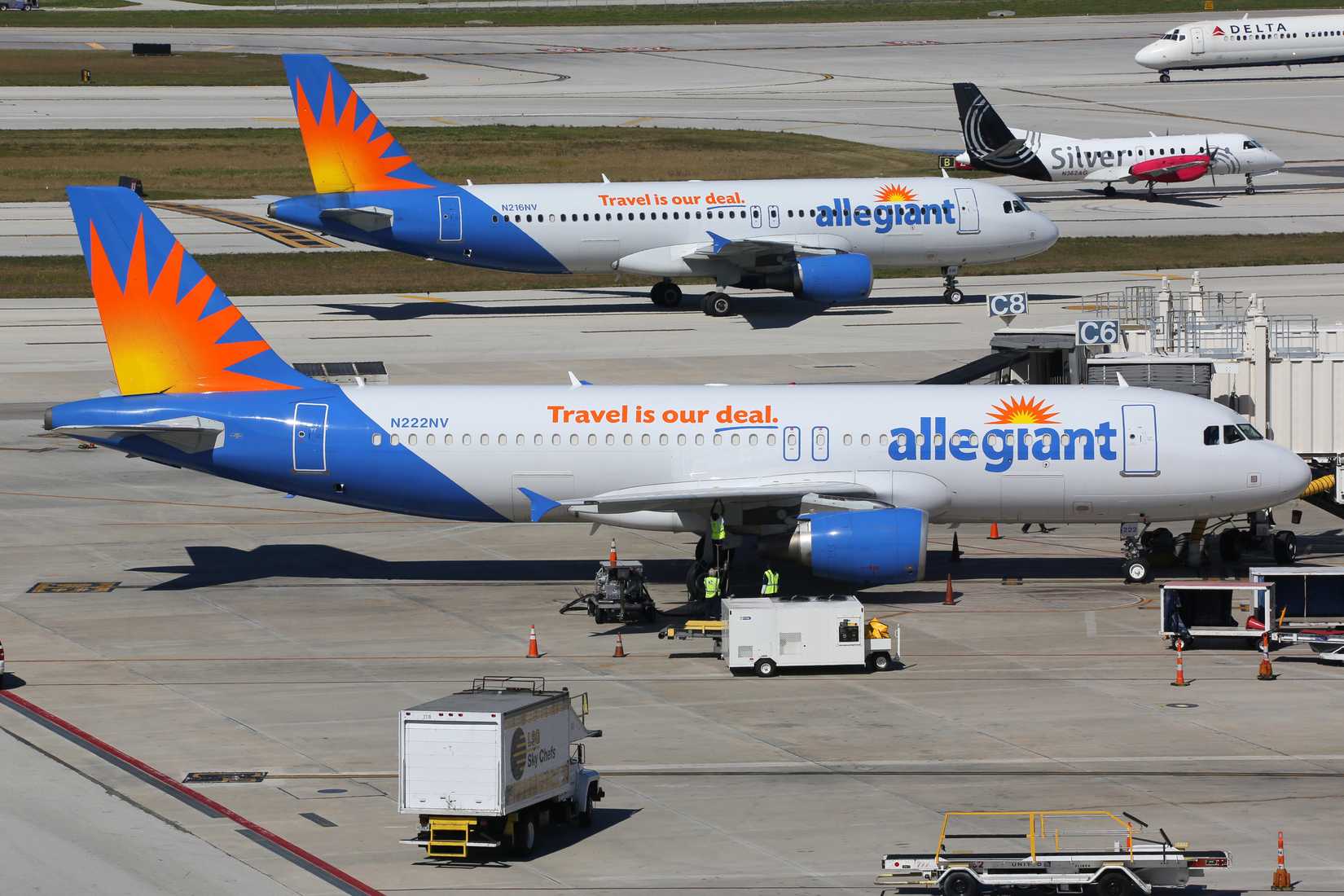
The short answer: Allegiant Air, as it tends to edge out Spirit and Frontier when it comes to overall cabin comfort, mainly thanks to its slightly roomier standard seats and the inclusion of premium options. Spirit Airlines offers a competitive experience, particularly with its Big Front Seat, whereas Frontier leans heavily toward high-density layouts that prioritize maximizing seat count over passenger space. However, as always with ULCCs, comfort is relative and often comes at an additional cost. In terms of onboard amenities, the winner is Spirit Airlines, as the company offers more onboard service and is the only ULCC that provides WiFi on board, although it’s available for a fee.
Allegiant’s fleet, primarily composed of Airbus A319s and A320s, offers about 30 inches of pitch in standard seats, slightly surpassing the 28-29 inches commonly found on Spirit and Frontier. Spirit’s Big Front Seat (with up to 36 inches of pitch and 22-inch width) provides an experience akin to domestic first class, if you’re willing to pay extra. In contrast, Frontier adheres closely to the ULCC model, featuring slimline seats and minimal pitch, making comfort a secondary concern.
Historically, all three carriers have squeezed seat counts and slimmed down services to achieve the lowest possible base fares, part of the ULCC model pioneered in Europe by Ryanair and easyJet. But as customer expectations have evolved, and as competitors like Southwest and JetBlue offer more generous seating in similar markets, the subtle differences between these ULCCs’ cabins have become a real selling point for passengers seeking just a touch more comfort without blowing their budget.
What Factors Shape Cabin Comfort?


Several factors contribute to cabin comfort on ULCCs, including seat pitch (legroom), seat width, seat padding and recline, cabin layout, and premium seating options. Additionally, the age and model of the aircraft play a role, as newer cabins often feature redesigned, slimline seats that can paradoxically reduce comfort even in the same footprint, due to companies trying to maximize seating while reducing costs simultaneously.
Looking at the data:
- Allegiant Air: Standard seats offer 30″ pitch, 17″ width, and no recline. A few “Legroom+” seats in the front and exit rows provide extra space, along with a large in-seat table suitable for a laptop.
- Spirit Airlines: Standard seats have a 28″ pitch, 17″ width, and minimal recline. The Big Front Seat, on the other hand, features a 36″ pitch and 22″ width, with a padded, business-class-style design and a large table suitable for a laptop.
- Frontier Airlines: Densely packed cabins at 28″ pitch, 17″ width, with very thin seat padding and very small tables not suitable for a laptop; no true premium seats are currently available, though “Stretch” seats offer slightly more legroom.
For example, on Allegiant’s Airbus A320s, seats 1A-C and 2D-F are marked as “Legroom+,” offering significantly more space without the full premium seat price. On Spirit’s Airbus A320neo, rows 1 and 2 host the Big Front Seats, which customers consistently rate as a favorite for affordable comfort. Frontier’s Stretch seats, located in exit rows and the front of the cabin, deliver marginally better legroom but still fall short of Spirit’s more robust premium offering.
What Do The Airlines Say?

Airline executives frequently emphasize that passengers buying ULCC tickets know they’re paying for “a seat, and nothing more.” Spirit’s leadership has highlighted that their Big Front Seat isn’t considered a first-class product – it’s simply extra space. Allegiant’s management often notes that their older aircraft configurations, while not the latest slimline models, sometimes create a slightly more spacious feel, even if unintentionally. Here is the overall description of every company, based on their official press releases:
- Allegiant Air: “Affordable, accessible, spacious travel.” Allegiant Air positions itself as offering affordable and accessible travel options. While specific quotes on cabin spaciousness are not directly stated, the airline’s emphasis on customer satisfaction and recognition as a top low-cost carrier suggests a focus on providing a comfortable travel experience.
- Spirit Airlines: “It’s not first class, but it’s the Big Front Seat.” While Spirit Airlines doesn’t officially label its Big Front Seat as first class, the airline offers it as a more comfortable option with extra legroom and wider seats. In a press release, Spirit highlighted the features of the Big Front Seat, emphasizing enhanced comfort without the traditional first-class label.
- Frontier Airlines: “Why pay for what you don’t use?”. Frontier Airlines promotes an à la carte pricing model, allowing passengers to pay only for the services they use. This approach is reflected in their travel policies, where amenities like seat selection, carry-on bags, and checked luggage are not included in the base fare. You can check the Instagram video from the official Frontier page below explaining their business model:
These sources offer direct insights into each airline’s approach to cabin comfort and pricing models, providing readers with a clearer understanding of what to expect when choosing between these three companies. For travelers, knowing the airline’s philosophy helps set realistic comfort expectations.
How Do These Companies Compare To Other Carriers?

Compared to larger budget carriers or simple low-cost carriers (LCC) like 

However, Allegiant, Spirit, and Frontier play in a different space: they appeal to ultra-budget travelers who accept fewer perks for lower fares. Adding a Big Front Seat or Stretch seat can improve the experience, but often raises the price closer to what you’d pay for a Southwest or JetBlue ticket. For travelers strictly focused on cost, the ULCCs deliver unbeatable value, but not premium comfort.
For instance, JetBlue’s standard 32″ pitch and free Wi-Fi make its cabins feel far more premium than anything offered on Allegiant or Frontier. Southwest’s open seating policy and more spacious cabins cater to a different kind of budget traveler, one who prioritizes experience as much as price. Thus, while Allegiant may lead the ULCC pack, it’s still a fundamentally different experience compared to the hybrid or full-service carriers. The only ULCC that offers (paid) WiFi connection on board from our list is Spirit, which can be a big plus if you need to work while on board.


Southwest Vs. JetBlue – Which American LCC is Better For You?
Both carriers have a lot to offer.
Are There Any Other Details To Be Aware Of?


Of course, nothing can be 100% perfect and linear, and cabin comfort isn’t just about the seat. There are additional factors that can contribute to the overall comfort level, such as aircraft age, cleanliness, maintenance, and cabin crew service, all of which matter. Allegiant’s older planes may offer slightly more space, but they also come with an aging interior. Spirit and Frontier’s newer aircraft may be more tightly packed, but can feel fresher and better maintained.
Passengers who value smooth boarding, overhead bin space, or the mood lighting found on newer planes might prefer Spirit’s A320neo over Allegiant’s older A319s. Additionally, flight length matters: on a short flight of under two hours, a cramped seat is manageable, but for cross-country trips, even a few extra inches of pitch or a better recline can make a significant difference.
Comfort level chart based on passenger reviews and descriptions from TripAdvisor and SeatGuru:
|
Factor |
Allegiant |
Spirit |
Frontier |
|
Fleet Age |
Older (~15-years-old A319, A320) |
Newer (~6-years-old A320neo) |
Newer (~5 years-old A320neo) |
|
Seat Quality |
Older, more padding |
Slimline, minimal |
Ultra-slimline |
|
Cabin Cleanliness |
Mixed reports |
Generally positive |
Mixed reports |
Travelers should double-check aircraft types, seat maps, and even recent passenger reviews before booking, especially if comfort is a priority. For example, Aerolopa provides excellent technical seat details, but real-world experiences can vary by aircraft, crew, and route. Using extra tools like SeatGuru or airline seat maps can help passengers pick the best possible seat, even in a tightly packed ULCC cabin. Or you can check numerous trip reports online.
What’s The Final Verdict?

So, which American ultra-low-cost carrier offers the most comfortable cabin? Allegiant Air narrowly takes the crown, offering slightly more generous standard seat pitch and a practical range of extra-legroom seats. Spirit Airlines shines if you’re willing to splurge on the Big Front Seat, while Frontier focuses primarily on keeping fares low at the expense of personal space and comfort.
For travelers, the key is to know your priorities: if you simply want the cheapest seat, all three carriers deliver, but if you crave a touch of extra comfort, Allegiant and Spirit provide meaningful options worth the upgrade. Always check aircraft configuration and seat availability when booking, as the best seats (and deals) often go fast.
Looking ahead, ULCCs face increasing pressure to balance passenger comfort with profitability, especially as customer reviews and social media amplify stories of discomfort. As new aircraft join fleets and older planes are phased out, we may see shifts in cabin configurations. For now, savvy passengers can still find ways to fly cheaply and a bit more comfortably, simply by knowing where to look.
source